


Ignition Troubles. Please Help!

Thread Starter
|
New User
Joined: Sep 2015
Posts: 8
Likes: 0
Ignition Troubles. Please Help!
Forgive me this is long, but I have exhausted all other resources.
The info;
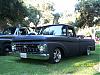
72' F100 Ranger, 360 Auto/W AC. Bone stock, no modifications.
The Issue;
While driving, vehicle lost power, seemed like it was running out of fuel. After inspection, fuel was not the issue. I then put a timing light on it and noticed the spark was all over the place, like the points were sticking.
So I replaced the points and condenser and she fired right up and she ran as smooth as ever. After 7 days, the same thing happened. So, I did a bit more digging and found what I believe to be the issue. I believe my condensers are going bad. Replaced the condenser with one I had from a previous tune-up and sure enough, runs fine.
So, doing some research I learned that it could be any number of things. I believe it may be getting too much voltage to the coil, it hovers in the 10.5 to 11v range. It is my understanding that it should be around 9v while running and 12v while starting.
Enter the phase of throwing parts at an issue I have no idea is being caused by:
Parts Replaced:
Voltage regulator
Coil
Cap and Rotor
Ignition switch
Now, before you ask. Yes the resistor wire is present and intact, no splices, visible shorts or grounds. The connector out of the firewall is not melted nor is it damaged in anyway. The wire from the connector to the coil is also in good visible shape. Nor are there any visible shorts inside the distributor (though that would not contribute to the over voltage).
This problem is beyond me at this point. I have owned many of these trucks/engines and have never seen this. So any and all help y'all could provide would be most welcome.
I know I could just cut the wire from the connector to the coil and add an external resistor, but I would rather not alter her in any way if I didn't have too. Thanks in advance, I think I got all the pertinent info needed for folks to help.
Ps. I know a Pertronix system would alleviate the need to track this issue down, but that will have to wait.
The info;
72' F100 Ranger, 360 Auto/W AC. Bone stock, no modifications.
The Issue;
While driving, vehicle lost power, seemed like it was running out of fuel. After inspection, fuel was not the issue. I then put a timing light on it and noticed the spark was all over the place, like the points were sticking.
So I replaced the points and condenser and she fired right up and she ran as smooth as ever. After 7 days, the same thing happened. So, I did a bit more digging and found what I believe to be the issue. I believe my condensers are going bad. Replaced the condenser with one I had from a previous tune-up and sure enough, runs fine.
So, doing some research I learned that it could be any number of things. I believe it may be getting too much voltage to the coil, it hovers in the 10.5 to 11v range. It is my understanding that it should be around 9v while running and 12v while starting.
Enter the phase of throwing parts at an issue I have no idea is being caused by:
Parts Replaced:
Voltage regulator
Coil
Cap and Rotor
Ignition switch
Now, before you ask. Yes the resistor wire is present and intact, no splices, visible shorts or grounds. The connector out of the firewall is not melted nor is it damaged in anyway. The wire from the connector to the coil is also in good visible shape. Nor are there any visible shorts inside the distributor (though that would not contribute to the over voltage).
This problem is beyond me at this point. I have owned many of these trucks/engines and have never seen this. So any and all help y'all could provide would be most welcome.
I know I could just cut the wire from the connector to the coil and add an external resistor, but I would rather not alter her in any way if I didn't have too. Thanks in advance, I think I got all the pertinent info needed for folks to help.
Ps. I know a Pertronix system would alleviate the need to track this issue down, but that will have to wait.

Fleet Mechanic

Joined: May 2001
Posts: 1,396
Likes: 4
From: Cupertino
Welcome aboard, pal. We will get you going. Stop throwing parts at the problem.
1) Your coil voltage is too high. The spec for coil resistance is about 1.4 ohms and the "pink wire" is about the same. So you should be seeing something like 7 or so volts at the coil. You have not told us what coil you put in. Tell us that, and do a resistance across the primary.
2) Voltage regulator is out of the equation. Again, throw no more parts at the problem.
3) Bad Shanghai condensers are a common complaint here. Your high primary voltage may be the cause of failing condensers.
Now the bad news.
4) Jumping ignition spark indicates a bad distributor or bad timing chain. Parts are cheap but it will take you a Saturday to replace both.
My advice is to pull the radiator and front cover, pull the cover and timing chain, get a rebuilt distributor. Immediately dump the points and condenser in the distributor and replace with quality gringo parts.
You will have to dig deeper into the coil overvoltage. The best solution is a Pertronix kit which takes all the mechanical stuff and resistance wire issues out of the equation.
The guys will be in to add. They are the best Ford truck guys on the planet.
Semper Fi
1) Your coil voltage is too high. The spec for coil resistance is about 1.4 ohms and the "pink wire" is about the same. So you should be seeing something like 7 or so volts at the coil. You have not told us what coil you put in. Tell us that, and do a resistance across the primary.
2) Voltage regulator is out of the equation. Again, throw no more parts at the problem.
3) Bad Shanghai condensers are a common complaint here. Your high primary voltage may be the cause of failing condensers.
Now the bad news.
4) Jumping ignition spark indicates a bad distributor or bad timing chain. Parts are cheap but it will take you a Saturday to replace both.
My advice is to pull the radiator and front cover, pull the cover and timing chain, get a rebuilt distributor. Immediately dump the points and condenser in the distributor and replace with quality gringo parts.
You will have to dig deeper into the coil overvoltage. The best solution is a Pertronix kit which takes all the mechanical stuff and resistance wire issues out of the equation.
The guys will be in to add. They are the best Ford truck guys on the planet.
Semper Fi
Thread Starter
|
New User
Joined: Sep 2015
Posts: 8
Likes: 0
The coil is just a Duralast Gold.
Primary resistance I got was 2.9
Resistor Wire's resistance is 1.0 ( specs call for 1.3-1.4 I thought)
Distributor was replaced last summer with a Duralast re-man'd
It could very well be bad condensors, that's what I first though. Untill I found the high voltage at the coil +side while running.
Timing chain, fuel pump were done 3 weeks ago, when I had the initial problem. I thought then it was timing chain, but that was still dead on when I dropped the cover and replaced it, mark on mark. ( as a side note the truck runs wonderfully, with a new condenser, for a week)
As for the points and condenser, where would I get them? I called Ford today to see if I could get Fomoco and they don't make them anymore
And yes, pertronix is on the list, but with all the parts chasing I have done, I got the "Evil Eye" from the wife when I mentioned it. So it will have to be a month or so out.
Primary resistance I got was 2.9
Resistor Wire's resistance is 1.0 ( specs call for 1.3-1.4 I thought)
Distributor was replaced last summer with a Duralast re-man'd
It could very well be bad condensors, that's what I first though. Untill I found the high voltage at the coil +side while running.
Timing chain, fuel pump were done 3 weeks ago, when I had the initial problem. I thought then it was timing chain, but that was still dead on when I dropped the cover and replaced it, mark on mark. ( as a side note the truck runs wonderfully, with a new condenser, for a week)
As for the points and condenser, where would I get them? I called Ford today to see if I could get Fomoco and they don't make them anymore
And yes, pertronix is on the list, but with all the parts chasing I have done, I got the "Evil Eye" from the wife when I mentioned it. So it will have to be a month or so out.

Hotshot


Joined: Mar 2013
Posts: 14,255
Likes: 199
From: Phoenix, Az.
Points are part number B8Q12171A. (DP12) Call:
<table width="100%" class="dataTable" id="dealerResultsTbl" aria-describedby="dealerResultsTbl_info" style="width: 100%;" border="0" cellspacing="0" cellpadding="5"><tbody class="hidden" id="dealerResultsBody" role="alert" aria-live="polite" aria-relevant="all" style="display: table-row-group;" jquery172006074286595415235="57"><tr class="odd rowStyle" _dt_rowindex="6"><td class="icon-column sorting_1">
 </td><td class="alignLeft">Hilbish Motor Co
(Kannapolis, NC)</td><td class="icon-column">
 </td><td></td><td>1</td><td class="alignLeft"></td><td class="alignLeft">
</td><td class="alignLeft">(704) 938-3131
</td></tr></tbody></table> Condenser is part number C9AZ12300A.(DC-13A) Call:
<table width="100%" class="dataTable" id="dealerResultsTbl" aria-describedby="dealerResultsTbl_info" style="width: 100%;" border="0" cellspacing="0" cellpadding="5"><tbody class="hidden" id="dealerResultsBody" role="alert" aria-live="polite" aria-relevant="all" style="display: table-row-group;" jquery1720676960697432507="57"><tr class="odd rowStyle" _dt_rowindex="2"><td class="alignLeft">Burns Ford-Mercury, Inc.
(Lancaster, SC)
</td><td class="icon-column">
</td><td></td><td>1</td><td class="alignLeft"></td><td class="alignLeft"></td><td class="alignLeft">(803) 286-4611</td></tr></tbody></table>
Thread Starter
|
New User
Joined: Sep 2015
Posts: 8
Likes: 0
WHAT? The parts guy you talked to must not be a Geezer like me. They are still available. Your local dealer can order them from Ford. I can sell them to you all day long. Or for someone more local with them in stock:
Points are part number B8Q12171A. (DP12) Call:
<table width="100%" class="dataTable" id="dealerResultsTbl" aria-describedby="dealerResultsTbl_info" style="width: 100%;" border="0" cellspacing="0" cellpadding="5"><tbody class="hidden" id="dealerResultsBody" role="alert" aria-live="polite" aria-relevant="all" style="display: table-row-group;" jquery172006074286595415235="57"><tr class="odd rowStyle" _dt_rowindex="6"><td class="icon-column sorting_1"></td><td class="alignLeft">Hilbish Motor Co
(Kannapolis, NC)
</td><td class="icon-column"></td><td></td><td>1</td><td class="alignLeft"></td><td class="alignLeft">
</td><td class="alignLeft">(704) 938-3131
</td></tr></tbody></table> Condenser is part number C9AZ12300A.(DC-13A) Call:
<table width="100%" class="dataTable" id="dealerResultsTbl" aria-describedby="dealerResultsTbl_info" style="width: 100%;" border="0" cellspacing="0" cellpadding="5"><tbody class="hidden" id="dealerResultsBody" role="alert" aria-live="polite" aria-relevant="all" style="display: table-row-group;" jquery1720676960697432507="57"><tr class="odd rowStyle" _dt_rowindex="2"><td class="alignLeft">Burns Ford-Mercury, Inc.
(Lancaster, SC)
</td><td class="icon-column"></td><td></td><td>1</td><td class="alignLeft"></td><td class="alignLeft"></td><td class="alignLeft">(803) 286-4611</td></tr></tbody></table>
Points are part number B8Q12171A. (DP12) Call:
<table width="100%" class="dataTable" id="dealerResultsTbl" aria-describedby="dealerResultsTbl_info" style="width: 100%;" border="0" cellspacing="0" cellpadding="5"><tbody class="hidden" id="dealerResultsBody" role="alert" aria-live="polite" aria-relevant="all" style="display: table-row-group;" jquery172006074286595415235="57"><tr class="odd rowStyle" _dt_rowindex="6"><td class="icon-column sorting_1">
</td><td class="alignLeft">Hilbish Motor Co(Kannapolis, NC)
</td><td class="icon-column">
</td><td></td><td>1</td><td class="alignLeft"></td><td class="alignLeft"></td><td class="alignLeft">(704) 938-3131
</td></tr></tbody></table> Condenser is part number C9AZ12300A.(DC-13A) Call:
<table width="100%" class="dataTable" id="dealerResultsTbl" aria-describedby="dealerResultsTbl_info" style="width: 100%;" border="0" cellspacing="0" cellpadding="5"><tbody class="hidden" id="dealerResultsBody" role="alert" aria-live="polite" aria-relevant="all" style="display: table-row-group;" jquery1720676960697432507="57"><tr class="odd rowStyle" _dt_rowindex="2"><td class="alignLeft">Burns Ford-Mercury, Inc.
(Lancaster, SC)
</td><td class="icon-column">
</td><td></td><td>1</td><td class="alignLeft"></td><td class="alignLeft"></td><td class="alignLeft">(803) 286-4611</td></tr></tbody></table>
Hotshot
Joined: Mar 2013
Posts: 14,255
Likes: 199
From: Phoenix, Az.
 This King don't Lie.
<table width="100%" class="dataTable" id="dealerResultsTbl" aria-describedby="dealerResultsTbl_info" style="width: 100%;" border="0" cellspacing="0" cellpadding="5"><tbody class="hidden" id="dealerResultsBody" role="alert" aria-live="polite" aria-relevant="all" style="display: table-row-group;" jquery17206948530578823777="52"><tr class="odd rowStyle" _dt_rowindex="6"><td class="icon-column sorting_1">
 </td><td class="alignLeft">Feyer Ford of Edenton, Inc.
(Edenton, NC)</td><td class="icon-column">
</td><td></td><td>1</td><td class="alignLeft"></td><td class="alignLeft"></td><td class="alignLeft">(252) 482-2144</td></tr></tbody></table>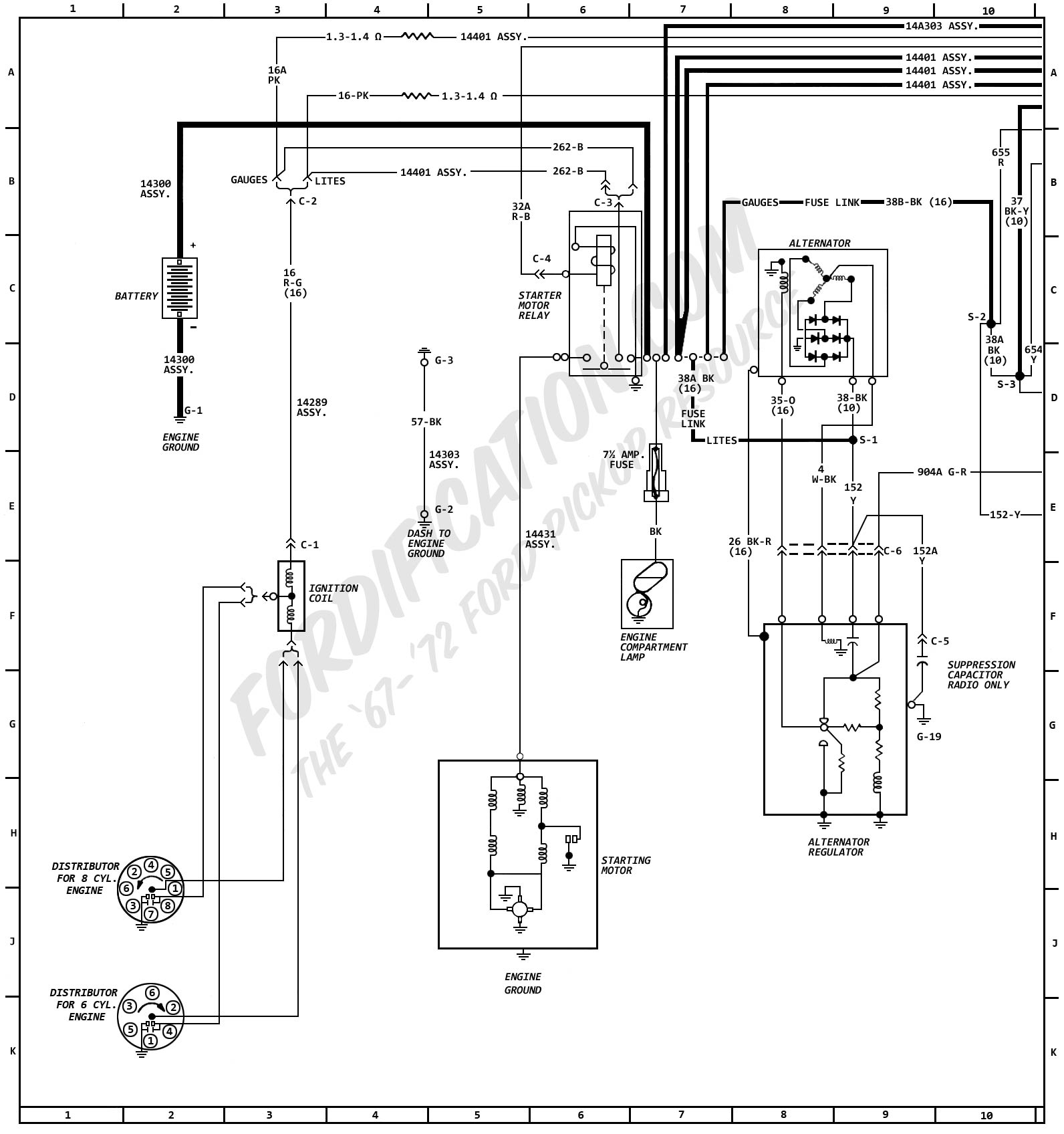
Hotshot
Joined: Mar 2013
Posts: 14,255
Likes: 199
From: Phoenix, Az.
Don't chew to much azz. A young kid wouldn't have the foggiest idea how to look them up. Ford only has 1980 and newer vehicles in the computer. One would have to use the ol' books or micro fische machine. 1972 and older vehicles were harder to look up. Beyond that young man. Ford revised their books (and therefore fische) 73/79 to make more sense and easier. But that kid has prolly never looked at either version.
Trending Topics
Lead Driver


Joined: Apr 2011
Posts: 6,399
Likes: 40
From: El Dorado, Arkansas
The advantages of 'geezerdom' and the wisdom that comes from it.

Sounds like the Ford parts guy talked to didn't want to be bothered with looking up old parts.
In dealings with a local Ford parts counter guy a good while back: I got into a semi-tift with the local Ford parts counter guy, when I was needing a pulley nut for the '94 Mustang 3G alternator I put on my truck. He said that the nut was obsolete but that any Ford alternator nut would work.
I said that was not the case since the alternator nut from my old '69 F100 1G alternator had an SAE thread and the 3G alternator nut had a metric thread (at that time, I didn't know the specific diameter or thread pitch of the 3G nut but, I knew it wasn't SAE). He continued to disagree. I left from there and went to a local alternator shop and got the correct nut for something like 25 or 50 cents.
The next day, I took the 3G nut with me to work. I started going through the metric taps bin and found the correct diameter and thread pitch for it. It was a 16 mm diameter x 1.50 thread pitch.
--my co-worker is the brother-in-law to the local Ford parts counter guy. I told my co-worker to be sure and tell his brother-in-law what the specs were for the 3G alternator nut I had talked to him about the day before.

FTE Stories
Ford Trucks for Ford Truck Enthusiasts

Top 10 Fords at 2026 Carlisle Ford Nationals
Joe Kucinski
3 Best / 3 Worst Parts of Modern Ford Ownership
Brett Foote
10 Amazing Upgrades That Solve Common Ford Truck Owner Headaches
Pouria Savadkouei
Every 2026 Ford Engine Explained
Brett Foote
10 Ugly Ford Trucks That We Still Kinda Love
Joe Kucinski
10 Things Every Truck Owner NEEDS (2026 Edition)
Michael S. Palmer
Rezvani's Latest Post-Apocalyptic Monster Is a Ford F-150 Raptor Underneath
Verdad Gallardo
Top 10 Most Expensive Ford Trucks Ever Sold on Bring a Trailer
Joe Kucinski
2027 Ford Super Duty Buyer's Guide (Every Model, Engine, & Package)
Brett Foote
Thread Starter
|
New User
Joined: Sep 2015
Posts: 8
Likes: 0
Agreed, buying the Pertronix would keep me from having to do anything as I am getting near 11 volts anyway.
Do you think the resistor wire went "bad" somehow? I wasn't aware that they could wear out or anything. But I can't think of any other explanation.
That's why I changed the ignitions switch. I figured the contacts for "start" and "run" may be pushing voltage though both wires in both positions. Upping the voltage ultimately once they merge and the connector in the firewall. But that was a no go.
Do you think the resistor wire went "bad" somehow? I wasn't aware that they could wear out or anything. But I can't think of any other explanation.
That's why I changed the ignitions switch. I figured the contacts for "start" and "run" may be pushing voltage though both wires in both positions. Upping the voltage ultimately once they merge and the connector in the firewall. But that was a no go.
Thread Starter
|
New User
Joined: Sep 2015
Posts: 8
Likes: 0
Well, I'm no geezer by most standards. Unless you ask someone in their early 20's :P
I do appreciate all the help guys, I was waiting for replies with my tools in hand. I ran out and got the resistance reading the moment JeffFAFA replied. lol
This issue has me stumped big time. I could be overthinking it maybe and it's just a condenser issue.
I do appreciate all the help guys, I was waiting for replies with my tools in hand. I ran out and got the resistance reading the moment JeffFAFA replied. lol
This issue has me stumped big time. I could be overthinking it maybe and it's just a condenser issue.
Logistics Pro
Joined: Dec 2004
Posts: 4,651
Likes: 60
From: Hemet ca.
And yes, pertronix is on the list, but with all the parts chasing I have done, I got the "Evil Eye" from the wife when I mentioned it. So it will have to be a month or so out.
Don't worry about the "Evil Eye" what you need can't wait. You might be on the couch maybe one night, once she see's how happy you are, you'll be back in your room in no time.
The "Evil Eye" don't hurt if you don't look directly into it, if you have to, wear a welding helmet.
Don't worry about the "Evil Eye" what you need can't wait. You might be on the couch maybe one night, once she see's how happy you are, you'll be back in your room in no time.
The "Evil Eye" don't hurt if you don't look directly into it, if you have to, wear a welding helmet.
Hotshot
Joined: Mar 2013
Posts: 14,255
Likes: 199
From: Phoenix, Az.
The advantages of 'geezerdom' and the wisdom that comes from it.
Sounds like the Ford parts guy talked to didn't want to be bothered with looking up old parts.
In dealings with a local Ford parts counter guy a good while back: I got into a semi-tift with the local Ford parts counter guy, when I was needing a pulley nut for the '94 Mustang 3G alternator I put on my truck. He said that the nut was obsolete but that any Ford alternator nut would work.
I said that was not the case since the alternator nut from my old '69 F100 1G alternator had an SAE thread and the 3G alternator nut had a metric thread (at that time, I didn't know the specific diameter or thread pitch of the 3G nut but, I knew it wasn't SAE). He continued to disagree. I left from there and went to a local alternator shop and got the correct nut for something like 25 or 50 cents.
The next day, I took the 3G nut with me to work. I started going through the metric taps bin and found the correct diameter and thread pitch for it. It was a 16 mm diameter x 1.50 thread pitch.
--my co-worker is the brother-in-law to the local Ford parts counter guy. I told my co-worker to be sure and tell his brother-in-law what the specs were for the 3G alternator nut I had talked to him about the day before.
Sounds like the Ford parts guy talked to didn't want to be bothered with looking up old parts.
In dealings with a local Ford parts counter guy a good while back: I got into a semi-tift with the local Ford parts counter guy, when I was needing a pulley nut for the '94 Mustang 3G alternator I put on my truck. He said that the nut was obsolete but that any Ford alternator nut would work.
I said that was not the case since the alternator nut from my old '69 F100 1G alternator had an SAE thread and the 3G alternator nut had a metric thread (at that time, I didn't know the specific diameter or thread pitch of the 3G nut but, I knew it wasn't SAE). He continued to disagree. I left from there and went to a local alternator shop and got the correct nut for something like 25 or 50 cents.
The next day, I took the 3G nut with me to work. I started going through the metric taps bin and found the correct diameter and thread pitch for it. It was a 16 mm diameter x 1.50 thread pitch.
--my co-worker is the brother-in-law to the local Ford parts counter guy. I told my co-worker to be sure and tell his brother-in-law what the specs were for the 3G alternator nut I had talked to him about the day before.

Hotshot
Joined: Mar 2013
Posts: 14,255
Likes: 199
From: Phoenix, Az.
The only way I know of is it was shortened or part of it was replaced with regular wire. I'd run it the whole way to make sure no hack job will give ya some head scratchin' now or in the future. Making no sense equals someone before you hacking something a lot of times. Maybe somewhere not obvious.
Thread Starter
|
New User
Joined: Sep 2015
Posts: 8
Likes: 0
Nope the pink wire is whole and intact. I have owned the puck-up for 10 years. Never have I had any issues with it, ran great. Now all of the sudden, this. Again it has me scratching my head.
I have traced the wire from the connector (just inside the engine compartment) To the ignition switch and from the coil to the connector. As I said, no burnt, splicing, shorting or cutting of this wire is visible at all.
I have traced the wire from the connector (just inside the engine compartment) To the ignition switch and from the coil to the connector. As I said, no burnt, splicing, shorting or cutting of this wire is visible at all.
Lead Driver
Joined: Apr 2011
Posts: 6,399
Likes: 40
From: El Dorado, Arkansas
For whatever it's worth, a couple of weeks back, my truck started cutting out really bad on my way to work. It acted just like a fuel problem. End of the work day, I stumbled the truck back towards home when it died at the intersection of a stop light, 8 blocks from home. I had to drag the truck to the house. (Urrrrrhhhhh!!!!)
I let the truck (and myself) completely cool off. I eliminated it being fuel related when I put my timing light on and just observed its flashes. As long as the engine was cold, the timing light had a steady rhythm. Once the engine reached operating temperature though, the flashes became irattic. After a couple of more minutes, the light was off more than it was on and then the engine died.
I had put brand new points and condenser on just 4 or 5 months earlier (parts from O'Reilly's). The points and condenser have a lifetime warranty so, they replaced them with new ones for free. I also bought a second set of points and condenser.
I put the new condenser on and the engine fired right up. With the timing light hooked up, I just watched the flashes. The engine got up to operating temperature and the engine didn't cut out. I wrapped on the accelerator several times and the engine revved freely with no stumbling, missing or cutting out.
I took that condenser off (since I knew it was good) and put it in the glove box, along with the new set of points. I put the extra condenser on I had bought and tested it out. It worked fine too (at least for now) and it's still on there.
I could shake the bad condenser and hear the guts of it flopping around inside the housing. It was shorting out to the case.
Condenser Failure in Conventional Ignition Systems
I let the truck (and myself) completely cool off. I eliminated it being fuel related when I put my timing light on and just observed its flashes. As long as the engine was cold, the timing light had a steady rhythm. Once the engine reached operating temperature though, the flashes became irattic. After a couple of more minutes, the light was off more than it was on and then the engine died.
I had put brand new points and condenser on just 4 or 5 months earlier (parts from O'Reilly's). The points and condenser have a lifetime warranty so, they replaced them with new ones for free. I also bought a second set of points and condenser.
I put the new condenser on and the engine fired right up. With the timing light hooked up, I just watched the flashes. The engine got up to operating temperature and the engine didn't cut out. I wrapped on the accelerator several times and the engine revved freely with no stumbling, missing or cutting out.
I took that condenser off (since I knew it was good) and put it in the glove box, along with the new set of points. I put the extra condenser on I had bought and tested it out. It worked fine too (at least for now) and it's still on there.
I could shake the bad condenser and hear the guts of it flopping around inside the housing. It was shorting out to the case.
Condenser Failure in Conventional Ignition Systems