





Bleeding Brakes on New System

Thread Starter
|
Cross-Country


Joined: Aug 2014
Posts: 85
Likes: 0
From: Sioux Falls, SD
Bleeding Brakes on New System
Hey guys,
I am looking for some help on how to properly bleed my brakes system. I have all new components: master cylinder, brake lines, front calipers, and rear brake cylinders. I am using DOT 5 fluid. I primed the new master clyinder on the bench as instructed before installing on the truck. I tried starting at the passenger side rear of the truck bleeding but have gotten almost no where with the rear. I have no problem getting the front brakes bleed but can't get fluid to the rear brake cylinders. Is there a trick I am missing or does the proportionning valve need 12V to it or somthign totally different?
I am looking for some help on how to properly bleed my brakes system. I have all new components: master cylinder, brake lines, front calipers, and rear brake cylinders. I am using DOT 5 fluid. I primed the new master clyinder on the bench as instructed before installing on the truck. I tried starting at the passenger side rear of the truck bleeding but have gotten almost no where with the rear. I have no problem getting the front brakes bleed but can't get fluid to the rear brake cylinders. Is there a trick I am missing or does the proportionning valve need 12V to it or somthign totally different?

Ford Parts Specialist
Joined: Nov 2006
Posts: 88,826
Likes: 790
From: Simi Valley, CA

1975/79 F100/150 2WD/4WD / 1975/79 F250 2WD with single piston caliper disc brakes / 1975/79 E100/150 / 1976/79 F250 4WD & Bronco / 1979 F350 4WD

Postmaster
Joined: Nov 2011
Posts: 2,553
Likes: 10
To bleed you pull the pin out on the prop valve. There is a factory tool to hold it out while bleeding or a helper can gently pull with needle nose pliers while you bleed.
I did not know that trick when I did mine (original valve)... I won't say how many quarts of fluid I went through to get it bled. A "mity vac" on the bleeders helped get the rears started.
In the future, I may delete the factory valve as HIO suggests but with the factory valve, pull the pin is the trick.
I did not know that trick when I did mine (original valve)... I won't say how many quarts of fluid I went through to get it bled. A "mity vac" on the bleeders helped get the rears started.
In the future, I may delete the factory valve as HIO suggests but with the factory valve, pull the pin is the trick.

Post Fiend
Joined: Apr 2002
Posts: 19,311
Likes: 97
From: Waterloo, Iowa
One general trick to bleeding wheel cylinders is to run the shoe adjusters all the way up just as tight as they will go till the wheel won't spin.
What can happen, depending where the wheel cylinders are drilled and piston cups are inside they will cover up the port. No fluid gets inside.
What can happen, depending where the wheel cylinders are drilled and piston cups are inside they will cover up the port. No fluid gets inside.
Trending Topics

Lead Driver


Joined: Apr 2011
Posts: 6,399
Likes: 40
From: El Dorado, Arkansas
I've used manually-adjustable proportioning valves in the past but, I prefer the OEM factory multi-function brake valves instead. --I suppose it just comes down to personal preference.
One tip I can suggest it to get a set of Speed Bleeders for the calipers/wheel cylinders. They are inexpensive and will drastically cut down on the time it takes to bleed the brake system out.
With an OEM brake valve, it would be a good idea to also invest in a pressure differential valve lock tool. This will keep the pressure differential valve spool from shifting and tripping the brake warning light, while you're bleeding the brakes out.
https://www.musclecarresearch.com/brake-valve-tool
It temporarily installs in place of the valve warning switch (finger tight only), while the brakes are being bled out.
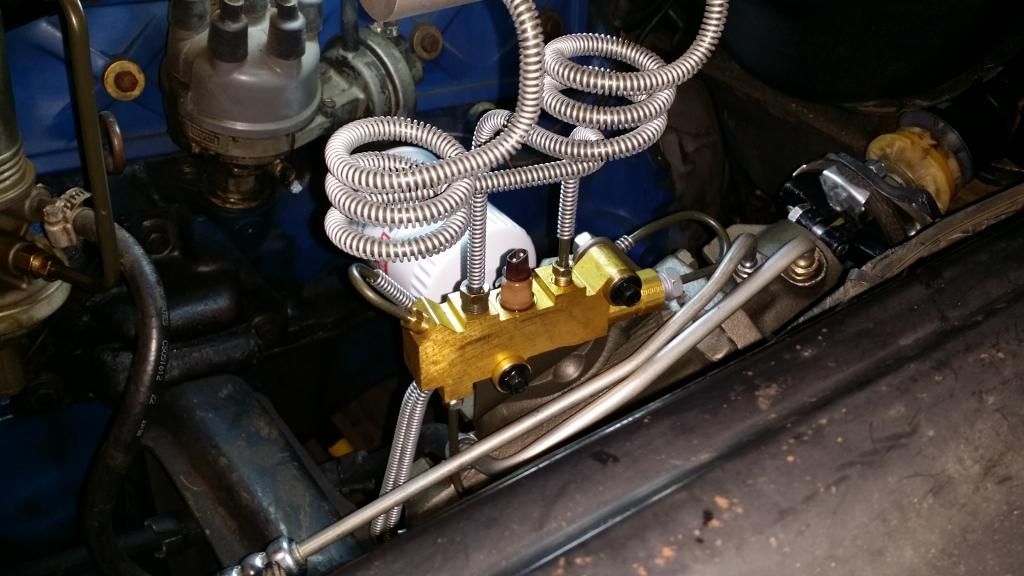

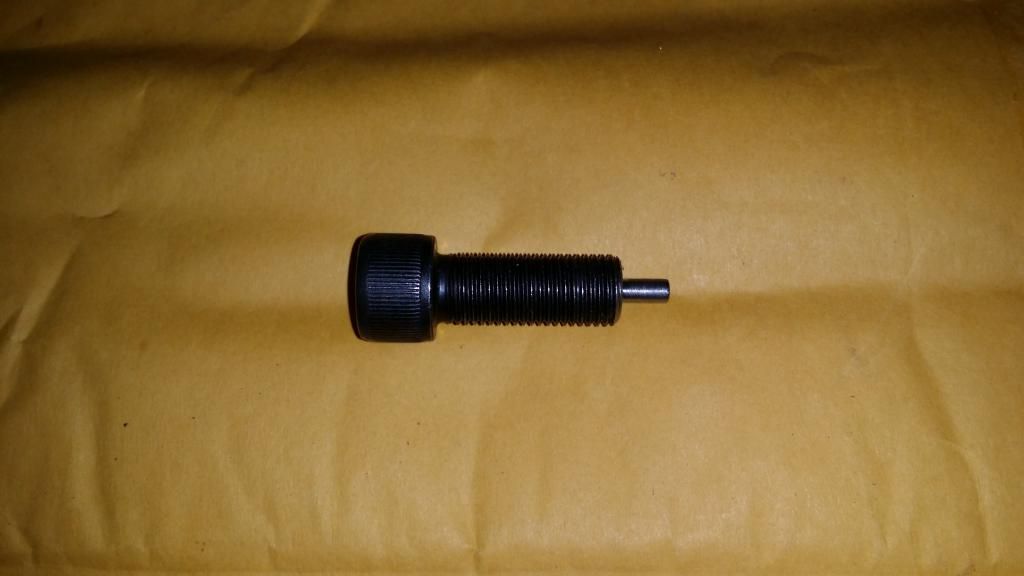

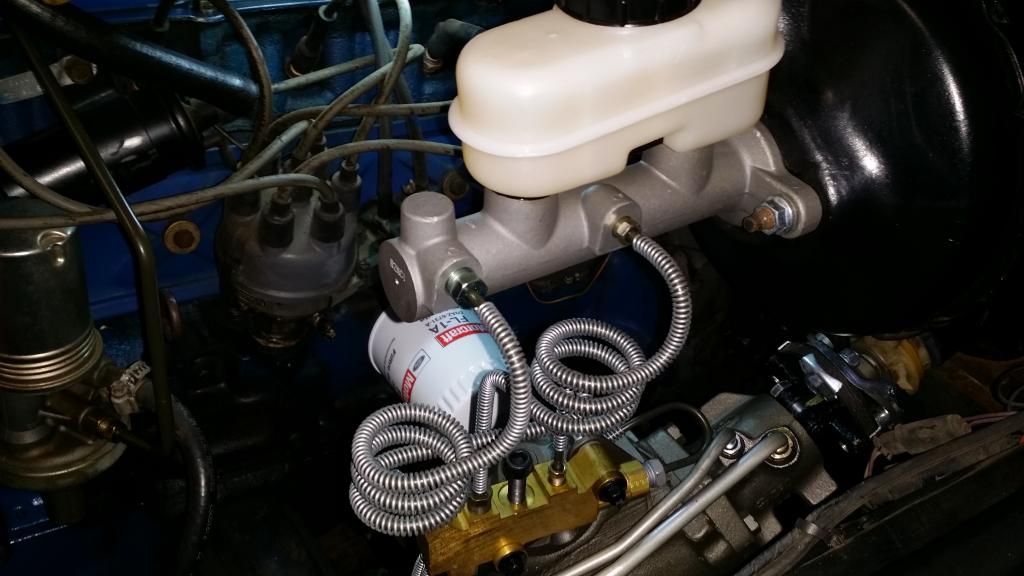
After the front disc brake conversion on my '69 F100 was complete, there was no shifted pressure differential valve spool and no brake warning light lit up on the dash.

One tip I can suggest it to get a set of Speed Bleeders for the calipers/wheel cylinders. They are inexpensive and will drastically cut down on the time it takes to bleed the brake system out.
With an OEM brake valve, it would be a good idea to also invest in a pressure differential valve lock tool. This will keep the pressure differential valve spool from shifting and tripping the brake warning light, while you're bleeding the brakes out.
https://www.musclecarresearch.com/brake-valve-tool
It temporarily installs in place of the valve warning switch (finger tight only), while the brakes are being bled out.


After the front disc brake conversion on my '69 F100 was complete, there was no shifted pressure differential valve spool and no brake warning light lit up on the dash.

FTE Stories
Ford Trucks for Ford Truck Enthusiasts

10 Fords to Drive Before You Die
Joe Kucinski
3 Best / Worst Features Of The 2025+ Ford Expedition
Brett Foote
10 Ways Ford is LOSING to the Competition
Joe Kucinski
Top 6 Best Deals Available on New Fords & Lincolns Right Now
Brett Foote
This Hennessey Takes the Expedition Tremor's Off-Roading Capability to the Next Level
Verdad Gallardo
Top 10 Fords at 2026 Carlisle Ford Nationals
Joe Kucinski
3 Best / 3 Worst Parts of Modern Ford Ownership
Brett Foote
10 Amazing Upgrades That Solve Common Ford Truck Owner Headaches
Pouria Savadkouei
Every 2026 Ford Engine Explained
Brett Foote
Moderator & parts slinger


Joined: Feb 2007
Posts: 50,291
Likes: 5,827
From: S/W Missouri, Polk county
The one in the front of the proportional valve.....some repair books say it has to be pushed IN according to GVW???
The pin only moves like a 1 or 2 16th of an ".
The pin only moves like a 1 or 2 16th of an ".
Thread Starter
|
Cross-Country
Joined: Aug 2014
Posts: 85
Likes: 0
From: Sioux Falls, SD
I checked the valve this morning and found the pin. One post says to pull it out for bleeding and another post says to push in for bleeding so I am unsure which way to go. Right now, I only have a problem getting fluid to the rear brakes. Any thoughts here on which way is the correct way? I will probably find an easy way to either hold it in or out...whichever the correct way is.
Moderator & parts slinger
Joined: Feb 2007
Posts: 50,291
Likes: 5,827
From: S/W Missouri, Polk county
Chilton and Hanes manuals have some conflicting input about the direction (push or pull) of the pin being based off the GVW of the vehicle. Sorry I can;t remember more than that.
And I can not ck what the books say till I get off work. I would try the pull out and hold method with a piece of thin sheet metal bent and cut to match the tool in the pic.
Vice grips are not a good method IMO.
And I can not ck what the books say till I get off work. I would try the pull out and hold method with a piece of thin sheet metal bent and cut to match the tool in the pic.
Vice grips are not a good method IMO.

Lead Driver


Joined: Nov 2006
Posts: 5,217
Likes: 506
From: Pa.
On a side note .. You've spent a lot of money on parts and good brake fluid in order to keep the brake system working well and to increase the longevity of the parts you just bought flushing the brake system every 1-2 years is important .. So why not invest in the tools to help you do that .. I've been using the Motive products .. They work well ..
For the master cylinder you have you'll need the 1105 adapter and the basic pump .. They're are combo's with these kits that you can get cheaper to include other adapters if your using the pump on other vehicles ..
http://www.jegs.com/PDFs/MOTIVEAPPLICATIONGUIDE.pdf
For the master cylinder you have you'll need the 1105 adapter and the basic pump .. They're are combo's with these kits that you can get cheaper to include other adapters if your using the pump on other vehicles ..
http://www.jegs.com/PDFs/MOTIVEAPPLICATIONGUIDE.pdf
Lead Driver
Joined: Apr 2011
Posts: 6,399
Likes: 40
From: El Dorado, Arkansas
I checked the valve this morning and found the pin. One post says to pull it out for bleeding and another post says to push in for bleeding so I am unsure which way to go. Right now, I only have a problem getting fluid to the rear brakes. Any thoughts here on which way is the correct way? I will probably find an easy way to either hold it in or out...whichever the correct way is.
If the valve body is brass (Weatherhead valve), you push the pin inward.