


Failed Engine Tear Down
Thread Starter
|
Lead Driver


Joined: Mar 2008
Posts: 7,192
Likes: 384
From: Near Los Angeles
Failed Engine Tear Down
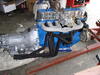
About 5 years ago I paid to have a 300 built and the engine failed. The oil pressure started dropping until it reached, iirc, 4 psi at hot idle. That happened within 1k miles after the rebuild. It has been sitting in my garage, on a stand, since. Today I will tear it down and hopefully find out what happened.
I will post photos later today.
I will post photos later today.
Thread Starter
|
Lead Driver
Joined: Mar 2008
Posts: 7,192
Likes: 384
From: Near Los Angeles
If I could find a cause then I would be able to sell the parts that I knew would not cause problems.
Thread Starter
|
Lead Driver
Joined: Mar 2008
Posts: 7,192
Likes: 384
From: Near Los Angeles
Yes, I have read about infamous Clifford cam cheese grating bearings. Mine is an Isky cam.
Well, I'm surprised, and disappointed, that everything looked fairly good. The possible issues I noticed I'll list and let someone with more experience than I possibly diagnose.
1. On a couple of the ARP rod bolts the machinist did not press them all the way in. The bolt head remained 1/8" from seated.
2. Cam bearings showed visible wear line.

That is not a shadow. I could feel an 'edge' or difference with my finger on that line.
3. The thrust bearings. Both sides were to copper, with only about 500 miles on the engine. I also noticed rough areas on the crank where it rides the side of the thrust bearing. Hopefully you can see it in the photos.


4. Over all, for an engine with dropping oil pressure down to 4psi, it looked good. That rough area(s) on the crank at the thrust journal is the most distrubing.
BTW, I came across a factory plugged hole at the bottom of the block, right below the dip stick hole. Does anyone know its purpose? It goes straight through the block.
The bore was perfect. The pistons and rings were good.

For future reference, when I remove a bearing and it says .010, how do I know whether that is over or under sized? Is it merely a visual inspection, noting which side is thicker?
Well, I'm surprised, and disappointed, that everything looked fairly good. The possible issues I noticed I'll list and let someone with more experience than I possibly diagnose.
1. On a couple of the ARP rod bolts the machinist did not press them all the way in. The bolt head remained 1/8" from seated.
2. Cam bearings showed visible wear line.

That is not a shadow. I could feel an 'edge' or difference with my finger on that line.
3. The thrust bearings. Both sides were to copper, with only about 500 miles on the engine. I also noticed rough areas on the crank where it rides the side of the thrust bearing. Hopefully you can see it in the photos.


4. Over all, for an engine with dropping oil pressure down to 4psi, it looked good. That rough area(s) on the crank at the thrust journal is the most distrubing.
BTW, I came across a factory plugged hole at the bottom of the block, right below the dip stick hole. Does anyone know its purpose? It goes straight through the block.
The bore was perfect. The pistons and rings were good.

For future reference, when I remove a bearing and it says .010, how do I know whether that is over or under sized? Is it merely a visual inspection, noting which side is thicker?
Thread Starter
|
Lead Driver
Joined: Mar 2008
Posts: 7,192
Likes: 384
From: Near Los Angeles
What does an over-sized bearing say on it? An over-sized bearing would be used where the crank journals had been machined to a larger diameter than oe, correct?
I'm also wondering, if I send out a crank to have it turned down .010, do they resurface or turn down the surface that touches the sides of the thrust bearing?
Trending Topics

Super Moderator


Joined: Apr 2004
Posts: 34,512
Likes: 2,824

The crank can't be machined to a larger diameter. (think about it....)
Cranks are resized by welding, and that was the way to make a stroker in the good old days.
I can't think of a good reason anyone would want larger journals, as that causes issues with the block and rods. You can, and it is often done, swap to a smaller journal on the rods so you can use an off-the-shelf rod. Most common for V8 performance would be the BBC rod or rods that size so you can buy standard bearings.
As for the thrust bearing surfacing, best ask the machine shop how that is done and figured. End play being pretty important, I'm sure there is a "standard" way that is handled. No one mentions it much, but it's gotta be dealt with.
Cranks are resized by welding, and that was the way to make a stroker in the good old days.
I can't think of a good reason anyone would want larger journals, as that causes issues with the block and rods. You can, and it is often done, swap to a smaller journal on the rods so you can use an off-the-shelf rod. Most common for V8 performance would be the BBC rod or rods that size so you can buy standard bearings.
As for the thrust bearing surfacing, best ask the machine shop how that is done and figured. End play being pretty important, I'm sure there is a "standard" way that is handled. No one mentions it much, but it's gotta be dealt with.
FTE Stories
Ford Trucks for Ford Truck Enthusiasts

3 Best / 3 Worst Parts of Modern Ford Ownership
Brett Foote
10 Amazing Upgrades That Solve Common Ford Truck Owner Headaches
Pouria Savadkouei
Every 2026 Ford Engine Explained
Brett Foote
10 Ugly Ford Trucks That We Still Kinda Love
Joe Kucinski
10 Things Every Truck Owner NEEDS (2026 Edition)
Michael S. Palmer
Rezvani's Latest Post-Apocalyptic Monster Is a Ford F-150 Raptor Underneath
Verdad Gallardo
Top 10 Most Expensive Ford Trucks Ever Sold on Bring a Trailer
Joe Kucinski
2027 Ford Super Duty Buyer's Guide (Every Model, Engine, & Package)
Brett Foote
Top 10 Ford Truck Tragedies
Joe Kucinski
Thread Starter
|
Lead Driver
Joined: Mar 2008
Posts: 7,192
Likes: 384
From: Near Los Angeles
Thanks for your reply.
I did not say 'crank machined to a larger diameter.' I went back and reread what I wrote.
I wrote 'crank journal', which, unless I am greatly mistaken, is the cap, the part the bearing and crank sits in and is clamped down over the crank. Unless my reading has been wrong, the journal does get line honed on occasion? Hence, over and under sized bearings. One, in essence, replaces material removed from the crank (under-sized), the other replaces material removed from the journal (over-sized), the cap.
At least that is my understanding, and I certainly am still learning.
So I'm still looking for an answer to my original question: how do you still the difference between an over and under sized bearing?
That is what I meant. Thank you.
I did not say 'crank machined to a larger diameter.' I went back and reread what I wrote.
I wrote 'crank journal', which, unless I am greatly mistaken, is the cap, the part the bearing and crank sits in and is clamped down over the crank. Unless my reading has been wrong, the journal does get line honed on occasion? Hence, over and under sized bearings. One, in essence, replaces material removed from the crank (under-sized), the other replaces material removed from the journal (over-sized), the cap.
At least that is my understanding, and I certainly am still learning.
So I'm still looking for an answer to my original question: how do you still the difference between an over and under sized bearing?
That is what I meant. Thank you.
Super Moderator
Joined: Apr 2004
Posts: 34,512
Likes: 2,824
Journals are on the crank, like so:
http://www.motorera.com/dictionary/p...crankshaft.gif
But I see what you mean. When a rod is resized or the block line-bored, how do you fit bearings?
Seems that with the mains, the main caps are cut down a bit, then bolted to the block. This result in a smaller hole which is then bored out to the original size. Tricky work, especially with cam bearings where oversized bearings or cam journals are required, or with OHC heads. More on that subject:
Line Boring Equipment: A Boring Subject? - Engine Builder Magazine
Not to worry. What I know about all this stuff will fill a thimble. Hence the links.
I've read through the post, seems a mystery why this engine failed. It doesn't take much sometimes and things just cascade.
http://www.motorera.com/dictionary/p...crankshaft.gif
But I see what you mean. When a rod is resized or the block line-bored, how do you fit bearings?
Seems that with the mains, the main caps are cut down a bit, then bolted to the block. This result in a smaller hole which is then bored out to the original size. Tricky work, especially with cam bearings where oversized bearings or cam journals are required, or with OHC heads. More on that subject:
Line Boring Equipment: A Boring Subject? - Engine Builder Magazine
Not to worry. What I know about all this stuff will fill a thimble. Hence the links.
I've read through the post, seems a mystery why this engine failed. It doesn't take much sometimes and things just cascade.
Thread Starter
|
Lead Driver
Joined: Mar 2008
Posts: 7,192
Likes: 384
From: Near Los Angeles
So, at this point, not finding anything wrong with the block after checking with a light, is this block buildable? It did make me feel better to find the questionable machining marks on the crank. At least I have a suspect.
After spending $400 on the machine work, could I have a clear conscious selling it? I also have pistons with 1k miles on them with Chrome molly rings, balanced, reconditioned rods, with ARP bolts.
After spending $400 on the machine work, could I have a clear conscious selling it? I also have pistons with 1k miles on them with Chrome molly rings, balanced, reconditioned rods, with ARP bolts.

Thread
Thread Starter
Forum
Replies
Last Post
jimsville
Big Block V8 - 385 Series (6.1/370, 7.0/429, 7.5/460)
15
Sep 26, 2006 09:53 PM
BlueMeanie
Ford Inline Six, 200, 250, 4.9L / 300
2
May 31, 2002 01:44 PM