



issues with my exhaust

Thread Starter
|
Freshman User
Joined: May 2015
Posts: 26
Likes: 1
issues with my exhaust
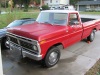
Guys (and gals), I've got a 1978 F100 XLT (302 engine) that has been running fine. However, recently, it's been emitting a big, visible puff of exhaust from the left tail pipe when I start up after it has been sitting for a while. I did replace the flange gasket on that side, but it's a much tighter fit now than it was before.
I mentioned it to the guy at the auto parts store and he said it could be a number of things, but was likely caused by my not using ethanol free gas. So, I recently switched over to E-free gas, but it's still happening. Any thoughts?
I mentioned it to the guy at the auto parts store and he said it could be a number of things, but was likely caused by my not using ethanol free gas. So, I recently switched over to E-free gas, but it's still happening. Any thoughts?

Senior User
Joined: Aug 2013
Posts: 133
Likes: 0
From: San Diego
Depends on some more symptoms. Is the puff of smoke coming after start-up only? Or does it also happen when the truck has been idling for a while and you give it some gas?
Worn valve stem seals can allow oil to trickle down and sit on the intake valve heads, then get sucked into the combustion chamber under increased induction when giving 'er some gas.
This is not a peculiarity of these trucks, just any old worn engine.
A tip I got years ago was:
Blue smoke = burning oil
Black smoke = excessive gas
White smoke = "burning" water
Worn valve stem seals can allow oil to trickle down and sit on the intake valve heads, then get sucked into the combustion chamber under increased induction when giving 'er some gas.
This is not a peculiarity of these trucks, just any old worn engine.
A tip I got years ago was:
Blue smoke = burning oil
Black smoke = excessive gas
White smoke = "burning" water

Postmaster
Joined: Nov 2011
Posts: 2,553
Likes: 10
A puff on start up, especially one side, is usually caused by oil seeping into a cylinder or intake port or two. In operation under load, the oil gets diluted so no visible smoke but pools up while sitting or sometimes closed throttle coasting (get somebody to follow and watch). I don't know the 302 specifically, but common causes are loose valve clearance, weak valve guide seals or leak at the manifold joint near the valley.

Fleet Mechanic

Joined: Jun 2013
Posts: 1,895
Likes: 32
I agree, it sounds like oil seeping past the valve seats overnight.. As a last ditch effort you can add 1/4 of a quart of transmission fluid to the gas to assure that it isn't deposits on the valve or seats causing a sticky situation
Good luck
Good luck
Senior User
Joined: Aug 2013
Posts: 133
Likes: 0
From: San Diego

Thread Starter
|
Freshman User
Joined: May 2015
Posts: 26
Likes: 1
exhaust issue
Thanks for the outlook guys. I only get the blast of smoke when starting up, not after idling for a while. I guess it may be time for a shop visit. Any idea about the risk of driving it for while with this going on?
Senior User
Joined: Aug 2013
Posts: 133
Likes: 0
From: San Diego
Nah, you should be ok, but if it's lost oil through burning, check the dipstick and give it a wee top-up anyway. These are pretty sturdy engines, but no need to tempt fate just for the want of an oil check...
Trending Topics
Posting Guru
Joined: Aug 2010
Posts: 1,761
Likes: 8
From: Knoxville, TN
As long as you pay attention to your oil level, the only real immediate risk is to anyone standing behind that exhaust pipe when you start it up. 
And ethanol fuel has nothing to do with it. The guy who told you it did doesn't know what he's talking about.
And ethanol fuel has nothing to do with it. The guy who told you it did doesn't know what he's talking about.
FTE Stories
Ford Trucks for Ford Truck Enthusiasts

Rezvani's Latest Post-Apocalytic Monster Is a Ford F-150 Raptor Underneath
Verdad Gallardo
Top 10 Most Expensive Ford Trucks Ever Sold on Bring a Trailer
Joe Kucinski
2027 Ford Super Duty Buyer's Guide (Every Model, Engine, & Package)
Brett Foote
Top 10 Ford Truck Tragedies
Joe Kucinski
AEV FXL Super Duty - the Super Duty Raptor Ford Doesn't Make
Brett Foote
Lobo Vs Lobo: Proof the F-150 Lobo Should Be Even Lower!
Michael S. Palmer
Ford's 2001 Explorer Sportsman Concept Looks For a New Home
Verdad Gallardo
10 Best Ford Truck Engines We Miss the Most!
Joe Kucinski
2026 Shelby F-150 Off-Road: Better Than a Raptor R?
Brett Foote
Posting Guru
Joined: Aug 2010
Posts: 1,761
Likes: 8
From: Knoxville, TN
The detergents in modern top-tier gasolines do a very nice job of cleaning deposits ... that's a good thing.
The concern with ethanol is material compatibility: on very old (i.e. never been rebuilt/replaced) plastic/rubber parts that aren't made with modern materials, it can leach out the plasticizers from the elastomers and polymers, causing cracking and leaks. And on the infrastructure side (or in marine applications), since it is miscible with water, sufficiently high concentrations can actually collect enough water for bacteria to grow, and some of the bugs that eat ethanol produce enough acid to corrode storage tanks and fittings. That's not a concern on automobiles with E10, but it is a concern for underground storage tanks at higher concentrations, or for marine applications. If your carb and fuel pump have been rebuilt/swapped pretty much any time after the '80s, you're probably fine on material compatibility issues with ethanol - worst case, you may *eventually* need to replace fuel hoses too.
There is a bit of an energy density difference, so changes to carburetor tuning would be needed when swapping back and forth between E0 and high-ethanol fuels, but with E10 (what you typically get at the pump today), it's only a 3% difference. So at most you adjust your idle mixture screws a hair and you're good to go. Running 3% lean at mid-load isn't going to hurt anything, and once the power valve kicks in you'll still be rich at WOT.
The concern with ethanol is material compatibility: on very old (i.e. never been rebuilt/replaced) plastic/rubber parts that aren't made with modern materials, it can leach out the plasticizers from the elastomers and polymers, causing cracking and leaks. And on the infrastructure side (or in marine applications), since it is miscible with water, sufficiently high concentrations can actually collect enough water for bacteria to grow, and some of the bugs that eat ethanol produce enough acid to corrode storage tanks and fittings. That's not a concern on automobiles with E10, but it is a concern for underground storage tanks at higher concentrations, or for marine applications. If your carb and fuel pump have been rebuilt/swapped pretty much any time after the '80s, you're probably fine on material compatibility issues with ethanol - worst case, you may *eventually* need to replace fuel hoses too.
There is a bit of an energy density difference, so changes to carburetor tuning would be needed when swapping back and forth between E0 and high-ethanol fuels, but with E10 (what you typically get at the pump today), it's only a 3% difference. So at most you adjust your idle mixture screws a hair and you're good to go. Running 3% lean at mid-load isn't going to hurt anything, and once the power valve kicks in you'll still be rich at WOT.
Thread Starter
|
Freshman User
Joined: May 2015
Posts: 26
Likes: 1
Thanks all. I will keep an eye on the oil and let you guys know if anything changes with this scenario. I'm new to this forum, but it's already proved a great resource. When possible, I'll definitely add any information I can that may help someone else.
Thread Starter
|
Freshman User
Joined: May 2015
Posts: 26
Likes: 1
OK, just to wrap up this thread (and I've taken my sweet time about that), the guy who does the big work on my truck sussed out the problem and found that it was the valve stem seals. Four of them were well worn and disintegrated, causing oil to leak into the cylinders. He said that was causing the white smoke. He cleaned them out, replaced the worn ones and I've been good to go. Now, on to the next issue, which I think is going to require an old fashioned tune-up.

Thread
Thread Starter
Forum
Replies
Last Post
DCFord
1973 - 1979 F-100 & Larger F-Series Trucks
9
Jun 5, 2010 11:53 AM
kev1978
1973 - 1979 F-100 & Larger F-Series Trucks
2
Jan 11, 2004 10:50 PM
cjben
1973 - 1979 F-100 & Larger F-Series Trucks
3
Jun 22, 2001 09:29 PM