




Airbags

Thread Starter
|
New User
Joined: Mar 2015
Posts: 9
Likes: 0
Airbags
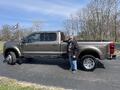
How do you know that you need them? I have more tongue weight than I'm used to but I'm not sure they are quite necessary. The truck is level but the ride is more "wavy" (gets pushed forward/back) on the highway. Nothing crazy but different than what I'm used to. No problems side-to-side. Pros/cons? Thanks so much.

Cargo Master
Joined: Feb 2002
Posts: 2,414
Likes: 22
From: Tucson USA
airbags will just add to level and not be as mushy as springs alone. I installed some on my F350, did away with the OEM overload springs. Dont haul heavy except on occasion but when I do they bring the level back to the truck so its not light on the front end.

Senior User

Joined: Jan 2006
Posts: 348
Likes: 1
As long as your truck is mostly level you don't "need" bags. Like hank says they will help level the truck. They can improve the ride a bit I understand. I've gone back n forth on the topic and currently am in the "no bag" camp.
Thread Starter
|
New User
Joined: Mar 2015
Posts: 9
Likes: 0
Thank you
This helps- Thank you. I do feel like the front end is lighter in some situations. I do wonder if the 100 gallons of water going behind the crew can and the 50 gallons going in the Living Quarters of the trailer will make the bed sag too low. I wonder how low is too low for safety and strength... But anyway I appreciate this.
Cargo Master
Joined: Feb 2002
Posts: 2,414
Likes: 22
From: Tucson USA
One way to tell is to park and unhook the trailer. With the headlights on, mark where they hit a wall or some other object. Hook up trailer and see where the lights are now aimed.
Actually you can do this just by measurement. On level ground measure to a fixed point on the truck the bottom of the bumper, the middle of the headlight etc. The with the trailer hooked up re-measure to the same point.
Actually you can do this just by measurement. On level ground measure to a fixed point on the truck the bottom of the bumper, the middle of the headlight etc. The with the trailer hooked up re-measure to the same point.
Trending Topics

Hotshot
Joined: Jan 2010
Posts: 10,060
Likes: 491
From: Bristol, TN.
You can also measure sag at the wheel wells with and without your load. 1" is usually the recommended max by the hitch makers, before you add something to bring things back to level.
FTE Stories
Ford Trucks for Ford Truck Enthusiasts

Top 10 Fords at 2026 Carlisle Ford Nationals
Joe Kucinski
3 Best / 3 Worst Parts of Modern Ford Ownership
Brett Foote
10 Amazing Upgrades That Solve Common Ford Truck Owner Headaches
Pouria Savadkouei
Every 2026 Ford Engine Explained
Brett Foote
10 Ugly Ford Trucks That We Still Kinda Love
Joe Kucinski
10 Things Every Truck Owner NEEDS (2026 Edition)
Michael S. Palmer
Rezvani's Latest Post-Apocalyptic Monster Is a Ford F-150 Raptor Underneath
Verdad Gallardo
Top 10 Most Expensive Ford Trucks Ever Sold on Bring a Trailer
Joe Kucinski
2027 Ford Super Duty Buyer's Guide (Every Model, Engine, & Package)
Brett Foote
Tuned


Joined: Mar 2014
Posts: 427
Likes: 4
From: Prescott, Michigan
What you are describing, sounds like "chucking". Do a search on that.
Is that what you are feeling?

Lead Driver


Joined: Jun 2005
Posts: 8,475
Likes: 728
From: Calgary Canada
To me, it sounds like what you need is a Weight Distributing Hitch, although maybe you have that and just didn't mention it.
Let's hear some details on that trailer and the hitch setup please.
Let's hear some details on that trailer and the hitch setup please.
Senior User
Joined: Jan 2006
Posts: 348
Likes: 1
I forgot to add my standard response to tow vehicle/trailer questions. You should visit the local CAT Scale to see how your TV/TT is loaded and if you are over weight. You can guess by looking at the published weight of your TT and the Max Tow numbers for your truck but to KNOW your weights a visit to the scale is in order. IMHO the "important" numbers are the Front/Rear GAWR (found on the sticker on the "B" pillar) and the actual axle weights (from the scale). In my experience you will be over the Rear GAWR well before you reach the Max Trailer weight.
To correctly weigh a bumper-pull TT it takes 3 passes over the scales (if you have a weight distributing hitch) and 2 passes if you pull a 5th wheel. Hitting the scales can be a bit intimidating the first time but it's like riding a bicycle, once you do it you wonder what the fuss was about.
The CAT Scale is your friend.
To correctly weigh a bumper-pull TT it takes 3 passes over the scales (if you have a weight distributing hitch) and 2 passes if you pull a 5th wheel. Hitting the scales can be a bit intimidating the first time but it's like riding a bicycle, once you do it you wonder what the fuss was about.
The CAT Scale is your friend.
Lead Driver
Joined: Jun 2005
Posts: 8,475
Likes: 728
From: Calgary Canada
Good point about the CAT scales. It can take a bit of time, but for a guy like me, who still hasn't given up my childhood dream of being a trucker, it's actually kind of fun.
Plus, it's valuable information you can't really get easily any other way.
Plus, it's valuable information you can't really get easily any other way.

Thread
Thread Starter
Forum
Replies
Last Post
hotrod351
1987 - 1996 F150 & Larger F-Series Trucks
16
Sep 12, 2014 10:59 AM
Henry Ferris
1999 - 2016 Super Duty
8
Nov 30, 2003 11:18 AM