When you click on links to various merchants on this site and make a purchase, this can result in this site earning a commission. Affiliate programs and affiliations include, but are not limited to, the eBay Partner Network.
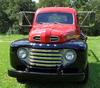
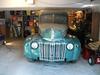
I was out trying to work on the 44 1 1/2 ton I have. I need to replace the brake shoes and slave cylinders. I can't figure out how to get the hub apart. Anyone know about this?
On a plus note. I got some more info about the logo and what the paint scheme may of been.
Front or rear? You will have to back the shoes off. Turn the cams, a 3/4" or 11/16" bolt head at about 10 and 2 o'clock on the backing plate. With the wrench turn them both upward until they stop, back them off of the stop position a little. Loosen the nut on the lower cams and turn the cam bolt so the dots on the two bolts face each other toward the center. The shoes are now adjusted in as far as they will go. On the front, you just unscrew and remove the dust cover in the center of the hub and you have access to the bearing nut. On the rear, take the nuts off that hold the axle shaft in. Then take a large hammer, a 3lb hammer works fine, and pound on the face of the axle in the center. Several good blows on the end will loosen the tapered washers on the axle studs. Pull all of the tapered washers off of the studs and slide the axle out. The rear hub bearings are held on with a double nut with a keyed washer between them. You will probably notice that someone has already used a cold chisel to loosen the outer nut. It takes a special 8 sided socket that very few have. Once the outer nut is loose you should be able to turn it off with your fingers. Remove the keyed washer and the inner nut should come off with your fingers also. I hope this helps.
Mark
I believe that will work. I will go out again tomorrow and try. I have a picture and I just want to make sure I understood. On the back of the drum here there are a few bolts. Are those the ones I need to take off?
If this is the front, then just pop off the center cap. Under there you will find the stuff that holds the hub in place. Might be two nuts with a lock washer (of sorts) in between or more likely, it will be a cotter pin and a nut behind it. Remove cotter pin, then loosen the nut, take it off and there you should have a hub in your lap. Be careful that you don't bang it on the end of the axle or you will flatten the threads.
If that is not the right way, don't worry, someone will come along and correct me. I don't think there is that much between my 1/2 ton and this one as far as wheels/hub removal goes...
Oh and nothing in the rear will hold the hubs in place. Those are either the bolts holding the backing plate to the axle or the adjusting cams that were mentioned by 49ford
There will be a nut with a cotter pin thru it under the Ford cap on the front. The cap is screwed on. You may be able to remove the drum and hub without backing off the brakes. It will depend on how well the brakes are adjusted and if there is much of a ridge on the drum. There are 4 bolts around the center of the spindle, they hold the backing plate on. No need to mess with those unless you are removing the backing plate. The upper brake adjusting cams are at approximately 10 and 2. The lower ones are about 2 1/2" apart on the bottom. There is a nut about 1" on each one with a rectangular stub sticking thru it that is approximately 3/8"x5/8" with a dot stamped into it on one end of the rectangle. If the drums don't want to come off after removing the bearing nut, try adjusting just the top cams first. The drums may come off without adjusting the lower ones. Have fun.
This Hennessey Takes the Expedition Tremor's Off-Roading Capability to the Next Level
Slideshow: The VelociRaptor Expedition gains a lift, upgraded suspension, Brembo brakes, and trail-ready equipment while retaining the stock 440-horsepower EcoBoost V6.
Rezvani's Latest Post-Apocalyptic Monster Is a Ford F-150 Raptor Underneath
Slideshow: Called the Fortress, the 850-horsepower pickup combines Raptor underpinnings with military-inspired features, survival equipment, and a starting price of $285,000.