




Bad Cruise control need help

Thread Starter
|
New User
Joined: Aug 2013
Posts: 18
Likes: 0
Bad Cruise control need help
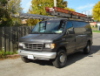
The Cruise control stopped working in my 1992 econoline van we checked the wires and the fuse but they were OK, can somebody help me with this so I don't have go to the dealer. Thanks Will

Laughing Gas
Joined: Apr 2014
Posts: 1,100
Likes: 8
Thread Starter
|
New User
Joined: Aug 2013
Posts: 18
Likes: 0
Thanks for all your help I will get one of my friends to check it out I'm not able to use my hands
Thanks again.
Thread Starter
|
New User
Joined: Aug 2013
Posts: 18
Likes: 0
Recall
If its a recall then the dealer will take care of it at no cost right.
Laughing Gas
Joined: Apr 2014
Posts: 1,100
Likes: 8
The Authorized shop will only do the repair that's required, which is replacing/repairing a pig-tail wire at the brake master cylinder.
That Might or Might not repair your cruse control problem?
I wouldn't expect the shop to go threw the entire system for solving the repair.
But, you could do some sweet talking to the service writer at the shop and maybe have them look into the problem.
Like telling them the cruse worked fine, no problems, then it stop working, and you found out about this recall, that might have caused it to stop working.......ect, ect........and see how that goes??

Freshman User
Joined: Mar 2012
Posts: 44
Likes: 0
From: cleveburgh
RECALL, lessons learned
The recall was triggered by some curious engineering decisions made when the speed (not cruise) control system was designed combined with the effect of aging on one particular part of that system, i.e. the brake pressure switch.
The recall repair consists of adding a 2 amp. in-line fuse to the wiring harness connected to the pressure switch and replacing the old pressure switch with a new one.
Consider how speed control functions. Driving the highway, you press the ON switch on the steering wheel and set the speed, then semi-relax as it more-or-less maintains the set speed for you. It stops working only when the speed drops below its minimum activation limit or you turn it off at the wheel or apply the brakes or turn off the engine.
The simplest way to wire the activation-deactivation circuit is to run a series circuit from a fuse to the ON-OFF rocker on the wheel, through the ignition switch, then to the brake switch, then to a latching relay in the speed control module. That relay passes power through some sort of discrimination circuit from the speed sensor. This is NOT how Ford did it. The pressure switch is in its own separate circuit and is a normally-closed diaphragm-operated switch that breaks the circuit WHENEVER the brakes are applied, flexing that membrane inside the switch every time the brakes are used!.
Ford’s engineers, in their collective wisdom (using the term fairly loosely), decided to power that circuit from the same 15 amp. fuse that also powers the turn signals, hazard flashers, brake lights, and at least one other function that I’ll get to in a bit. And, of course, since the brake lights and hazards are always energized, that means the pressure switch is also ALWAYS live.
As is normal (for me), I discovered much of this the hard way. One day last summer, wife decided that we were going to picnic. Loading the family aboard the ‘bucket’, I stopped to get some lemonade and punch. Returning, I restarted, then shifted into reverse....well, tried to, anyway. It wouldn’t shift out of PARK. As we all know, one must step on the brake to shift the thing; I did but the shift arm wouldn’t move. I knew that the shift interlock is electrical in nature, so we must have blown a fuse. Fortunately, having owned 13+ OPP’s (other people’s problems), better known as pre-trashed (owned?) vehicles, I have learned to carry a few spare expendables: motor oil, brake-steering-transmission-coolant fluids, duct tape, epoxy putty, drive belts, flashlights, fuses, plus a few necessary tools in my vehicles at all times.
So, I stuck my head up under the dash, flash in hand, and (re)discovered that the fuse panel had no markings for circuits protected. Ford, like other manufacturers, only puts that information in the owner’s manual. Of all my OPP’s, only one ever came with a manual and that one was strictly a parts donor. So, I pulled each fuse, discovering that one 15 amp. was blown. I went to my spare set, pulled the only 15 out and inserted it. When I re-attempted to shift it out of PARK, the effect was as before: no shift. I went back to the fuses and pulled the new(ish) 15---BLOWN.
Not knowing the exact age of that fuse (the set came with the van), I headed off in search of a NEW fuse. After going to a half-dozen stores, I found one that had one single 5-pack set for only $8.00, plus tax. Trudging back to the van, I could sense that my passengers were getting a little testy. I quickly put THE 15 amp. in and heard it pop as I pulled my head away. Dang (or more colorful metaphors for acts of conception and defecation ((not performed at the same time)) ).
Now, I was more than a little urined. Obviously, the brake, turn, hazard, speed fuse also feeds the interlock. Plus my passengers were asking me why we weren’t moving. My concise and colorful responses would earn me a week of sleeping on the couch. Suddenly, the light bulb exploded over my head....the interlock is electric; take away power and I should be able to shift! I disconnected battery negative and, yes, shifted into neutral. Reconnecting the battery, I restarted, canceled the picnic, and headed for home, minus turn, hazard, and brake lights, of course. An interesting ride, to be sure, as it was by then twilight. Not as much sphincter-clenching fun as the time I drove the van home 10 miles with NO brakes, but.....
So, to recap, that brake pressure switch, in the forward end of the master cylinder with the twin-wire socket attached, has a membrane in it that flexes EVERY time the brakes are used. After a few years and tens of thousands of brake applications, that diaphragm cracks or breaks. Now, when you step on the brake pedal, you’re pumping a petroleum-based fluid onto an unshielded always-energized electrical connection. One of two things happens next:
If you’re lucky, as I was, the circuit shorts through the brake fluid to the master cylinder and chassis, blowing the fuse. The worst you lose is the cost of a fuse and a $20 pressure switch, or if, like me, you don’t care if you have working speed control, a fuse and a $2 pipe plug.
If you’re NOT lucky, as several Ford owners can attest, the circuit shorts, but doesn't pass enough current to blow the 15 amp. fuse; instead, the electrically-conductive flammable brake fluid on the ALWAYS hot terminal cooks into vapor and ignites, burning through the plastic switch top, setting fire to the wiring harnesses and anything else flammable in the engine compartment, which then ravages through the firewall. Now, you have car-be-que or van-be-que, in our case. And it happens at ANY time, moving or not, occupied or not, indoors or out. I know, I’ve seen the video.
The 2 amp. fuse protects the circuit by not allowing enough current pass-through (in case of failure of the pressure switch) to either blow the 15 amp. fuse or to cook the brake fluid to ignition. Obviously, Ford's engineers realized the need for the 2 amp. fuse in later vehicles as they ALL have a fuse just for the pressure switch circuit. It seems to me that we could avoid the whole mess if the disconnect in that portion of the circuit was a relay wired to the brake light activation switch, voiding the need for the pressure switch altogether. But, I guess, Ford had a better idea!
The recall repair consists of adding a 2 amp. in-line fuse to the wiring harness connected to the pressure switch and replacing the old pressure switch with a new one.
Consider how speed control functions. Driving the highway, you press the ON switch on the steering wheel and set the speed, then semi-relax as it more-or-less maintains the set speed for you. It stops working only when the speed drops below its minimum activation limit or you turn it off at the wheel or apply the brakes or turn off the engine.
The simplest way to wire the activation-deactivation circuit is to run a series circuit from a fuse to the ON-OFF rocker on the wheel, through the ignition switch, then to the brake switch, then to a latching relay in the speed control module. That relay passes power through some sort of discrimination circuit from the speed sensor. This is NOT how Ford did it. The pressure switch is in its own separate circuit and is a normally-closed diaphragm-operated switch that breaks the circuit WHENEVER the brakes are applied, flexing that membrane inside the switch every time the brakes are used!.
Ford’s engineers, in their collective wisdom (using the term fairly loosely), decided to power that circuit from the same 15 amp. fuse that also powers the turn signals, hazard flashers, brake lights, and at least one other function that I’ll get to in a bit. And, of course, since the brake lights and hazards are always energized, that means the pressure switch is also ALWAYS live.
As is normal (for me), I discovered much of this the hard way. One day last summer, wife decided that we were going to picnic. Loading the family aboard the ‘bucket’, I stopped to get some lemonade and punch. Returning, I restarted, then shifted into reverse....well, tried to, anyway. It wouldn’t shift out of PARK. As we all know, one must step on the brake to shift the thing; I did but the shift arm wouldn’t move. I knew that the shift interlock is electrical in nature, so we must have blown a fuse. Fortunately, having owned 13+ OPP’s (other people’s problems), better known as pre-trashed (owned?) vehicles, I have learned to carry a few spare expendables: motor oil, brake-steering-transmission-coolant fluids, duct tape, epoxy putty, drive belts, flashlights, fuses, plus a few necessary tools in my vehicles at all times.
So, I stuck my head up under the dash, flash in hand, and (re)discovered that the fuse panel had no markings for circuits protected. Ford, like other manufacturers, only puts that information in the owner’s manual. Of all my OPP’s, only one ever came with a manual and that one was strictly a parts donor. So, I pulled each fuse, discovering that one 15 amp. was blown. I went to my spare set, pulled the only 15 out and inserted it. When I re-attempted to shift it out of PARK, the effect was as before: no shift. I went back to the fuses and pulled the new(ish) 15---BLOWN.
Not knowing the exact age of that fuse (the set came with the van), I headed off in search of a NEW fuse. After going to a half-dozen stores, I found one that had one single 5-pack set for only $8.00, plus tax. Trudging back to the van, I could sense that my passengers were getting a little testy. I quickly put THE 15 amp. in and heard it pop as I pulled my head away. Dang (or more colorful metaphors for acts of conception and defecation ((not performed at the same time)) ).
Now, I was more than a little urined. Obviously, the brake, turn, hazard, speed fuse also feeds the interlock. Plus my passengers were asking me why we weren’t moving. My concise and colorful responses would earn me a week of sleeping on the couch. Suddenly, the light bulb exploded over my head....the interlock is electric; take away power and I should be able to shift! I disconnected battery negative and, yes, shifted into neutral. Reconnecting the battery, I restarted, canceled the picnic, and headed for home, minus turn, hazard, and brake lights, of course. An interesting ride, to be sure, as it was by then twilight. Not as much sphincter-clenching fun as the time I drove the van home 10 miles with NO brakes, but.....
So, to recap, that brake pressure switch, in the forward end of the master cylinder with the twin-wire socket attached, has a membrane in it that flexes EVERY time the brakes are used. After a few years and tens of thousands of brake applications, that diaphragm cracks or breaks. Now, when you step on the brake pedal, you’re pumping a petroleum-based fluid onto an unshielded always-energized electrical connection. One of two things happens next:
If you’re lucky, as I was, the circuit shorts through the brake fluid to the master cylinder and chassis, blowing the fuse. The worst you lose is the cost of a fuse and a $20 pressure switch, or if, like me, you don’t care if you have working speed control, a fuse and a $2 pipe plug.
If you’re NOT lucky, as several Ford owners can attest, the circuit shorts, but doesn't pass enough current to blow the 15 amp. fuse; instead, the electrically-conductive flammable brake fluid on the ALWAYS hot terminal cooks into vapor and ignites, burning through the plastic switch top, setting fire to the wiring harnesses and anything else flammable in the engine compartment, which then ravages through the firewall. Now, you have car-be-que or van-be-que, in our case. And it happens at ANY time, moving or not, occupied or not, indoors or out. I know, I’ve seen the video.
The 2 amp. fuse protects the circuit by not allowing enough current pass-through (in case of failure of the pressure switch) to either blow the 15 amp. fuse or to cook the brake fluid to ignition. Obviously, Ford's engineers realized the need for the 2 amp. fuse in later vehicles as they ALL have a fuse just for the pressure switch circuit. It seems to me that we could avoid the whole mess if the disconnect in that portion of the circuit was a relay wired to the brake light activation switch, voiding the need for the pressure switch altogether. But, I guess, Ford had a better idea!
Last edited by 95E150-'rustbucket'; Feb 5, 2015 at 12:15 PM. Reason: additional rationalizations and realizations
Trending Topics

Freshman User
Joined: Nov 2014
Posts: 46
Likes: 0
From: Bancroft and Haliburton?
The recall had more in it than just cruise control, if it was like my Expy it included the switch on the master brake cylinder that if shorted caused the vehicle to catch fire and depending on the condition of the switch, wet or dry different fixes were needed. mine at 13 yo had been sold 5 times and nobody had checked to see if it was fixed. It cost me nothing and our local Ford dealer who had to order the new switch and a wiring harness with two fuses in it. Since you received the recall notice, did you take your truck in??
FTE Stories
Ford Trucks for Ford Truck Enthusiasts

10 Things Every Truck Owner NEEDS (2026 Edition)
Michael S. Palmer
Rezvani's Latest Post-Apocalyptic Monster Is a Ford F-150 Raptor Underneath
Verdad Gallardo
Top 10 Most Expensive Ford Trucks Ever Sold on Bring a Trailer
Joe Kucinski
2027 Ford Super Duty Buyer's Guide (Every Model, Engine, & Package)
Brett Foote
Top 10 Ford Truck Tragedies
Joe Kucinski
AEV FXL Super Duty - the Super Duty Raptor Ford Doesn't Make
Brett Foote
Lobo Vs Lobo: Proof the F-150 Lobo Should Be Even Lower!
Michael S. Palmer
Ford's 2001 Explorer Sportsman Concept Looks For a New Home
Verdad Gallardo
10 Best Ford Truck Engines We Miss the Most!
Joe Kucinski
Freshman User
Joined: Nov 2014
Posts: 46
Likes: 0
From: Bancroft and Haliburton?
I see from where I was to where my comment ended up Rustbucket did a very thorough explanation of the problem. I just wanted to add that in my case my cruise wasn't working but after Ford did the recall repair, it started working as intended which made me smile even more.

Thread
Thread Starter
Forum
Replies
Last Post
ford9303
1987 - 1996 F150 & Larger F-Series Trucks
1
Apr 30, 2014 10:47 AM
bruno2
1987 - 1996 F150 & Larger F-Series Trucks
10
Aug 29, 2011 06:13 PM
westladog
1999 - 2003 7.3L Power Stroke Diesel
25
Jun 25, 2005 05:28 PM