



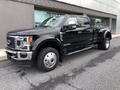

Flatbed for 14 SD?

Thread Starter
|
Junior User
Joined: Mar 2014
Posts: 77
Likes: 0
From: Central New York
Flatbed for 14 SD?
I'm trying to figure out if it's at all cost effective to add a flatbed to my 2014 SD reg cab 4x4 6.2, and would appreciate any input from those who have done this, (not necessarily on a 14). I retired recently and have started small farm raising beef. When I left work I bought a Tacoma and loved it as a utility truck for general living in the country stuff, but knew it would be over worked for farm building, and operating duties. I sold the Tacoma and fulfilled a long time dream of owning an F250, (that I can now justify).
I'm a real car geek, and picky about maintenance and appearance, which is what makes the flatbed option so attractive. The truck is a real garage queen even though it's for work. I hate the idea of beating up the bed with general use, and was wondering if there is real value in trying to sell the bed complete while its new, or should I just use it, and take care of it for as long as it last's?
It seems the flatbed would be much more useful day to day, with 4 or 8 inch side rails, and than I would not be completely obsessed about the paint and sheet metal. I looked on craigslist and saw no regular 8' beds, and ebay had 2 that I could locate but it seems like a nightmare trying to sell a truck bed online.
I cant just suck it up and go get the flat bed, because starting the farm has gone over budget, (as expected), so I would need the bed to eat away at the cost. I am looking at PJ truck beds, they are available locally and their products seem well made. It looks like I could get the flatbed for under 3000 depending on options.
Can anyone with a flatbed point out any downsides I might be missing?
or share their experience when getting their flatbed.
Thanks, Patrick
I'm a real car geek, and picky about maintenance and appearance, which is what makes the flatbed option so attractive. The truck is a real garage queen even though it's for work. I hate the idea of beating up the bed with general use, and was wondering if there is real value in trying to sell the bed complete while its new, or should I just use it, and take care of it for as long as it last's?
It seems the flatbed would be much more useful day to day, with 4 or 8 inch side rails, and than I would not be completely obsessed about the paint and sheet metal. I looked on craigslist and saw no regular 8' beds, and ebay had 2 that I could locate but it seems like a nightmare trying to sell a truck bed online.
I cant just suck it up and go get the flat bed, because starting the farm has gone over budget, (as expected), so I would need the bed to eat away at the cost. I am looking at PJ truck beds, they are available locally and their products seem well made. It looks like I could get the flatbed for under 3000 depending on options.
Can anyone with a flatbed point out any downsides I might be missing?
or share their experience when getting their flatbed.
Thanks, Patrick

Super Moderator


Joined: Dec 2011
Posts: 13,318
Likes: 6,097

Just some general observations:
1. Check the laws of your state.
In some states, replacing the pickup bed with a flat bed immediately causes the truck to be considered a different type of vehicle, subject to more scrutiny. For example, in my state, both a pickup and a flatbed can be registered as commercial vehicles, but the flatbed will always be required to stop at the scales, by virtue of the shape and visual appearance of the bed alone. Same GVWR. Same chassis. Different bed? Pull over.
New York doesn't have permanent road side scales, from what I understand. I believe the CVEU (Commercial Vehicle Enforcement Unit) sets up portable temporary inspection stations at rest stops on a random and unpredictable basis. And New York may not have any specific statutory definition of "pick up bed", or any extraneous requirements imposed on flat beds, regardless of GVWR. But check for yourself before making the change.
2. Check with your local farm bureau...
In New York, there are agricultural plates and farming tags. They may (or may not) be of use to you. They will not exempt you from certain requirements, like obtaining a USDOT number if your vehicle is over 10,000 GVWR, or over 10,000 GVW, but it might be worth investigating if you anticipate pulling a trailer that puts your gross combined weight rating over a certain amount. New York, and the USDOT, treat farms as commercial operations if you receive any money whatsoever from the farming operation, even if operating at a net loss, and even if the money is only a small prize at the county fair for the best rib eye. The local farm bureau usually has already done the research and waded through the legaleze to help farmers comply with the dizzying array of ever increasing vehicle registration regulations. Even if perfectly legal, putting a flatbed on your F250 will draw more CVEU attention to you, so be prepared.
3. Have a look at this anecdotal from landscaper in the state of New York, found on the Lawnsite...
4. Be aware of the different cab axle measurements on flat beds...
You are looking for beds with a 56" CA (cab to axle), not a 60" CA, which are more common and found on narrow frame chassis cabs. So that is one question that I would ask every person you contact about their bed for sale, new or used. Ask if it a 56" CA.
5. Consider an aluminum bed...
Take a close look at the beds on the Home Depot temporary rental trucks. Those seem like a well built bed in my opinion. They are light too, so net payload capacity will not be as reduced as it would otherwise be with a steel flat bed. The kind of steel used in flatbed making is regular mild steel... not expensive high strength low alloy steel. So the cheap steel beds will be thicker, to maintain strength and stability... and consequently much heavier. The margin of payload capacity on your F250 SRW is already limited, so to any extent that you can find an affordable aluminum tray bed or flat bed, even if used, you would be better off as far as remaining within your trucks ratings when loaded.
If it were me, I'd probably keep the factory bed, lineX it, and then allow the snot to get beaten out of it. The nice thing about factory beds is that many useful accessories are already engineered for them... like material racks to carry long items over the cab (ranch gates, irrigation pipe, barn lumber, steel)... these items are often sold in 16' to 21' lengths, all of which will exceed the 8' length of any flat bed with a 56" CA. The 9' flatbeds usually have 60" CAs, and anything longer wil have an 84" CA.
If you need steel material on the farm, it is generally sold in 20 foot lengths. If you need it shorter just to haul it back to the property, the yard will charge cut fees. That is not only more expensive, but it forces you to predesign your project so that you can have the material cut to minimize waste and useless short drops. Cutting everything down to 8' or less may not work if you are making a 9' foot cattle gate so a truck can pull through and clear the mirrors.
You can get a lumber/ladder/material rack on a flatbed, but it has to be custom made. With a pick up bed, you can go on craigslist and pick up a ladder rack for $200, which is less than the cost of material and electricity or fuel gas to weld one up yourself.
6. Consider a sturdy tandem axle dumping utility trailer...
You won't mind beating up a sturdy dump trailer, no matter how much of a car geek you are. Your truck can stay pretty, while you have hired hands shovel rocks any which way they please in to your dump trailer. Or you can use your tractor/loader to scoop up steer manure, drop it ***** nilly into your trailer, with your truck parked safely away, and then hook up and dump it elsewhere on your farm.
Another advantage of a separate dump trailer is getting loads of drain rock or quarter by dust crushed gravel from the quarry to refresh the unpaved roads on the property. Some quarrys load with a hopper that you drive under, and the rock literally comes raining down from the sky onto your bed. If the cab is 3 inches away from the flatbed with stake sides, then there is a good chance that some rocks will hit the cab when the load is dropped from the hopper (or the loader).
However, if the cab is 12 feet away from the dump trailer (8 foot bed + 4 foot trailer tongue), then who cares if a few rocks are bound to bounce around outside of their intended target. Plus, when you get back to your farm, you can dump the load with a push of a button. And, while you are driving, your load will be at a lower center of gravity. And, with a tandem axle trailer, you will have 4 extra brakes to stop your load.
You can get a good tandem axle dump trailer for $4,000, and it might offer you twice the utility of a flat bed. Be sure and keep your states laws in mind, and your farm bureau's recommendations in mind, when selecting such a trailer. Keep it under 9,990 GVWR. Perception is nine tenths of law ENFORCEMENT, so if a CVEU officer sees you toting a 20 foot tandem dually gooseneck dump with 4' high steel sides, he is going to know that trailer is anywhere from 14K to 24K GVWR, and he is going to take you down to have a looksee at your paperwork, log book, license, etc. So better to have a small, low sided dump trailer, say a 5x8, with twin tandem single axles of the 102" wide variety for better lateral stability. Keep a low profile, and keep within the law, and go about your personal business.
1. Check the laws of your state.
In some states, replacing the pickup bed with a flat bed immediately causes the truck to be considered a different type of vehicle, subject to more scrutiny. For example, in my state, both a pickup and a flatbed can be registered as commercial vehicles, but the flatbed will always be required to stop at the scales, by virtue of the shape and visual appearance of the bed alone. Same GVWR. Same chassis. Different bed? Pull over.
New York doesn't have permanent road side scales, from what I understand. I believe the CVEU (Commercial Vehicle Enforcement Unit) sets up portable temporary inspection stations at rest stops on a random and unpredictable basis. And New York may not have any specific statutory definition of "pick up bed", or any extraneous requirements imposed on flat beds, regardless of GVWR. But check for yourself before making the change.
2. Check with your local farm bureau...
In New York, there are agricultural plates and farming tags. They may (or may not) be of use to you. They will not exempt you from certain requirements, like obtaining a USDOT number if your vehicle is over 10,000 GVWR, or over 10,000 GVW, but it might be worth investigating if you anticipate pulling a trailer that puts your gross combined weight rating over a certain amount. New York, and the USDOT, treat farms as commercial operations if you receive any money whatsoever from the farming operation, even if operating at a net loss, and even if the money is only a small prize at the county fair for the best rib eye. The local farm bureau usually has already done the research and waded through the legaleze to help farmers comply with the dizzying array of ever increasing vehicle registration regulations. Even if perfectly legal, putting a flatbed on your F250 will draw more CVEU attention to you, so be prepared.
3. Have a look at this anecdotal from landscaper in the state of New York, found on the Lawnsite...
Originally Posted by Angelo585
I think that with all of these regulations and laws, enforcement is at the discretion of the officers running the check point. I would rather be safe than sorry... Back in 2001 the county sheriff deputies here in the Rochester area had set up a check point on the on ramp of the interstate, they were checking everyone, cars, trucks, motorcycles. Here I come in an F250 pulling a tandem trailer with 2 lazers and a wb on it. The company i was working for was a large, well known company in the area. i get flagged over, the sherriff deputy checks all my documents (license/registration) and verifies i am legal, then he calls the state troopers CVEU and asks them to come by.
They held me for 2 1/2 hours on the side of the road while they looked for serial numbers on everything mowers, blowers, trimmers and trailer, each number was entered into a lap top the trooper had with him. When I asked why they were doing this, I was told it was for compliance and to verify that nothing was stolen. I left the scene with 7 tickets for the most ridiculous offenses.
I had to appear in court with the owner of the company... 5 tickets got thrown out and the 2 that held were no DOT number displayed - fine $1000.00. The trailer was registered "homemade" but the serial number came back as a manufactured trailer. That fine was $250 plus the owner had to show the judge a corrected registration which the judge made the officer and owner go verify while I sat in court. They actually left court and traveled to the company's shop then came back to court. Total fines with state surcharges was around $1600.00 and no points on my CDL.
After that experience, I read up on every regulation and made sure that when I started my business I was in compliance no matter what.
In this area, it is not uncommon to see landscape trucks pulled into check points by the CVEU and inspected and weighed, even when I worked on Long Island, same thing, the impound area would be littered with out of service landscape trucks. We were told once that the CVEU loves to go after landscapers because the probability of finding violations and non compliance is much higher and as I said in an earlier post, with budgets tightening, local municipalities are looking for revenue in other area's... a big area is DOT compliance.
They held me for 2 1/2 hours on the side of the road while they looked for serial numbers on everything mowers, blowers, trimmers and trailer, each number was entered into a lap top the trooper had with him. When I asked why they were doing this, I was told it was for compliance and to verify that nothing was stolen. I left the scene with 7 tickets for the most ridiculous offenses.
I had to appear in court with the owner of the company... 5 tickets got thrown out and the 2 that held were no DOT number displayed - fine $1000.00. The trailer was registered "homemade" but the serial number came back as a manufactured trailer. That fine was $250 plus the owner had to show the judge a corrected registration which the judge made the officer and owner go verify while I sat in court. They actually left court and traveled to the company's shop then came back to court. Total fines with state surcharges was around $1600.00 and no points on my CDL.
After that experience, I read up on every regulation and made sure that when I started my business I was in compliance no matter what.
In this area, it is not uncommon to see landscape trucks pulled into check points by the CVEU and inspected and weighed, even when I worked on Long Island, same thing, the impound area would be littered with out of service landscape trucks. We were told once that the CVEU loves to go after landscapers because the probability of finding violations and non compliance is much higher and as I said in an earlier post, with budgets tightening, local municipalities are looking for revenue in other area's... a big area is DOT compliance.
You are looking for beds with a 56" CA (cab to axle), not a 60" CA, which are more common and found on narrow frame chassis cabs. So that is one question that I would ask every person you contact about their bed for sale, new or used. Ask if it a 56" CA.
5. Consider an aluminum bed...
Take a close look at the beds on the Home Depot temporary rental trucks. Those seem like a well built bed in my opinion. They are light too, so net payload capacity will not be as reduced as it would otherwise be with a steel flat bed. The kind of steel used in flatbed making is regular mild steel... not expensive high strength low alloy steel. So the cheap steel beds will be thicker, to maintain strength and stability... and consequently much heavier. The margin of payload capacity on your F250 SRW is already limited, so to any extent that you can find an affordable aluminum tray bed or flat bed, even if used, you would be better off as far as remaining within your trucks ratings when loaded.
If it were me, I'd probably keep the factory bed, lineX it, and then allow the snot to get beaten out of it. The nice thing about factory beds is that many useful accessories are already engineered for them... like material racks to carry long items over the cab (ranch gates, irrigation pipe, barn lumber, steel)... these items are often sold in 16' to 21' lengths, all of which will exceed the 8' length of any flat bed with a 56" CA. The 9' flatbeds usually have 60" CAs, and anything longer wil have an 84" CA.
If you need steel material on the farm, it is generally sold in 20 foot lengths. If you need it shorter just to haul it back to the property, the yard will charge cut fees. That is not only more expensive, but it forces you to predesign your project so that you can have the material cut to minimize waste and useless short drops. Cutting everything down to 8' or less may not work if you are making a 9' foot cattle gate so a truck can pull through and clear the mirrors.
You can get a lumber/ladder/material rack on a flatbed, but it has to be custom made. With a pick up bed, you can go on craigslist and pick up a ladder rack for $200, which is less than the cost of material and electricity or fuel gas to weld one up yourself.
6. Consider a sturdy tandem axle dumping utility trailer...
You won't mind beating up a sturdy dump trailer, no matter how much of a car geek you are. Your truck can stay pretty, while you have hired hands shovel rocks any which way they please in to your dump trailer. Or you can use your tractor/loader to scoop up steer manure, drop it ***** nilly into your trailer, with your truck parked safely away, and then hook up and dump it elsewhere on your farm.
Another advantage of a separate dump trailer is getting loads of drain rock or quarter by dust crushed gravel from the quarry to refresh the unpaved roads on the property. Some quarrys load with a hopper that you drive under, and the rock literally comes raining down from the sky onto your bed. If the cab is 3 inches away from the flatbed with stake sides, then there is a good chance that some rocks will hit the cab when the load is dropped from the hopper (or the loader).
However, if the cab is 12 feet away from the dump trailer (8 foot bed + 4 foot trailer tongue), then who cares if a few rocks are bound to bounce around outside of their intended target. Plus, when you get back to your farm, you can dump the load with a push of a button. And, while you are driving, your load will be at a lower center of gravity. And, with a tandem axle trailer, you will have 4 extra brakes to stop your load.
You can get a good tandem axle dump trailer for $4,000, and it might offer you twice the utility of a flat bed. Be sure and keep your states laws in mind, and your farm bureau's recommendations in mind, when selecting such a trailer. Keep it under 9,990 GVWR. Perception is nine tenths of law ENFORCEMENT, so if a CVEU officer sees you toting a 20 foot tandem dually gooseneck dump with 4' high steel sides, he is going to know that trailer is anywhere from 14K to 24K GVWR, and he is going to take you down to have a looksee at your paperwork, log book, license, etc. So better to have a small, low sided dump trailer, say a 5x8, with twin tandem single axles of the 102" wide variety for better lateral stability. Keep a low profile, and keep within the law, and go about your personal business.
Thread Starter
|
Junior User
Joined: Mar 2014
Posts: 77
Likes: 0
From: Central New York
Thanks for the insightful reply, I have pulled a friends 14k dump trailer and really liked it's utility as you stated. I had, (had) the flatbed bug mostly to keep the truck in good shape and hopefully get it done for a good price, but I guess the dump trailer can go on the wish list.
I would of course, always stay within the law whatever I decide, and have to admit that I might have spent quite a few years on the other side of that check point. When equipment like lawn mowers and small construction equipment attract unusual attention from the Police it is often to combat spikes in theft of that type of equipment, which can often go unchecked, as well as to confirm safe towing practices are being followed. Those spikes might also unfortunately reveal an enforcement honey hole. there will always be over eager guys here and there, at those inspections, but realize the amount of mind boggling, dangerous s**t removed from the road that is no longer a threat to us law abiding farmers and our families. Thanks again, I am leaning toward a dump trailer now, (in the future).
I would of course, always stay within the law whatever I decide, and have to admit that I might have spent quite a few years on the other side of that check point. When equipment like lawn mowers and small construction equipment attract unusual attention from the Police it is often to combat spikes in theft of that type of equipment, which can often go unchecked, as well as to confirm safe towing practices are being followed. Those spikes might also unfortunately reveal an enforcement honey hole. there will always be over eager guys here and there, at those inspections, but realize the amount of mind boggling, dangerous s**t removed from the road that is no longer a threat to us law abiding farmers and our families. Thanks again, I am leaning toward a dump trailer now, (in the future).

Fleet Owner


Joined: Mar 2003
Posts: 24,724
Likes: 74
From: Blue Hill Township
Void the warranty? You actually believe that?
Thread Starter
|
Junior User
Joined: Mar 2014
Posts: 77
Likes: 0
From: Central New York
NY has agriculture and farm plates, but the advantages don't out weigh the risks, for me. I've had the discussion with other farmers who think I'm crazy, but I will occasionally use the truck for activities not "exclusively related to farming operation" and that is one of the rules for ag plates, farm plates have a 25 mile radius from your listed properties OR the dump. Guys register in these class's all the time to save a few bucks and usually don't have a problem, but in the event of a catastrophic accident while operating outside the prescribed use of these plates, you would be well screwed by the other parties legal team, whether or not you were in the wrong.
So unless I get a screaming deal on a nice flatbed, I guess the dump trailer makes a lot of sense for me.
So unless I get a screaming deal on a nice flatbed, I guess the dump trailer makes a lot of sense for me.
Trending Topics
Bleed Ford Blue


Joined: Apr 2009
Posts: 13,578
Likes: 157
From: Anchorage Alaska

Interesting to hear all the different laws that go on in different states. Here its all but a free for all and all depends on GVWR not the type of truck. Pickups are registered the same as any car/van/suv up to a 1-ton...with a f-450-up you have to register as commercial as we just found out with our new F-450 shop truck and display DOT numbers.
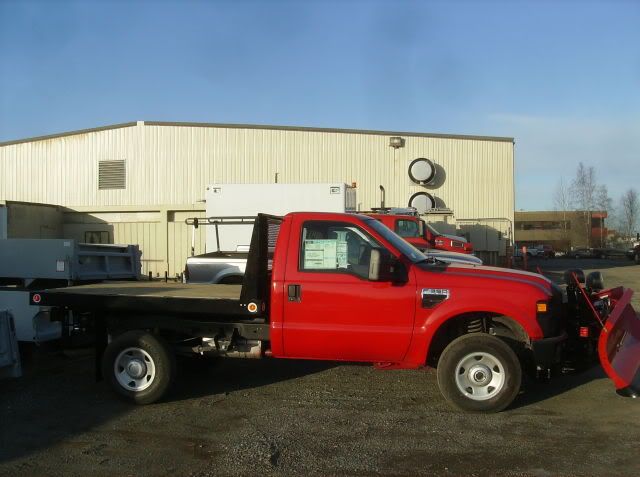
But i've done ton's of pickup box delete/bed removal's for service bodies and flat beds on 56" CA trucks. I believe we have 4 8'x8' beds in stock at the moment at work.
only you can decide the best thing for you, flat beds are very useful though...sounds like costs down there are very cheap also as a flat bed, head board, ICC bumper installed with all LED marker lights and ford factory chassis cab taillights would run you $4,600 + here.
here's one i did years ago back when i worked in the shop.
But i've done ton's of pickup box delete/bed removal's for service bodies and flat beds on 56" CA trucks. I believe we have 4 8'x8' beds in stock at the moment at work.
only you can decide the best thing for you, flat beds are very useful though...sounds like costs down there are very cheap also as a flat bed, head board, ICC bumper installed with all LED marker lights and ford factory chassis cab taillights would run you $4,600 + here.
here's one i did years ago back when i worked in the shop.

FTE Stories
Ford Trucks for Ford Truck Enthusiasts

3 Best / 3 Worst Parts of Modern Ford Ownership
Brett Foote
10 Amazing Upgrades That Solve Common Ford Truck Owner Headaches
Pouria Savadkouei
Every 2026 Ford Engine Explained
Brett Foote
10 Ugly Ford Trucks That We Still Kinda Love
Joe Kucinski
10 Things Every Truck Owner NEEDS (2026 Edition)
Michael S. Palmer
Rezvani's Latest Post-Apocalyptic Monster Is a Ford F-150 Raptor Underneath
Verdad Gallardo
Top 10 Most Expensive Ford Trucks Ever Sold on Bring a Trailer
Joe Kucinski
2027 Ford Super Duty Buyer's Guide (Every Model, Engine, & Package)
Brett Foote
Top 10 Ford Truck Tragedies
Joe Kucinski
Super Moderator
Joined: Dec 2011
Posts: 13,318
Likes: 6,097
Ford isn't scared of wide frames (non chassis cabs) running around naked, or at least with someone else's clothes on.

FTE Leadership Emeritus

Joined: Sep 2000
Posts: 23,174
Likes: 1,678
From: Stephensville WI
Many companies make service, platform and cargo bodies for your truck. Knapheide (link below) is just one example. Use Google to find others.
All Products | Knapheide
All Products | Knapheide
Laughing Gas
Joined: Mar 2009
Posts: 843
Likes: 6
From: Jessup, PA
That's why I said it "may" as in to check it out for yourself just to make sure. If you want proof of where I came up with this, in 2003 when Dodge came out with 3rd generation trucks, they didn't offer a box delete option or a chassis cab version until the 2007.5 model year and any aftermarket body voided all factory warranties. This was told to me by my regional Dodge representative. Good to see it isn't a problem with Ford. Just figured it was worth mentioning to make sure to protect what was bought with no surprises.

Postmaster
Joined: Apr 2008
Posts: 4,724
Likes: 4
From: Rogersville, TN
Congrats on the new farm. We just bought some acreage about a month ago to start our own farm raising beef too. With 5 kids I just about need a farm just to feed them lol. Personally I'm not a fan of flatbeds unless it is for hauling a specific load that requires more space(plywood, lumber, etc) and that is all you are hauling. Having your load tied down opens you up for more violations(properly secured, proper straps, etc). I drove a flatbed tractor and trailer for a few years and the laws for how the load must be secured are pretty strict(per weight, length, first and last section of load must have two straps within certain feet of each other, etc). Then your truck is pretty much useless for most daily chores like going to the grocery store, hauling off trash, hauling smaller items you can't tie down(wal mart or Lowe's trips). I would leave the bed on it and look into getting a trailer.