


Progress update & Bed wood Question

Posting Guru
Joined: Jul 2012
Posts: 2,203
Likes: 4
From: Southern SC.
Check out this thread -- https://www.ford-trucks.com/forums/1...hlight=bedwood
name is "BEDWOOD" if you just want to do a search for it. Great advice on what to use. Tells you not to use steelwool for final sanding as it leaves residue that may rust -
I'm using Tongue Oil (expensive) on Black Walnut. I tried a test piece and left it out in the rain and it repelled the water very well. Hope this helps Have fun
name is "BEDWOOD" if you just want to do a search for it. Great advice on what to use. Tells you not to use steelwool for final sanding as it leaves residue that may rust -
I'm using Tongue Oil (expensive) on Black Walnut. I tried a test piece and left it out in the rain and it repelled the water very well. Hope this helps Have fun

New User
Joined: Jul 2009
Posts: 10
Likes: 0
From: Punxsutawney
Mike the truck looks good. Did you finish the wiring? The finish Eric and I used on the '50 was a marine varnish. It still looks like the day we put it on 12 years now. If you want to know the product name I will have to look it up. Tony

Hotshot


Joined: Oct 2004
Posts: 15,882
Likes: 88
From: Durham NC
Dave, just for the sake of someone wanting what you used, it's TUNG oil extracted by pressing the fruit (nuts) of the tropical Tung tree. For those that are technically oriented, tung oil is a penetrating, anaerobic hardening, light amber colored oil. It will soak into the cells of the wood and when deep enough to be cut off from oxygen it will harden, sealing the wood. Since it is below the surface of the wood it is not affected by UV (sunlight). Be sure you get 100% PURE tung oil. It is expensive but goes a long way if used properly. DO NOT be duped by products calling themselves Tung Oil Finish or Wiping Finish found on the shelves in big box store paint depts. made by Minwax and others. It is just thinned out common polyurethane varnish with just a splash of tung oil added to the vat of product (barely detectable quantity) so they can put it on the label. It is not intended for outdoor use and will break down after a year or so exposure to UV.
If you use oak or ash wood, good luck, the natural acids in the wood will break down any finish starting within 6 months of weather exposure.
If you use oak or ash wood, good luck, the natural acids in the wood will break down any finish starting within 6 months of weather exposure.
Posting Guru
Joined: Jul 2012
Posts: 2,203
Likes: 4
From: Southern SC.
[quote=AXracer;14398314]Dave, just for the sake of someone wanting what you used, it's TUNG oil extracted by pressing the fruit (nuts) of the tropical Tung tree.
Ax I never could spell worth a damn now the computer corrects me even if it has a mind of it's own and puts words in I never used. I do know TUNG oil (the real stuff) works well and looks great. I used it on black walnut and it makes the wood grain pop. So I thank you for sharing your knowledge on this and many other things I have used rebuilding the F3.
Ax I never could spell worth a damn now the computer corrects me even if it has a mind of it's own and puts words in I never used. I do know TUNG oil (the real stuff) works well and looks great. I used it on black walnut and it makes the wood grain pop. So I thank you for sharing your knowledge on this and many other things I have used rebuilding the F3.
Hotshot
Joined: Oct 2004
Posts: 15,882
Likes: 88
From: Durham NC
Wasn't really tying to correct your spelling or make fun of you Dave, just wanted to make it easier for someone reading along to find the right product (I don't know what you might get if you googled "tongue oil", but it might make it onto TV.) 
It also gave me an opportunity to once again warn people about the deceptive labeled/bogus products out there that do not perform the same.
I use 100% tung oil to finish most all my fine woodworking projects. I buy mine at the local Woodcraft store, ~22.00 a quart.
It also gave me an opportunity to once again warn people about the deceptive labeled/bogus products out there that do not perform the same.
I use 100% tung oil to finish most all my fine woodworking projects. I buy mine at the local Woodcraft store, ~22.00 a quart.
Posting Guru
Joined: Jul 2012
Posts: 2,203
Likes: 4
From: Southern SC.
Ax no problem - did not take it that you were being a smart guy besides I need all the help I can get whether it is spelling or truck stuff or computer problems - and I own a computer service bureau (I rely on the techs a whole bunch). The local woodcraft store is the only place I found 100% tung oil and it was $22 also. I've put on 4 coats with a light sanding between each coat -- it really is good stuff and with out you sharing the info I would have used something that would not holdup. So keep the info coming.
Trending Topics
Hotshot
Joined: Oct 2004
Posts: 15,882
Likes: 88
From: Durham NC
After sanding to 400 or 600 sandpaper, I vacuum the surface to remove as much dust from the pores as possible then wipe the wood with a cloth little more wet than damp, but less than dripping with water (wet enough to obviously change the color of the wood. Let it dry and resand with the finest grit sandpaper once more to cut off the fuzz the wetting raised. (this is an important step if you want a really fine finish).
I then apply the tung oil liberally using a green nylon pad to scrub it into the surface, keeping the surface wet with oil for at least 10 minutes. I then wipe/rub the surface as dry as I can get it with clean shop towels or microfiber cloths, (paper towels if desperate!). After 20 minutes more I wipe it once again until the rags slide rather than stick. I allow to dry overnight, then apply a second coat exactly like the first (using the green pad to apply the oil eliminates need to sand between coats. I make absolutely sure to remove every last trace of oil on the surface when wiping.
If it is a very course grained wood a 3rd coat may be needed. For an extra fine finish, I let it dry for a couple days then wax with Simonize paste was in the yellow can using a white nylon pad as an applicator and buffing with a course cloth like burlap, canvas, or bluejeans using heavy pressure. (be sure the rivets have been cut off the bluejeans!)
I then apply the tung oil liberally using a green nylon pad to scrub it into the surface, keeping the surface wet with oil for at least 10 minutes. I then wipe/rub the surface as dry as I can get it with clean shop towels or microfiber cloths, (paper towels if desperate!). After 20 minutes more I wipe it once again until the rags slide rather than stick. I allow to dry overnight, then apply a second coat exactly like the first (using the green pad to apply the oil eliminates need to sand between coats. I make absolutely sure to remove every last trace of oil on the surface when wiping.
If it is a very course grained wood a 3rd coat may be needed. For an extra fine finish, I let it dry for a couple days then wax with Simonize paste was in the yellow can using a white nylon pad as an applicator and buffing with a course cloth like burlap, canvas, or bluejeans using heavy pressure. (be sure the rivets have been cut off the bluejeans!)
FTE Stories
Ford Trucks for Ford Truck Enthusiasts

2027 Ford Super Duty Buyer's Guide (Every Model, Engine, & Package)
Brett Foote
Top 10 Ford Truck Tragedies
Joe Kucinski
AEV FXL Super Duty - the Super Duty Raptor Ford Doesn't Make
Brett Foote
Lobo Vs Lobo: Proof the F-150 Lobo Should Be Even Lower!
Michael S. Palmer
Ford's 2001 Explorer Sportsman Concept Looks For a New Home
Verdad Gallardo
10 Best Ford Truck Engines We Miss the Most!
Joe Kucinski
2026 Shelby F-150 Off-Road: Better Than a Raptor R?
Brett Foote
2027 Super Duty Carhartt Package First Look: 12 Things You NEED to Know!
Michael S. Palmer
10 Most Surprising 2026 Ford Truck Features!
Joe Kucinski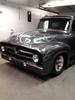
Thread Starter
|
Posting Guru
Joined: Apr 2004
Posts: 1,074
Likes: 0
From: Northwestern PA
 just working out some bugs at this point.. getting ready to put her on the road.
I'm using cherry for the bed, not sure if Im going to stain it or leave it natural..
Hotshot
Joined: Oct 2004
Posts: 15,882
Likes: 88
From: Durham NC
If you stain, you have the choice of two types: a penetrating (dye) transparent stain or a wiping (pigment) semi or opaque "stain". Dyes and pigments are two different classes of coloring agents. Dyes are transparent, pigments are opaque. Think of the results of using each as like dyeing a piece of clothing versus "coloring" it by rubbing it in clay.
Penetrating dye stain is sold as a transparent color dye dissolved in alcohol or as a powder you dissolve yourself. It looks like colored water and smells like alcohol. It penetrates deeply and dyes the wood fibers without obscuring the grain pattern. (true candy color auto paint is clear tinted with transparent dye. Food colors are a special class of dye) Pure color dyes are expensive to manufacture and dye stains, like candy color paint, is difficult to apply evenly without overlaps or variation in shade. Beside the grain showing clearly other advantages are you can get bright vibrant pure colors, minor shallow scratches and scrapes will not show unless below the penetration level.
Wiping stains are nothing more than opaque oil paint thinned with varnish (semi-transparent) and/or mineral spirits (opaque). They look and smell like thin paint. They are inexpensive since made from cheap "earth" derived color pigments and inexpensive extenders. They are sold in cans or tubes at the DIY or hardware stores with "wood" names for the colors. i.e. walnut, cherry, oak, maple, etc. Since wiping stains are opaque and basically paint, they sit on the surface and obscure/hide the color and grain of the wood underneath. They are meant to be easy to apply and to attempt to make cheap wood like common pine, particle board and/or plywood "look" like more expensive hardwood, and/or blend the colors of mixed wood species and grades, but the muddy artificial colors will only fool the most amateurish eye. Since they sit on the surface, even minor scratches or nicks will glaringly expose the wood underneath.
Dyes are sensitive to UV exposure. Red dye is the most fugitive dye color. (fugitive is a technical term used in the dye industry for how much a color fades or changes color with age and exposure to light.)
Note: I worked as a process control lab tech for Buffalo Dye Works div. of Allied Chemical co., the second largest dye producer in the world at that time, for 18 mo. before being drafted.
Postmaster
Joined: Aug 2003
Posts: 3,222
Likes: 6
From: Houston
I agree with Ax, don't stain it. It turns to a beautiful and much darker color from exposure. Leave a cut-off in the sun for a couple of hours with something covering half of it and see for yourself. Amazing how fast it will turn colors. If you are looking at it everyday you really won't notice, but it gets darker quickly. Tung oil is great and you can always apply more coats as the wood drys out more and more.
New User
Joined: Jul 2009
Posts: 10
Likes: 0
From: Punxsutawney
Mike we used oak on our bed. We varnished it without staining it first. It turned out nice. If you are using cherry once you get it the shade you want it the marine varnish should lock in the color. Our oak boards haven't changed one bit. When you get it on the road and want to go for a ride come down I would like to see it. You should still have my number. Look forward to seeing it.Tony

Senior User
Joined: Mar 2010
Posts: 151
Likes: 0
From: Fairbury, Nebraska
I will be doing my bed soon, and also planned on using oak, as I am a big fan of red oak. Typically I use a Minwax Early American stain covered with polyurethane. Do you think this will hold up, it will not set outside in the weather, but will see some sun? Maybe I will try some tung oil on red oak and see what it looks like?
Hotshot
Joined: Oct 2004
Posts: 15,882
Likes: 88
From: Durham NC
I highly recommend 100% Tung Oil on the unstained red oak. It will take 4-5 applications to fill the grain. Add 25% mineral spirits to the first 2 applications. I'd recommend using 600 wet or dry sandpaper pad to apply. The very fine sanding dust the paper produces will mix with the oil and help fill the grain. apply 2 more coats a month after the first application. Don't stain! The RO will darken to a rich grain color in a few months, be patient, will be much more attractive than any stained wood.
Urethane will check and fail within a year unless kept inside 100% of the time. The tung oil can be reapplied if the wood starts to dry out. The Urethane will need to be sanded off completely before any refinishing.
Urethane will check and fail within a year unless kept inside 100% of the time. The tung oil can be reapplied if the wood starts to dry out. The Urethane will need to be sanded off completely before any refinishing.

Posting Guru
Joined: Dec 2008
Posts: 2,352
Likes: 1
From: Waleska, GA
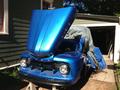
OBTW, I looked in your gallery and it doesn't seem to have but a couple of pictures of your paint job. I really like it! Did you do it yourself? Please post up a few more pictures of it.