


Can you recommend a spark plug ?

Thread Starter
|
Junior User
Joined: May 2003
Posts: 56
Likes: 0
Can you recommend a spark plug ?
Would appreciate any comments or recommendations for spark plugs for my stock 351M, installed in a 1980 F-100 short box, 2WD with a C6 automatic and a 2.73 geared rear end.
The truck performs extremely well considering low horsepower and low torque specs. Driven as a work truck commuter about 75 miles per day, half are 60 - 70 MPH bumper to bumper highway, and the other half bumper to bumper start and stop
Overall performance is excellent, but could use more mid-range response. Off the line, it revs out strong, shifting into 3rd around 90 MPH with lots of legs left to go. Top end would exceed 120 MPH if given enough road and time. It handles like a sports car in tight, fast corners, and is sure-footed at any speed.
To improve fuel economy, I have been experimenting with different octane ratings. Doesn't seem to matter what the octane is, or how the truck is driven, I still get 10 miles per gallon - period - whether its idling in a parking lot or full throttle on the highway, or whether its using 87 regular or 94 (10% ethanol) octane fuel.
The 94 octane gives me better throttle response and overall engine performance, apparently by a more complete combustion. I am wondering if a hotter rated plug would accomplish the same thing - improved combustion for better performance and fuel economy.
All engine parts are stock or premium brand aftermarket. Nothing high performance installed as yet.
Your input would be appreciated.
Thanks
JT
The truck performs extremely well considering low horsepower and low torque specs. Driven as a work truck commuter about 75 miles per day, half are 60 - 70 MPH bumper to bumper highway, and the other half bumper to bumper start and stop
Overall performance is excellent, but could use more mid-range response. Off the line, it revs out strong, shifting into 3rd around 90 MPH with lots of legs left to go. Top end would exceed 120 MPH if given enough road and time. It handles like a sports car in tight, fast corners, and is sure-footed at any speed.
To improve fuel economy, I have been experimenting with different octane ratings. Doesn't seem to matter what the octane is, or how the truck is driven, I still get 10 miles per gallon - period - whether its idling in a parking lot or full throttle on the highway, or whether its using 87 regular or 94 (10% ethanol) octane fuel.
The 94 octane gives me better throttle response and overall engine performance, apparently by a more complete combustion. I am wondering if a hotter rated plug would accomplish the same thing - improved combustion for better performance and fuel economy.
All engine parts are stock or premium brand aftermarket. Nothing high performance installed as yet.
Your input would be appreciated.
Thanks
JT

Posting Legend
Joined: Sep 2001
Posts: 30,255
Likes: 37
Can you recommend a spark plug ?
Stick with autolite. If any "$pecial" sparkplug makes a difference you needed a tuneup anyway and a std autolite would have given the same results.
-Save your money!
If your engine is tuned properly the 87 octane should give the best performance. Anything else is just throwing $$ out the tailpipe.
Stay away from alcohol fuels. The alcohol draws moisture into your fuel system which is OK if you are driving it a distance daily. If you park it with that stuff in the fuel system it will cause rust to form which will give you headaches for the rest of the vehicles life. Alcohol also eats the elastomer gaskets and other rubber items in your fuel system. Bad stuff foisted off on Americans because of corn lobbyists and crooked Congressmen.
-Save your money!
If your engine is tuned properly the 87 octane should give the best performance. Anything else is just throwing $$ out the tailpipe.
Stay away from alcohol fuels. The alcohol draws moisture into your fuel system which is OK if you are driving it a distance daily. If you park it with that stuff in the fuel system it will cause rust to form which will give you headaches for the rest of the vehicles life. Alcohol also eats the elastomer gaskets and other rubber items in your fuel system. Bad stuff foisted off on Americans because of corn lobbyists and crooked Congressmen.

Post Fiend
Joined: Jan 2003
Posts: 10,323
Likes: 2
From: Montana Territory
Can you recommend a spark plug ?
I would run some new wires, Borg Warner makes a good set, about $40. I put on an MSD coil ($40) and got about 1.5MPG increase. Changing the fuel filter($2) and airfilter($8) also help. The plugs are autolite, 25 pre gapped but you should check them.
Thread Starter
|
Junior User
Joined: May 2003
Posts: 56
Likes: 0
Can you recommend a spark plug ?
Torque1st:
The ethanol blends (5% - 10%) cost 40 to 50 cents a gallon more per fill, and at 10 miles per gallon, it sure adds up. Once in a while I get some pinging under heavy load with the 87 octane, but usually only with "no-name" brands.
Thanks for your input.
JT
Mattsbox99:
So, its better to invest wasted fuel dollars in higher quality ignition parts if I understand what you're saying. The MSD coil and lower resistance wires would deliver more voltage to the plugs which results in a hotter spark and a more complete burn. The 1.5 MPG increase you achieved would surely be welcome - that's a 15% increase in my case - plus the 40 to 50 cents per gallon saved on the fuel cost.
Will post results after a reasonable test period. Thanks for youir input.
JT
The ethanol blends (5% - 10%) cost 40 to 50 cents a gallon more per fill, and at 10 miles per gallon, it sure adds up. Once in a while I get some pinging under heavy load with the 87 octane, but usually only with "no-name" brands.
Thanks for your input.
JT
Mattsbox99:
So, its better to invest wasted fuel dollars in higher quality ignition parts if I understand what you're saying. The MSD coil and lower resistance wires would deliver more voltage to the plugs which results in a hotter spark and a more complete burn. The 1.5 MPG increase you achieved would surely be welcome - that's a 15% increase in my case - plus the 40 to 50 cents per gallon saved on the fuel cost.
Will post results after a reasonable test period. Thanks for youir input.
JT
Post Fiend
Joined: Jan 2003
Posts: 10,323
Likes: 2
From: Montana Territory
Can you recommend a spark plug ?
First of all the air and fuel filter should be changed every 6000 miles anyway.
The plugs should be changed every ten thousand miles.
The stock coil just plain sucks, I have never had them last very long. The MSD coil has a warranty and has given perfet performance. The wires should last the life of the vehicle but with todays technology and low prices its hard not to justify a better wire.
You should also change your PCV valve and check for vacuum leaks. I would clean the EGR valve but I haven't done it and don't know how. Chevcking to make sure the Thermactor system is operating too. You can't service the old pump or buy a new one so you will have to find one in a junkyard, should be about $15. I don't know if you can buy the Thermactor valve.
By the way before changing everything I was getting 8 MPG and after I was getting 15.
The plugs should be changed every ten thousand miles.
The stock coil just plain sucks, I have never had them last very long. The MSD coil has a warranty and has given perfet performance. The wires should last the life of the vehicle but with todays technology and low prices its hard not to justify a better wire.
You should also change your PCV valve and check for vacuum leaks. I would clean the EGR valve but I haven't done it and don't know how. Chevcking to make sure the Thermactor system is operating too. You can't service the old pump or buy a new one so you will have to find one in a junkyard, should be about $15. I don't know if you can buy the Thermactor valve.
By the way before changing everything I was getting 8 MPG and after I was getting 15.
Posting Legend
Joined: Sep 2001
Posts: 30,255
Likes: 37
Can you recommend a spark plug ?
Stick with the STD ignition components. They are designed to work together. Replacements are also readily available at any parts store. They can also be tested by any good parts store. I haven't had a coil fail in 20 years.
Substituting a non-STD coil can overload the ignition module and cause failure.
The amount of voltage it takes to fire the plug is determined by the gas pressure in the cylinder and the gap. Your 351M is a low compression engine that only requires STD parts. In other words it only takes so much and any increases in "capacity" are wasted. The stock system was designed to completely burn the charge in order to meet stringent emissions requirements under all conditions.
The resistance built into the ignition wires is there to reduce RFI emissions. It does not alter the voltage required to fire the plug but it does have a slight effect on current delivered to the spark.
Just like I said about plugs above, perceived increases in mileage or performance are many times the result of replacing defective components or sometimes changed driving habits.
Substituting a non-STD coil can overload the ignition module and cause failure.
The amount of voltage it takes to fire the plug is determined by the gas pressure in the cylinder and the gap. Your 351M is a low compression engine that only requires STD parts. In other words it only takes so much and any increases in "capacity" are wasted. The stock system was designed to completely burn the charge in order to meet stringent emissions requirements under all conditions.
The resistance built into the ignition wires is there to reduce RFI emissions. It does not alter the voltage required to fire the plug but it does have a slight effect on current delivered to the spark.
Just like I said about plugs above, perceived increases in mileage or performance are many times the result of replacing defective components or sometimes changed driving habits.
Thread Starter
|
Junior User
Joined: May 2003
Posts: 56
Likes: 0
Can you recommend a spark plug ?
Torque1st:
The first thing I did was install new plugs, distributor cap, PCV valve, fuel filter, air filter and rebuilt the 2 barrel Holley carb. All emissions components had already been removed including catalytic converter. Couldn't get Holley's fuel level right due to stripped threads in bowl, so I replaced with stock Motorcraft 2150.
Then I found a number of vacuum leaks which I eliminated one by one. The EGR valve was plugged solid, so it was removed and a plate installed on the spacer to seal the holes. There were no timing marks on the damper or crank pulleys, so timing has been hit and miss. Right now its in "miss" mode, with idle rpms too high. Its possible the throttle plates are not fully closing, and fuel gets in through the idle transfer slots. The idle rpm falls when I run the engine without its air cleaner, which leads me to suspect the hold-down bolt or filter housing somehow affects alignment or some other mechanical function.
It is not feasible at this point to reinstall the emissions gear - that I can live with. But I do not want to risk premature failure of the ignition module or any other component. What's left is small adjustments to tweak performance.
Your comment regarding driving habits did not go unnoticed ! This year marks my 40th year behind the wheel - accident free. Mind you I have made up for that with speeding tickets over the years. Just my luck to buy a 23 year old truck that's more fun to drive than the last 60-odd vehicles I've owned (including Jaguars, Corvette, Cadillac -some new, some used).
Thanks again for your suggestions.
JT
The first thing I did was install new plugs, distributor cap, PCV valve, fuel filter, air filter and rebuilt the 2 barrel Holley carb. All emissions components had already been removed including catalytic converter. Couldn't get Holley's fuel level right due to stripped threads in bowl, so I replaced with stock Motorcraft 2150.
Then I found a number of vacuum leaks which I eliminated one by one. The EGR valve was plugged solid, so it was removed and a plate installed on the spacer to seal the holes. There were no timing marks on the damper or crank pulleys, so timing has been hit and miss. Right now its in "miss" mode, with idle rpms too high. Its possible the throttle plates are not fully closing, and fuel gets in through the idle transfer slots. The idle rpm falls when I run the engine without its air cleaner, which leads me to suspect the hold-down bolt or filter housing somehow affects alignment or some other mechanical function.
It is not feasible at this point to reinstall the emissions gear - that I can live with. But I do not want to risk premature failure of the ignition module or any other component. What's left is small adjustments to tweak performance.
Your comment regarding driving habits did not go unnoticed ! This year marks my 40th year behind the wheel - accident free. Mind you I have made up for that with speeding tickets over the years. Just my luck to buy a 23 year old truck that's more fun to drive than the last 60-odd vehicles I've owned (including Jaguars, Corvette, Cadillac -some new, some used).
Thanks again for your suggestions.
JT
Trending Topics
Posting Legend
Joined: Sep 2001
Posts: 30,255
Likes: 37
Can you recommend a spark plug ?
Sounds like you did things right when you picked up your new truck. Same things I do with any new (to me) vehicle.
P.S. A hotter plug does not do anything to improve combustion. It just operates at a higher temperature in the combustion chamber which could cause more pinging or preignition. This sometimes helps burn off combustion deposits from oil or fuel modifiers that can contribute to pinging also.
P.S. A hotter plug does not do anything to improve combustion. It just operates at a higher temperature in the combustion chamber which could cause more pinging or preignition. This sometimes helps burn off combustion deposits from oil or fuel modifiers that can contribute to pinging also.
FTE Stories
Ford Trucks for Ford Truck Enthusiasts

Top 10 Most Expensive Ford Trucks Ever Sold on Bring a Trailer
Joe Kucinski
2027 Ford Super Duty Buyer's Guide (Every Model, Engine, & Package)
Brett Foote
Top 10 Ford Truck Tragedies
Joe Kucinski
AEV FXL Super Duty - the Super Duty Raptor Ford Doesn't Make
Brett Foote
Lobo Vs Lobo: Proof the F-150 Lobo Should Be Even Lower!
Michael S. Palmer
Ford's 2001 Explorer Sportsman Concept Looks For a New Home
Verdad Gallardo
10 Best Ford Truck Engines We Miss the Most!
Joe Kucinski
2026 Shelby F-150 Off-Road: Better Than a Raptor R?
Brett Foote
2027 Super Duty Carhartt Package First Look: 12 Things You NEED to Know!
Michael S. Palmer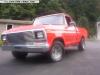


Posting Guru
Joined: Mar 2002
Posts: 2,070
Likes: 2
From: Boise, Idaho
Can you recommend a spark plug ?
It's too bad you trashed the 'emissions' stuff. That stuff helps gas mileage and power and just so happens to reduce emissions.
You're gonna hear a lot of barking and woofing about how emissions equipment hurt gas mileage and power. Ask them exactly how and why.
EGR helps increase the compression at part throttle. Increased compression means more power/better efficiency. It also reduces the temperature in the combustion chamber; your truck will run cooler (a by-product of running cooler is lowered NOx emissions). It also slows the rate of combustion; think 'high octane'. As you know, high octane fuel burns more slowly than low octane fuel.
To compensate for the slower burn rate, the factory tuned the distributor for more spark advance at part throttle. If you take EGR off, you will experience knocking at part throttle. If you try to compensate by retarding the distributor to 'tune out' the spark knock at part throttle, you end up with lousy idle and lousy full throttle tune.
By now you might think that taking the EGR off is a really bad idea. You'd be right.
If you're determined to leave the EGR off, then use your head and get the distributor recurved. Oh, you'll need to retune your carburetor, too.
Thermactor; injects clean air into the exhaust ports to help prevent CO and unburned HC. If you have cats then you want the thermactor. The cats need the extra Oxygen to burn the HC. If they don't get the extra Oxygen, they plug up. Also, the extra heat made by the thermactor helps warm the cats up to get them to operating temperature. If you have an Oxygen sensor you want thermactor to keep the EGO sensor clean during warm-up. And it needs to be heated up, too.
If you're thinking that taking the thermactor system off is another bad idea, you're on the right track.
PCV; sucks the air out of the engine's crankcase and sends it through the intake to be burned. First benefit, creates a vacuum in the combustion chamber which helps the rings to seal which helps power. The sealed rings also prevent blow-by. Blow-by causes the oil to be diluted and get contaminated. Diluted oil increased friction which reduces power. The PCV also helps rid the engine of any blow-by which helps keep the oil clean.
If you're thinking that the PCV is a good thing, you'd be right. Since PCV systems have been standard equipment on cars, engine life has been increasing. In the 60's you'd be lucky to get 100k out of an engine. Three years ago I gave away a good running 79 Toyota with 275K. The body and interior were trashed, but it was absolutely reliable.
Learn how the stuff works and you'll be keeping it working, not scrapping it.
I've gotten excellent results with Autolite extended tip plugs. Not Platinum, just regular plugs. The Toyota and my 54 F100 ran like totally different engines with Autolites compared to Champions.
Use OEM style ignition stuff. Learn how to custom fit plug wires. Keep them separated from each other and away from metal, just like the factory did.
You're gonna hear a lot of barking and woofing about how emissions equipment hurt gas mileage and power. Ask them exactly how and why.
EGR helps increase the compression at part throttle. Increased compression means more power/better efficiency. It also reduces the temperature in the combustion chamber; your truck will run cooler (a by-product of running cooler is lowered NOx emissions). It also slows the rate of combustion; think 'high octane'. As you know, high octane fuel burns more slowly than low octane fuel.
To compensate for the slower burn rate, the factory tuned the distributor for more spark advance at part throttle. If you take EGR off, you will experience knocking at part throttle. If you try to compensate by retarding the distributor to 'tune out' the spark knock at part throttle, you end up with lousy idle and lousy full throttle tune.
By now you might think that taking the EGR off is a really bad idea. You'd be right.
If you're determined to leave the EGR off, then use your head and get the distributor recurved. Oh, you'll need to retune your carburetor, too.
Thermactor; injects clean air into the exhaust ports to help prevent CO and unburned HC. If you have cats then you want the thermactor. The cats need the extra Oxygen to burn the HC. If they don't get the extra Oxygen, they plug up. Also, the extra heat made by the thermactor helps warm the cats up to get them to operating temperature. If you have an Oxygen sensor you want thermactor to keep the EGO sensor clean during warm-up. And it needs to be heated up, too.
If you're thinking that taking the thermactor system off is another bad idea, you're on the right track.
PCV; sucks the air out of the engine's crankcase and sends it through the intake to be burned. First benefit, creates a vacuum in the combustion chamber which helps the rings to seal which helps power. The sealed rings also prevent blow-by. Blow-by causes the oil to be diluted and get contaminated. Diluted oil increased friction which reduces power. The PCV also helps rid the engine of any blow-by which helps keep the oil clean.
If you're thinking that the PCV is a good thing, you'd be right. Since PCV systems have been standard equipment on cars, engine life has been increasing. In the 60's you'd be lucky to get 100k out of an engine. Three years ago I gave away a good running 79 Toyota with 275K. The body and interior were trashed, but it was absolutely reliable.
Learn how the stuff works and you'll be keeping it working, not scrapping it.
I've gotten excellent results with Autolite extended tip plugs. Not Platinum, just regular plugs. The Toyota and my 54 F100 ran like totally different engines with Autolites compared to Champions.
Use OEM style ignition stuff. Learn how to custom fit plug wires. Keep them separated from each other and away from metal, just like the factory did.
Last edited by pcmenten; Jul 2, 2003 at 12:55 AM.
Thread Starter
|
Junior User
Joined: May 2003
Posts: 56
Likes: 0
Can you recommend a spark plug ?
Hey Paul;
You are almost as verbose as I ! Good stuff overall, but I'd like to clarify a point or two.
First point is the majority of emissions stuff had already been removed when I purchased the vehicle. My emissions setup was an early one - no thermactor from what I can tell. The remaining brackets suggest air pump, gas evaporation cannister, egr valve but no oxygen sensor. A mechanic friend told me horror stories about how hot the exhaust pipes got at the catalytic converter - but mine was already removed. I have not encountered overheated exhaust manifolds, pipes, muffler or tailpipe. In fact, they run a lot cooler than I had been prepared for !
Second point deals with the distributor and base timing. The research I have done to date suggests the factory retarded the timing on the 351M not advanced it as you state. I have had a difficult time getting the idle speed down, and adjusting the base timing. I forgot to mention earlier that I had a defective vacuum advance mechanism, and ended up buying a complete distributor from a used parts dealer as a source of replacements.
I was aware the EGR lowers overall engine temperature - but I thought it was more a result of lowering the fuel mixture temp as it enters the combustion chamber. However, the offset to the lower temperature was a less volatile mixture due to the addition of the inate exhaust gas. I'm no expert, but I never could get real comfy with the thought of recirculating unburnt exhaust gas.
Anyway, without accurate timing marks, I timed the engine by feel, sound and borrowed vacuum gauge & tach. Once all the vacuum leaks were found and corrected, idle rpms dropped from the 900-1100 range to a more acceptable 700 - 800. I have tried to get as much ignition advance as possible before any pinging is detected, but I have no way to accurately measure the degrees.
Since the last round of adjustments, I noticed the water temperature has cooled despite much hotter ambient termperatures. How do we explain that one ? I expected it to run hotter not cooler.
As far as power is concerned, when I boot it from a dead standing start, and keep it glued to the firewall, all I hear is the deep throated roar of a V8 engine that doesn't miss a beat or suffer the slightest hint of a stumble or hesitation right on through its power curve. When she shifts into third, I estimate the speed is about 105 miles per hour (mine reads only to 85 mph) as the needle is bent over and we are still accelerating with lots of revs to go. I usually back off due to guilt - she's 23 goin' on 24 years old, and I've driven her all of three months !
I'll definately move over to Autolite spark plugs, and replace the wires. The existing ones are original - but routeing is perfect and they appear in excellent condition.
I would like to change back to the Holley 2 barrel carb - but its not a priority.
I appreciate your extra effort in providing such a wealth of info. Thanks very much.
Regards,
JT
You are almost as verbose as I ! Good stuff overall, but I'd like to clarify a point or two.
First point is the majority of emissions stuff had already been removed when I purchased the vehicle. My emissions setup was an early one - no thermactor from what I can tell. The remaining brackets suggest air pump, gas evaporation cannister, egr valve but no oxygen sensor. A mechanic friend told me horror stories about how hot the exhaust pipes got at the catalytic converter - but mine was already removed. I have not encountered overheated exhaust manifolds, pipes, muffler or tailpipe. In fact, they run a lot cooler than I had been prepared for !
Second point deals with the distributor and base timing. The research I have done to date suggests the factory retarded the timing on the 351M not advanced it as you state. I have had a difficult time getting the idle speed down, and adjusting the base timing. I forgot to mention earlier that I had a defective vacuum advance mechanism, and ended up buying a complete distributor from a used parts dealer as a source of replacements.
I was aware the EGR lowers overall engine temperature - but I thought it was more a result of lowering the fuel mixture temp as it enters the combustion chamber. However, the offset to the lower temperature was a less volatile mixture due to the addition of the inate exhaust gas. I'm no expert, but I never could get real comfy with the thought of recirculating unburnt exhaust gas.
Anyway, without accurate timing marks, I timed the engine by feel, sound and borrowed vacuum gauge & tach. Once all the vacuum leaks were found and corrected, idle rpms dropped from the 900-1100 range to a more acceptable 700 - 800. I have tried to get as much ignition advance as possible before any pinging is detected, but I have no way to accurately measure the degrees.
Since the last round of adjustments, I noticed the water temperature has cooled despite much hotter ambient termperatures. How do we explain that one ? I expected it to run hotter not cooler.
As far as power is concerned, when I boot it from a dead standing start, and keep it glued to the firewall, all I hear is the deep throated roar of a V8 engine that doesn't miss a beat or suffer the slightest hint of a stumble or hesitation right on through its power curve. When she shifts into third, I estimate the speed is about 105 miles per hour (mine reads only to 85 mph) as the needle is bent over and we are still accelerating with lots of revs to go. I usually back off due to guilt - she's 23 goin' on 24 years old, and I've driven her all of three months !
I'll definately move over to Autolite spark plugs, and replace the wires. The existing ones are original - but routeing is perfect and they appear in excellent condition.
I would like to change back to the Holley 2 barrel carb - but its not a priority.
I appreciate your extra effort in providing such a wealth of info. Thanks very much.
Regards,
JT
Posting Legend
Joined: Sep 2001
Posts: 30,255
Likes: 37
Can you recommend a spark plug ?
The timing that was retarded on most of these engines was the cam timing. They did often have elaborate schemes to alter engine timing using vacuum signals, -made for a real pit of snakes.
The smog pump brackets means you had the Thermactor system at one time.
The EGR system was a really neat system that is very misunderstood. You did get a small increase in dynamic compression. You also got a reduction in the oxides of nitrogen NOx due to the lower concentration of oxygen in the mix as well as the lower combustion temperature.
Very good info by pcmenton. I would suggest everybody read it again. -very good stuff.
Thanks Paul
The smog pump brackets means you had the Thermactor system at one time.
The EGR system was a really neat system that is very misunderstood. You did get a small increase in dynamic compression. You also got a reduction in the oxides of nitrogen NOx due to the lower concentration of oxygen in the mix as well as the lower combustion temperature.
Very good info by pcmenton. I would suggest everybody read it again. -very good stuff.
Thanks Paul

Elder User
Joined: Feb 2002
Posts: 987
Likes: 2
From: East Bend, Carolina, U.S
Can you recommend a spark plug ?
All of the information is good for someone who knows not what they are doing while trying to get more performance with an engine as it exhists and they are just tampering.

Senior User
Joined: Jun 2003
Posts: 160
Likes: 0
From: Santa Rosa, Ca
Can you recommend a spark plug ?
I have all the original stuff on my 1979 351m (smogwise) and I get about 15 mpg right now, and it NEEDs a tune up! My truck passes california emissions by miles, but it ran better before the carb was rebuilt, timing retarded 10' btdc, and whatever else the shop did, It even idled nicely at 550 rpm! Beleeb dat! but I just wanted to state that yeah with my Ca smog settings in place, big loss of power, misses between1200-2100 rpm. But if I could set the stuff back the way it was, I would be happier. The smog stuff didnt interfere with my originally getting 16.5-17.5 mpg before! So it musta been doin good things....

Fleet Mechanic


Joined: Jan 2003
Posts: 1,811
Likes: 15
From: Central Ohio
Can you recommend a spark plug ?
Just thought I would throw in my $.02... With all the factory tuning and emisions equipment my 351M in my 78 was 'gutless'. After taking off every bit of emissions control (except the pcv valve) and retuning it was actually 'decent' but still lacking. Then after doing some simple bolt ons like edlebrock intake and carb, headers and dual exhaust, it will outrun my wifes mustang if I put it in 4-lo (LOL). I dont know exactly if gas milleage changed after taking off the emissions, it always got around 7-8mpg and did aftarward. But it jumped up to 9-10 mpg after the edelbrock intake and carb (even though the carb was a bit on the large side at 750! LOL).
I do know how all the emissions stuff works, and if your keeping your motor mostly stock then you can leave em on (but there is a lot of tweaking to be had... check out bubba f250's website). If your doing a serious buildup I would probably ditch the whole thing. But most importantly, whatever your engine configuration is, it needs to be in tune.
I do know how all the emissions stuff works, and if your keeping your motor mostly stock then you can leave em on (but there is a lot of tweaking to be had... check out bubba f250's website). If your doing a serious buildup I would probably ditch the whole thing. But most importantly, whatever your engine configuration is, it needs to be in tune.