




After several threads and more poking around on the truck, I think I've reached the point to bite the bullet and proceed with the conversion. It's running WAY lean; new carburetor / ignition / simpler system will help me get past this problem (I Hope).
So, this is the plan; let me know if I'm missing anything
1. Replace Carburetor and distributor (going with the DUI). Will need to make new choke heat tube (looks like break hard line?). Old one broke and is on the wrong side of the carb in any case.
2. Delete EGR (distributor being setup to account for this). Will remove EGR valve and install block plate. Will remove tube from exhaust and put in plug (3/4 pipe thread from what I hear). Will also plug EGR / Carb spacer plate.
3. Keep PCV and EVAP. Replace electronic solenoids with vacuum valves controlled by ported vacuum source. Alternative would be delete EVAP and run PCV line to the old EVAP port on carb (it T's in there now so I THINK that would work)
4. Get rid of other vacuum lines (except brake booster of course) and cap off unused ports. Remove bank of solenoids on valve cover since they won't be doing anything any longer.
5. Remove SMOG pump, plug EGR plate and close off exhaust tube.
6. Pull computer and associated wiring.
In the end;
Basic Carburetor.
Ported vacuum to distributor and vacuum valves for PCV and EVAP. Fresh Air port on carb to choke tube circuit. Bowl vent to EVAP system (now vacuum controlled instead of electronic)
DUI Distributor (wired using old coil hot wire and relay per DUI)
Manifold vacuum to brake booster. All others plugged.
No EGR. No Smog Pump. Functional EVAP and PCV
Leave O2 sensor in place to plug hole (no connection of course).
Remove MAP sensor, Computer, Associated Cables.
That should simplify things quite a bit. Will allow me to adjust idle mix myself, limit possible vacuum issues, and keep EVAP and PCV.
Does all this make sense?
Chime in..
So, this is the plan; let me know if I'm missing anything
1. Replace Carburetor and distributor (going with the DUI). Will need to make new choke heat tube (looks like break hard line?). Old one broke and is on the wrong side of the carb in any case.
2. Delete EGR (distributor being setup to account for this). Will remove EGR valve and install block plate. Will remove tube from exhaust and put in plug (3/4 pipe thread from what I hear). Will also plug EGR / Carb spacer plate.
3. Keep PCV and EVAP. Replace electronic solenoids with vacuum valves controlled by ported vacuum source. Alternative would be delete EVAP and run PCV line to the old EVAP port on carb (it T's in there now so I THINK that would work)
4. Get rid of other vacuum lines (except brake booster of course) and cap off unused ports. Remove bank of solenoids on valve cover since they won't be doing anything any longer.
5. Remove SMOG pump, plug EGR plate and close off exhaust tube.
6. Pull computer and associated wiring.
In the end;
Basic Carburetor.
Ported vacuum to distributor and vacuum valves for PCV and EVAP. Fresh Air port on carb to choke tube circuit. Bowl vent to EVAP system (now vacuum controlled instead of electronic)
DUI Distributor (wired using old coil hot wire and relay per DUI)
Manifold vacuum to brake booster. All others plugged.
No EGR. No Smog Pump. Functional EVAP and PCV
Leave O2 sensor in place to plug hole (no connection of course).
Remove MAP sensor, Computer, Associated Cables.
That should simplify things quite a bit. Will allow me to adjust idle mix myself, limit possible vacuum issues, and keep EVAP and PCV.
Does all this make sense?
Chime in..

Franklin2
Moderator
close


Today
- Join DateJan 2001
- LocationVirginia
- Posts:56,948
-
Likes:0
-
Liked:2,717 Times in 2,256 Posts
Keep the vacuum line going to the firewall that goes over to the pass side and goes through to the interior. That runs your heater controls. There should be a check valve and a coffee can over there also, keep them.
I would also keep the original aircleaner, it's vacuum controls, and the heat pipe that runs from the aircleaner to the exhaust. I never had a six, but I think they had this setup like the v8's didn't they?
I would also keep the original aircleaner, it's vacuum controls, and the heat pipe that runs from the aircleaner to the exhaust. I never had a six, but I think they had this setup like the v8's didn't they?
I don't see a vacuum line going to the heater controls, but I'll check and make sure to keep it if it exists.
I'll also keep the manifold vacuum line going to the air cleaner and original air cleaner w/heat riser tube.
Quick Update;
Old Carb is off
I got the choke heater tube out (press fit) and it looks like I can make a new one from brake line. I can flair it pretty much like a brake line on the carb end, but need to figure out the end that goes into the manifold it has a reverse flair with a normal open end (if that makes sense)
I decided to not remove the exhaust tube that goes to the EGR, or rather it decided for me. I can just remove the EGR valve and put in a plate. The EGR valve was toasted by the way. Might have been part of the lean issue but it was stuck closed it looks like. May still have been leaking though.
I also managed to get the smog hose connection off the EGR plate and it does look like a 3/4 pipe thread so I should be able to plug it. At this point, the PCV will still be going into the plate, but the EGR and SMOG will not.
The other line from the PCV is tee'ed into the EVAP line and that will remain, using the vacuum operated valves instead of the electric ones (there are two - one at the PCV valve and another inline just before the carb. I assuming they will both operate at the same time using ported vacuum. If anyone has any other ideas here, let me know.
Next plan is to remove the smog pump and figure out how to block off the line coming from the exhaust.
Once that is done, I can install the new carburetor and distributor, wire it up and after making sure all the vacuum ports are blocked, get to getting it setup.
After all that, it's time to cleanup and remove computer, harness, solenoid bank, etc.
Hopefully, that will take care of the lean issue and other nonsense. If not, at least things will be simpler. I just hope I don't have internal issues, although it was running OK so I do think this is related to a computer / feedback carb / air-fuel mix issue. Problems starting, lean, rough idle, lean backfires, all points to that.
I suppose I could also have a fuel supply issue but that will be easy to address if it comes to that. That said, it doesn't hesitate at throttle so it looks like it's getting fuel OK.
Whew..
Oddly enough, I see a light at the end of the tunnel and I think, if all my theories are correct, it should work out OK.
Has anyone else redone the PCV / Evap like this? I had some folks here suggest that design so I'm guessing folks have.
I'd sure like to get back to my '63 F100 project but need to have this old girl up and running before the snow. I also need to start driving it to work so my wife can drive my Van, so I can fix her ABS and lower control arm issue on the Pacifica.
It never ends..
I'll also keep the manifold vacuum line going to the air cleaner and original air cleaner w/heat riser tube.
Quick Update;
Old Carb is off
I got the choke heater tube out (press fit) and it looks like I can make a new one from brake line. I can flair it pretty much like a brake line on the carb end, but need to figure out the end that goes into the manifold it has a reverse flair with a normal open end (if that makes sense)
I decided to not remove the exhaust tube that goes to the EGR, or rather it decided for me. I can just remove the EGR valve and put in a plate. The EGR valve was toasted by the way. Might have been part of the lean issue but it was stuck closed it looks like. May still have been leaking though.
I also managed to get the smog hose connection off the EGR plate and it does look like a 3/4 pipe thread so I should be able to plug it. At this point, the PCV will still be going into the plate, but the EGR and SMOG will not.
The other line from the PCV is tee'ed into the EVAP line and that will remain, using the vacuum operated valves instead of the electric ones (there are two - one at the PCV valve and another inline just before the carb. I assuming they will both operate at the same time using ported vacuum. If anyone has any other ideas here, let me know.
Next plan is to remove the smog pump and figure out how to block off the line coming from the exhaust.
Once that is done, I can install the new carburetor and distributor, wire it up and after making sure all the vacuum ports are blocked, get to getting it setup.
After all that, it's time to cleanup and remove computer, harness, solenoid bank, etc.
Hopefully, that will take care of the lean issue and other nonsense. If not, at least things will be simpler. I just hope I don't have internal issues, although it was running OK so I do think this is related to a computer / feedback carb / air-fuel mix issue. Problems starting, lean, rough idle, lean backfires, all points to that.
I suppose I could also have a fuel supply issue but that will be easy to address if it comes to that. That said, it doesn't hesitate at throttle so it looks like it's getting fuel OK.
Whew..
Oddly enough, I see a light at the end of the tunnel and I think, if all my theories are correct, it should work out OK.
Has anyone else redone the PCV / Evap like this? I had some folks here suggest that design so I'm guessing folks have.
I'd sure like to get back to my '63 F100 project but need to have this old girl up and running before the snow. I also need to start driving it to work so my wife can drive my Van, so I can fix her ABS and lower control arm issue on the Pacifica.
It never ends..
Franklin2
Moderator
close
Today
- Join DateJan 2001
- LocationVirginia
- Posts:56,948
-
Likes:0
-
Liked:2,717 Times in 2,256 Posts
I was wondering why the PCV valve was in your control circuit, but I think I see now, you have your arrows going the wrong way. You are going to use the PCV valve connection to suck the fumes out of the canister correct?

Just use a manifold vacuum source instead of your PCV/EGR source. You don't need both. It is really much simpler than your already simple diagram would suggest. ~Bill
The diagram is a duplicate of how the factory setup was, except I'm using vacuum operated valves instead of the electronic ones.
The original design for the EVAP had the purge hose going to the carburetor with a valve that only allowed the canister to purge if the engine was above idle. In the new design, that valve is replaced with a vacuum operated one, controlled by PORTED vacuum (vacuum that is only present above idle).
The PCV system had 2 lines coming from the valve. One large one to the EGR plate and a second one that went from the PCV valve, to an electronic valve and then was tee-ed into the evap purge line, behind the evap purge valve. In the new PCV desgin, the connections are exactly the same, except once again, the electronic valve is replaced with a vacuum controlled valve, controlled as with the EVAP by ported vacuum.
In the case of the PCV system, it's the large vacuum line to the EGR plate that pulls the fumes through, with the valve cover breather bringing in the fresh air of course. Some systems don't have the second line.
The EVAP line that goes to the carburetor is an evap purge line that allows fumes to enter the carburetor when the engine is on and above idle. When the engine is off, the valve is close and no fumes can escape, as per the original design.
In terms of why the small line from the PCV is involved at all I can't really say. It was in the original design so I left it. I know some PCV systems only have the one large line.
Franklin2 - You might need to explain your comment to me.
The original design for the EVAP had the purge hose going to the carburetor with a valve that only allowed the canister to purge if the engine was above idle. In the new design, that valve is replaced with a vacuum operated one, controlled by PORTED vacuum (vacuum that is only present above idle).
The PCV system had 2 lines coming from the valve. One large one to the EGR plate and a second one that went from the PCV valve, to an electronic valve and then was tee-ed into the evap purge line, behind the evap purge valve. In the new PCV desgin, the connections are exactly the same, except once again, the electronic valve is replaced with a vacuum controlled valve, controlled as with the EVAP by ported vacuum.
In the case of the PCV system, it's the large vacuum line to the EGR plate that pulls the fumes through, with the valve cover breather bringing in the fresh air of course. Some systems don't have the second line.
The EVAP line that goes to the carburetor is an evap purge line that allows fumes to enter the carburetor when the engine is on and above idle. When the engine is off, the valve is close and no fumes can escape, as per the original design.
In terms of why the small line from the PCV is involved at all I can't really say. It was in the original design so I left it. I know some PCV systems only have the one large line.
Franklin2 - You might need to explain your comment to me.
FTE Stories
Ford Trucks for Ford Truck Enthusiasts
Explore

10 Best Ford Truck Engines We Miss the Most!
Joe Kucinski
2026 Shelby F-150 Off-Road: Better Than a Raptor R?
Brett Foote
2027 Super Duty Carhartt Package First Look: 12 Things You NEED to Know!
Michael S. Palmer
10 Most Surprising 2026 Ford Truck Features!
Joe Kucinski
Top 10 Ford Trucks Coming to Mecum Indy 2026
Brett Foote
5 Best / 5 Worst Ford Truck Wheels of All Time
Joe Kucinski
Ford Super Duty: 5 Things Owners LOVE, 5 Things They LOATHE!
Joe Kucinski
Every 2026 Ford Truck Engine RANKED from WORST to FIRST!
Michael S. Palmer
The Best F-150 Deal of Every Trim Level (XL through Raptor)
Joe Kucinski
That isn't like mine. First, mine is a 4x4, Manual Transmission. On your diagram, they show one line from the PCV valve, Mine has two like I said. The barbed connector on the PCV valve is F shaped, with two lines. The large one goes to the EGR plate under the carb, passenger side. The small one T's into the purge line from the EVAP.
I know because I saw it..
I'll need to get a pic posted
I know because I saw it..
I'll need to get a pic posted
Quick Update:
SMOG system has been removed; pump, lines, etc. There is a check valve on the hardline that goes to the exhaust pipe (ties in just ahead of the muffler). The check valve allows air to go from the pump into the exhaust; prevents exhaust going the other way. I'm thinking that for the time being, that valve should effectively block the line until I can replace that section of exhaust pipe, or weld it. Any thoughts on that?
I fabricated an EGR block off plate from some 1/4" aluminum plate I had laying around. I'll get a pic of that posted later tonight.
I also started to move some of the wiring harness out of the way. Pulled the MAP sensor from the firewall and was able to move the harness off to the driver's side. I need to figure out the temp sensor and oil pressure sender wires before I pull the harness, but I can already see how much cleaner it will be.
I was going to wait on pulling the harness, but I know I'm not going back to the computer so might as well be 100% committed. (no, the judge has not signed the commitment papers.. yet..)
Next on the task list is to fabricate the choke heater tube, then get the gasket under the EGR plate, the gasket under the carburetor and get the carburetor bolted up. Also need to get and install the plug for the EGR plate to close the hole where the smog system plugged in. And of course install the EGR block off plate.
The distributor is due in on 12/18 so I'll be a bit on hold until then. I may use that time to go ahead and do a smoke test to make sure I don't have any other vacuum leaks that I need to take care of.
If I need to replace the intake manifold gasket, now would be the time..
Speaking of which, as there is no water jacket on the intake I assume I don't need to drain the coolant to replace it? (is intake and exhaust the same gasket???)
Pics to follow later tonight..
SMOG system has been removed; pump, lines, etc. There is a check valve on the hardline that goes to the exhaust pipe (ties in just ahead of the muffler). The check valve allows air to go from the pump into the exhaust; prevents exhaust going the other way. I'm thinking that for the time being, that valve should effectively block the line until I can replace that section of exhaust pipe, or weld it. Any thoughts on that?
I fabricated an EGR block off plate from some 1/4" aluminum plate I had laying around. I'll get a pic of that posted later tonight.
I also started to move some of the wiring harness out of the way. Pulled the MAP sensor from the firewall and was able to move the harness off to the driver's side. I need to figure out the temp sensor and oil pressure sender wires before I pull the harness, but I can already see how much cleaner it will be.
I was going to wait on pulling the harness, but I know I'm not going back to the computer so might as well be 100% committed. (no, the judge has not signed the commitment papers.. yet..)
Next on the task list is to fabricate the choke heater tube, then get the gasket under the EGR plate, the gasket under the carburetor and get the carburetor bolted up. Also need to get and install the plug for the EGR plate to close the hole where the smog system plugged in. And of course install the EGR block off plate.
The distributor is due in on 12/18 so I'll be a bit on hold until then. I may use that time to go ahead and do a smoke test to make sure I don't have any other vacuum leaks that I need to take care of.
If I need to replace the intake manifold gasket, now would be the time..
Speaking of which, as there is no water jacket on the intake I assume I don't need to drain the coolant to replace it? (is intake and exhaust the same gasket???)
Pics to follow later tonight..
Franklin2
Moderator
close
Today
- Join DateJan 2001
- LocationVirginia
- Posts:56,948
-
Likes:0
-
Liked:2,717 Times in 2,256 Posts
You will have to deal with the check valve in a year or two whether you want to or not. The exhaust will come up in the lines and stop, and the moisture and gases from the exhaust laying in there will slowly eat the valve and the pipe up. Been there, done that.
Franklin2
Moderator
close
Today
- Join DateJan 2001
- LocationVirginia
- Posts:56,948
-
Likes:0
-
Liked:2,717 Times in 2,256 Posts
Is this the one? It's what I thought in the previous post, the PCV is the purge connection, that's why I said your arrows are backwards.
The CPRV is your canister purge valve that controls the vacuum to suck the canister fumes out.
The other line going to the carb is the bowl vent system. It is the Solenoid Valve-Carburetor Bowl Vent and the Thermal Vacuum Vent valve.

The CPRV is your canister purge valve that controls the vacuum to suck the canister fumes out.
The other line going to the carb is the bowl vent system. It is the Solenoid Valve-Carburetor Bowl Vent and the Thermal Vacuum Vent valve.
That diagram looks closer. I just know how the lines are connected and I'm leaving them that way, replacing electronic with vacuum operated valves.
In relation to the exhaust check valve; I know it won't be a long term fix. I'm just hoping to have it last through the winter and I'll get it fixed right this spring. My main goal at this point is to get the truck back up and running before the snow hits. I may get bold and deal with it sooner, or it may force me to.
Some Pics:
This is old valve at the PCV valve, the small line going to T into the purge line

This is the place where the small line from the PCV valve T's in

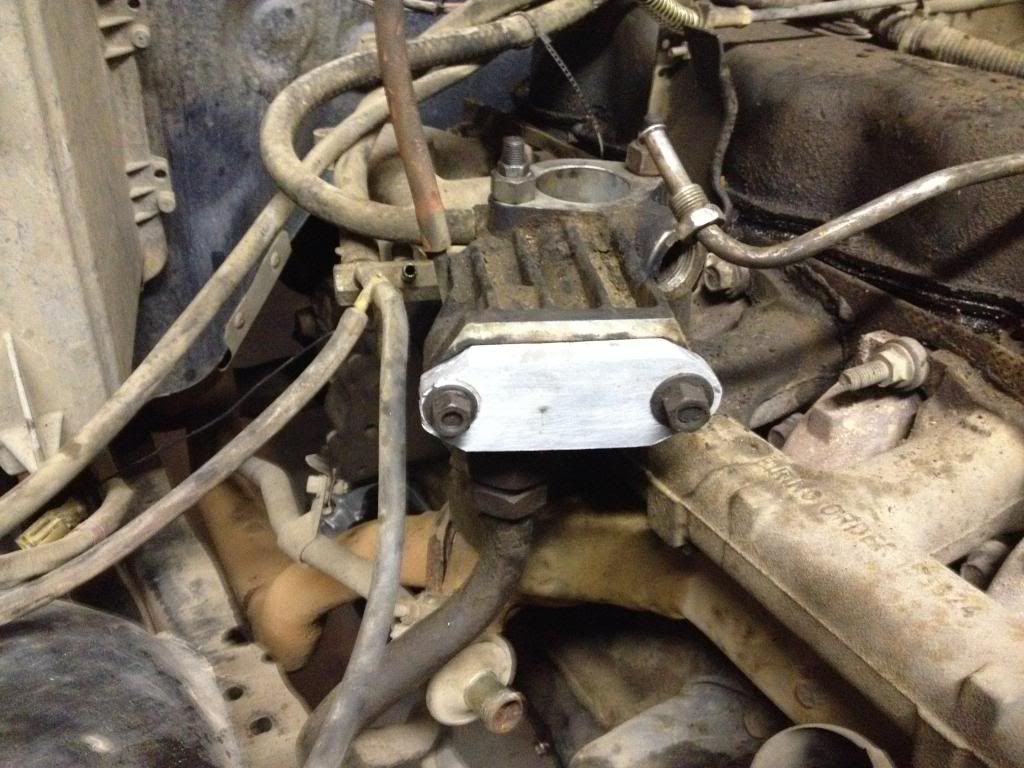
This is the EGR Block-Off Plate I made. After installing it, I may make different one that is sized to the mounting location instead of the gasket. You can also see the exhaust line that was going to the smog pump, with the old check valve in place.

In relation to the exhaust check valve; I know it won't be a long term fix. I'm just hoping to have it last through the winter and I'll get it fixed right this spring. My main goal at this point is to get the truck back up and running before the snow hits. I may get bold and deal with it sooner, or it may force me to.
Some Pics:
This is old valve at the PCV valve, the small line going to T into the purge line
This is the place where the small line from the PCV valve T's in
This is the EGR Block-Off Plate I made. After installing it, I may make different one that is sized to the mounting location instead of the gasket. You can also see the exhaust line that was going to the smog pump, with the old check valve in place.



Looks like you have things in-hand. But one suggestion on the line to the exhaust - cut it with a tubing cutter and fold it over. Pick a spot that is easily accessible and when you fold it crimp it tight. I used vise grips and then a large C-clamp and never had a leak.
Btw, where in KS are you? That's my home state and I'm in Ark City frequently.
Btw, where in KS are you? That's my home state and I'm in Ark City frequently.