



Computer question: After Re-Gear

Thread Starter
|
Elder User
Joined: May 2003
Posts: 540
Likes: 0
From: North Florida
Way I figure it is if the 4.30s where available stock, might as well go lower if the tires are taller than stock. That way it performs as good or better than a 4.30gear/265 tire ex.
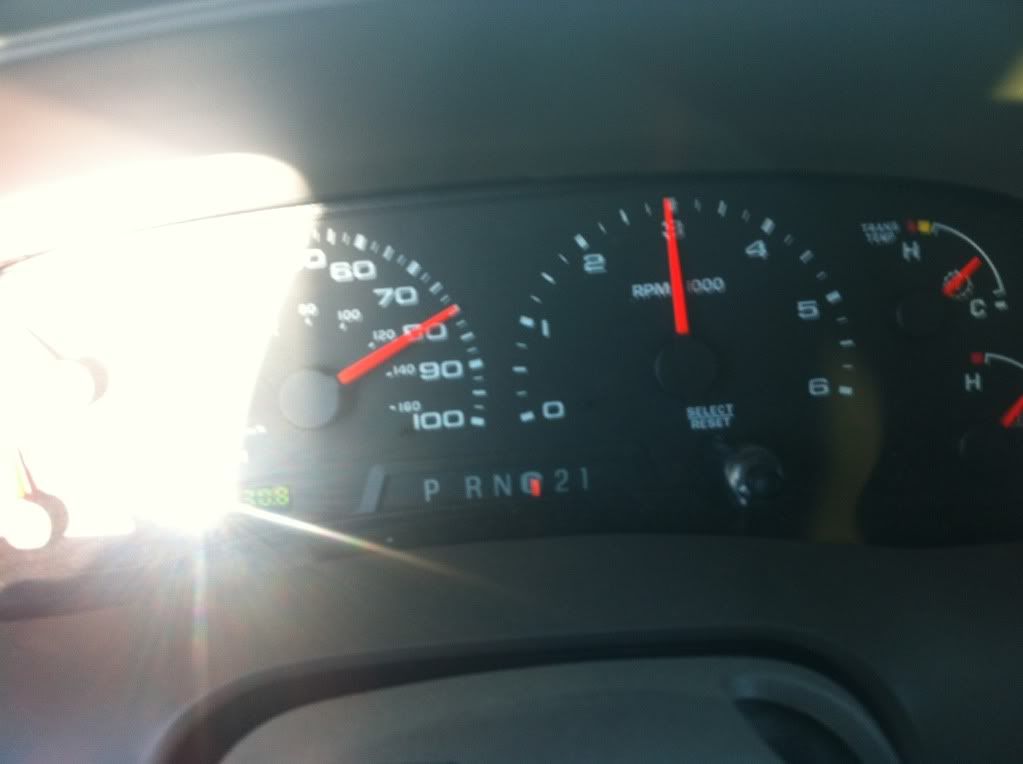
I run just shy of 3,000 rpms with 4.88s and 285s at 80 mph if I remember right. It pulls like mad. Even my Dad that has a 6.4l diesel was impressed how long it would hold OD pulling my camper and ATV trailer at 60 mph.
I run just shy of 3,000 rpms with 4.88s and 285s at 80 mph if I remember right. It pulls like mad. Even my Dad that has a 6.4l diesel was impressed how long it would hold OD pulling my camper and ATV trailer at 60 mph.
Did that make any sense? Basically, I'm just nervous about 4.56's.

Thanks again for everyone's input on this.
James
Frmr Ford Trans Engr


Joined: Aug 1999
Posts: 24,740
Likes: 2,669
From: SE Florida
Would you please explain that? I don't understand how a trans sensor could throw off the vehicle speed signal.
FTE Chapter Leader


Joined: May 2006
Posts: 11,273
Likes: 100
From: North Dakota

I completely understand what you are saying here. I guess my only concern is that I had both an old full size K5 Blazer and an 02 Tahoe that I had regeared to 4.56. Now, mind you I had them done BEFORE I put 35's on the wheels... I still had roughly 33" tires at the times of swap. Oh MAN did they feel low-geared! And that was okay because I knew 35's were coming for both. However, since I'm 2WD and stuck with the puny 285's, I'm nervous about 4.56 being too "RPM-Screamingly-Low" for my taste.
Did that make any sense? Basically, I'm just nervous about 4.56's.
Thanks again for everyone's input on this.
James
Did that make any sense? Basically, I'm just nervous about 4.56's.
Thanks again for everyone's input on this.
James



Super Moderator


Joined: May 2004
Posts: 29,380
Likes: 118
From: Central Coast of CA

An engine produces power. Nothing the rear diff does can increase the power output of the engine, nothing. The diff gearing can move the torque produced by the engine lower in the RPM band (or higher up), but it cannot increase the power produced by the engine.
That's why there's "drivetrain loss" on a chassis dyno compared to an engine dyno. If the trans and diff could up the output of the engine, chassis dyno's would show a higher output, and there wouldn't be a drivetrain loss in power.
Stewart
Frmr Ford Trans Engr
Joined: Aug 1999
Posts: 24,740
Likes: 2,669
From: SE Florida
I'm not splitting hairs, and I don't understand what you mean by multiplying the torque that's already there.
An engine produces power. Nothing the rear diff does can increase the power output of the engine, nothing. The diff gearing can move the torque produced by the engine lower in the RPM band (or higher up), but it cannot increase the power produced by the engine.
That's why there's "drivetrain loss" on a chassis dyno compared to an engine dyno. If the trans and diff could up the output of the engine, chassis dyno's would show a higher output, and there wouldn't be a drivetrain loss in power.
Stewart
An engine produces power. Nothing the rear diff does can increase the power output of the engine, nothing. The diff gearing can move the torque produced by the engine lower in the RPM band (or higher up), but it cannot increase the power produced by the engine.
That's why there's "drivetrain loss" on a chassis dyno compared to an engine dyno. If the trans and diff could up the output of the engine, chassis dyno's would show a higher output, and there wouldn't be a drivetrain loss in power.
Stewart
The trans and rear gears can't move the torque to any other RPM. The engine makes a given torque at a given RPM and no gearing can change that.
What gearing CAN change is the tractive effort* at the tire/ground interface. A higher numerical gear (i.e., 4:30 vs 3.73) will produce more tractive effort at the ground for any given torque.
If the engine is making 500 lb-ft and the trans is in 1:1 ratio and the truck has a 3.73:1 axle ratio there will be 500lb-ft * 3.73 = 1865 lb-ft of torque in the axle shafts. With that same 500 lb-ft and 4.30:1 gearing the torque in the axle shafts is now 2150 lb-ft.
Ideally this torque will split 50-50 to each side, but that doesn't happen in reality. It is close enough for an approximation. Now if you multiply this torque by the rolling radius of the tire (something less than the unloaded diameter of the tire) you will get tractive effort. This is the force that moves the vehicle.
I've ignored drivetrain losses, but the loss between the same truck when changing from a 3.73:1 to a 4.30:1 ratio is negligible.
*tractive effort = the amount of force that the tires exert upon the ground to move the vehicle.
Cargo Master

Joined: Feb 2011
Posts: 3,450
Likes: 13
From: Forest lake minnesota
FTE Stories
Ford Trucks for Ford Truck Enthusiasts

Top 6 Best Deals Available on New Fords & Lincolns Right Now
Brett Foote
This Hennessey Takes the Expedition Tremor's Off-Roading Capability to the Next Level
Verdad Gallardo
Top 10 Fords at 2026 Carlisle Ford Nationals
Joe Kucinski
3 Best / 3 Worst Parts of Modern Ford Ownership
Brett Foote
10 Amazing Upgrades That Solve Common Ford Truck Owner Headaches
Pouria Savadkouei
Every 2026 Ford Engine Explained
Brett Foote
10 Ugly Ford Trucks That We Still Kinda Love
Joe Kucinski
10 Things Every Truck Owner NEEDS (2026 Edition)
Michael S. Palmer
Rezvani's Latest Post-Apocalyptic Monster Is a Ford F-150 Raptor Underneath
Verdad Gallardo
Post Fiend
Joined: Mar 2009
Posts: 11,798
Likes: 14
From: Mt. Shasta California
The trans spins more rpm's with lower gears while the rear axles are at the stock rpms so with a stock trans sensor (that they don't have anyway) the speed would be off. I should have never mentioned a transmission sensor scenario.
Bleed Ford Blue
Joined: Apr 2009
Posts: 13,578
Likes: 157
From: Anchorage Alaska
My turn to split hairs.
The trans and rear gears can't move the torque to any other RPM. The engine makes a given torque at a given RPM and no gearing can change that.
What gearing CAN change is the tractive effort* at the tire/ground interface. A higher numerical gear (i.e., 4:30 vs 3.73) will produce more tractive effort at the ground for any given torque.
If the engine is making 500 lb-ft and the trans is in 1:1 ratio and the truck has a 3.73:1 axle ratio there will be 500lb-ft * 3.73 = 1865 lb-ft of torque in the axle shafts. With that same 500 lb-ft and 4.30:1 gearing the torque in the axle shafts is now 2150 lb-ft.
Ideally this torque will split 50-50 to each side, but that doesn't happen in reality. It is close enough for an approximation. Now if you multiply this torque by the rolling radius of the tire (something less than the unloaded diameter of the tire) you will get tractive effort. This is the force that moves the vehicle.
I've ignored drivetrain losses, but the loss between the same truck when changing from a 3.73:1 to a 4.30:1 ratio is negligible.
*tractive effort = the amount of force that the tires exert upon the ground to move the vehicle.
The trans and rear gears can't move the torque to any other RPM. The engine makes a given torque at a given RPM and no gearing can change that.
What gearing CAN change is the tractive effort* at the tire/ground interface. A higher numerical gear (i.e., 4:30 vs 3.73) will produce more tractive effort at the ground for any given torque.
If the engine is making 500 lb-ft and the trans is in 1:1 ratio and the truck has a 3.73:1 axle ratio there will be 500lb-ft * 3.73 = 1865 lb-ft of torque in the axle shafts. With that same 500 lb-ft and 4.30:1 gearing the torque in the axle shafts is now 2150 lb-ft.
Ideally this torque will split 50-50 to each side, but that doesn't happen in reality. It is close enough for an approximation. Now if you multiply this torque by the rolling radius of the tire (something less than the unloaded diameter of the tire) you will get tractive effort. This is the force that moves the vehicle.
I've ignored drivetrain losses, but the loss between the same truck when changing from a 3.73:1 to a 4.30:1 ratio is negligible.
*tractive effort = the amount of force that the tires exert upon the ground to move the vehicle.
Thank you sir, my point in a well thought out and explained in a nutshell

basically you can light'em up easier

Super Moderator
Joined: May 2004
Posts: 29,380
Likes: 118
From: Central Coast of CA
Damn I love having you on the site, Mark! Reps! 
Russ, if that was your point, then your post didn't convey that, because your post had the same misconceptions I've seen before on the 'net.
It's all good, as long as we're on the same page that changing the R & P gear doesn't increase torque provided by the engine.

Stewart
It's all good, as long as we're on the same page that changing the R & P gear doesn't increase torque provided by the engine.
Stewart

Bleed Ford Blue
Joined: Apr 2009
Posts: 13,578
Likes: 157
From: Anchorage Alaska
Russ, if that was your point, then your post didn't convey that, because your post had the same misconceptions I've seen before on the 'net.
It's all good, as long as we're on the same page that changing the R & P gear doesn't increase torque provided by the engine.
Stewart
i may be stupid (an nobody is arguing that) but i ain't THAT stupid.
holding O/D longer when towing or on large grades, more off the line power/TQ and like i said the ability to light'em up
Post Fiend
Joined: Mar 2009
Posts: 11,798
Likes: 14
From: Mt. Shasta California
Torque multiplication was just a poor choice of words and torque is rarely multiplied but an example of it is in a torque converter where the stator redirects the fluid and truly multiplies torque. There is no torque multiplication when going to lower gears, there is merely a shift of torque.
