




Question on soldering practices/methods

Thread Starter
|
Cargo Master


Joined: Jul 2009
Posts: 2,541
Likes: 54
From: Des Moines
Question on soldering practices/methods
I was curious to know:
When using standard solder to repair wiring, and then using heat shrink to cover the joint, is it advisable to dab a little dielectric grease on the joint before using the heat shrink? Would there be any advantage to it, or does the heat shrink do a good enough job of sealing if it's done right?
I know there's certain types of heat shrink that have a glue or sorts in them, but I'm asking for general reasons. I need to repair some tail light wiring and with it being at the back of the truck, where all the water, salt, and road grime are thrown as I'm driving, I thought dielectric grease could work IF it's not harmful in the sense of the heat from a mini torch ruining the grease.
When using standard solder to repair wiring, and then using heat shrink to cover the joint, is it advisable to dab a little dielectric grease on the joint before using the heat shrink? Would there be any advantage to it, or does the heat shrink do a good enough job of sealing if it's done right?
I know there's certain types of heat shrink that have a glue or sorts in them, but I'm asking for general reasons. I need to repair some tail light wiring and with it being at the back of the truck, where all the water, salt, and road grime are thrown as I'm driving, I thought dielectric grease could work IF it's not harmful in the sense of the heat from a mini torch ruining the grease.

FTE Chapter Leader
Joined: May 2009
Posts: 8,843
Likes: 27
From: Eastern Ky

I was curious to know:
When using standard solder to repair wiring, and then using heat shrink to cover the joint, is it advisable to dab a little dielectric grease on the joint before using the heat shrink? Would there be any advantage to it, or does the heat shrink do a good enough job of sealing if it's done right?
I know there's certain types of heat shrink that have a glue or sorts in them, but I'm asking for general reasons. I need to repair some tail light wiring and with it being at the back of the truck, where all the water, salt, and road grime are thrown as I'm driving, I thought dielectric grease could work IF it's not harmful in the sense of the heat from a mini torch ruining the grease.
When using standard solder to repair wiring, and then using heat shrink to cover the joint, is it advisable to dab a little dielectric grease on the joint before using the heat shrink? Would there be any advantage to it, or does the heat shrink do a good enough job of sealing if it's done right?
I know there's certain types of heat shrink that have a glue or sorts in them, but I'm asking for general reasons. I need to repair some tail light wiring and with it being at the back of the truck, where all the water, salt, and road grime are thrown as I'm driving, I thought dielectric grease could work IF it's not harmful in the sense of the heat from a mini torch ruining the grease.
Thread Starter
|
Cargo Master
Joined: Jul 2009
Posts: 2,541
Likes: 54
From: Des Moines
Thank you. I didn't think that the grease itself would be a problem. What concerned me was the heat from the mini torch causing it to break down somehow and then it's actually more harmful than helpful.

Posting Guru
Joined: Jul 2009
Posts: 1,069
Likes: 1
From: Toledo, Ohio
Liquid electrical tape is EXTREMELY flammable.. Ask me how I know.
I think dialectric grease is useless. But thats just me.
If its done right, heat shrink tubing alone will seal a connection. I have done a LOT of electrical repairs working on tractor trailers. I have never had to redo connections I soldered and heat shrinked.. But I did have to redo connections done with silicon, butt connectors, and electrical tape. (Quick repairs, but not designed for longevity)
I think dialectric grease is useless. But thats just me.
If its done right, heat shrink tubing alone will seal a connection. I have done a LOT of electrical repairs working on tractor trailers. I have never had to redo connections I soldered and heat shrinked.. But I did have to redo connections done with silicon, butt connectors, and electrical tape. (Quick repairs, but not designed for longevity)

Senior User
Joined: Nov 2012
Posts: 180
Likes: 0
From: Montana
Trending Topics
Thread Starter
|
Cargo Master
Joined: Jul 2009
Posts: 2,541
Likes: 54
From: Des Moines
Liquid electrical tape is EXTREMELY flammable.. Ask me how I know.
I think dialectric grease is useless. But thats just me.
If its done right, heat shrink tubing alone will seal a connection. I have done a LOT of electrical repairs working on tractor trailers. I have never had to redo connections I soldered and heat shrinked.. But I did have to redo connections done with silicon, butt connectors, and electrical tape. (Quick repairs, but not designed for longevity)
I think dialectric grease is useless. But thats just me.
If its done right, heat shrink tubing alone will seal a connection. I have done a LOT of electrical repairs working on tractor trailers. I have never had to redo connections I soldered and heat shrinked.. But I did have to redo connections done with silicon, butt connectors, and electrical tape. (Quick repairs, but not designed for longevity)

I think it's funny that people make statements like that and nobody ever asks them how they know.
FTE Stories
Ford Trucks for Ford Truck Enthusiasts

Top 10 Fords at 2026 Carlisle Ford Nationals
Joe Kucinski
3 Best / 3 Worst Parts of Modern Ford Ownership
Brett Foote
10 Amazing Upgrades That Solve Common Ford Truck Owner Headaches
Pouria Savadkouei
Every 2026 Ford Engine Explained
Brett Foote
10 Ugly Ford Trucks That We Still Kinda Love
Joe Kucinski
10 Things Every Truck Owner NEEDS (2026 Edition)
Michael S. Palmer
Rezvani's Latest Post-Apocalyptic Monster Is a Ford F-150 Raptor Underneath
Verdad Gallardo
Top 10 Most Expensive Ford Trucks Ever Sold on Bring a Trailer
Joe Kucinski
2027 Ford Super Duty Buyer's Guide (Every Model, Engine, & Package)
Brett Foote
Posting Guru
Joined: Jul 2009
Posts: 1,069
Likes: 1
From: Toledo, Ohio
Hahaha, Nice DBGrif.
Well ill tell you anyhow.. I was working on a semi trailer harness that had rubbed through and decided after doing the repair on multiple wires, I would put liquid electrical tape on it. I realized after applying I had forgotten to heat shrink one of the tubes over my connection. I grabbed my mini burnzomatic torch and proceeded to shrink the tube.. The whole repair went up in flames under the trailer. The driver was asleep in the cab. That was a pucker moment. Fortunately no damage occurred.
Well ill tell you anyhow.. I was working on a semi trailer harness that had rubbed through and decided after doing the repair on multiple wires, I would put liquid electrical tape on it. I realized after applying I had forgotten to heat shrink one of the tubes over my connection. I grabbed my mini burnzomatic torch and proceeded to shrink the tube.. The whole repair went up in flames under the trailer. The driver was asleep in the cab. That was a pucker moment. Fortunately no damage occurred.

Cross-Country
Joined: Sep 2013
Posts: 64
Likes: 1
From: boonies, central TEXAS
Solder Flux
I've soldered many joints and flux makes a big difference. Depending on the gauge of the wire, I use slightly different techniques. For a small grade wire I twist the ends together, lay the connection flat, flux, solder, (I use a soldering iron), I use one wrap of electric tape and then heat shrink the whole connection. Granted, I am an electronic technician so I tend to be a little pedantic about connections, those little plastic splicers drive me nuts!

New User
Joined: Oct 2013
Posts: 3
Likes: 0
it always depends where it is, I don't solder in any application where there isn't much movement or vibration, I use a red head, and double wrap the tape. I am an apprentice C6 electrician and I've never used the grease even on 48v applications. I use soldering on speakers ECU systems and in connectors but not two separate strands of wire. If you crimp wires together correctly I think theyre more effective and do not add or remove resistance.
Postmaster
Joined: Nov 2011
Posts: 3,533
Likes: 17
From: SW Florida
As for the dielectric grease, I only use it to seal water out of things like trailer power connectors and spark plug leads. For a solder connection in a harness or whatever, the proper size heatshrink tube will do the job.
Thread Starter
|
Cargo Master
Joined: Jul 2009
Posts: 2,541
Likes: 54
From: Des Moines
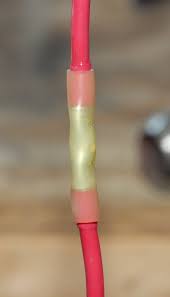
The diesel mechanics at work often use butt connectors that have a glue of some kind in them and the casing is heat shrink. After they're crimped on, the heat melts the glue and the casing to provide a solid seal. I'd have no problem using those in place of solder almost anytime- problem is that that they're expensive, which is why I opt for solder.
Even if I find myself in a position to use a plain butt connector for sake of time or a quick repair, I'll heat shrink the repair anyway just to prevent corrosion from taking hold on the wire.
Even if I find myself in a position to use a plain butt connector for sake of time or a quick repair, I'll heat shrink the repair anyway just to prevent corrosion from taking hold on the wire.
Post Fiend
Joined: Nov 2005
Posts: 7,437
Likes: 4
From: Charles Town, W bygod Va
The diesel mechanics at work often use butt connectors that have a glue of some kind in them and the casing is heat shrink. After they're crimped on, the heat melts the glue and the casing to provide a solid seal. I'd have no problem using those in place of solder almost anytime- problem is that that they're expensive, which is why I opt for solder.
Even if I find myself in a position to use a plain butt connector for sake of time or a quick repair, I'll heat shrink the repair anyway just to prevent corrosion from taking hold on the wire.
Even if I find myself in a position to use a plain butt connector for sake of time or a quick repair, I'll heat shrink the repair anyway just to prevent corrosion from taking hold on the wire.
I am a big fan of these also. The regular ones not only let moisture in, but the wire tends to bend back and forth and break right next to the connector.
I see no need for dielectric grease on a solder joint.
Edit: I get the heat shrink butt connecters at Walmart, price isn't too bad.
Thread Starter
|
Cargo Master
Joined: Jul 2009
Posts: 2,541
Likes: 54
From: Des Moines
I guess I didn't think to look for them at wal mart. We get them at work from midwest wheel, but we also buy in bulk so maybe it evens out.
I keep forgetting to mention that the reason I thought of using grease on the joint to begin with is that, IMO, there's never "too much protection" when it comes to electrical repairs. It's insane how even a small break in sheathing can cause corrosion to spread through the wire and before you know it, you have to replace a long section of it.
On my tail lights I noticed that corrosion has spread much further back than I thought, so for now I just made the necessary repair to get them working properly again. In the next couple of weeks I'm going to have to cut out all the wiring for both tail lights and replace it. I have the PO to thank for that- when he wired in the trailer sockets (one 7 pin in the bed for a 5th wheel and a 4 pin at the rear) he used... you guessed it... SCOTCH LOCKS!!!


I have been finding scotch locks all over this truck since I bought it. I'm not 100% against them- I think in certain applications they work quite nicely- but not when you're cutting into wires under the bed!!!
_-End Rant-_
We're all good now.
I am a big fan of these also. The regular ones not only let moisture in, but the wire tends to bend back and forth and break right next to the connector.
I see no need for dielectric grease on a solder joint.
Edit: I get the heat shrink butt connecters at Walmart, price isn't too bad.
I keep forgetting to mention that the reason I thought of using grease on the joint to begin with is that, IMO, there's never "too much protection" when it comes to electrical repairs. It's insane how even a small break in sheathing can cause corrosion to spread through the wire and before you know it, you have to replace a long section of it.
On my tail lights I noticed that corrosion has spread much further back than I thought, so for now I just made the necessary repair to get them working properly again. In the next couple of weeks I'm going to have to cut out all the wiring for both tail lights and replace it. I have the PO to thank for that- when he wired in the trailer sockets (one 7 pin in the bed for a 5th wheel and a 4 pin at the rear) he used... you guessed it... SCOTCH LOCKS!!!
I have been finding scotch locks all over this truck since I bought it. I'm not 100% against them- I think in certain applications they work quite nicely- but not when you're cutting into wires under the bed!!!
_-End Rant-_
We're all good now.
I am a big fan of these also. The regular ones not only let moisture in, but the wire tends to bend back and forth and break right next to the connector.
I see no need for dielectric grease on a solder joint.
Edit: I get the heat shrink butt connecters at Walmart, price isn't too bad.