




Learn from my mistake!

Thread Starter
|
Senior User
Joined: Apr 2004
Posts: 255
Likes: 0
Learn from my mistake!
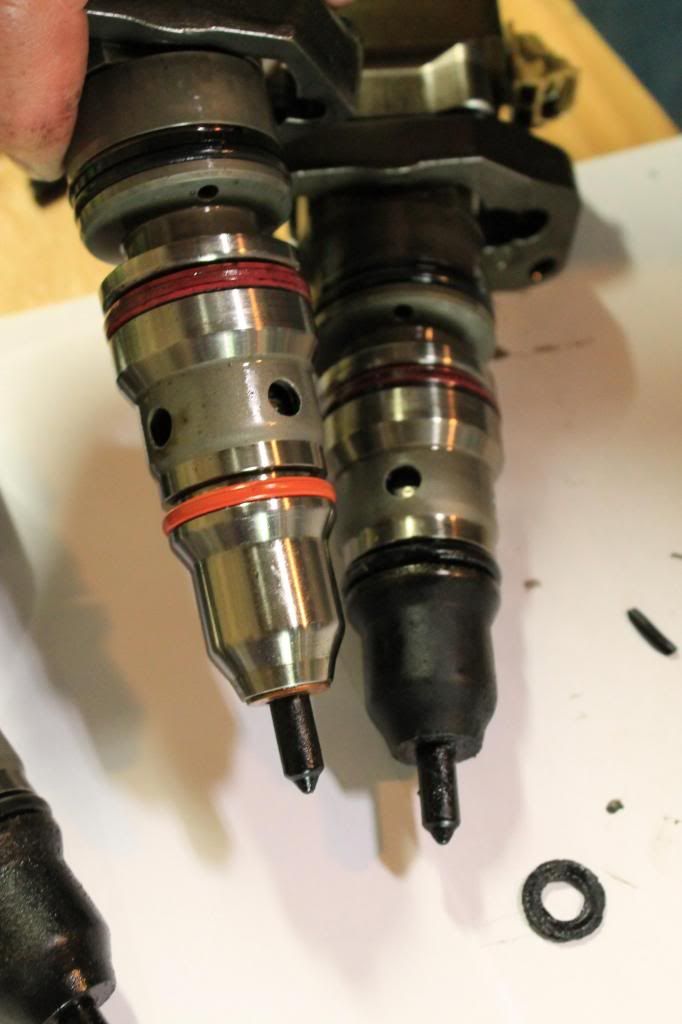
Wanted to share another "learning curve" experience when I replaced injector o-rings and reinstalled my injectors about three months ago. At first everything was fine, and then recently I lost power while towing during a long pull, and had large amounts of white smoke. I pulled the injectors and found three of them were scorched, see pic
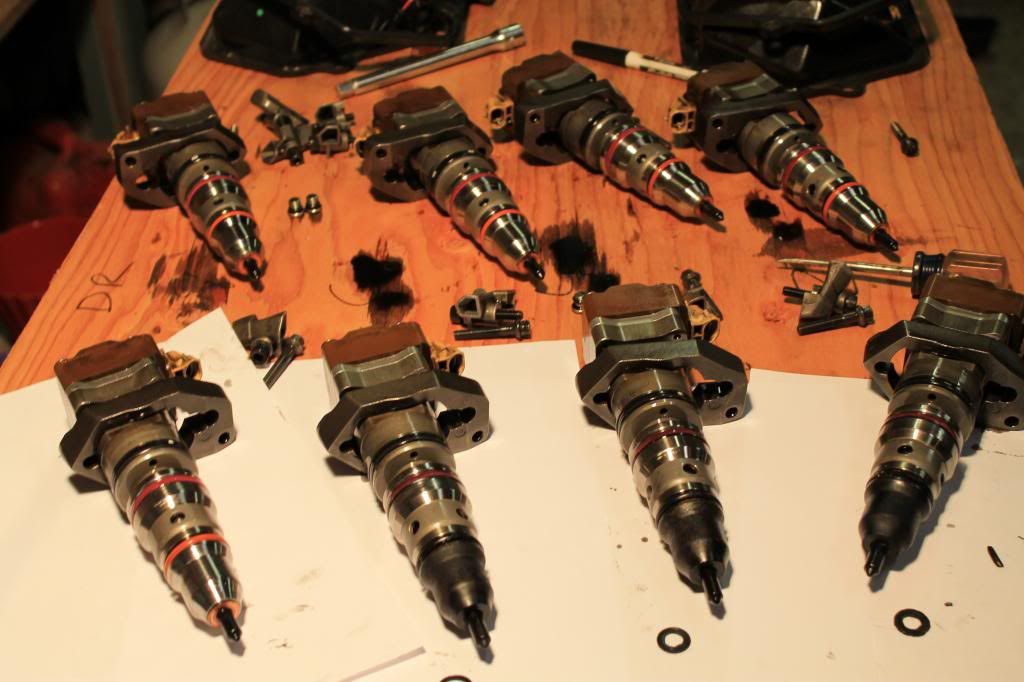
Comparison between proper and improper injector installation. These o-rings have approximately 2000 miles on them.
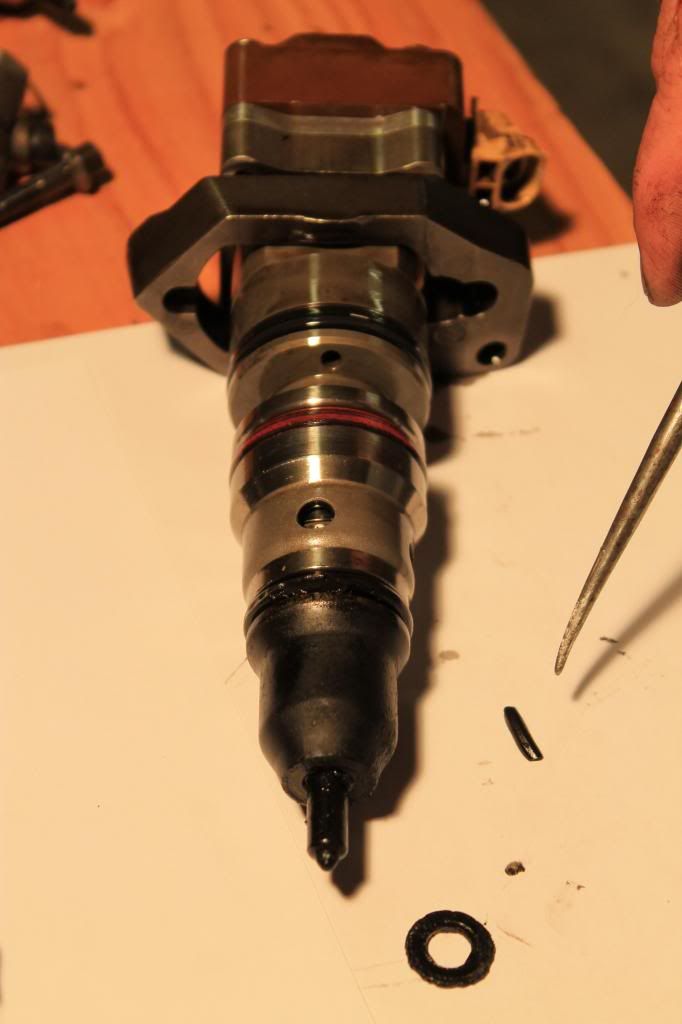
Close up with damaged o-ring / copper washer
After asking many boring questions on this forum, and many phone calls I bascially determined this was a self inflicted wound. There are several issues which may have caused this, if not a combination of them all:
1) Injector's not fully seated
2) Injector bolts improperly torqued due to a poor seating
3) Debris, oil, in the injector cups interfering with copper washer during seating.
I spoke with a diesel tech who stated ensure you clean, clean, clean, and clean again the injector cups prior to install. If there is anything small interfering with the copper washer, it provides a path for combustion gases to follow and eventually deteriorates the washer. This is why the symptoms aren't noticed for several months.
Secondly, when seating, smack the solenid of the injector with a rubber mallet and get a good seat. I was timid smacking the solenoid because I didn't want to cause damage. When torqing the injector bolts, tighten them as tight as you can by hand. You will not break the injector brackets or deform the copper washer. He stated this results in about 30-40 ft lbs of torque. Bascially, don't be afraid to tighten it.
On a good note, the scorched injectors are most likely OK and just look worse for the wear. Just need new o-rings and clean up a fine abrasive. I think I'm going to upgrade to Stage 1's now.

Comparison between proper and improper injector installation. These o-rings have approximately 2000 miles on them.

Close up with damaged o-ring / copper washer

After asking many boring questions on this forum, and many phone calls I bascially determined this was a self inflicted wound. There are several issues which may have caused this, if not a combination of them all:
1) Injector's not fully seated
2) Injector bolts improperly torqued due to a poor seating
3) Debris, oil, in the injector cups interfering with copper washer during seating.
I spoke with a diesel tech who stated ensure you clean, clean, clean, and clean again the injector cups prior to install. If there is anything small interfering with the copper washer, it provides a path for combustion gases to follow and eventually deteriorates the washer. This is why the symptoms aren't noticed for several months.
Secondly, when seating, smack the solenid of the injector with a rubber mallet and get a good seat. I was timid smacking the solenoid because I didn't want to cause damage. When torqing the injector bolts, tighten them as tight as you can by hand. You will not break the injector brackets or deform the copper washer. He stated this results in about 30-40 ft lbs of torque. Bascially, don't be afraid to tighten it.
On a good note, the scorched injectors are most likely OK and just look worse for the wear. Just need new o-rings and clean up a fine abrasive. I think I'm going to upgrade to Stage 1's now.

Fleet Mechanic
Joined: May 2005
Posts: 1,739
Likes: 14
From: Vale, NC
Thanks - I plan to do injectors this fall and this is really helpful. But, what do you mean by "tighten by hand". To me that sounds like just your fingers or something. Did you torque it with a torque wrench? Wouldn't that be critical with something like injectors? I'm usually a little lax about getting out the torque wrench, but it seems to me for injectors that would be one where you would want to torque it with a well-calibrated wrench to the exact factory specs.
Thread Starter
|
Senior User
Joined: Apr 2004
Posts: 255
Likes: 0
Thanks - I plan to do injectors this fall and this is really helpful. But, what do you mean by "tighten by hand". To me that sounds like just your fingers or something. Did you torque it with a torque wrench? Wouldn't that be critical with something like injectors? I'm usually a little lax about getting out the torque wrench, but it seems to me for injectors that would be one where you would want to torque it with a well-calibrated wrench to the exact factory specs.
Hotshot


Joined: Feb 2009
Posts: 10,408
Likes: 75
From: Plankinton, SD
Those bolts aren't that big, you will stretch them at 30-40lbs, weakening them, failure is right around the corner imo. I'd think they'd know what they are saying, but I wouldn't go that tight.
Thread Starter
|
Senior User
Joined: Apr 2004
Posts: 255
Likes: 0
Probably right. I think the gist of what he was saying is don't be afraid to get those bolts tight, after you seat the injector with a mallet.
Trending Topics

Cargo Master
Joined: Nov 2010
Posts: 3,244
Likes: 40
Id question your "diesel tech" guy. Injector hold down bolts get torqued to 10 ft pnds or so, which equates to 110 in pounds. Maybe he mispoke, but I would sure hate to see what happens trying to torque them to 30 ft pounds.
FTE Stories
Ford Trucks for Ford Truck Enthusiasts

Rezvani's Latest Post-Apocalytic Monster Is a Ford F-150 Raptor Underneath
Verdad Gallardo
Top 10 Most Expensive Ford Trucks Ever Sold on Bring a Trailer
Joe Kucinski
2027 Ford Super Duty Buyer's Guide (Every Model, Engine, & Package)
Brett Foote
Top 10 Ford Truck Tragedies
Joe Kucinski
AEV FXL Super Duty - the Super Duty Raptor Ford Doesn't Make
Brett Foote
Lobo Vs Lobo: Proof the F-150 Lobo Should Be Even Lower!
Michael S. Palmer
Ford's 2001 Explorer Sportsman Concept Looks For a New Home
Verdad Gallardo
10 Best Ford Truck Engines We Miss the Most!
Joe Kucinski
2026 Shelby F-150 Off-Road: Better Than a Raptor R?
Brett Foote
Cargo Master
Joined: Feb 2009
Posts: 2,111
Likes: 0
From: Yreka, CA
I haven't messed with my 7.3's injectors but aren't the hold down's similar style to the 6.0l? I would imagine the hold down bolts are similar size too.
6.0l injectors get torqued to 20 ft lbs.
6.0l injectors get torqued to 20 ft lbs.

Cargo Master
Joined: Feb 2009
Posts: 2,111
Likes: 0
From: Yreka, CA
Right, but isn't is a very similar setup to the 6.0l injectors which call for 240 in lbs of torque? I'm just speculating that if the bolts are similar shouldn't the 7.3l bolts be safe at least up to 240 in lbs?

Fleet Owner


Joined: Aug 2004
Posts: 20,419
Likes: 197
From: AZ

I took the advice of a super moderator here (cookie) and mixed Vaseline with oil and coated the injectors with that before putting them in. Worked good, when hit with a rubber mallet, like Mike said, you could hear them seat.
Thread Starter
|
Senior User
Joined: Apr 2004
Posts: 255
Likes: 0
I'll give the vaseline a try this time as well. Just ordered my Stage 1's! I definately want to hear them seat this time. I won't be using 30-40 ft lbs of torque either as I'm not in the mood to stretch any bolts, or end up with another improperly seated injector. If I go over 120 nm/10ft lbs a tiny bit though, I'm not going to worry about it.