




Operation Overlord
Thread Starter
|
Government Teat-sucker
Joined: Oct 2003
Posts: 9,748
Likes: 1
From: Virginia Beach

Operation Overlord
June 6, 1944, 160,000 Allied troops landed along a 50-mile stretch of heavily-fortified French coastline to fight **** Germany on the beaches of Normandy, France. General Dwight D. Eisenhower called the operation a crusade in which “we will accept nothing less than full victory.” More than 5,000 Ships and 13,000 aircraft supported the D-Day invasion, and by day’s end on June 6, the Allies gained a foot- hold in Normandy. The D-Day cost was high -more than 9,000 Allied Soldiers were killed or wounded -- but more than 100,000 Soldiers began the march across Europe to defeat Hitler.

Thread Starter
|
Government Teat-sucker
Joined: Oct 2003
Posts: 9,748
Likes: 1
From: Virginia Beach

No way we could do this today. I just don't feel there is the same sort of dedication in our time. Oh, well. I'm glad the greatest generation were the ones called upon.

Moderator


Joined: May 2007
Posts: 158,613
Likes: 12,052
From: Greenfield, MA

A video I came across...well worth the time to watch it. We must never forget the members of "The Greatest Generation". My father served aboard the USS Massey during WWII...he passed on 12/3/12. Sadly...they will soon all be gone.
D-Day - June 6, 1944 - the United States Army
D-Day - June 6, 1944 - the United States Army

Super Moderator


Joined: Apr 2004
Posts: 34,518
Likes: 2,826
You'd have to do some figuring based on total casualties on all beaches for all forces. It doesn't sound quite right, but that doesn't mean it isn't. Omaha was so bad compared to the others, they were ready to abandon it at one point. Excellent FAQ, info etc here:
GuidedTours
Given the current state of military hardware, such an invasion would be unthinkable today. A few dozen "smart bombs" and no more bunkers for example.
Also note the apalling French civilian casualty estimates of 15-20,000. That's KILLED, plus the wounded or missing.
I don't think too many people think of the enormity of WWII. The idea of really no place in the world free of the threat of armed conflict, and great parts of the world in the midst of active armed conflict is hard to fathom.
GuidedTours
Given the current state of military hardware, such an invasion would be unthinkable today. A few dozen "smart bombs" and no more bunkers for example.
Also note the apalling French civilian casualty estimates of 15-20,000. That's KILLED, plus the wounded or missing.
I don't think too many people think of the enormity of WWII. The idea of really no place in the world free of the threat of armed conflict, and great parts of the world in the midst of active armed conflict is hard to fathom.

Post Fiend


Joined: May 2012
Posts: 14,724
Likes: 0
From: Gods Country, Kansas
Like Stu said, it is really hard to find that kind of dedication any more. Not saying our military today is a bunch of pansies, I'm not saying that at all, I'm just saying there is no way we could do an operation like that today.

Postmaster
Joined: Dec 2008
Posts: 3,940
Likes: 8
From: Southern Oregon Coast
My grandmother was married 3 times in her life. Her 1st husband was my grandfather; her 2nd was a lowlife *******; and her 3rd was a hero...
His name was Albert Frank Durden - I didn't know him until after my grandmother married him. At first, I didn't know what to make of him but, as I grew to know him, the more I grew to respect him. At the time, it was shortly after I had been discharged from the USMC under an honorable/medical, and I had a pretty bad anger management issue as a result - Frank helped me, in his own way, get re-centered again.
He passed-away at the age of 89 in the year 2000.
Frank served in the US Army - 2nd Division, 23rd Regiment.
He landed on Normandy on D-day +3. Now for those who don't know what the "+3" means, here it is: Not all of the troops who were sent over there to storm that beach on that day and at time, made it. The boat that Frank was on collided with another boat out in the water and, as a result, repairs had to be made to the 2 boats before they could bring the troops to the shore. Frank landed on the shore of Normandy 3-days after the main assault, hence the "+3". He then became part of the troupe that marched from Normandy all the way to Pilsen, Czechoslovakia. He had some interesting stories about what they encountered along the way.
Until the day he died, he suffered from anxiety as a result of that war. Once, while under anesthesia for an eyelid surgery, he had a flashback to the war where he saw enemy aircraft bombing his location. He was well into his 80's when this happened and he had not experienced that kind of fear since the war - it rattled him pretty badly.
I learned a lot from that man and, even though he wasn't related by blood, I regarded him to be more of a grandfather than my maternal grandfather had ever been.
We're celebrating my grandmother's 86th birthday this coming Sunday.
His name was Albert Frank Durden - I didn't know him until after my grandmother married him. At first, I didn't know what to make of him but, as I grew to know him, the more I grew to respect him. At the time, it was shortly after I had been discharged from the USMC under an honorable/medical, and I had a pretty bad anger management issue as a result - Frank helped me, in his own way, get re-centered again.
He passed-away at the age of 89 in the year 2000.
Frank served in the US Army - 2nd Division, 23rd Regiment.
He landed on Normandy on D-day +3. Now for those who don't know what the "+3" means, here it is: Not all of the troops who were sent over there to storm that beach on that day and at time, made it. The boat that Frank was on collided with another boat out in the water and, as a result, repairs had to be made to the 2 boats before they could bring the troops to the shore. Frank landed on the shore of Normandy 3-days after the main assault, hence the "+3". He then became part of the troupe that marched from Normandy all the way to Pilsen, Czechoslovakia. He had some interesting stories about what they encountered along the way.
Until the day he died, he suffered from anxiety as a result of that war. Once, while under anesthesia for an eyelid surgery, he had a flashback to the war where he saw enemy aircraft bombing his location. He was well into his 80's when this happened and he had not experienced that kind of fear since the war - it rattled him pretty badly.
I learned a lot from that man and, even though he wasn't related by blood, I regarded him to be more of a grandfather than my maternal grandfather had ever been.
We're celebrating my grandmother's 86th birthday this coming Sunday.
Trending Topics

Freshman User
Joined: Apr 2013
Posts: 38
Likes: 0
put them in this situation and they would **** there pants
FTE Stories
Ford Trucks for Ford Truck Enthusiasts

Top 10 Fords at 2026 Carlisle Ford Nationals
Joe Kucinski
3 Best / 3 Worst Parts of Modern Ford Ownership
Brett Foote
10 Amazing Upgrades That Solve Common Ford Truck Owner Headaches
Pouria Savadkouei
Every 2026 Ford Engine Explained
Brett Foote
10 Ugly Ford Trucks That We Still Kinda Love
Joe Kucinski
10 Things Every Truck Owner NEEDS (2026 Edition)
Michael S. Palmer
Rezvani's Latest Post-Apocalyptic Monster Is a Ford F-150 Raptor Underneath
Verdad Gallardo
Top 10 Most Expensive Ford Trucks Ever Sold on Bring a Trailer
Joe Kucinski
2027 Ford Super Duty Buyer's Guide (Every Model, Engine, & Package)
Brett Foote
Ford Parts Specialist
Joined: Nov 2006
Posts: 88,826
Likes: 787
From: Simi Valley, CA
Every Allied invasion during WWII was a D (Disembarkation) Day.
Operation Neptune/Overlord, Neptune was the sea portion, Overlord was the land invasion.
A week before the invasion, Allied intelligence panicked when they discovered the words overlord, sword and gold were answers in a London Times crossword puzzle.
FIASCO: US troops landed on wrong section of Omaha Beach in front of sea wall, while their armor was landed in the correct location.
Troops pinned down until two US Destroyers, using their 5" guns, sailed in close to the beach, pounded a hole thru the sea wall.
Operation Neptune/Overlord, Neptune was the sea portion, Overlord was the land invasion.
A week before the invasion, Allied intelligence panicked when they discovered the words overlord, sword and gold were answers in a London Times crossword puzzle.
FIASCO: US troops landed on wrong section of Omaha Beach in front of sea wall, while their armor was landed in the correct location.
Troops pinned down until two US Destroyers, using their 5" guns, sailed in close to the beach, pounded a hole thru the sea wall.

Cargo Master
Joined: Jul 2006
Posts: 3,014
Likes: 91
From: Concord, CA
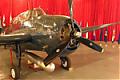
What truly made D-Day possible was the sacrifices of the Army Air Forces in establishing air superiority such as these from a military forum.
The Bloody Hundredth: 8th AF (in Europe) had more fatalities--26,000--than the entire USMC in WW II. 77% of Americans who flew against the Reich before D-Day would wind up as casualties
German air raids killed nearly 43,000 British civilians. Not until the fourth year of WWII would the Germans kill more British soldiers than women and children.
Dangerous Sky: In the 8th AFs first year of operations, more than 1,634 men were removed from flying for frostbite, over 400 more than were removed for combat wounds.
The Bells of Hell: in ground combat, for every soldier killed, three to four were wounded. In the AAF in WWII, over three times as many men were killed as wounded.
The Turning: Maj James H. Howard, won the only MOH awarded to a fighter pilot in EU theater.
Liberated Skies:
In the 5-month battle for air supremacy that made D-Day possible, the AAF in Europe lost over 2,600 heavy bombers and over 980 fighter planes and suffered 18,400 casualties, including 10,000 combat deaths, over half as many men as the 8th AF lost in all of 1942 and 1943. These airmen deserve an equal place in the national memory with the approximately 6,000 American soldiers killed, wounded, or MIA in the amphibious and airborne assault on D-Day.
Allied bombing in WWII has been more closely scrutinized than any other military operation in history, but almost none of its critics point out one of its most dangerous shortcomings: the failure to place air operations--what to bomb, how to bomb, and when to bomb--under closer civilian scrutiny.
BOTTOM LINE: The 8th AF sustained approx. 1/10th of all the Americans killed in WWII. Only subs had a higher fatality rate: 23%. 28K AAF members became POWs. Taken with the over 18K wounded--and not counting psychological casualties--the rate is over 34%--the highest casualty rate in the American armed forces in WWII.
German air raids killed nearly 43,000 British civilians. Not until the fourth year of WWII would the Germans kill more British soldiers than women and children.
Dangerous Sky: In the 8th AFs first year of operations, more than 1,634 men were removed from flying for frostbite, over 400 more than were removed for combat wounds.
The Bells of Hell: in ground combat, for every soldier killed, three to four were wounded. In the AAF in WWII, over three times as many men were killed as wounded.
The Turning: Maj James H. Howard, won the only MOH awarded to a fighter pilot in EU theater.
Liberated Skies:
In the 5-month battle for air supremacy that made D-Day possible, the AAF in Europe lost over 2,600 heavy bombers and over 980 fighter planes and suffered 18,400 casualties, including 10,000 combat deaths, over half as many men as the 8th AF lost in all of 1942 and 1943. These airmen deserve an equal place in the national memory with the approximately 6,000 American soldiers killed, wounded, or MIA in the amphibious and airborne assault on D-Day.
Allied bombing in WWII has been more closely scrutinized than any other military operation in history, but almost none of its critics point out one of its most dangerous shortcomings: the failure to place air operations--what to bomb, how to bomb, and when to bomb--under closer civilian scrutiny.
BOTTOM LINE: The 8th AF sustained approx. 1/10th of all the Americans killed in WWII. Only subs had a higher fatality rate: 23%. 28K AAF members became POWs. Taken with the over 18K wounded--and not counting psychological casualties--the rate is over 34%--the highest casualty rate in the American armed forces in WWII.

Thread
Thread Starter
Forum
Replies
Last Post