





truck failed emissions... input wanted...

Thread Starter
|
Lead Driver
Joined: Jul 2011
Posts: 8,679
Likes: 191
From: On the Edge of the Desert
truck failed emissions... input wanted...
well i took the old 71 in for an emmisions test so that i could once again get it registerd and on the road. as the title says, it failed.
it did good on the carbon monoxide test, but the amount of hydrocarbons emitted were what killed it. with the passing limit at 450ppm it blew a 433 at idle and a 582 driving on the rollers.
it has all new plugs, wires, cap and rotor.
before we went we turned up the idle to about 800rpm, and leaned it out some.
im thinking that it the combonation of worn points and a "bad" carb causing it to sputter are what did it in...
im gonna put some new points in it and get a carb kit. what else should i look at to help this thing pass?
last time it was registered was in '95 and the ol man says it always passed with flying colors...
note: it has a 1970 2v 351C engine
it did good on the carbon monoxide test, but the amount of hydrocarbons emitted were what killed it. with the passing limit at 450ppm it blew a 433 at idle and a 582 driving on the rollers.
it has all new plugs, wires, cap and rotor.
before we went we turned up the idle to about 800rpm, and leaned it out some.
im thinking that it the combonation of worn points and a "bad" carb causing it to sputter are what did it in...
im gonna put some new points in it and get a carb kit. what else should i look at to help this thing pass?
last time it was registered was in '95 and the ol man says it always passed with flying colors...
note: it has a 1970 2v 351C engine

Lead Driver
Joined: Jan 2003
Posts: 9,893
Likes: 12
From: Ohio

So it's fat under load/power. Where is the timing set?
Autolite 2bbl? Might need a new power valve? Could be stiff and not closing fully(leaning out properly). Not alot else in an Autolite to go wrong.
Autolite 2bbl? Might need a new power valve? Could be stiff and not closing fully(leaning out properly). Not alot else in an Autolite to go wrong.

Hotshot


Joined: Mar 2013
Posts: 14,255
Likes: 199
From: Phoenix, Az.
Carbon monoxide is more in how the carb is working and Hydrocarbons is more in how the engine is handling what the carb is giving it. Probably a combo of the lean mixture you gave it and too much timing. Set the timing back to factory spec. Since the motor sat for a time could be something related. Say sticky valves? If you have an additive called "seafoam" at one of your local parts retailers put that in your oil and gas tank both. The stuff is awesome for gas or diesel. Or, some rubbing alcohol in the tank wouldn't hurt.................
<table border="0" cellSpacing="0" cellPadding="0" width="554"><tbody><tr><td vAlign="top" width="100%" align="center"><table border="0" cellSpacing="0" cellPadding="10" width="96%"><tbody><tr><td class="text1">WHAT CAUSES HIGH HYDROCARBON (HC)?
Below are common failures which are likely to produce high Hydrocarbon HC. Hydrocarbons are basically raw fuel, otherwise known as Gasoline. High Hydrocarbon (HC) emissions are almost always a sign of poor fuel ignition. However, it's not always that the engine's ignition system is responsible for high Hydrocarbon emissions. Read on. 1. Improper Ignition Timing - Engine ignition timing is measured in degrees before or after Top Dead Center (TDC). Example of an ignition timing failure would be in the case where an engine's ignition timing is required to be set at 10 degrees Before Top Dead Center (BTDC) and instead is set to 15 degrees BTDC. This fault will not only cause a smog check "functional failure", but will increase Hyrdocarbon (HC) emissions as well. California allows 3 degrees +/- off of the manufacturer's required setting. Note: Late model vehicle's may not have a distributor, and therefore no timing adjustment will be needed. On these engines timing is electronically controlled by the ECU (Engine Control Unit).
2. Defective Ignition Components Your vehicle's ignition system consists of the ignition coil/s, distributor*, distributor cap*, distributor rotor*, ignition wires, and spark plugs. If any of these components are defective the engine will produce high hydrocarbons. A common reason ignition components perform poorly is due to carbon build-up. High ignition voltage traveling through the air pockets within these components form carbon. Carbon acts as an insulator between paths of electricity, decreasing the energy required at the spark plug to ignite the air/fuel in the combustion chambers properly. *Distributor-less engines do not have these components.
3. Lean Fuel Mixture - Any condition which will cause unmetered air to enter the intake manifold, and ultimately the combustion chambers, will cause high hydrocarbons (HC). This condition is called a lean miss-fire. Such faults as vacuum leaks and gasket leaks will cause lean fuel/air mixtures. Broken, disconnected or misrouted vacuum hoses will do the same. It is also important to note that many engine components rely on engine vacuum for proper operation. If any of these components are defective, externally or internally, they may cause large vacuum leaks as well. A good example of such a component is your vehicle's power brake booster.
</td></tr></tbody></table></td><td class="text6" vAlign="top" align="center">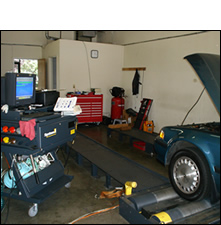
<table border="0" cellSpacing="0" cellPadding="0" width="222" align="center" height="226"><tbody><tr><td style='width: 222px; height: 226px; background-image: url("images/findbg-sm.png"); background-repeat: no-repeat;' height="226" width="222"> <table border="0" width="200" align="center"><form id="CFForm_1" method="post" name="CFForm_1" action="locator.cfm"><tbody><tr><td align="center"><select style="width: 190px; font-size: 13px;" id="ServiceType" name="ServiceType"> <option selected="" value="2">Select Type of Smog Check<option value="2">Regular Smog Check<option value="1">STAR Station Smog Check<option value="3">Smog Check Repair</option></select> </td></tr><tr><td align="center"><table cellSpacing="0" cellPadding="0" width="190" align="center"><tbody><tr><td vAlign="top"><input style="width: 99px; font-size: 13px;" id="ZipCode" name="ZipCode" value="Enter Zipcode" size="2"> </td><td width="41" noWrap="" align="right">Miles: </td><td vAlign="top"><select style="width: 50px; font-size: 13px;" id="miles" name="miles"> <option value="3">3</option> <option value="4">4</option> <option value="5">5</option> <option value="6">6</option> <option value="7">7</option> <option selected="" value="8">8</option> <option value="9">9</option> <option value="10">10</option> <option value="11">11</option> <option value="12">12</option> <option value="13">13</option> <option value="14">14</option> <option value="15">15</option> <option value="16">16</option> <option value="17">17</option> <option value="18">18</option> <option value="19">19</option> <option value="20">20</option> <option value="30">30</option></select> </td></tr></tbody></table></td></tr><tr><td class="text1" align="center">Which Type Should I Choose? </td></tr><tr><td align="center"><input name="submit" value=" Begin Search >> " src="images/button_search.png" type="image"> </td></tr><tr><td align="center"> </td></tr></tbody></form><tbody></tbody></table></td></tr></tbody></table><table cellSpacing="0" cellPadding="0"><tbody><tr><td><!--Topic Navigation -->Related Links: </td></tr></tbody></table><!-- Start of Java Script to control the Affiliate Banner rotation --><!-- End of Java Script to control the AffiliateBanner rotation -->
<ins style="margin: 0px; padding: 0px; border: currentColor; width: 120px; height: 240px; display: inline-table; visibility: visible; position: relative;"><ins style="margin: 0px; padding: 0px; border: currentColor; width: 120px; height: 240px; display: block; visibility: visible; position: relative;" id="aswift_0_anchor"><iframe style="left: 0px; top: 0px; position: absolute;" id="aswift_0" height="240" marginHeight="0" frameBorder="0" width="120" allowTransparency="" name="aswift_0" marginWidth="0" scrolling="no"></iframe></ins></ins>
</td></tr></tbody></table>
<table style="width: 500px; height: 500px;" border="0" cellSpacing="0" cellPadding="5" width="524" align="left"><tbody><tr><td class="text1"><dir=ltr style="margin-right: 0px;" align="left"></dir=ltr><td class="text1" width="600"><dir=ltr style="margin-right: 0px;"> Low Cylinder Compression - This fault is one of the less common high HC causing problems we encounter. Reasons an engine may have low or no compression in one or more of its cylinders may include things such as burned intake or exhaust valve/s, defective valve guides and/or seals, defective piston rings, and burned head gasket/s. A wet/dry cylinder compression test will diagnose this fault. More then often if such a problem exists it will be very apparent. You should notice rough idle.
</dir=ltr></td></tr></tbody></table>
<table border="0" cellSpacing="0" cellPadding="0" width="554"><tbody><tr><td vAlign="top" width="100%" align="center"><table border="0" cellSpacing="0" cellPadding="10" width="96%"><tbody><tr><td class="text1">WHAT CAUSES HIGH HYDROCARBON (HC)?
Below are common failures which are likely to produce high Hydrocarbon HC. Hydrocarbons are basically raw fuel, otherwise known as Gasoline. High Hydrocarbon (HC) emissions are almost always a sign of poor fuel ignition. However, it's not always that the engine's ignition system is responsible for high Hydrocarbon emissions. Read on. 1. Improper Ignition Timing - Engine ignition timing is measured in degrees before or after Top Dead Center (TDC). Example of an ignition timing failure would be in the case where an engine's ignition timing is required to be set at 10 degrees Before Top Dead Center (BTDC) and instead is set to 15 degrees BTDC. This fault will not only cause a smog check "functional failure", but will increase Hyrdocarbon (HC) emissions as well. California allows 3 degrees +/- off of the manufacturer's required setting. Note: Late model vehicle's may not have a distributor, and therefore no timing adjustment will be needed. On these engines timing is electronically controlled by the ECU (Engine Control Unit).
2. Defective Ignition Components Your vehicle's ignition system consists of the ignition coil/s, distributor*, distributor cap*, distributor rotor*, ignition wires, and spark plugs. If any of these components are defective the engine will produce high hydrocarbons. A common reason ignition components perform poorly is due to carbon build-up. High ignition voltage traveling through the air pockets within these components form carbon. Carbon acts as an insulator between paths of electricity, decreasing the energy required at the spark plug to ignite the air/fuel in the combustion chambers properly. *Distributor-less engines do not have these components.
3. Lean Fuel Mixture - Any condition which will cause unmetered air to enter the intake manifold, and ultimately the combustion chambers, will cause high hydrocarbons (HC). This condition is called a lean miss-fire. Such faults as vacuum leaks and gasket leaks will cause lean fuel/air mixtures. Broken, disconnected or misrouted vacuum hoses will do the same. It is also important to note that many engine components rely on engine vacuum for proper operation. If any of these components are defective, externally or internally, they may cause large vacuum leaks as well. A good example of such a component is your vehicle's power brake booster.
</td></tr></tbody></table></td><td class="text6" vAlign="top" align="center">
<table border="0" cellSpacing="0" cellPadding="0" width="222" align="center" height="226"><tbody><tr><td style='width: 222px; height: 226px; background-image: url("images/findbg-sm.png"); background-repeat: no-repeat;' height="226" width="222">
<table border="0" width="200" align="center"><form id="CFForm_1" method="post" name="CFForm_1" action="locator.cfm"><tbody><tr><td align="center"><select style="width: 190px; font-size: 13px;" id="ServiceType" name="ServiceType"> <option selected="" value="2">Select Type of Smog Check<option value="2">Regular Smog Check<option value="1">STAR Station Smog Check<option value="3">Smog Check Repair</option></select> </td></tr><tr><td align="center"><table cellSpacing="0" cellPadding="0" width="190" align="center"><tbody><tr><td vAlign="top"><input style="width: 99px; font-size: 13px;" id="ZipCode" name="ZipCode" value="Enter Zipcode" size="2"> </td><td width="41" noWrap="" align="right">Miles: </td><td vAlign="top"><select style="width: 50px; font-size: 13px;" id="miles" name="miles"> <option value="3">3</option> <option value="4">4</option> <option value="5">5</option> <option value="6">6</option> <option value="7">7</option> <option selected="" value="8">8</option> <option value="9">9</option> <option value="10">10</option> <option value="11">11</option> <option value="12">12</option> <option value="13">13</option> <option value="14">14</option> <option value="15">15</option> <option value="16">16</option> <option value="17">17</option> <option value="18">18</option> <option value="19">19</option> <option value="20">20</option> <option value="30">30</option></select> </td></tr></tbody></table></td></tr><tr><td class="text1" align="center">Which Type Should I Choose? </td></tr><tr><td align="center"><input name="submit" value=" Begin Search >> " src="images/button_search.png" type="image"> </td></tr><tr><td align="center"> </td></tr></tbody></form><tbody></tbody></table></td></tr></tbody></table><table cellSpacing="0" cellPadding="0"><tbody><tr><td><!--Topic Navigation -->Related Links: </td></tr></tbody></table><!-- Start of Java Script to control the Affiliate Banner rotation --><!-- End of Java Script to control the AffiliateBanner rotation --> <ins style="margin: 0px; padding: 0px; border: currentColor; width: 120px; height: 240px; display: inline-table; visibility: visible; position: relative;"><ins style="margin: 0px; padding: 0px; border: currentColor; width: 120px; height: 240px; display: block; visibility: visible; position: relative;" id="aswift_0_anchor"><iframe style="left: 0px; top: 0px; position: absolute;" id="aswift_0" height="240" marginHeight="0" frameBorder="0" width="120" allowTransparency="" name="aswift_0" marginWidth="0" scrolling="no"></iframe></ins></ins>
</td></tr></tbody></table>
<table style="width: 500px; height: 500px;" border="0" cellSpacing="0" cellPadding="5" width="524" align="left"><tbody><tr><td class="text1"><dir=ltr style="margin-right: 0px;" align="left"></dir=ltr><td class="text1" width="600"><dir=ltr style="margin-right: 0px;"> Low Cylinder Compression - This fault is one of the less common high HC causing problems we encounter. Reasons an engine may have low or no compression in one or more of its cylinders may include things such as burned intake or exhaust valve/s, defective valve guides and/or seals, defective piston rings, and burned head gasket/s. A wet/dry cylinder compression test will diagnose this fault. More then often if such a problem exists it will be very apparent. You should notice rough idle.
</dir=ltr></td></tr></tbody></table>

Cargo Master
Joined: Apr 2009
Posts: 3,038
Likes: 4
From: South west Idaho
Apparently some states or counties they do . Here in my state only two counties check and it's for 1981 and newer . Of course I would be in one of those counties , but my 73 is not checked .
Logistics Pro

Joined: Nov 2012
Posts: 4,308
Likes: 19
From: Las Vegas, NV

in Vegas it 68 and newer that get smogged unless you get the restricted classic registration. Restricts milage to 5000 a year.
Trending Topics
Thread Starter
|
Lead Driver
Joined: Jul 2011
Posts: 8,679
Likes: 191
From: On the Edge of the Desert
it does have the autolite 2bbl. and i was suspecting the power valve. the carb is dryed out and leaks a little too.
it did only fail the drive test but too me its high on both...
i did add some seafoam to the crank a few weeks ago, (half in the gas and half in the crank) im going to change the oil and filter this weekend along with a new PCV Valve. i may add another pint of seafoam to the crank...
here in phx all vehicles 1967+ have to pass emmisions. but thats only in maricopa and pima counties. all 13 other counties have no emissions...
it did only fail the drive test but too me its high on both...
i did add some seafoam to the crank a few weeks ago, (half in the gas and half in the crank) im going to change the oil and filter this weekend along with a new PCV Valve. i may add another pint of seafoam to the crank...
here in phx all vehicles 1967+ have to pass emmisions. but thats only in maricopa and pima counties. all 13 other counties have no emissions...
FTE Stories
Ford Trucks for Ford Truck Enthusiasts

Rezvani's Latest Post-Apocalytic Monster Is a Ford F-150 Raptor Underneath
Verdad Gallardo
Top 10 Most Expensive Ford Trucks Ever Sold on Bring a Trailer
Joe Kucinski
2027 Ford Super Duty Buyer's Guide (Every Model, Engine, & Package)
Brett Foote
Top 10 Ford Truck Tragedies
Joe Kucinski
AEV FXL Super Duty - the Super Duty Raptor Ford Doesn't Make
Brett Foote
Lobo Vs Lobo: Proof the F-150 Lobo Should Be Even Lower!
Michael S. Palmer
Ford's 2001 Explorer Sportsman Concept Looks For a New Home
Verdad Gallardo
10 Best Ford Truck Engines We Miss the Most!
Joe Kucinski
2026 Shelby F-150 Off-Road: Better Than a Raptor R?
Brett Foote

Hotshot
Joined: Mar 2013
Posts: 14,255
Likes: 199
From: Phoenix, Az.
Phoenix! Well what do you know. So am I ! I live in Phoenix and work in Scottsdale. If you get stuck on the carb let me know. I got a 5 gallon can of carb soak in my garage that has enough in it to soak another carb. I'm in North Phoenix Cave Creek road and the 101 area.
Thread Starter
|
Lead Driver
Joined: Jul 2011
Posts: 8,679
Likes: 191
From: On the Edge of the Desert
i got the carb cleaned and rebuilt on saturday morning. the power valve was stiff.
now im just waiting on some material so i can rebuild my distributor. after looking at what would have to be done to get an hei in it i might as well just keep what i got.
now im just waiting on some material so i can rebuild my distributor. after looking at what would have to be done to get an hei in it i might as well just keep what i got.
Cargo Master


Joined: Jul 2003
Posts: 2,730
Likes: 20
From: Four Oaks, NC
I'm like the other guy above, amazed that they require a 71 Ford truck to pass an emissions test! Where I live its 96 and newer. Does your state possibly have some sort of "classic" or "antique" registration that might make it easier? In my state if it is titled as an antique it does not even need safety inspection (but you are limited as to how many miles per year you can drive it).

Elder User
Joined: Jul 2012
Posts: 553
Likes: 0
From: Raleigh, NC
I'm like the other guy above, amazed that they require a 71 Ford truck to pass an emissions test! Where I live its 96 and newer. Does your state possibly have some sort of "classic" or "antique" registration that might make it easier? In my state if it is titled as an antique it does not even need safety inspection (but you are limited as to how many miles per year you can drive it).

When OBD II became standard in 1996, and inspections stations had to buy new equipment, the state no longer required emissions tests on pre-'96 vehicles so that inspections stations could dispose of the older equipment.
Cargo Master
Joined: Jul 2003
Posts: 2,730
Likes: 20
From: Four Oaks, NC
In NC you can have the normal registration, with no restrictions on miles, on a vehicle that is at least 35 years old with no safety (or any other) inspection required.
When OBD II became standard in 1996, and inspections stations had to buy new equipment, the state no longer required emissions tests on pre-'96 vehicles so that inspections stations could dispose of the older equipment.
When OBD II became standard in 1996, and inspections stations had to buy new equipment, the state no longer required emissions tests on pre-'96 vehicles so that inspections stations could dispose of the older equipment.