




Help with rear axcle length?

Thread Starter
|
Junior User
Joined: Nov 2012
Posts: 88
Likes: 0
From: Waubaushine ON Canada
Help with rear axcle length?
Hi guy's, I've tried a search on the subject.
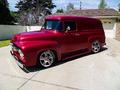
1956 F-100
I realize there may be no right answer regarding axcel length, how ever I am looking at getting a 9" rear end custom built but am not sure of the best length to get the look I'm after at the same time I want to insure I have the most options avalable to me when it comes to picking rims when the time comes!
I am trying to achive a stock look but have a 18/295 or possibly a 20/295 tire under the factory fenders.
I have a Triangulated 4 link with coil overs (No Leaf Springs) I will be running disc brakes and budget permitting would like to go with Willwood, as this is what is on the front Heits I installed.
I made a mistake and purchased a 9" off a local site and it was a $600 mistake as I think at 47.625" flange to flange it is to short, I think it could work but i beleive I would be limited to a 0 back offset much like a drag wheel! not much choice/options.
Sorry for the long winded request!
any advice from the many that have gone the hot rod approch?
Thank you,
Angelo
1956 F-100
I realize there may be no right answer regarding axcel length, how ever I am looking at getting a 9" rear end custom built but am not sure of the best length to get the look I'm after at the same time I want to insure I have the most options avalable to me when it comes to picking rims when the time comes!
I am trying to achive a stock look but have a 18/295 or possibly a 20/295 tire under the factory fenders.
I have a Triangulated 4 link with coil overs (No Leaf Springs) I will be running disc brakes and budget permitting would like to go with Willwood, as this is what is on the front Heits I installed.
I made a mistake and purchased a 9" off a local site and it was a $600 mistake as I think at 47.625" flange to flange it is to short, I think it could work but i beleive I would be limited to a 0 back offset much like a drag wheel! not much choice/options.
Sorry for the long winded request!
any advice from the many that have gone the hot rod approch?
Thank you,
Angelo

Hotshot


Joined: Oct 2004
Posts: 15,882
Likes: 88
From: Durham NC
IMHO too short is better than too long, but 47" is pretty narrow. You can always get spacers to put the wheels exactly where you want them. So much depends on the wheels you plan on using. Stock width is 61" you would need to know the width and offset of the wheels you want to use, but most people go with the stock width. 57-72 truck 9" are stock width. If you are going to have it shortened, then a later one could be used. You can check here for info:
https://www.ford-trucks.com/article/...ial_Swaps.html
https://www.ford-trucks.com/article/...ial_Swaps.html

Logistics Pro


Joined: Nov 2006
Posts: 3,674
Likes: 367
From: Fallon,NV & Bainbridge OH

My best friend is a chassis builder and the advice he gave me years ago that I have used several times and always recommend is "get the wheels and tires first, mock it up and measure for the rear end" Then everything fits right without blowing $600.
Thread Starter
|
Junior User
Joined: Nov 2012
Posts: 88
Likes: 0
From: Waubaushine ON Canada
IMHO too short is better than too long, but 47" is pretty narrow. You can always get spacers to put the wheels exactly where you want them. So much depends on the wheels you plan on using. Stock width is 61" you would need to know the width and offset of the wheels you want to use, but most people go with the stock width. 57-72 truck 9" are stock width. If you are going to have it shortened, then a later one could be used. You can check here for info:
1948 through 1960 Ford F-1 and F-100 Rear Axle (differential) Swaps .: Articles
1948 through 1960 Ford F-1 and F-100 Rear Axle (differential) Swaps .: Articles
Thank you,
V2
Thread Starter
|
Junior User
Joined: Nov 2012
Posts: 88
Likes: 0
From: Waubaushine ON Canada
Dave also good advice! to late for me, I thought I resurched enough, I had some bad advice as I was told "Ah don't worry, you can gat a 9" cheap any day of the week!"
So I didn't worry!!

so yes, I spent $600 and am not sure I have what I need!
Thank you for your help.
Angelo
V2
Thread Starter
|
Junior User
Joined: Nov 2012
Posts: 88
Likes: 0
From: Waubaushine ON Canada
Ok so I have had a little time to read over the article that was posted here, so here I am again in a need to understand!
When mesuring the rear axle length and going by the 61" (57 up) when refering to this dimention is this the axcl face with the axcls installed or is this face to face of the axcl housing with out the axcl shafts installed?
Sorry for the lame question, its all new to me!
Thank you,
Angelo
When mesuring the rear axle length and going by the 61" (57 up) when refering to this dimention is this the axcl face with the axcls installed or is this face to face of the axcl housing with out the axcl shafts installed?
Sorry for the lame question, its all new to me!
Thank you,
Angelo
Trending Topics
Hotshot
Joined: Oct 2004
Posts: 15,882
Likes: 88
From: Durham NC
Now I don't understand! You paid 600.00 for just an empty housing, no axles, no pumpkin, brakes? 57 - 62 truck 9" (I say truck, because they have the 5 on 5 bolt pattern to match the OEM front axle bolt pattern so you only need 1 spare) complete rear axles with everything including adequate drum brakes and a useable gear ratio ready to bolt in typically sell in the 4-600.00 range. If you are going to/have changed the front hubs to a different bolt pattern, and/or are going to change the rear suspension to something other than the OEM parallel leafs then you might look at other rear axle donors such as the Explorer 8.8 they can be had for 150-300 including disk brakes if you plan to put disks on the front. They are a little narrow at 58" but 1" spacers are readily available, and there are some spacers that will convert the Explorer bolt pattern to 5 on 5. The 8.8 is plenty strong for < 500 HP even with occasional trips down the strip and are very available.
The rear end for swapping is measured from axle flange to axle flange (the surface the wheels bolt to) otherwise it would be referred to as the housing width.
Remember the only "dumb question" is the one you have and don't ask.
I'd suggest you stop buying parts until you make a plan:
On separate pieces of paper make each a page of how you plan on using the truck; daily driver, main transportation, work/hauling/towing vehicle, special use vehicle (weekends/cruises etc), show truck, trailered show truck, occasional fun racing, serious racer, etc. Then number the pages in order of importance/frequency.
On each page make 2 lists, one of what the truck you have NEEDS to function for that use that it doesn't have presently: (Say for a typical daily driver) engine that is economical/dependable, uses standard pump gas, automatic OD transmission (or manual OD transmission as preferred), rear axle that is strong enough for your driving style, ratio that gives good acceleration for around town, ratio that gives high speed without overrevving engine for frequent expressway trips, power steering, safe adequate brakes, new seat(s), new bed floor, rust repair, working dash instruments etc etc.
The second list should be the items that would be nice to have: new steering column, smooth riding/lowered suspension, power brakes, disk brakes, body straightened, new paint job, new instruments, new IFS, larger modified motor, late model EFI engine, new electronic instruments, sound system, full upholstery, etc etc etc.
Now number each item on each list in order of importance (note: we have NOT specified any exact parts yet such as make/size/year of engine) to you. In order of importance note for each item who will be doing the work and if DIY do you have the skills and tools/equipment needed, or if jobbed out do you have the available funds to have it done and/or for the parts or will you need to wait on each to acquire needed funds? Do you have the place to work where the truck and parts can be safely stored for extended lengths of time?
Here's a few truisms about this hobby learned from much of my own and other's experiences:
1. A basic no frills daily driver in primer and basic upholstery is going to cost a total of 12-20,000.00. Doesn't matter if you start with a 1000.00 rust bucket basket case, or a 10,000.00 mostly completed running driver in good/excellent condition. The difference is in how long it will be before the truck will ever see the highway.The basket case can take 5-10 or even more years to make drivable (and the likelyhood of running out of patience/interest/money before completion is great), the running driver may take only 6 months to a year of weekend work to add your personal touches to it and can be driven much of the time between. All depends if you like to build or drive more.
2. whatever changes you make will snowball and end up costing 2 times your highest estimate and take 3 times as long as you planned to do.
3. Many will make changes based on what they read/see in magazines, on TV shows, and by taking the advice of well meaning but actually inexperienced dreamer friends, or even their own unrealistic dreams. (i.e. deciding to put in a blown 600 cu in FI screamer that only runs on 105 octane racing gas in a truck to be driven daily on a minimum wage burger flipper budget.) These trucks were built very well from the factory, and have lasted 60 years already, most of the original design parts are still viable for daily use by just replacing the wear parts back to original condition. They don't "need" fully boxed frames, IFS, large engines, disk brakes, 4 bar racing rear suspensions, air bags, etc. to look good, be admired by others, be fun to drive. For example the stock beam axle works/rides/handles quite well with softened stock springs, rebuilt or upgraded power steering box and OEM drum brakes if rebuilt and aligned properly, and if cleaned up and detailed with some paint. Can be easily done by the average DIYer in a few weekends for 1/4 the cost of a MII type replacement IFS that requires a lot of skill, 6-10 months or more time and major equipment to install. Make sure you make changes that are most meaningful and important to YOU!
The rear end for swapping is measured from axle flange to axle flange (the surface the wheels bolt to) otherwise it would be referred to as the housing width.
Remember the only "dumb question" is the one you have and don't ask.
I'd suggest you stop buying parts until you make a plan:
On separate pieces of paper make each a page of how you plan on using the truck; daily driver, main transportation, work/hauling/towing vehicle, special use vehicle (weekends/cruises etc), show truck, trailered show truck, occasional fun racing, serious racer, etc. Then number the pages in order of importance/frequency.
On each page make 2 lists, one of what the truck you have NEEDS to function for that use that it doesn't have presently: (Say for a typical daily driver) engine that is economical/dependable, uses standard pump gas, automatic OD transmission (or manual OD transmission as preferred), rear axle that is strong enough for your driving style, ratio that gives good acceleration for around town, ratio that gives high speed without overrevving engine for frequent expressway trips, power steering, safe adequate brakes, new seat(s), new bed floor, rust repair, working dash instruments etc etc.
The second list should be the items that would be nice to have: new steering column, smooth riding/lowered suspension, power brakes, disk brakes, body straightened, new paint job, new instruments, new IFS, larger modified motor, late model EFI engine, new electronic instruments, sound system, full upholstery, etc etc etc.
Now number each item on each list in order of importance (note: we have NOT specified any exact parts yet such as make/size/year of engine) to you. In order of importance note for each item who will be doing the work and if DIY do you have the skills and tools/equipment needed, or if jobbed out do you have the available funds to have it done and/or for the parts or will you need to wait on each to acquire needed funds? Do you have the place to work where the truck and parts can be safely stored for extended lengths of time?
Here's a few truisms about this hobby learned from much of my own and other's experiences:
1. A basic no frills daily driver in primer and basic upholstery is going to cost a total of 12-20,000.00. Doesn't matter if you start with a 1000.00 rust bucket basket case, or a 10,000.00 mostly completed running driver in good/excellent condition. The difference is in how long it will be before the truck will ever see the highway.The basket case can take 5-10 or even more years to make drivable (and the likelyhood of running out of patience/interest/money before completion is great), the running driver may take only 6 months to a year of weekend work to add your personal touches to it and can be driven much of the time between. All depends if you like to build or drive more.
2. whatever changes you make will snowball and end up costing 2 times your highest estimate and take 3 times as long as you planned to do.
3. Many will make changes based on what they read/see in magazines, on TV shows, and by taking the advice of well meaning but actually inexperienced dreamer friends, or even their own unrealistic dreams. (i.e. deciding to put in a blown 600 cu in FI screamer that only runs on 105 octane racing gas in a truck to be driven daily on a minimum wage burger flipper budget.) These trucks were built very well from the factory, and have lasted 60 years already, most of the original design parts are still viable for daily use by just replacing the wear parts back to original condition. They don't "need" fully boxed frames, IFS, large engines, disk brakes, 4 bar racing rear suspensions, air bags, etc. to look good, be admired by others, be fun to drive. For example the stock beam axle works/rides/handles quite well with softened stock springs, rebuilt or upgraded power steering box and OEM drum brakes if rebuilt and aligned properly, and if cleaned up and detailed with some paint. Can be easily done by the average DIYer in a few weekends for 1/4 the cost of a MII type replacement IFS that requires a lot of skill, 6-10 months or more time and major equipment to install. Make sure you make changes that are most meaningful and important to YOU!
FTE Stories
Ford Trucks for Ford Truck Enthusiasts

10 Things Every Truck Owner NEEDS (2026 Edition)
Michael S. Palmer
Rezvani's Latest Post-Apocalyptic Monster Is a Ford F-150 Raptor Underneath
Verdad Gallardo
Top 10 Most Expensive Ford Trucks Ever Sold on Bring a Trailer
Joe Kucinski
2027 Ford Super Duty Buyer's Guide (Every Model, Engine, & Package)
Brett Foote
Top 10 Ford Truck Tragedies
Joe Kucinski
AEV FXL Super Duty - the Super Duty Raptor Ford Doesn't Make
Brett Foote
Lobo Vs Lobo: Proof the F-150 Lobo Should Be Even Lower!
Michael S. Palmer
Ford's 2001 Explorer Sportsman Concept Looks For a New Home
Verdad Gallardo
10 Best Ford Truck Engines We Miss the Most!
Joe Kucinski
Thread Starter
|
Junior User
Joined: Nov 2012
Posts: 88
Likes: 0
From: Waubaushine ON Canada
Now I don't understand! You paid 600.00 for just an empty housing, no axles, no pumpkin, brakes? 57 - 62 truck 9" (I say truck, because they have the 5 on 5 bolt pattern to match the OEM front axle bolt pattern so you only need 1 spare) complete rear axles with everything including adequate drum brakes and a useable gear ratio ready to bolt in typically sell in the 4-600.00 range. If you are going to/have changed the front hubs to a different bolt pattern, and/or are going to change the rear suspension to something other than the OEM parallel leafs then you might look at other rear axle donors such as the Explorer 8.8 they can be had for 150-300 including disk brakes if you plan to put disks on the front. They are a little narrow at 58" but 1" spacers are readily available, and there are some spacers that will convert the Explorer bolt pattern to 5 on 5. The 8.8 is plenty strong for < 500 HP even with occasional trips down the strip and are very available.
The rear end for swapping is measured from axle flange to axle flange (the surface the wheels bolt to) otherwise it would be referred to as the housing width.
Remember the only "dumb question" is the one you have and don't ask.
I'd suggest you stop buying parts until you make a plan:
On separate pieces of paper make each a page of how you plan on using the truck; daily driver, main transportation, work/hauling/towing vehicle, special use vehicle (weekends/cruises etc), show truck, trailered show truck, occasional fun racing, serious racer, etc. Then number the pages in order of importance/frequency.
On each page make 2 lists, one of what the truck you have NEEDS to function for that use that it doesn't have presently: (Say for a typical daily driver) engine that is economical/dependable, uses standard pump gas, automatic OD transmission (or manual OD transmission as preferred), rear axle that is strong enough for your driving style, ratio that gives good acceleration for around town, ratio that gives high speed without overrevving engine for frequent expressway trips, power steering, safe adequate brakes, new seat(s), new bed floor, rust repair, working dash instruments etc etc.
The second list should be the items that would be nice to have: new steering column, smooth riding/lowered suspension, power brakes, disk brakes, body straightened, new paint job, new instruments, new IFS, larger modified motor, late model EFI engine, new electronic instruments, sound system, full upholstery, etc etc etc.
Now number each item on each list in order of importance (note: we have NOT specified any exact parts yet such as make/size/year of engine) to you. In order of importance note for each item who will be doing the work and if DIY do you have the skills and tools/equipment needed, or if jobbed out do you have the available funds to have it done and/or for the parts or will you need to wait on each to acquire needed funds? Do you have the place to work where the truck and parts can be safely stored for extended lengths of time?
Here's a few truisms about this hobby learned from much of my own and other's experiences:
1. A basic no frills daily driver in primer and basic upholstery is going to cost a total of 12-20,000.00. Doesn't matter if you start with a 1000.00 rust bucket basket case, or a 10,000.00 mostly completed running driver in good/excellent condition. The difference is in how long it will be before the truck will ever see the highway.The basket case can take 5-10 or even more years to make drivable (and the likelyhood of running out of patience/interest/money before completion is great), the running driver may take only 6 months to a year of weekend work to add your personal touches to it and can be driven much of the time between. All depends if you like to build or drive more.
2. whatever changes you make will snowball and end up costing 2 times your highest estimate and take 3 times as long as you planned to do.
3. Many will make changes based on what they read/see in magazines, on TV shows, and by taking the advice of well meaning but actually inexperienced dreamer friends, or even their own unrealistic dreams. (i.e. deciding to put in a blown 600 cu in FI screamer that only runs on 105 octane racing gas in a truck to be driven daily on a minimum wage burger flipper budget.) These trucks were built very well from the factory, and have lasted 60 years already, most of the original design parts are still viable for daily use by just replacing the wear parts back to original condition. They don't "need" fully boxed frames, IFS, large engines, disk brakes, 4 bar racing rear suspensions, air bags, etc. to look good, be admired by others, be fun to drive. For example the stock beam axle works/rides/handles quite well with softened stock springs, rebuilt or upgraded power steering box and OEM drum brakes if rebuilt and aligned properly, and if cleaned up and detailed with some paint. Can be easily done by the average DIYer in a few weekends for 1/4 the cost of a MII type replacement IFS that requires a lot of skill, 6-10 months or more time and major equipment to install. Make sure you make changes that are most meaningful and important to YOU!
The rear end for swapping is measured from axle flange to axle flange (the surface the wheels bolt to) otherwise it would be referred to as the housing width.
Remember the only "dumb question" is the one you have and don't ask.
I'd suggest you stop buying parts until you make a plan:
On separate pieces of paper make each a page of how you plan on using the truck; daily driver, main transportation, work/hauling/towing vehicle, special use vehicle (weekends/cruises etc), show truck, trailered show truck, occasional fun racing, serious racer, etc. Then number the pages in order of importance/frequency.
On each page make 2 lists, one of what the truck you have NEEDS to function for that use that it doesn't have presently: (Say for a typical daily driver) engine that is economical/dependable, uses standard pump gas, automatic OD transmission (or manual OD transmission as preferred), rear axle that is strong enough for your driving style, ratio that gives good acceleration for around town, ratio that gives high speed without overrevving engine for frequent expressway trips, power steering, safe adequate brakes, new seat(s), new bed floor, rust repair, working dash instruments etc etc.
The second list should be the items that would be nice to have: new steering column, smooth riding/lowered suspension, power brakes, disk brakes, body straightened, new paint job, new instruments, new IFS, larger modified motor, late model EFI engine, new electronic instruments, sound system, full upholstery, etc etc etc.
Now number each item on each list in order of importance (note: we have NOT specified any exact parts yet such as make/size/year of engine) to you. In order of importance note for each item who will be doing the work and if DIY do you have the skills and tools/equipment needed, or if jobbed out do you have the available funds to have it done and/or for the parts or will you need to wait on each to acquire needed funds? Do you have the place to work where the truck and parts can be safely stored for extended lengths of time?
Here's a few truisms about this hobby learned from much of my own and other's experiences:
1. A basic no frills daily driver in primer and basic upholstery is going to cost a total of 12-20,000.00. Doesn't matter if you start with a 1000.00 rust bucket basket case, or a 10,000.00 mostly completed running driver in good/excellent condition. The difference is in how long it will be before the truck will ever see the highway.The basket case can take 5-10 or even more years to make drivable (and the likelyhood of running out of patience/interest/money before completion is great), the running driver may take only 6 months to a year of weekend work to add your personal touches to it and can be driven much of the time between. All depends if you like to build or drive more.
2. whatever changes you make will snowball and end up costing 2 times your highest estimate and take 3 times as long as you planned to do.
3. Many will make changes based on what they read/see in magazines, on TV shows, and by taking the advice of well meaning but actually inexperienced dreamer friends, or even their own unrealistic dreams. (i.e. deciding to put in a blown 600 cu in FI screamer that only runs on 105 octane racing gas in a truck to be driven daily on a minimum wage burger flipper budget.) These trucks were built very well from the factory, and have lasted 60 years already, most of the original design parts are still viable for daily use by just replacing the wear parts back to original condition. They don't "need" fully boxed frames, IFS, large engines, disk brakes, 4 bar racing rear suspensions, air bags, etc. to look good, be admired by others, be fun to drive. For example the stock beam axle works/rides/handles quite well with softened stock springs, rebuilt or upgraded power steering box and OEM drum brakes if rebuilt and aligned properly, and if cleaned up and detailed with some paint. Can be easily done by the average DIYer in a few weekends for 1/4 the cost of a MII type replacement IFS that requires a lot of skill, 6-10 months or more time and major equipment to install. Make sure you make changes that are most meaningful and important to YOU!
WOW thats alot of excelent advice! I have a good Idea on alot of what you say, I am prety realistic on time lines and have fairly good mechanical skills, more in the fabricating dept, than the automotive end, but I am willing to learn and thats why I went the total rebuild route.
You have alot of knowlagable points that could have saved me a few $$$, so far the only major blunder is the rear end! It is a 35 spline, 47- 5/8" axcl flange to flange, I paid $600 with new GM disc's, calipers.
What I now understand, dragster (not sure if it was road leagle) 35 spline much more $$$ for the pumpkin, there are no parking breaks, no studs, it looks like it requires stud bolts, so I think I will go to 60" with 31 spline limited slip, I am building the truck for a spirited drive (possible Auto Cross) not sure on that exactly, but want to do it this way rather than re doing it!
I had enough sence to pull the plug on the rear end rather than order more parts as it is already short, it has however served a perpose in the mock up stage, I'm sure I have learned my lesson, as stated it was a little as you said, poor advice from a well meaning freind! he also said now why don't you get an 8.8? I told him to shut up LOL, told him that he said you gotta get a Ford 9"

Thanks AXracer, this is the kind of help I was looking for! sometimes its hard to here what you know is right, I'm glade it was a $600 rear end and not a $5000 motor!
Angelo

Hotshot
Joined: Oct 2004
Posts: 15,882
Likes: 88
From: Durham NC
I've seen very few broken rear ends in AX except in maybe a couple modified Corvettes with > 800 HP. You'll never break an 8.8 in a truck, can't put down enough power that suddenly, even at the dragstrip. You'll need to do a lot of suspension work to make one of our pickups much of an AXer, but it would be fun and a surprise especially at rod events. (AX suspensions are something i know a fair amount about) What are you planning on using for an engine, tranny front suspension? If you really want to AX it I'd be looking at a 1. Jag, 2. C5 corvette, 3. Lexus, 4. Solstice independent front and rear suspension rather than an MII IFS and solid rear axle.
Thread Starter
|
Junior User
Joined: Nov 2012
Posts: 88
Likes: 0
From: Waubaushine ON Canada
I've seen very few broken rear ends in AX except in maybe a couple modified Corvettes with > 800 HP. You'll never break an 8.8 in a truck, can't put down enough power that suddenly, even at the dragstrip. You'll need to do a lot of suspension work to make one of our pickups much of an AXer, but it would be fun and a surprise especially at rod events. (AX suspensions are something i know a fair amount about) What are you planning on using for an engine, tranny front suspension? If you really want to AX it I'd be looking at a 1. Jag, 2. C5 corvette, 3. Lexus, 4. Solstice independent front and rear suspension rather than an MII IFS and solid rear axle.
I have built a complete frame with stock dimensions but 2" kick up over the rear, I wanted to stay Ford so I went with an 89 5L with a T5 out of a Mustang (carburated) I welded in a Heits Super ride coil over with power rack/12" Willwoods, Triangulated four link with 9" and want to go with 12" Willwood out back there as well, I wanted to try and get 18 or 20" 295-310 tires out back and 255 up front, The plan is a stock look to the body with a subtle Flat silver/peuter paint with satin black trim (no chrome) Interior unknown, still planning!
It will be an ongoing project, would have been easier and cheaper to buy someone else's but what I had seen were all cobbled together chassis and pretty paint/int I'm not sure how some even go down the road, most of my time will go into the chassis and eventially the drive line, in the end it will be my cruise truck and possibly my daily driver once retired! 5-10 yrs to build before retirment!
 Lots of fun (Happy Happy Happy)LOL
Thanks for all the input.
Angelo

Thread
Thread Starter
Forum
Replies
Last Post
old_blue1
1948 - 1956 F1, F100 & Larger F-Series Trucks
8
Jun 6, 2017 04:35 PM
preppypyro
1948 - 1956 F1, F100 & Larger F-Series Trucks
5
Jun 20, 2016 11:24 AM
goodmom
1948 - 1956 F1, F100 & Larger F-Series Trucks
2
Nov 26, 2003 07:28 PM