


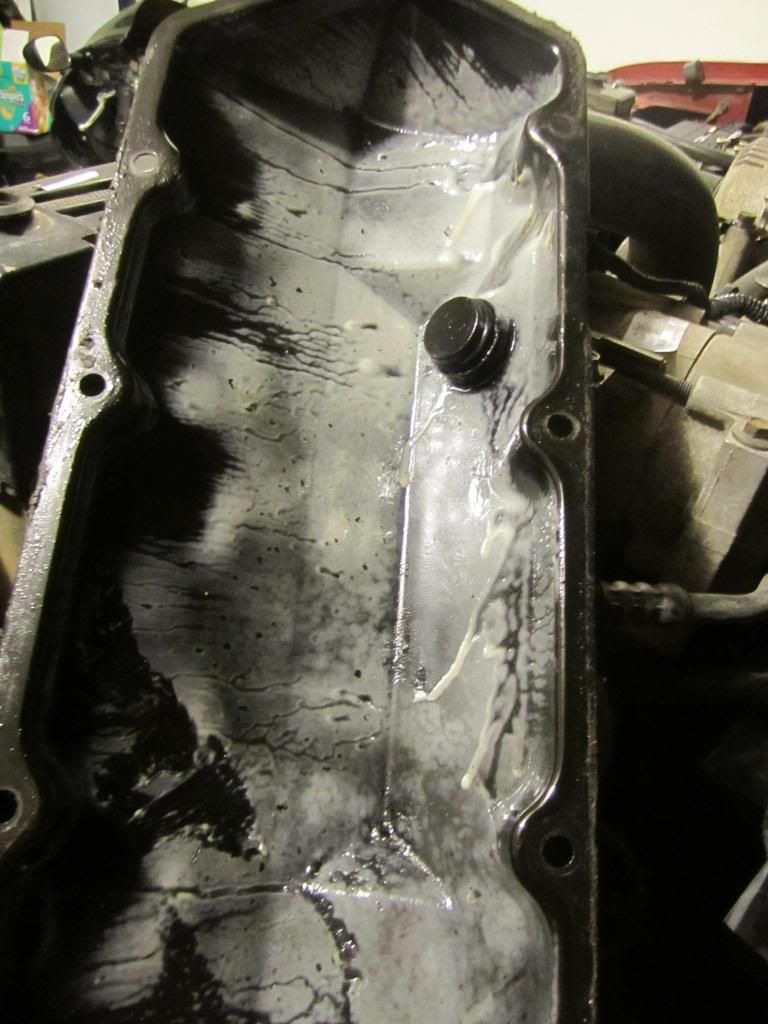
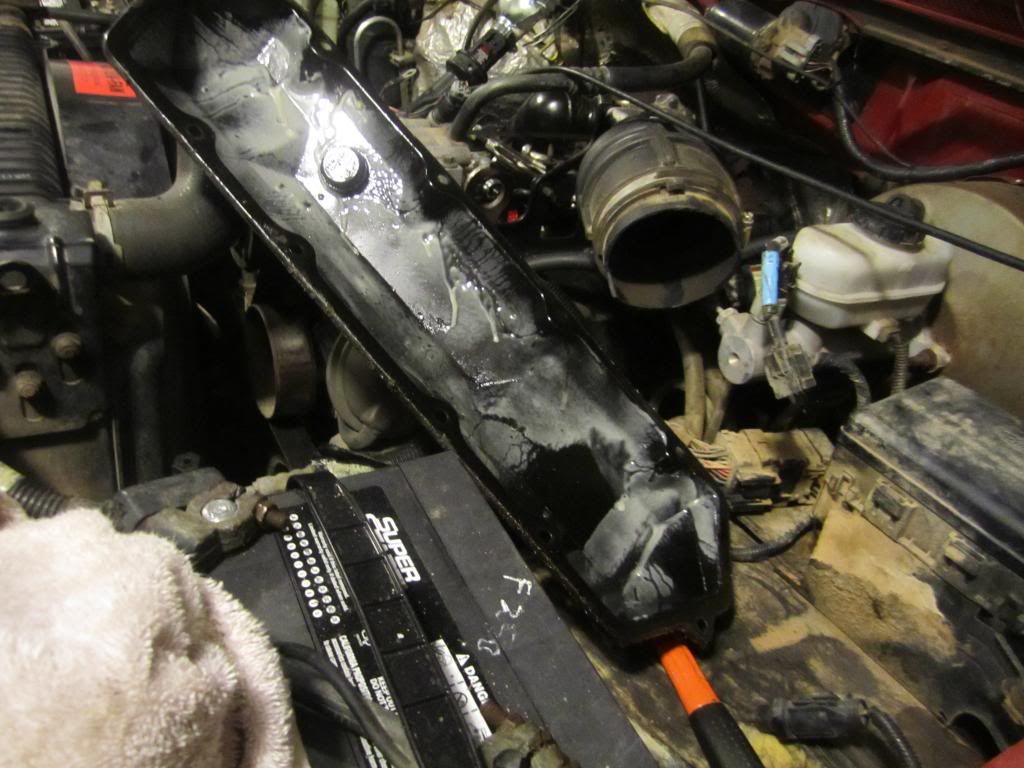
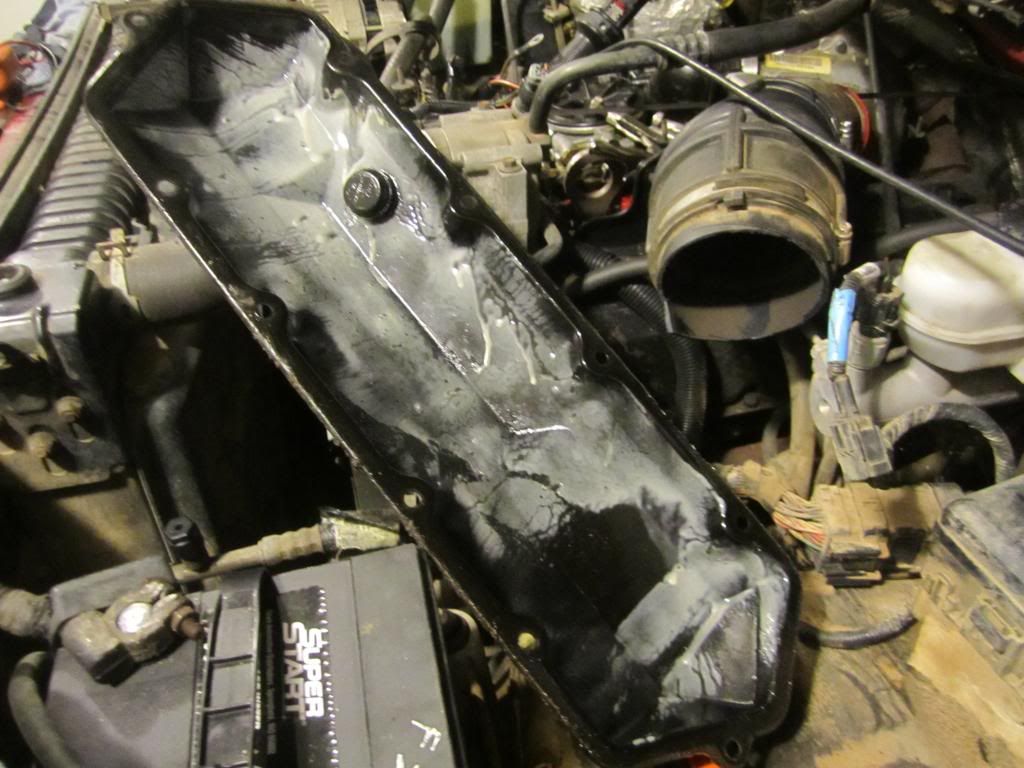


WTF is this

Fleet Mechanic
Joined: Oct 2006
Posts: 1,386
Likes: 1
From: Spokane, WA
WAG----- a lot of short trips in warmer very humid weather, moisture collects and mixes with oil. Then a long drive, engine working hard causing milky oil to vaporize leaving milky stuff inside valve covers IDK  This may have to be repeated for some time.
Good luck with that hope it doesn't continue
This may have to be repeated for some time.Good luck with that hope it doesn't continue
Fleet Mechanic
Joined: Oct 2006
Posts: 1,386
Likes: 1
From: Spokane, WA
More thinking about that, moisture in the oil would most likely raise hell with the hpop and injectors causing it to run really bad. I think I would clean it off the best you can, keep an eye on the oil, maybe have the oil analyzed.

Hotshot


Joined: Feb 2009
Posts: 10,410
Likes: 77
From: Plankinton, SD
As long as your water level isn't going down, its more than likely condensation. That is quite ugly, keep an eye on it.
Trending Topics
Tuned
Joined: Sep 2010
Posts: 485
Likes: 0
From: Boise Idaho
I've seen this happen in cold weather from normal blow by. It will show up in higher quantities with excessive blow by. It's caused by a chemical reaction with water molecules. But seeing this vehicle has sat for a while and there are multiple causes, hopefully it works itself out.
FTE Stories
Ford Trucks for Ford Truck Enthusiasts

Top 6 Best Deals Available on New Fords & Lincolns Right Now
Brett Foote
This Hennessey Takes the Expedition Tremor's Off-Roading Capability to the Next Level
Verdad Gallardo
Top 10 Fords at 2026 Carlisle Ford Nationals
Joe Kucinski
3 Best / 3 Worst Parts of Modern Ford Ownership
Brett Foote
10 Amazing Upgrades That Solve Common Ford Truck Owner Headaches
Pouria Savadkouei
Every 2026 Ford Engine Explained
Brett Foote
10 Ugly Ford Trucks That We Still Kinda Love
Joe Kucinski
10 Things Every Truck Owner NEEDS (2026 Edition)
Michael S. Palmer
Rezvani's Latest Post-Apocalyptic Monster Is a Ford F-150 Raptor Underneath
Verdad Gallardo
Post Fiend
Joined: Mar 2007
Posts: 26,966
Likes: 50
From: Texas
Kind of changing the subject a little, but I'd say it's time to re-think your air filter strategy. Looks like a good time to take the intake tube off, clean it, and see how bad your turbo wheel is dusted.

Thread Starter
|
Senior User
Joined: Dec 2012
Posts: 198
Likes: 0
^^^^
What are you talking about. I removed the K&N filter a day ago since the truck is sitting in the shop. I ordered a RDP 6637 Filter Kit. I also took a few pics of the turbo a few days ago. (the factory air box on the truck had been trashed) I ran the K&N filter for about 300 miles so i could get the truck back to NC to work on it (better then no filter) The wheel does have some saw bladiing but is not horrible and has very little play.
What are you talking about. I removed the K&N filter a day ago since the truck is sitting in the shop. I ordered a RDP 6637 Filter Kit. I also took a few pics of the turbo a few days ago. (the factory air box on the truck had been trashed) I ran the K&N filter for about 300 miles so i could get the truck back to NC to work on it (better then no filter) The wheel does have some saw bladiing but is not horrible and has very little play.

Hotshot


Joined: Oct 2003
Posts: 17,799
Likes: 104
From: Ashland City, TN
Good ole water.
This gonna sound stupid.
Go get a full oil change and a can of sea foam.
Run the sea foam for 100-300 miles or something and then change your oil.
The seafoam will take the water out of the oil.
This gonna sound stupid.
Go get a full oil change and a can of sea foam.
Run the sea foam for 100-300 miles or something and then change your oil.
The seafoam will take the water out of the oil.

Hotshot
Joined: Oct 2003
Posts: 17,799
Likes: 104
From: Ashland City, TN
I need a new t-stat myself. the parts store one didn't even last a year.

Elder User
Joined: Mar 2012
Posts: 609
Likes: 0
That white stuff is water from the air (condensate) mixing with chemicals in the oil and then separating from the oil. The additive package from the oil is getting depleted.
Do what Talyn said above with the Sea Foam treatment.
The condensate appears in high humidity environments when engines don't get heated up for enough time in a single session. Your engine sitting for an extended time collects moisture from the air in the oil. When you then run the engine, the moisture need heat and time to boil out of the oil. Looks like you have too much moisture in the oil to boil out. Sea Foam will bond with the moisture over time (or miles) and keep it in the oil. Then when you change the oil, it also removes the moisture.
Do what Talyn said above with the Sea Foam treatment.
The condensate appears in high humidity environments when engines don't get heated up for enough time in a single session. Your engine sitting for an extended time collects moisture from the air in the oil. When you then run the engine, the moisture need heat and time to boil out of the oil. Looks like you have too much moisture in the oil to boil out. Sea Foam will bond with the moisture over time (or miles) and keep it in the oil. Then when you change the oil, it also removes the moisture.
Hotshot
Joined: Oct 2003
Posts: 17,799
Likes: 104
From: Ashland City, TN
That white stuff is water from the air (condensate) mixing with chemicals in the oil and then separating from the oil. The additive package from the oil is getting depleted.
Do what Talyn said above with the Sea Foam treatment.
The condensate appears in high humidity environments when engines don't get heated up for enough time in a single session. Your engine sitting for an extended time collects moisture from the air in the oil. When you then run the engine, the moisture need heat and time to boil out of the oil. Looks like you have too much moisture in the oil to boil out. Sea Foam will bond with the moisture over time (or miles) and keep it in the oil. Then when you change the oil, it also removes the moisture.
Do what Talyn said above with the Sea Foam treatment.
The condensate appears in high humidity environments when engines don't get heated up for enough time in a single session. Your engine sitting for an extended time collects moisture from the air in the oil. When you then run the engine, the moisture need heat and time to boil out of the oil. Looks like you have too much moisture in the oil to boil out. Sea Foam will bond with the moisture over time (or miles) and keep it in the oil. Then when you change the oil, it also removes the moisture.