


Warm Weather Drivability Issue

Thread Starter
|
Senior User
Joined: Jul 2008
Posts: 121
Likes: 0
From: Republic of Texas
Warm Weather Drivability Issue
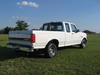
I have a 1992 F150 w/5.8L engine. The truck is a very well-kept original, in dead-stock condition with about 135K miles. During warm/hot weather, the truck seems down on power, and has occasional rough idle issues. When the weather is below about 40*F, the truck seems more powerful and generally has better drivability. This is not a severe issue, just noticable as the weather changes.
I've performed all the typical checks and fixes; new plugs/wires/cap/rotor, checking for vacuum leaks, checking for wiring damage, etc. I'm wondering if it could be the ECU or other module that has become temperature-sensitive.
Are there any common electronic issues that crop up on these models? Any help is appriciated.
Cheers,
JD
I've performed all the typical checks and fixes; new plugs/wires/cap/rotor, checking for vacuum leaks, checking for wiring damage, etc. I'm wondering if it could be the ECU or other module that has become temperature-sensitive.
Are there any common electronic issues that crop up on these models? Any help is appriciated.
Cheers,
JD

Freshman User
Joined: Mar 2011
Posts: 44
Likes: 0
From: Overland Park
I have a '96 F-150 with the 4.9 in it. Noticed the same problem that you have and looked into it some. Do you have a single or duel tank model, and if so, does the idle change at all when you switch tanks?
Thread Starter
|
Senior User
Joined: Jul 2008
Posts: 121
Likes: 0
From: Republic of Texas
Thanks,
JD

Thread Starter
|
Senior User
Joined: Jul 2008
Posts: 121
Likes: 0
From: Republic of Texas
Thanks,
JD
Freshman User
Joined: Mar 2011
Posts: 44
Likes: 0
From: Overland Park
My problem was that the pump in tank two was putting out about 15 PSI of pressure where as it should be around 45 PSI. I would constantly use it since the level float in tank one doesn't work on a dependable basis, so I never thought to use it until I wanted to rule out restricted fuel lines/filter. But now I come to find my bypass valve has gone bad and I now have the magical, never-ending tank. $350 bucks later... 

Fleet Owner


Joined: Oct 2005
Posts: 20,786
Likes: 1,751
From: Kentucky
All I see in/on the distributor is the ignition pick-up. Is that the component you're talking about? The distributor has a flat pad cast into the side of it below the cap, but nothing is mounted there, and no holes are drilled/threaded. Could it be the ignition module mounted on the LH inner fender beneath the cruise control servo?
Thanks,
JD
Thanks,
JD
The ICM can be removed and tested at many auto part stores. If it is found to be faulty make sure you get a gray colored Push-Start style replacement ICM. Many parts manuals are wrong, including Ford, they will most likely try to sell you a black CCD-style ICM which will cause other issues if you install it.
The PIP is not as easily tested. It usually boils down to a process of elimination.

Thread
Thread Starter
Forum
Replies
Last Post
Bootlegger's Deluxe
1987 - 1996 F150 & Larger F-Series Trucks
8
Jan 27, 2016 01:39 PM
Jrogosich
1987 - 1996 F150 & Larger F-Series Trucks
2
Aug 18, 2010 11:56 AM
kbatku
1980 - 1986 Bullnose F100, F150 & Larger F-Series Trucks
4
Dec 31, 2008 10:40 AM







