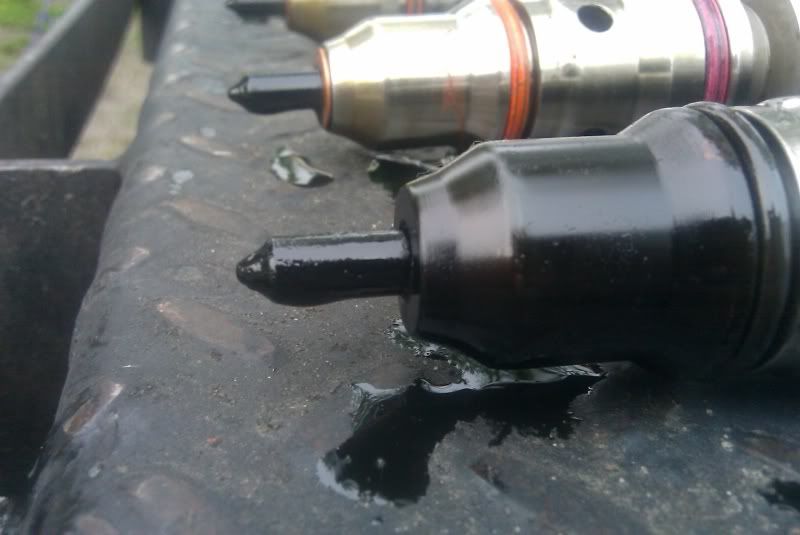
Injector Forensics!
Thread Starter
|
Hotshot


Joined: Jan 2011
Posts: 18,849
Likes: 179
From: Puget Sound
Injector Forensics!
I had some questions on my old injectors and thought it would be a great topic for open discussion. These engines are reaching "that age" and the stick shops are getting a big backlog on work. I see plenty of people talking about injectors, so maybe those of us who have taken the "plunger" can share our pictures and discuss what we found in there. I'm sure there are plenty of pix because few would throw this much ante on the table and not commemorate it with a click.
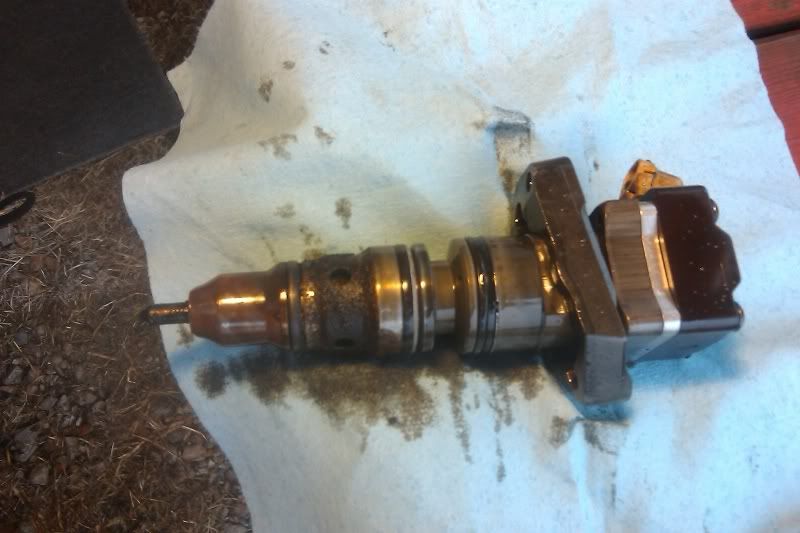
Stinky's history: Injectors 3 and 7 gave me grief a year ago and they were replaced by remans (before FTE input) at 240K. I then learned I had every kind of exhaust leak known in the automotive industry. The exhaust leaks were fixed a year ago, but a boost leak is new... maybe a month before my recent total stick swap (260K), maybe at the swap (installing 38R at the same time could have introduced it). I typically used the 60e tune and the stock tune, with a bump to 80e when I needed to pass on a two-lane road and Decel tune on steep grades. I haven't towed my boat this summer. What am I seeing here that I haven't seen on other injector pictures recently posted?


Stinky's history: Injectors 3 and 7 gave me grief a year ago and they were replaced by remans (before FTE input) at 240K. I then learned I had every kind of exhaust leak known in the automotive industry. The exhaust leaks were fixed a year ago, but a boost leak is new... maybe a month before my recent total stick swap (260K), maybe at the swap (installing 38R at the same time could have introduced it). I typically used the 60e tune and the stock tune, with a bump to 80e when I needed to pass on a two-lane road and Decel tune on steep grades. I haven't towed my boat this summer. What am I seeing here that I haven't seen on other injector pictures recently posted?
Hotshot
Joined: Jul 2008
Posts: 12,782
Likes: 2,142
From: N.GA Mountains

For comparison sake - kinda....
These had 240k miles on them and 50k miles burning WVO. Worked 100% perfect, but I needed a set of 175/146's...
This one had 270k miles and 100k on WVO (and B100 in diesel tank). It also worked FINE - but the cracked piston... not so good.....
I stopped using bio-d because I feel it caused the build-up on the fuel-side of the injectors seen here. It had been 2yrs since using B100...
These had 240k miles on them and 50k miles burning WVO. Worked 100% perfect, but I needed a set of 175/146's...
This one had 270k miles and 100k on WVO (and B100 in diesel tank). It also worked FINE - but the cracked piston... not so good.....
I stopped using bio-d because I feel it caused the build-up on the fuel-side of the injectors seen here. It had been 2yrs since using B100...
Post Fiend
Joined: May 2009
Posts: 5,470
Likes: 3
From: Pea Ridge, AR
I only really see one question unless you are asking as well what the plunger's a barrels, or pintle look like, and you would need to start by taking them apart. Most of the injector issues, are going to be internal i.e. poppet seat wear, internal orings, etc.
As for the "what am I seeing" portion, are you referring to the rough almost knurled surface of the fuel inlet portion, surrounding the plunger?
As for the "what am I seeing" portion, are you referring to the rough almost knurled surface of the fuel inlet portion, surrounding the plunger?
Thread Starter
|
Hotshot
Joined: Jan 2011
Posts: 18,849
Likes: 179
From: Puget Sound
I only really see one question unless you are asking as well what the plunger's a barrels, or pintle look like, and you would need to start by taking them apart. Most of the injector issues, are going to be internal i.e. poppet seat wear, internal orings, etc.
As for the "what am I seeing" portion, are you referring to the rough almost knurled surface of the fuel inlet portion, surrounding the plunger?
As for the "what am I seeing" portion, are you referring to the rough almost knurled surface of the fuel inlet portion, surrounding the plunger?
I plead dumber than a box-o-rocks here and I welcome the basics. I'm sure other readers will appreciate this as well.
As for the WVO/B100 pictures - is that the "coking" that the injector shops refer to when they say that can void warranties and deposit refunds?
Post Fiend
Joined: May 2009
Posts: 5,470
Likes: 3
From: Pea Ridge, AR
The discoloration is just the injector cap, that portion actually will thread off, all the way up to the fuel inlets. The barrel is internal as well. I've got a exploded diagram somewhere I'll locate.
I can only speculate on variations, but heat has to play a factor, as well as the "lines" there could be some combustion gases that come into play as well.
That being said, they look like nearly all injectors I have pulled.
I can only speculate on variations, but heat has to play a factor, as well as the "lines" there could be some combustion gases that come into play as well.
That being said, they look like nearly all injectors I have pulled.

Lead Driver
Joined: Sep 2010
Posts: 7,793
Likes: 50
2nd pic, 1st and 3rd injectors, there's no "knurling", is what i seee different.
Post Fiend
Joined: May 2009
Posts: 5,470
Likes: 3
From: Pea Ridge, AR
Trending Topics
Thread Starter
|
Hotshot
Joined: Jan 2011
Posts: 18,849
Likes: 179
From: Puget Sound
Cap... that's it. I can't figure why #8 is so clean after 260,000 miles and 12 years, while the other 5 "legacy" injectors look like they do.
FTE Stories
Ford Trucks for Ford Truck Enthusiasts

Top 10 Fords at 2026 Carlisle Ford Nationals
Joe Kucinski
3 Best / 3 Worst Parts of Modern Ford Ownership
Brett Foote
10 Amazing Upgrades That Solve Common Ford Truck Owner Headaches
Pouria Savadkouei
Every 2026 Ford Engine Explained
Brett Foote
10 Ugly Ford Trucks That We Still Kinda Love
Joe Kucinski
10 Things Every Truck Owner NEEDS (2026 Edition)
Michael S. Palmer
Rezvani's Latest Post-Apocalyptic Monster Is a Ford F-150 Raptor Underneath
Verdad Gallardo
Top 10 Most Expensive Ford Trucks Ever Sold on Bring a Trailer
Joe Kucinski
2027 Ford Super Duty Buyer's Guide (Every Model, Engine, & Package)
Brett Foote
Senior User

Joined: Aug 2007
Posts: 412
Likes: 0
From: Fresno, CA
I believe the discoloration is due to combustion gas leaking past the copper washer. When I re-ringed my injectors there were 3 that looked like that, and all 3 had slightly loose hold down bolts.


Thread Starter
|
Hotshot
Joined: Jan 2011
Posts: 18,849
Likes: 179
From: Puget Sound

Fleet Mechanic


Joined: Mar 2009
Posts: 1,856
Likes: 52
From: Sacramento Delta, CA
Excellent basic science question. I would appreciate it if Mr. Rosewood or the other injector sponsors could chime in on this thread.
These are mine from the driver's side. In this picture I have already used emory cloth on the nozzles to clean them up before inspecting the nozzles for cracks with a stereoscope. They didn't have many deposits on them prior to clean up, but I screwed up the crime scene by not photographing before the cleanup. There were no cracks anywhere including between injector nozzle holes. Some of the holes did appear to be "clogged" more than others though.

CSIPSD said that a nozzle cannot "stick open." I believe that my white smoke is coming from unburnt fuel in the cylinder caused by overheating caused by a fuel starvation problem due to clogged in-fuel-tank pickup/mixing screens. I don't see any channels running through the o-rings so (assuming it is an inector mechanical problem and is not an electrical problem -- hopefully I will know next week) the introduction of the extra fuel would have to be internal, wouldn't it?
These are mine from the driver's side. In this picture I have already used emory cloth on the nozzles to clean them up before inspecting the nozzles for cracks with a stereoscope. They didn't have many deposits on them prior to clean up, but I screwed up the crime scene by not photographing before the cleanup. There were no cracks anywhere including between injector nozzle holes. Some of the holes did appear to be "clogged" more than others though.
CSIPSD said that a nozzle cannot "stick open." I believe that my white smoke is coming from unburnt fuel in the cylinder caused by overheating caused by a fuel starvation problem due to clogged in-fuel-tank pickup/mixing screens. I don't see any channels running through the o-rings so (assuming it is an inector mechanical problem and is not an electrical problem -- hopefully I will know next week) the introduction of the extra fuel would have to be internal, wouldn't it?

Senior User
Joined: Mar 2012
Posts: 492
Likes: 0
From: Jenkintown, PA
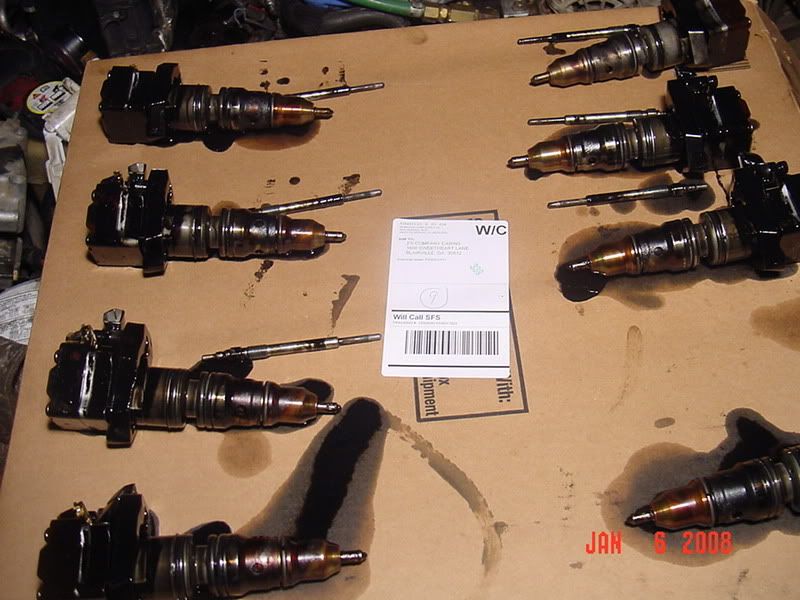
Here are the injectors from my '99 before a Rosewood Stage 1 rebuild:
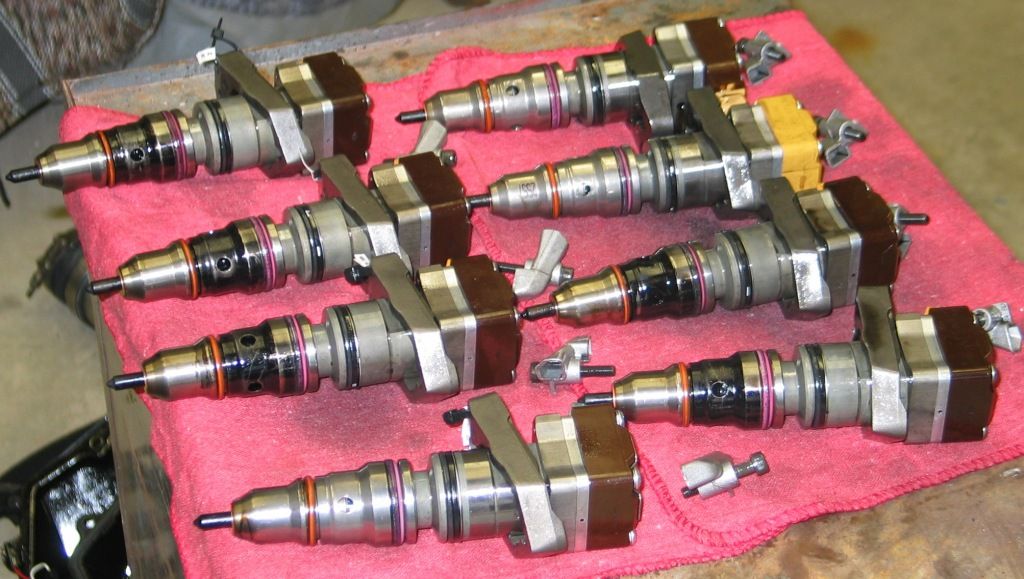
1, 6 and 8 were remans installed by the PO with around 30K on them, the balance have 203K. Didn't do any inspecting other than snapping a few photos.
Chris
1, 6 and 8 were remans installed by the PO with around 30K on them, the balance have 203K. Didn't do any inspecting other than snapping a few photos.
Chris
Hotshot
Joined: Jul 2008
Posts: 12,782
Likes: 2,142
From: N.GA Mountains
The 'debris' on tips is normal. 'Coking' is a thick, crusty build-up that does not wipe off easily.
This is what combustion gasses leaking past the copper gasket looks like...