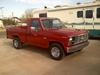

Erratic Idle need help

Thread Starter
|
Elder User


Joined: Apr 2010
Posts: 901
Likes: 0
From: South Jersey
Erratic Idle need help
This is for my dad. He has an 85 F-150, 4 speed, no A/C, with a 300 CID I-6. Here's this email to me:
Ok started on the truck today. Problem is that is won't idle right...it goes up and down usually down when it warms up and stalls. even though I turned up the idle stop screw it still goes up and down. I couldn't find any vac lines disconnected or bad or any hoses. I don't see any leaks on the intake manifold but didn't try spraying any carb cleaner when running to see if it made a difference. Carb is down tight to mount. I don't hear any hissing but didn't check real good. I first tested the egr since I suspected that. remove the vac hose with truck off and tried to pull vac...it's like there is a hole in the diaphram it won't even register a vac and the erg valve doesn't move....won't hold pressure either....so that indicated the egr is bad....find out if that might be part of my problem. Exhaust has a funny nasty smell too not like rotten eggs more like an acid type smell...but have had that for a while too...please see what the guys say online about it. What should I be looking at first? Carb has been replaced awhile ago ...It's not plugs the ways it acts either...I've repalced wires too.
Ok started on the truck today. Problem is that is won't idle right...it goes up and down usually down when it warms up and stalls. even though I turned up the idle stop screw it still goes up and down. I couldn't find any vac lines disconnected or bad or any hoses. I don't see any leaks on the intake manifold but didn't try spraying any carb cleaner when running to see if it made a difference. Carb is down tight to mount. I don't hear any hissing but didn't check real good. I first tested the egr since I suspected that. remove the vac hose with truck off and tried to pull vac...it's like there is a hole in the diaphram it won't even register a vac and the erg valve doesn't move....won't hold pressure either....so that indicated the egr is bad....find out if that might be part of my problem. Exhaust has a funny nasty smell too not like rotten eggs more like an acid type smell...but have had that for a while too...please see what the guys say online about it. What should I be looking at first? Carb has been replaced awhile ago ...It's not plugs the ways it acts either...I've repalced wires too.

Moderator


Joined: Jan 2001
Posts: 56,992
Likes: 2,741
From: Virginia

Some of the EGR's cannot be tested by pulling vacuum on them. The best way to see if that is your problem is too pull it off, and slip a piece of aluminum flashing under it to block it off and see if that corrects the problem. If it does, you can buy a new one.

Lead Driver
Joined: Jul 2009
Posts: 6,477
Likes: 19
From: Sheffield, AL
When the O2 sensor goes bad, one can have different exhaust smells as well as running problems.
Also, these carburetors are controlled by the computer. I believe there is an IAC [idle air control] which senses where the throttle shaft is regarding rotation.
As said previously, check very thoroughly for vacuum leaks as this engine behaves badly when leaks are present. Originally, many of the vacuum lines were a flexible plastic which becomes brittle with time and heat. These can have small cracks [hard to detect] and can/should be replaced with regular vacuum hose. These hoses pass through the fire wall on the passenger side and control the ventilation system inside the cab.
Check the PCV and brake booster hoses also for leaks.
Also, these carburetors are controlled by the computer. I believe there is an IAC [idle air control] which senses where the throttle shaft is regarding rotation.
As said previously, check very thoroughly for vacuum leaks as this engine behaves badly when leaks are present. Originally, many of the vacuum lines were a flexible plastic which becomes brittle with time and heat. These can have small cracks [hard to detect] and can/should be replaced with regular vacuum hose. These hoses pass through the fire wall on the passenger side and control the ventilation system inside the cab.
Check the PCV and brake booster hoses also for leaks.
Thread Starter
|
Elder User
Joined: Apr 2010
Posts: 901
Likes: 0
From: South Jersey
Here's the latest:
I took off this afternoon to work on the truck:
I found a rubber hose that connects to a metal line that I believe runs to the gas tank and it had a worn hole in it. I taped it up to seal it but didn't make a difference.
I warmed it up and then reved it up to watch the egr shaft and it modulated like it is suppose to back and forth...so that should be the problem either.
I tried using a hose hooked to a propane torch and put gas around different areas and no change in rpm.
I tried carb cleaner and sprayed that all around hoses, fittings, and manifolds, egr, under carb, and no real change in rpm.
At this point I'm not so sure it is a vac leak. It seems to maybe be something electrical cause the rpm will usually be low and somewhat rough and then jump up and smooth out for a few seconds then drop down again. I have the carb with the electric throttle sensor, electric idle control, and a feedback solenoid. I tried disconnecting the feedback solenoid and no change. Then I disconnected the idle control, started the truck and it seemed to run smooth but a bit high. As soon as I connected it, the rpm dropped right down and rough again. I disconnected it and it stayed low and rough.
I tried the idle jet screw all the way in then out to where it was. I started it and no change. Then I tried turning it out some and rpms did go up, but still not right.
I don't know what to try next. Gonna pull and check the plugs and distributor cap, and timing too. But I don't think it's that. Something seems to change to make it go up then down, but mostly just down and rough.
Any ideas??
I took off this afternoon to work on the truck:
I found a rubber hose that connects to a metal line that I believe runs to the gas tank and it had a worn hole in it. I taped it up to seal it but didn't make a difference.
I warmed it up and then reved it up to watch the egr shaft and it modulated like it is suppose to back and forth...so that should be the problem either.
I tried using a hose hooked to a propane torch and put gas around different areas and no change in rpm.
I tried carb cleaner and sprayed that all around hoses, fittings, and manifolds, egr, under carb, and no real change in rpm.
At this point I'm not so sure it is a vac leak. It seems to maybe be something electrical cause the rpm will usually be low and somewhat rough and then jump up and smooth out for a few seconds then drop down again. I have the carb with the electric throttle sensor, electric idle control, and a feedback solenoid. I tried disconnecting the feedback solenoid and no change. Then I disconnected the idle control, started the truck and it seemed to run smooth but a bit high. As soon as I connected it, the rpm dropped right down and rough again. I disconnected it and it stayed low and rough.
I tried the idle jet screw all the way in then out to where it was. I started it and no change. Then I tried turning it out some and rpms did go up, but still not right.
I don't know what to try next. Gonna pull and check the plugs and distributor cap, and timing too. But I don't think it's that. Something seems to change to make it go up then down, but mostly just down and rough.
Any ideas??

Moderator


Joined: Nov 2007
Posts: 22,415
Likes: 92
From: Denver Metro Area, CO
Pull your computer codes, it wouldn't at all surprise me if you find:
[ 12 | 13 ] Cannot control RPM during ER Self-Test [ high | low ] RPM check
or
17 RPM below Self-Test limit with Idle Air Control off
as one or more of your codes.
The IAC sets the speed, this is measured via the TPS (Throttle Position Sensor).
Here is how to check them at home:
Fuel Injection Technical Library » How To Run a Self-Test
Ford Ranger/Bronco II EEC-IV Testing
[ 12 | 13 ] Cannot control RPM during ER Self-Test [ high | low ] RPM check
or
17 RPM below Self-Test limit with Idle Air Control off
as one or more of your codes.
The IAC sets the speed, this is measured via the TPS (Throttle Position Sensor).
Here is how to check them at home:
Fuel Injection Technical Library » How To Run a Self-Test
Ford Ranger/Bronco II EEC-IV Testing
Trending Topics
Thread Starter
|
Elder User
Joined: Apr 2010
Posts: 901
Likes: 0
From: South Jersey
Pull your computer codes, it wouldn't at all surprise me if you find:
[ 12 | 13 ] Cannot control RPM during ER Self-Test [ high | low ] RPM check
or
17 RPM below Self-Test limit with Idle Air Control off
as one or more of your codes.
The IAC sets the speed, this is measured via the TPS (Throttle Position Sensor).
Here is how to check them at home:
Fuel Injection Technical Library » How To Run a Self-Test
Ford Ranger/Bronco II EEC-IV Testing
[ 12 | 13 ] Cannot control RPM during ER Self-Test [ high | low ] RPM check
or
17 RPM below Self-Test limit with Idle Air Control off
as one or more of your codes.
The IAC sets the speed, this is measured via the TPS (Throttle Position Sensor).
Here is how to check them at home:
Fuel Injection Technical Library » How To Run a Self-Test
Ford Ranger/Bronco II EEC-IV Testing
FTE Stories
Ford Trucks for Ford Truck Enthusiasts

3 Best / 3 Worst Parts of Modern Ford Ownership
Brett Foote
10 Amazing Upgrades That Solve Common Ford Truck Owner Headaches
Pouria Savadkouei
Every 2026 Ford Engine Explained
Brett Foote
10 Ugly Ford Trucks That We Still Kinda Love
Joe Kucinski
10 Things Every Truck Owner NEEDS (2026 Edition)
Michael S. Palmer
Rezvani's Latest Post-Apocalyptic Monster Is a Ford F-150 Raptor Underneath
Verdad Gallardo
Top 10 Most Expensive Ford Trucks Ever Sold on Bring a Trailer
Joe Kucinski
2027 Ford Super Duty Buyer's Guide (Every Model, Engine, & Package)
Brett Foote
Top 10 Ford Truck Tragedies
Joe Kucinski
Moderator
Joined: Nov 2007
Posts: 22,415
Likes: 92
From: Denver Metro Area, CO
In any event, if your dad has the feedback carb with the IAC & TPS & O2 sensor & whatnot with the computer to run it, well, then ask the computer to spit its codes.
If you guys can hear the IAC motor at ON/OFF (key positions) my guess is the IAC is controlling the idle just fine but his TPS isn't seeing that.
I just got the last available Motorcraft TPS from Rock Auto on a Wholesaler Closeout (that fits my DD, not truck), I think it was around $14 + shipping.
Thread Starter
|
Elder User
Joined: Apr 2010
Posts: 901
Likes: 0
From: South Jersey
Latest from dad:
OK so I warmed up the truck and used the Sunpro Actron code scanner and followed the directions including having the clutch depressed for the 4.9 liter engine during the test.
the KOEO (key on engine off) test fed out one code #23
#23 throttle position sensor signal voltage out of self test specification
next is spit out the continuous memory codes and I have two:
#22 manifold absolute pressure sensor or barometric pressure sensor signal voltage out of specification
#13 RPM out of specification during normal idle operation or DC motor does not follow dashpot.
Not sure if I cold have trigered ay of them when I was disconnecting wires and vacuum hoses yesterday while it was running to see if it made any differences.
I ran the tests twice to be sure I got the codes right. I didn't run the other tests because it said to fix the KOEO codes first, before proceeding to the tests with the engine running.
The Haynes book gives some information on checking the TPS, so I guess I'll do them next. Any ideas on anything else I should do?
OK so I warmed up the truck and used the Sunpro Actron code scanner and followed the directions including having the clutch depressed for the 4.9 liter engine during the test.
the KOEO (key on engine off) test fed out one code #23
#23 throttle position sensor signal voltage out of self test specification
next is spit out the continuous memory codes and I have two:
#22 manifold absolute pressure sensor or barometric pressure sensor signal voltage out of specification
#13 RPM out of specification during normal idle operation or DC motor does not follow dashpot.
Not sure if I cold have trigered ay of them when I was disconnecting wires and vacuum hoses yesterday while it was running to see if it made any differences.
I ran the tests twice to be sure I got the codes right. I didn't run the other tests because it said to fix the KOEO codes first, before proceeding to the tests with the engine running.
The Haynes book gives some information on checking the TPS, so I guess I'll do them next. Any ideas on anything else I should do?
Moderator
Joined: Nov 2007
Posts: 22,415
Likes: 92
From: Denver Metro Area, CO
OK, it seems to be complaining about the TPS.
Shocking!
I've been learning about these computers for the past several years on my DD 1986 Tempo with TBI (throttle-body injection, very similar to a feedback carb), this is what I've learned:
According to Ralph (81-F-150-Explorer) the computer lists the codes with the most important being first, so focus on that. In this case, I would replace the TPS, they are just mechanical rheostats and wear out. OEM replacement parts are kind of expensive sometimes but you have a fairly good chance they'll last a long time, as compared with the Chinese replacements.
The TPS can be tested with a volt or ohmmeter, there are instructions all over the 'net, but I would probably just replace it if it looks to be old.
Then, clear the codes, drive it around for a while (get it up to operating temperature) and test again. If something else is really bad, the computer will detect & report it in which case, go down that road.
It seems to also be complaining about the MAP sensor, this very well also could be bad, but the error could be triggered by the bad TPS so do one thing at a time.
My TPS died on me last Monday, on my way back home from having spent the weekend at Gary's house in OK. The thing suddenly started running really poorly and I was concerned that I wouldn't make it home (I was about 60 miles outside of Denver) but it got me here.
Immediately pulled codes, it spat all kinds of stuff at me - one of which turned out to be the TPS, but it also told me about the O2 sensor as well as a bunch of other things, both KOEO and KOER.
This was what pushed me into purchasing an OEM replacement (told you about that) and, guess what....
While the engine has less than one hour at temperature since then, it isn't reporting any more codes.
I'm gonna replace the O2 sensor regardless, mostly because 1) I already bought it, and 2) it's the original from the factory.
These computers aren't exceedingly smart, they're basically logic controllers. If the computer thinks the throttle is in a certain position, it's going to expect to see other characteristics caused by that - a certain amount of exhaust, a certain amount of vacuum, it's gonna lean/enrichen the mixture based on temperatures, stuff like that.
It's gonna be getting all sorts of input from the other sensors telling it things are way off from what it's expecting to see.
I would replace the TPS, and (at the same time) clean the electrical connections to the MAP & make sure the vacuum hose is tight & sealed on both ends. Clear the codes, see what else comes up (if anything).
Shocking!
I've been learning about these computers for the past several years on my DD 1986 Tempo with TBI (throttle-body injection, very similar to a feedback carb), this is what I've learned:
According to Ralph (81-F-150-Explorer) the computer lists the codes with the most important being first, so focus on that. In this case, I would replace the TPS, they are just mechanical rheostats and wear out. OEM replacement parts are kind of expensive sometimes but you have a fairly good chance they'll last a long time, as compared with the Chinese replacements.
The TPS can be tested with a volt or ohmmeter, there are instructions all over the 'net, but I would probably just replace it if it looks to be old.
Then, clear the codes, drive it around for a while (get it up to operating temperature) and test again. If something else is really bad, the computer will detect & report it in which case, go down that road.
It seems to also be complaining about the MAP sensor, this very well also could be bad, but the error could be triggered by the bad TPS so do one thing at a time.
My TPS died on me last Monday, on my way back home from having spent the weekend at Gary's house in OK. The thing suddenly started running really poorly and I was concerned that I wouldn't make it home (I was about 60 miles outside of Denver) but it got me here.
Immediately pulled codes, it spat all kinds of stuff at me - one of which turned out to be the TPS, but it also told me about the O2 sensor as well as a bunch of other things, both KOEO and KOER.
This was what pushed me into purchasing an OEM replacement (told you about that) and, guess what....
While the engine has less than one hour at temperature since then, it isn't reporting any more codes.
I'm gonna replace the O2 sensor regardless, mostly because 1) I already bought it, and 2) it's the original from the factory.
These computers aren't exceedingly smart, they're basically logic controllers. If the computer thinks the throttle is in a certain position, it's going to expect to see other characteristics caused by that - a certain amount of exhaust, a certain amount of vacuum, it's gonna lean/enrichen the mixture based on temperatures, stuff like that.
It's gonna be getting all sorts of input from the other sensors telling it things are way off from what it's expecting to see.
I would replace the TPS, and (at the same time) clean the electrical connections to the MAP & make sure the vacuum hose is tight & sealed on both ends. Clear the codes, see what else comes up (if anything).
Thread Starter
|
Elder User
Joined: Apr 2010
Posts: 901
Likes: 0
From: South Jersey
OK, it seems to be complaining about the TPS.
Shocking!
I've been learning about these computers for the past several years on my DD 1986 Tempo with TBI (throttle-body injection, very similar to a feedback carb), this is what I've learned:
According to Ralph (81-F-150-Explorer) the computer lists the codes with the most important being first, so focus on that. In this case, I would replace the TPS, they are just mechanical rheostats and wear out. OEM replacement parts are kind of expensive sometimes but you have a fairly good chance they'll last a long time, as compared with the Chinese replacements.
The TPS can be tested with a volt or ohmmeter, there are instructions all over the 'net, but I would probably just replace it if it looks to be old.
Then, clear the codes, drive it around for a while (get it up to operating temperature) and test again. If something else is really bad, the computer will detect & report it in which case, go down that road.
It seems to also be complaining about the MAP sensor, this very well also could be bad, but the error could be triggered by the bad TPS so do one thing at a time.
My TPS died on me last Monday, on my way back home from having spent the weekend at Gary's house in OK. The thing suddenly started running really poorly and I was concerned that I wouldn't make it home (I was about 60 miles outside of Denver) but it got me here.
Immediately pulled codes, it spat all kinds of stuff at me - one of which turned out to be the TPS, but it also told me about the O2 sensor as well as a bunch of other things, both KOEO and KOER.
This was what pushed me into purchasing an OEM replacement (told you about that) and, guess what....
While the engine has less than one hour at temperature since then, it isn't reporting any more codes.
I'm gonna replace the O2 sensor regardless, mostly because 1) I already bought it, and 2) it's the original from the factory.
These computers aren't exceedingly smart, they're basically logic controllers. If the computer thinks the throttle is in a certain position, it's going to expect to see other characteristics caused by that - a certain amount of exhaust, a certain amount of vacuum, it's gonna lean/enrichen the mixture based on temperatures, stuff like that.
It's gonna be getting all sorts of input from the other sensors telling it things are way off from what it's expecting to see.
I would replace the TPS, and (at the same time) clean the electrical connections to the MAP & make sure the vacuum hose is tight & sealed on both ends. Clear the codes, see what else comes up (if anything).
Shocking!
I've been learning about these computers for the past several years on my DD 1986 Tempo with TBI (throttle-body injection, very similar to a feedback carb), this is what I've learned:
According to Ralph (81-F-150-Explorer) the computer lists the codes with the most important being first, so focus on that. In this case, I would replace the TPS, they are just mechanical rheostats and wear out. OEM replacement parts are kind of expensive sometimes but you have a fairly good chance they'll last a long time, as compared with the Chinese replacements.
The TPS can be tested with a volt or ohmmeter, there are instructions all over the 'net, but I would probably just replace it if it looks to be old.
Then, clear the codes, drive it around for a while (get it up to operating temperature) and test again. If something else is really bad, the computer will detect & report it in which case, go down that road.
It seems to also be complaining about the MAP sensor, this very well also could be bad, but the error could be triggered by the bad TPS so do one thing at a time.
My TPS died on me last Monday, on my way back home from having spent the weekend at Gary's house in OK. The thing suddenly started running really poorly and I was concerned that I wouldn't make it home (I was about 60 miles outside of Denver) but it got me here.
Immediately pulled codes, it spat all kinds of stuff at me - one of which turned out to be the TPS, but it also told me about the O2 sensor as well as a bunch of other things, both KOEO and KOER.
This was what pushed me into purchasing an OEM replacement (told you about that) and, guess what....
While the engine has less than one hour at temperature since then, it isn't reporting any more codes.
I'm gonna replace the O2 sensor regardless, mostly because 1) I already bought it, and 2) it's the original from the factory.
These computers aren't exceedingly smart, they're basically logic controllers. If the computer thinks the throttle is in a certain position, it's going to expect to see other characteristics caused by that - a certain amount of exhaust, a certain amount of vacuum, it's gonna lean/enrichen the mixture based on temperatures, stuff like that.
It's gonna be getting all sorts of input from the other sensors telling it things are way off from what it's expecting to see.
I would replace the TPS, and (at the same time) clean the electrical connections to the MAP & make sure the vacuum hose is tight & sealed on both ends. Clear the codes, see what else comes up (if anything).
Lead Driver
Joined: Jul 2009
Posts: 6,477
Likes: 19
From: Sheffield, AL
 In case anyone else is looking for the TPS:
eBay # 160771704608
Ford NOS
Moderator
Joined: Nov 2007
Posts: 22,415
Likes: 92
From: Denver Metro Area, CO
Upon startup after changing either, the idle speed might bounce around for a while (let it warm up, maybe take it for a short ride around the neighborhood after it seems to have stabilized some) and pull codes again... it might say something about needing to relearn the idle speed but that's just an informational message.