






needing help

Thread Starter
|
New User
Joined: Jan 2010
Posts: 15
Likes: 0
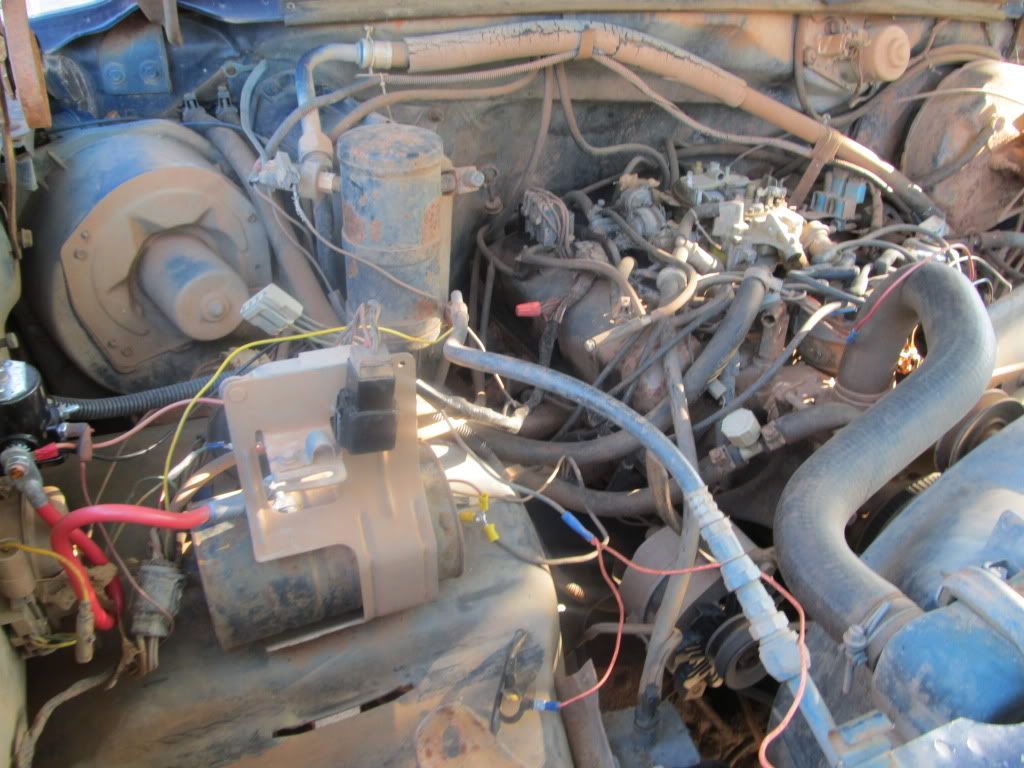
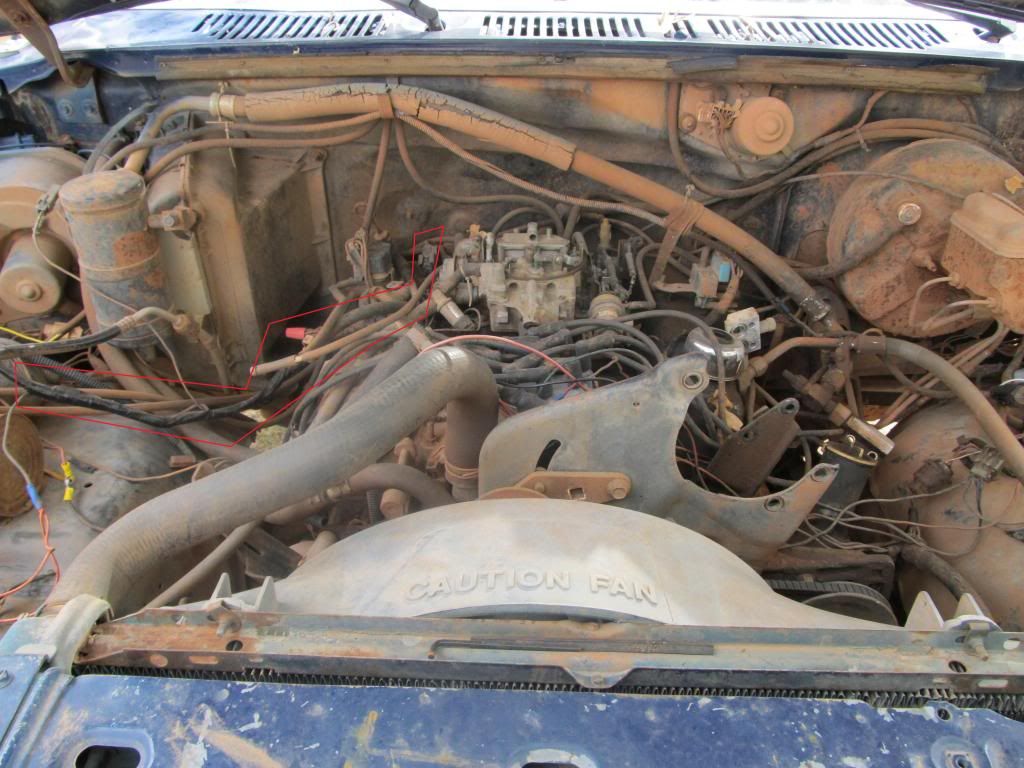
Here is what I got of the engine bay, whats circled in red is the main part and area of where the wires come in at. and yes I know there isnt a battery. what idk is what the thing that looks like a coffee can does or the round thing on the left side you can hardly see them
Posting Guru
Joined: Dec 2009
Posts: 1,619
Likes: 0
From: jus south of nuts
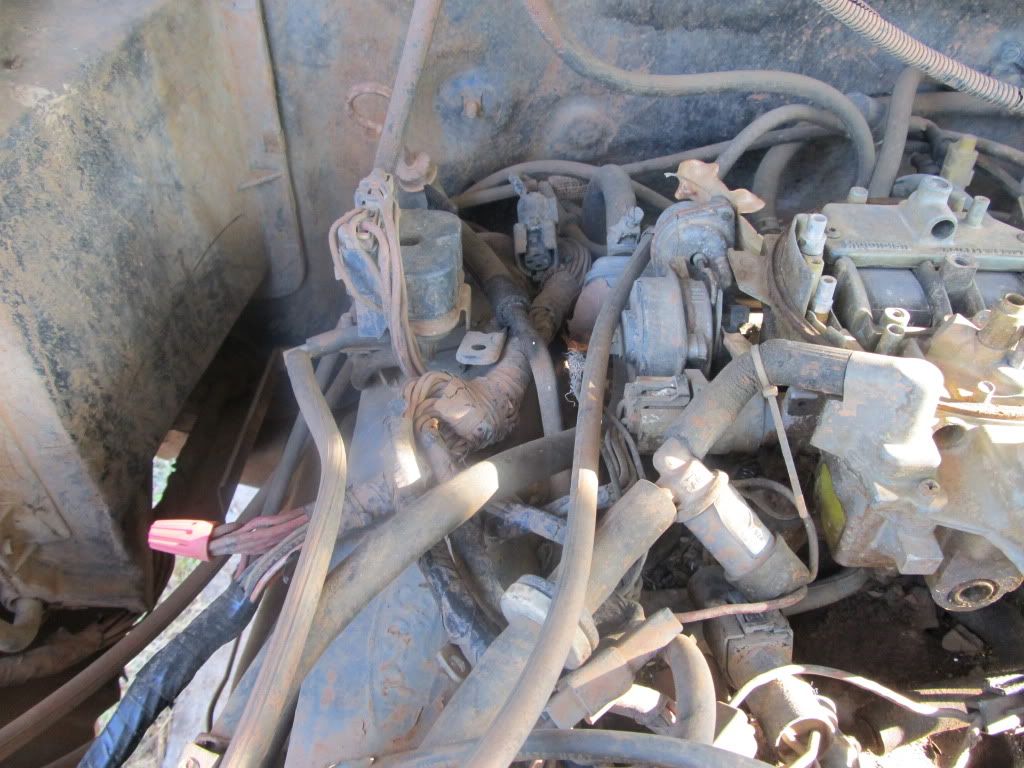
holy crap, you have got yourself a wiring nightmare. i see a few connectors with nothing connected to them, this and the array of random wires,wire nuts, and other splices lead me to believe some one swapped something major in your rig.
so hang on, i know the truck didnt start..then it did a few days later right? does it run now?
so hang on, i know the truck didnt start..then it did a few days later right? does it run now?
Posting Guru
Joined: Dec 2009
Posts: 1,619
Likes: 0
From: jus south of nuts
im thinking with all those open terminalls and splices...this whole problem could have been caused my moisture from wheelin, the whole engine bay was probably soaked and once the engine was turned off and the current left the...wirenuts the moisture set in and kept it from atsrting for a few days..till it dryed out, then all was well.
i would go thru and trace as much of that crap out as possible, when you determine a wire to be in use, get any splice or uncovered terminal end insulated and waterproof. def get those open connectors watertight
the moisture set in and kept it from atsrting for a few days..till it dryed out, then all was well.i would go thru and trace as much of that crap out as possible, when you determine a wire to be in use, get any splice or uncovered terminal end insulated and waterproof. def get those open connectors watertight

Posting Guru
Joined: Jan 2005
Posts: 1,749
Likes: 0
The coffee can is either a vacuum canister or smog pump muffler (or intake? i forget)
and that broken fuel line looks like one of the return or vent lines. Who knows about the rest of the stuff..
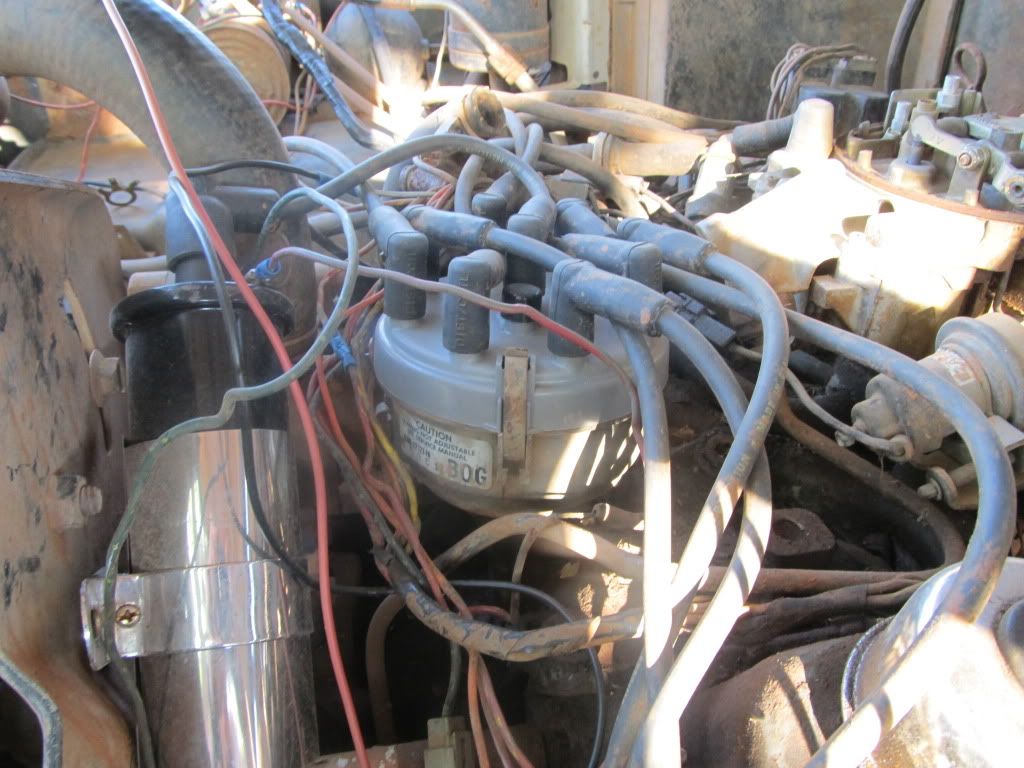
That distributor doesn't look stock to me.. you said no vacuum advance and not a single wire going to it, plus its empty? Plus it says timing isn't adjustable.. I dunno what Ford did with distributors in 83.
and that broken fuel line looks like one of the return or vent lines. Who knows about the rest of the stuff..
That distributor doesn't look stock to me.. you said no vacuum advance and not a single wire going to it, plus its empty? Plus it says timing isn't adjustable.. I dunno what Ford did with distributors in 83.

Cargo Master

Joined: May 2004
Posts: 3,007
Likes: 5
Looks like it might be a Throttle Body Injector, not strickly a carberator in the old school sense and not Fuel Injection in the injector at the intake valve sense.
I don't know if that helps any, but get back to basics,
Will it run with ether sprayed in the carb? If so then it's a fuel problem, if not then check the spark and timing issues.
I don't know if that helps any, but get back to basics,
Will it run with ether sprayed in the carb? If so then it's a fuel problem, if not then check the spark and timing issues.
FTE Stories
Ford Trucks for Ford Truck Enthusiasts

10 Ugly Ford Trucks That We Still Kinda Love
Joe Kucinski
10 Things Every Truck Owner NEEDS (2026 Edition)
Michael S. Palmer
Rezvani's Latest Post-Apocalyptic Monster Is a Ford F-150 Raptor Underneath
Verdad Gallardo
Top 10 Most Expensive Ford Trucks Ever Sold on Bring a Trailer
Joe Kucinski
2027 Ford Super Duty Buyer's Guide (Every Model, Engine, & Package)
Brett Foote
Top 10 Ford Truck Tragedies
Joe Kucinski
AEV FXL Super Duty - the Super Duty Raptor Ford Doesn't Make
Brett Foote
Lobo Vs Lobo: Proof the F-150 Lobo Should Be Even Lower!
Michael S. Palmer
Ford's 2001 Explorer Sportsman Concept Looks For a New Home
Verdad Gallardo
Fleet Mechanic
Joined: Sep 2003
Posts: 1,716
Likes: 15
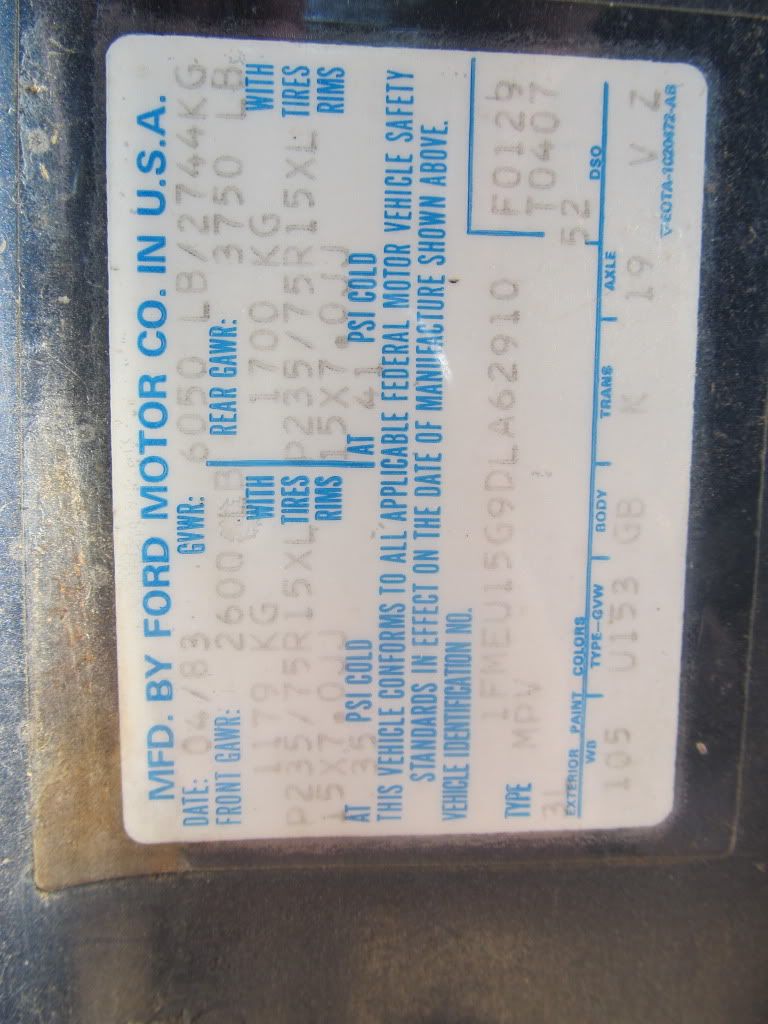
OK. 49 state, EEC-III computer with feedback carburetor (7200 v v Variable Venturi), EEC-III distributor, with cylindrical coil as used with EEC-III.
EEC-III distributors only distribute spark, no other functions. They are usually keyed to the intake manifold, can't rotate them. The timing fuction is handled by the computer. With the harmonic balancer on the crankshaft, you should see the timing pulse ring. It has 4 teeth, spaced around each 90 degrees. A crankshaft pickup sensor (CPS) is mounted close to the pulse ring reads each tooth as it goes by, and sends that to the EEC-III computer. The computer takes that, along with intake vacuum reading (via baro sensor), water temp, engine RPM (which it computes from the pulse train from the CPS) to determine when to fire. For each fire, it sends a trigger pulse to the Ignition Module, which fires the ignition coil.
The computer does a lot of other stuff, like: Managing the EGR vacuum solenoid and monitoring the EGR solenoid position sensor to work the EGR Valve; Controlling the TAB and TAD vacuum solenoids which control air pump air distribution to purge, or upstream to back of cylinder heads, or downstream to the cats; Reads the Oxygen Sensor as an input; Controls the feedback stepper motor for the internal air bleed (fine mixture control) on the passenger side of the carb; Works the carb bowl vent solenoid and carbon canister purge solenoids. Other stuff too but that's what I can think of at the moment.
The black coffee can is a vacuum reservoir, probably for the heater/AC system, you should be able to trace that out.
The carbon canister is not in any of the pics, but if you look at post #18 first pic, trace down from the top of the carb the bowl vent rubber hose, somebody has a zip-tie on it, goes to the bowl vent solenoid, then to the inline orifice, then continues down to the left bottom out of the picture. The canister should be on the other end of that hose.
I see a plugged-off vac hose coming from the carb and TAB/TAD solenoid area, hanging over the passenger side valve cover. I'm suspecting that the TAB and TAD valves air distribution assembly, the air pump, all the air distribution hoses and check valves are gone, as I don't see them.
I don't see the kick-down rod for the C6 trans, it should be connected to the throttle linkage at the carb, and go down to the trans. Or maybe it's there but the camera angle hides it.
In post #18, pic 1 I see something that looks open. Locate the Flush-N-Fill tee that is in the return heater hose going down to the water pump. Above and slightly to the right of the F-n-F tee, about the 1 O'clock position, up on the intake manifold is something with a hex base, with a 90 degree turn at the top, the end looks like tubing and it looks open. I can't tell if that is in the water area of the manifold, or the vacuum area. One thought I had is it's a water take-off for the Sandwich type of EGR Cooler. You can see the sandwich cooler peeking out from behind the carb on the passenger side rear. The sandwich coolers use 3/8" heater hose for in and out, and you can see one hose on the cooler. In fact, it has a TOWER CLAMP on it!!! Those come from the factory, that might be an original 1983 hose!
I see a lot of stuff... and a lot of it ain't too good. Hack and hack again.
I assume that this truck will never have to meet an emissions test or inspection of those components. And you just want to get it running in some fashion again.
I'd start with the basics. Does it have spark? Does it have fuel up to the carb? To check fuel, crank the starter for maybe 10 seconds, then OFF, then carefully pull open the venturi sliders and hold them open. Do not touch or bend the metering rods that they pull out. With left hand holding the sliders wide open, work the throttle linkage by hand to work the accelerator pump. Should see gas squirt looking down the barrels if there was gas in the carb bowl.
EEC-III distributors only distribute spark, no other functions. They are usually keyed to the intake manifold, can't rotate them. The timing fuction is handled by the computer. With the harmonic balancer on the crankshaft, you should see the timing pulse ring. It has 4 teeth, spaced around each 90 degrees. A crankshaft pickup sensor (CPS) is mounted close to the pulse ring reads each tooth as it goes by, and sends that to the EEC-III computer. The computer takes that, along with intake vacuum reading (via baro sensor), water temp, engine RPM (which it computes from the pulse train from the CPS) to determine when to fire. For each fire, it sends a trigger pulse to the Ignition Module, which fires the ignition coil.
The computer does a lot of other stuff, like: Managing the EGR vacuum solenoid and monitoring the EGR solenoid position sensor to work the EGR Valve; Controlling the TAB and TAD vacuum solenoids which control air pump air distribution to purge, or upstream to back of cylinder heads, or downstream to the cats; Reads the Oxygen Sensor as an input; Controls the feedback stepper motor for the internal air bleed (fine mixture control) on the passenger side of the carb; Works the carb bowl vent solenoid and carbon canister purge solenoids. Other stuff too but that's what I can think of at the moment.
The black coffee can is a vacuum reservoir, probably for the heater/AC system, you should be able to trace that out.
The carbon canister is not in any of the pics, but if you look at post #18 first pic, trace down from the top of the carb the bowl vent rubber hose, somebody has a zip-tie on it, goes to the bowl vent solenoid, then to the inline orifice, then continues down to the left bottom out of the picture. The canister should be on the other end of that hose.
I see a plugged-off vac hose coming from the carb and TAB/TAD solenoid area, hanging over the passenger side valve cover. I'm suspecting that the TAB and TAD valves air distribution assembly, the air pump, all the air distribution hoses and check valves are gone, as I don't see them.
I don't see the kick-down rod for the C6 trans, it should be connected to the throttle linkage at the carb, and go down to the trans. Or maybe it's there but the camera angle hides it.
In post #18, pic 1 I see something that looks open. Locate the Flush-N-Fill tee that is in the return heater hose going down to the water pump. Above and slightly to the right of the F-n-F tee, about the 1 O'clock position, up on the intake manifold is something with a hex base, with a 90 degree turn at the top, the end looks like tubing and it looks open. I can't tell if that is in the water area of the manifold, or the vacuum area. One thought I had is it's a water take-off for the Sandwich type of EGR Cooler. You can see the sandwich cooler peeking out from behind the carb on the passenger side rear. The sandwich coolers use 3/8" heater hose for in and out, and you can see one hose on the cooler. In fact, it has a TOWER CLAMP on it!!! Those come from the factory, that might be an original 1983 hose!
I see a lot of stuff... and a lot of it ain't too good. Hack and hack again.
I assume that this truck will never have to meet an emissions test or inspection of those components. And you just want to get it running in some fashion again.
I'd start with the basics. Does it have spark? Does it have fuel up to the carb? To check fuel, crank the starter for maybe 10 seconds, then OFF, then carefully pull open the venturi sliders and hold them open. Do not touch or bend the metering rods that they pull out. With left hand holding the sliders wide open, work the throttle linkage by hand to work the accelerator pump. Should see gas squirt looking down the barrels if there was gas in the carb bowl.
Thread Starter
|
New User
Joined: Jan 2010
Posts: 15
Likes: 0
Well I ordered a new computer, and yes like g_k50 said its a injector carb thing half way between carbed and fuel injected kinda like the chevy tbi system. I have been talking to my buddies dad who use to buy rebuild and flip old broncos some years ago. so im hoping to get him out here this week cause i had army drill all weekend so wasnt home to do it this weekend. where could I get a cheap basic wiring harness to start over with? or hell a full harness idc I just want my truck running again. I havent been able to drive it in so long. and could I bypass most of these problems with a edelbrock intake and carb?
Posting Guru
Joined: Dec 2009
Posts: 1,619
Likes: 0
From: jus south of nuts
Well I ordered a new computer, and yes like g_k50 said its a injector carb thing half way between carbed and fuel injected kinda like the chevy tbi system. I have been talking to my buddies dad who use to buy rebuild and flip old broncos some years ago. so im hoping to get him out here this week cause i had army drill all weekend so wasnt home to do it this weekend. where could I get a cheap basic wiring harness to start over with? or hell a full harness idc I just want my truck running again. I havent been able to drive it in so long. and could I bypass most of these problems with a edelbrock intake and carb?
Fleet Mechanic
Joined: Sep 2003
Posts: 1,716
Likes: 15
It uses a regular mechanical fuel pump that fills the carb's bowl under low pressure. What is different about this carb is the variable-venturi concept. Instead of two fixed-diameter venturi's of a regular two barrel carb, it has two venturi's that can change their cross-sectional areas. So it can be a big carb in heavy load situations, or be a small carb at light load and idle, and everything in between. This is all above the throttle plate. The throttle plate is controlled by the driver's foot as in a regular carb. The venturi opening is controlled by the vacuum servo inside the back of the carb. It opens/closes the venturi width based on intake and ported vacuum levels at the moment. The stepper motor on the side of the carb varies mixture a little bit via an internal air bleed. And I mean varies just a little bit. My V V carb tended to have it's stepper motor's point freeze in the all the way out position. I could never tell any difference in driving it, but I pulled the stepper out and free'd it up with careful use of carb spray before going in for emissions test. Always passed with a lot of room to spare.
The 7200 V V carb was also used on Ford Police Interceptor Crown Vic 351's from early 80's through 1990. It was the only carb for them.
The Ford throttle-body injection concept was the CFI, and it looks nothing like a V V carb. I have had both. I probably have a spare CFI unit around here somewhere that I never needed to use as a replacement.
Maybe it's me, but I test things first before replacing. Otherwise, how do you know that after $$ buying and your labor installing the new part, that it will have any hope of fixing the problem? We used to call that Easter-egging in the old days.
I would have checked for fuel in the carb like I mentioned, I would have checked for spark, I would have checked to see if the rotor turned with the starter in case the chain was toast, I would have put cyl. #1 on the top of the compression stroke and looked to see where the rotor was in relation to #1's cap terminal. And the results of those tests would point to new tests to try.

Thread Starter
|
New User
Joined: Jan 2010
Posts: 15
Likes: 0
I already did all that... the rotor turns fine and where it should be I get fuel cause I got a couple back fires but not to much smell. then I used a spark tester and would only get spark when I would first turn the key over but not if I turned it all the way. I have replaced every part that deals with spark. the computer was screwed to hell anyways so it couldnt hurt anything. and everything has been replaced or tested to make sure and since you cant test the computer how else was I suppose to find out?