351M vs. 400M

Thread Starter
|
Junior User
Joined: Feb 2003
Posts: 89
Likes: 0
From: Spanaway, Washington
Originally Posted by firstonraceday
Having never been subject to California emissions testing, the only thing I would add is this: I don't think it will pass visual inspection as these trucks didn't come with a factory 4-barrel carb option on the 351M/400.

Thread Starter
|
Junior User
Joined: Feb 2003
Posts: 89
Likes: 0
From: Spanaway, Washington
Originally Posted by Bill_Beyer
Well I don't know anything about the history of your particular truck but I do know that Ford quit using the "highboy" suspension in 1977 and it was only on F-250s & 350s. All F series trucks after 1977 1/2 were "lowboy" type suspensions. Maybe someone took an older set of springs & blocks and put it on your truck.
Maybe you could find more information in the 73-79 Series forum.
Maybe you could find more information in the 73-79 Series forum.

Posting Guru

Joined: Aug 2000
Posts: 1,127
Likes: 3
From: (near) Denver USA
NASCAR CTS teams don't seem to have much trouble getting 650hp with 2V carbs. Of course, they could get more if they used 4V carbs.
Read up on carb tuning and try it yourself, or get some tuning work done for you. There is far more potential in the stock Motorcraft 2150 2V carb than most people realize.
If you want to keep the 400 virtually stock, but with some power improvement, change the cam. Of any single component you can change, the cam will produce the most benefit.
Most of the moderate "torque" oriented cams will pass the sniffer/dyno tests, even if they are not technically e-legal (i.e., CARB certified). Depending on the exact compression ratio (determined by the heads and pistons used by the rebuilder), a good cam, with a well-tuned 2V carb and a good 3" single exhaust (with CARB-legal high-flow cat) should easily give you around 225hp and over 400 ft-lb torque. Stock figures for the 1979 400 are 159hp and 276 ft-lb torque.
BTW, the 460 was 7.5 liters.
Read up on carb tuning and try it yourself, or get some tuning work done for you. There is far more potential in the stock Motorcraft 2150 2V carb than most people realize.
If you want to keep the 400 virtually stock, but with some power improvement, change the cam. Of any single component you can change, the cam will produce the most benefit.
Most of the moderate "torque" oriented cams will pass the sniffer/dyno tests, even if they are not technically e-legal (i.e., CARB certified). Depending on the exact compression ratio (determined by the heads and pistons used by the rebuilder), a good cam, with a well-tuned 2V carb and a good 3" single exhaust (with CARB-legal high-flow cat) should easily give you around 225hp and over 400 ft-lb torque. Stock figures for the 1979 400 are 159hp and 276 ft-lb torque.
BTW, the 460 was 7.5 liters.
Thread Starter
|
Junior User
Joined: Feb 2003
Posts: 89
Likes: 0
From: Spanaway, Washington
Originally Posted by bubbaf250
NASCAR CTS teams don't seem to have much trouble getting 650hp with 2V carbs. Of course, they could get more if they used 4V carbs.
Read up on carb tuning and try it yourself, or get some tuning work done for you. There is far more potential in the stock Motorcraft 2150 2V carb than most people realize.
If you want to keep the 400 virtually stock, but with some power improvement, change the cam. Of any single component you can change, the cam will produce the most benefit.
Most of the moderate "torque" oriented cams will pass the sniffer/dyno tests, even if they are not technically e-legal (i.e., CARB certified). Depending on the exact compression ratio (determined by the heads and pistons used by the rebuilder), a good cam, with a well-tuned 2V carb and a good 3" single exhaust (with CARB-legal high-flow cat) should easily give you around 225hp and over 400 ft-lb torque. Stock figures for the 1979 400 are 159hp and 276 ft-lb torque.
BTW, the 460 was 7.5 liters.
Read up on carb tuning and try it yourself, or get some tuning work done for you. There is far more potential in the stock Motorcraft 2150 2V carb than most people realize.
If you want to keep the 400 virtually stock, but with some power improvement, change the cam. Of any single component you can change, the cam will produce the most benefit.
Most of the moderate "torque" oriented cams will pass the sniffer/dyno tests, even if they are not technically e-legal (i.e., CARB certified). Depending on the exact compression ratio (determined by the heads and pistons used by the rebuilder), a good cam, with a well-tuned 2V carb and a good 3" single exhaust (with CARB-legal high-flow cat) should easily give you around 225hp and over 400 ft-lb torque. Stock figures for the 1979 400 are 159hp and 276 ft-lb torque.
BTW, the 460 was 7.5 liters.
I am pretty much set on going with the 400 motor. I have a good buddy who has known Doug Engle (Engle racing cams) for years, so I will talk to them about a good cam for that motor.
As for the 2V carb... mine is basically shot.. The electric choke doesn't work... When it's hooked up, I have no choke. When it's not hooked up, I have choke... It like to vapor lock on me a lot when 4 wheelin when I visit my buddy in Colorado, etc., so where can I aquire a new or "rebuilt" 2v M/C carb. Or is any 2v carb good enough!?
Thanx again for the help!
--- Charles!

New User
Joined: Feb 2008
Posts: 8
Likes: 0
Go to the "articles/specs" section on this board. Click on "lists" then go down to "engines". Down there is an article on 351M/400 performance options. This engine is actually a Cleveland but without the bigger heads. If I recall from reading the article, the big heads of a Cleveland 4v and the manifold will bolt right on.
Good Luck
MaxB
Good Luck
MaxB

Elder User
Joined: May 2002
Posts: 526
Likes: 0
From: Sin City, USA
Go to the "articles/specs" section on this board. Click on "lists" then go down to "engines". Down there is an article on 351M/400 performance options. This engine is actually a Cleveland but without the bigger heads. If I recall from reading the article, the big heads of a Cleveland 4v and the manifold will bolt right on.
Good Luck
MaxB
Good Luck
MaxB
335 Series engines are: Australian 302C, 351C; US 351C, 351M, 400. 302C/351C deck height is 9.2" while 351M/400 deck height is 10.297"-10.302".
Posting Guru
Joined: Sep 2001
Posts: 1,045
Likes: 0
From: Rochester, Washington
Any Good Motor Head will tell you the C stands for Cleavland Ohio
Look even Wikipedia says so.
Ford 335 engine - Wikipedia, the free encyclopedia
and The M for Modified as in modified Clevland Block or Michigan as in the Deerborn Michigan Plant where all the 351M's were made...
FTE Stories
Ford Trucks for Ford Truck Enthusiasts

10 Things Every Truck Owner NEEDS (2026 Edition)
Michael S. Palmer
Rezvani's Latest Post-Apocalytic Monster Is a Ford F-150 Raptor Underneath
Verdad Gallardo
Top 10 Most Expensive Ford Trucks Ever Sold on Bring a Trailer
Joe Kucinski
2027 Ford Super Duty Buyer's Guide (Every Model, Engine, & Package)
Brett Foote
Top 10 Ford Truck Tragedies
Joe Kucinski
AEV FXL Super Duty - the Super Duty Raptor Ford Doesn't Make
Brett Foote
Lobo Vs Lobo: Proof the F-150 Lobo Should Be Even Lower!
Michael S. Palmer
Ford's 2001 Explorer Sportsman Concept Looks For a New Home
Verdad Gallardo
10 Best Ford Truck Engines We Miss the Most!
Joe Kucinski
Elder User
Joined: May 2002
Posts: 526
Likes: 0
From: Sin City, USA
Dude What kind of forum Garbage are you talking about....
Any Good Motor Head will tell you the C stands for Cleavland Ohio
Look even Wikipedia says so.
Ford 335 engine - Wikipedia, the free encyclopedia
and The M for Modified as in modified Clevland Block or Michigan as in the Deerborn Michigan Plant where all the 351M's were made...
Any Good Motor Head will tell you the C stands for Cleavland Ohio
Look even Wikipedia says so.
Ford 335 engine - Wikipedia, the free encyclopedia
and The M for Modified as in modified Clevland Block or Michigan as in the Deerborn Michigan Plant where all the 351M's were made...
Cargo Master


Joined: Dec 2004
Posts: 2,232
Likes: 3
From: NE Texas
I don't think I would pick a fight with an Aussie regarding the 335 series Ford V8's. Down there, they have built more variations of them, and with MUCH better, more meaningful parts combinations than the guys in Michigan and surrounding states ever dreamed of.
That said, had the insane US emissions laws and US automotive engineering trends of the seventies not hampered the Yanks, it might be a different story.
73XA,
We appreciate very much all your information from down under.
Now, how about sending me a set of those great Aussie heads?<g>
That said, had the insane US emissions laws and US automotive engineering trends of the seventies not hampered the Yanks, it might be a different story.
73XA,
We appreciate very much all your information from down under.
Now, how about sending me a set of those great Aussie heads?<g>
Senior User
Joined: Apr 2004
Posts: 259
Likes: 0
From: Eastern Ohio
It's an engine questiom.
Laughing Gas
Joined: Nov 2002
Posts: 1,198
Likes: 9
From: Fairmont
A little Cleveland history.
A friend of mine worked for Ford during mid 60's. He was one of the 4 engine builders for the gt40s that won Lemans.
anyway he told me a little bit about the beginning of the cleveland.
He said it was about 1968 when Ford decided to build and engine for the Mexican trucks. They were going to be painted orange and they were 335 cubic inches. Hence the 335 series. Anyway he tried to recall that there was some sort of issue with the 351W engine that they put it on what they call a "hurry up" schedule. That was a 7 day a week schedule. He has a engineering booklet of the Cleveland engine and he is going to send it to me so I can dig into it more.
anyway he told me a little bit about the beginning of the cleveland.
He said it was about 1968 when Ford decided to build and engine for the Mexican trucks. They were going to be painted orange and they were 335 cubic inches. Hence the 335 series. Anyway he tried to recall that there was some sort of issue with the 351W engine that they put it on what they call a "hurry up" schedule. That was a 7 day a week schedule. He has a engineering booklet of the Cleveland engine and he is going to send it to me so I can dig into it more.
Elder User
Joined: May 2002
Posts: 526
Likes: 0
From: Sin City, USA
A friend of mine worked for Ford during mid 60's. He was one of the 4 engine builders for the gt40s that won Lemans.
anyway he told me a little bit about the beginning of the cleveland.
He said it was about 1968 when Ford decided to build and engine for the Mexican trucks. They were going to be painted orange and they were 335 cubic inches. Hence the 335 series. Anyway he tried to recall that there was some sort of issue with the 351W engine that they put it on what they call a "hurry up" schedule. That was a 7 day a week schedule. He has a engineering booklet of the Cleveland engine and he is going to send it to me so I can dig into it more.
anyway he told me a little bit about the beginning of the cleveland.
He said it was about 1968 when Ford decided to build and engine for the Mexican trucks. They were going to be painted orange and they were 335 cubic inches. Hence the 335 series. Anyway he tried to recall that there was some sort of issue with the 351W engine that they put it on what they call a "hurry up" schedule. That was a 7 day a week schedule. He has a engineering booklet of the Cleveland engine and he is going to send it to me so I can dig into it more.
The 335 Series always seemed like the half baked replacement for the 90* family....somewhat like the more thought out 385 Series was the replacement for the big MEL, FE/FT engines.
I think the be compromise would have been a Windsor type block with Clevo type heads and 2 different deck heights. Ford could have had a 8.5"-9" deck and a 9.5"-10" deck and had engines between 302 and 402ci.
Senior User
Joined: May 2011
Posts: 398
Likes: 0
From: Wrights community
Then again, this is the same guy that told me that ford NEVER put a set of leaf springs stock on a 1/2 ton truck, 4x4 or not, so I guess take it for what it's worth! [/quote]
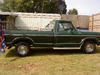
I have a 1977 f150 2wd. everything except the motor is stock. It has leaf springs in the back. A possibility is that someone changed the badges on your truck. The only way to tell is to look at the VIN. F10 =f100 F15= f150 F25=f250 F35=f350. and to tell if your motor is a true 351M, you can drop the oil pan and look at the crank casting numbers, then look up the correct numbers. You can look at the ID tag and tell if your truck originally came with a 351M or a 400. You can have the 351M block(still the same as a 400) with the 400 pistons, rods, and crank, basically restroking it to be a 400.
[/quote]I have a 1977 f150 2wd. everything except the motor is stock. It has leaf springs in the back. A possibility is that someone changed the badges on your truck. The only way to tell is to look at the VIN. F10 =f100 F15= f150 F25=f250 F35=f350. and to tell if your motor is a true 351M, you can drop the oil pan and look at the crank casting numbers, then look up the correct numbers. You can look at the ID tag and tell if your truck originally came with a 351M or a 400. You can have the 351M block(still the same as a 400) with the 400 pistons, rods, and crank, basically restroking it to be a 400.