





Front axle pinion angle seems wrong?
Thread Starter
|
Freshman User
Joined: Oct 2010
Posts: 27
Likes: 1
From: Salem, Oregon
Front axle pinion angle seems wrong?
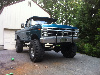
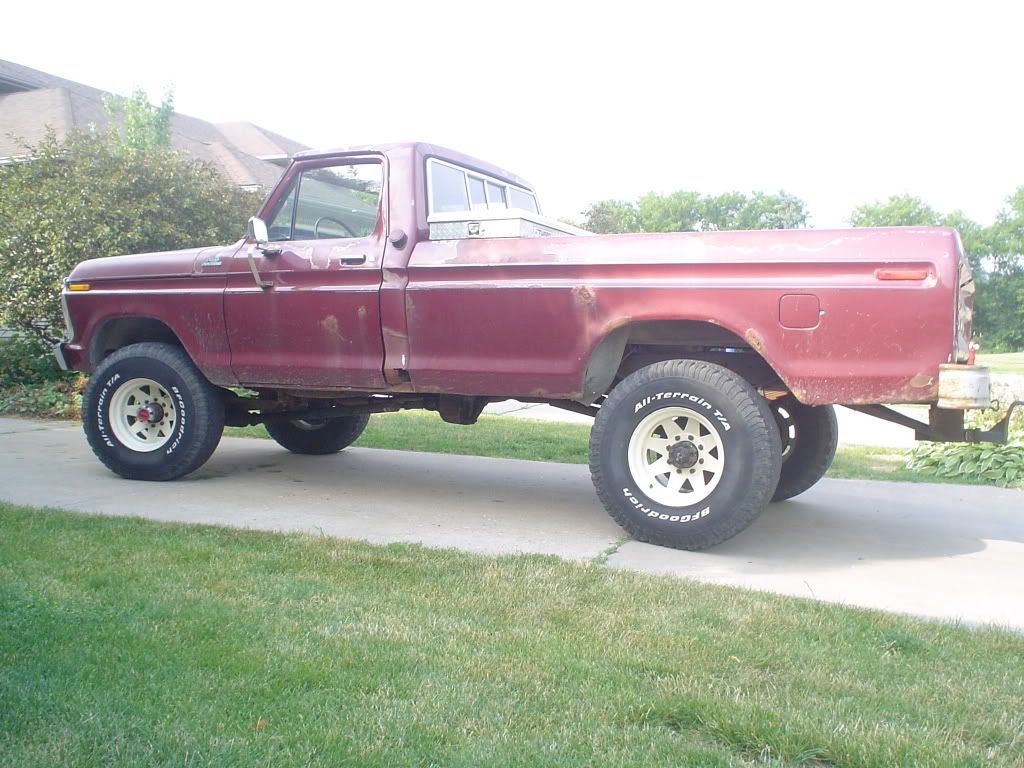
I have a 75 highboy, and noticed the front axle looks like the angle is off. I am guessing the pinion should be parallel to the frame, and not pointing toward the ground. It ends up putting the front u-joint at more of an angle than it really needs to be.
Why is it the front and rear axles dont just point to the t-case? That would leave virtually no angle for the u-joint to be fighting, right?
Why is it the front and rear axles dont just point to the t-case? That would leave virtually no angle for the u-joint to be fighting, right?

Posting Guru
Joined: Feb 2011
Posts: 1,128
Likes: 0
From: sacramento
im pretty sure it is supposed to be like that i cant rember and my truck is currentally torn apart to lift it... but the leaf pads on the axle are built into the diff(one of them is atleast) and you cant move your pinion angle without a shim so look to see if there is a shim in there otherwise its stock..

Post Fiend
Joined: Apr 2008
Posts: 8,261
Likes: 15
From: Big Sky Country
Depends what the OP means by "pointing towards the ground", the axle is angled in that direction a degree or two, but to the naked eye it basically runs parallel to the frame, if the OP could post up a pic we could see how much angle he's talking about.
Senior User
Joined: Nov 2007
Posts: 340
Likes: 4
From: Near Madison, WI
Trending Topics
Posting Guru
Joined: Oct 2010
Posts: 1,186
Likes: 1
From: townsend DE
FTE Stories
Ford Trucks for Ford Truck Enthusiasts

Top 6 Best Deals Available on New Fords & Lincolns Right Now
Brett Foote
This Hennessey Takes the Expedition Tremor's Off-Roading Capability to the Next Level
Verdad Gallardo
Top 10 Fords at 2026 Carlisle Ford Nationals
Joe Kucinski
3 Best / 3 Worst Parts of Modern Ford Ownership
Brett Foote
10 Amazing Upgrades That Solve Common Ford Truck Owner Headaches
Pouria Savadkouei
Every 2026 Ford Engine Explained
Brett Foote
10 Ugly Ford Trucks That We Still Kinda Love
Joe Kucinski
10 Things Every Truck Owner NEEDS (2026 Edition)
Michael S. Palmer
Rezvani's Latest Post-Apocalyptic Monster Is a Ford F-150 Raptor Underneath
Verdad Gallardo
Thread Starter
|
Freshman User
Joined: Oct 2010
Posts: 27
Likes: 1
From: Salem, Oregon
Thats pretty close to the same as mine too. So this can be fixed in part by adding some degreed shims to turn the axle? Is there any reason I cant relocate the leaf spring pads/blocks (whatever they are)? I am a very competent fabricar;
End result is I would like to have the pinion "pointing" at the t-case to reduce the driveline angle. I could have sworn that somewhere in my past I remember someone saying its a bad thing to do
End result is I would like to have the pinion "pointing" at the t-case to reduce the driveline angle. I could have sworn that somewhere in my past I remember someone saying its a bad thing to do
Freshman User
Joined: Apr 2011
Posts: 46
Likes: 0
From: Arizona
As I understand it, if you have a two u-joint shaft front shaft, the output of the front differential has to be parallel to the front output of the transfer case. If you have a three u-joint front shaft, the output of the front differential has to be pointed at the front output of the transfer case.
Here are some pics from Tom Wood's website to help explain:


Even though these show rear shafts, fronts shafts would have to follow the same rules.
Here are some pics from Tom Wood's website to help explain:
Even though these show rear shafts, fronts shafts would have to follow the same rules.
Senior User
Joined: Nov 2007
Posts: 340
Likes: 4
From: Near Madison, WI
^100% Correct^
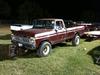
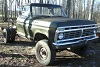
The front output on the t-case is either parallel to the earth or slightly north of parallel. The front pinion would then need to be either parallel or a slightly south of parallel to keep the yokes on the same plane. All of this being in the name of smooth, vibration free operation. I always felt that my pinion pictured above was exaggerated by the well worn front spring pack.
-Jared
The front output on the t-case is either parallel to the earth or slightly north of parallel. The front pinion would then need to be either parallel or a slightly south of parallel to keep the yokes on the same plane. All of this being in the name of smooth, vibration free operation. I always felt that my pinion pictured above was exaggerated by the well worn front spring pack.
-Jared
Post Fiend
Joined: Apr 2008
Posts: 8,261
Likes: 15
From: Big Sky Country
I'm not certain that's the case, reason being, as the spring pack fatigues over time and the pack flattens out the pinion angle remains on the very same plane, its angle is not altered due do the worn springs.
Freshman User
Joined: Apr 2011
Posts: 46
Likes: 0
From: Arizona
And also, the front pinion might be down a couple of degrees to compensate for when torque is applied. When you put a load on the front drive shaft (i.e. 4 hi or 4 lo) the whole differential will want to pivot up. The angle might not look so wonky when in 4wd.


Senior User
Joined: Nov 2007
Posts: 340
Likes: 4
From: Near Madison, WI
Incorrect.
-Jared