


Found some cool pictures
Thread Starter
|
New User
Joined: Mar 2008
Posts: 9
Likes: 1
From: Kinistino
Found some cool pictures
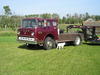
I was surfin' the other night and came across some pictures of the 534 seamaster engine. Have a look! 
Chris Craft Commander Forum: Anyone ever hear about a turbocharged 534 gas Seamaster ? ( photos )
Chris Craft Commander Forum: Anyone ever hear about a turbocharged 534 gas Seamaster ? ( photos )

Posting Guru
Joined: Dec 2010
Posts: 1,240
Likes: 2
From: Chino Hills
I wonder what that motor would really do with todays technology. It is basicaly a industrial 460 from what I have read, and I imagine like most other early industrial motor it would only spin 4500 rpm max. So I guess boost would have to come on really quick, and peak about 2000 rpm to 3500 rpm.

Fleet Mechanic


Joined: Jul 2004
Posts: 1,520
Likes: 199
Don't know where you read that, but your information is totally wrong. The 534 is part of the Super Duty family. They are completely unique to themselves, and share no parts with any other Ford V-8. The design is a bit similar to an MEL, but they are much larger.

Super Moderator

Joined: Apr 2004
Posts: 34,539
Likes: 2,837

The 534 predates the 460 by 10 years.
Here's some dyno info:
Ford Super Duty engine - Wikipedia, the free encyclopedia
The turbo set up doubtless makes a lot of torque, but as far as other hot rod parts, there are none.
A 460 can be made into a much more powerful engine with easily available parts.
Here's some dyno info:
Ford Super Duty engine - Wikipedia, the free encyclopedia
The turbo set up doubtless makes a lot of torque, but as far as other hot rod parts, there are none.
A 460 can be made into a much more powerful engine with easily available parts.

Fleet Mechanic
Joined: May 2005
Posts: 1,575
Likes: 11
From: Puyallup, WA
At around 7.2 to 1 compression ratio, they should have tolerated 7psi without much stress, although premium fuel I am sure would have been required.
BTW - they share nothing with the 460's other than the Ford name. You could even debate the blue oval nameplate as the trucks they were origionaly designed for and installed in did not use the blue oval emblem!
I was sorry to read that nobody wanted them and that they went to scrap. What a pity.
David
Fleet Mechanic
Joined: May 2005
Posts: 1,575
Likes: 11
From: Puyallup, WA
As produced by Ford, these are slow slog all day without destroying themselves engines. Low rpm, low compression, low specific output, just hammer down and grunt along.... without melting a piston or detonating to death

Which is why it would be interesting to take a look at the turbo'd version and see what changes might have been made in addition to the turbos and assorted plumbing. Along with the expected RPM ranges, and the expected operational hours per year, and the expected operational hour limits between majors. (much like the heavy, medium and light/pleasure duty ratings in boats for diesels have different rated horsepower and hours of use per year)
David
Trending Topics
Super Moderator
Joined: Apr 2004
Posts: 34,539
Likes: 2,837
Go back on the comments about the Sea Master. That was a draw-through set up, so your manifold, intercooler and the pipes are all full of pressurized air/fuel, just ready to send you into the next county should you drop a valve or have an ignition failure.
A smaller version of this:
YouTube - Amanda Sheperd's bomb 8times
A smaller version of this:
YouTube - Amanda Sheperd's bomb 8times
FTE Stories
Ford Trucks for Ford Truck Enthusiasts

10 Fords to Drive Before You Die
Joe Kucinski
3 Best / Worst Features Of The 2025+ Ford Expedition
Brett Foote
10 Ways Ford is LOSING to the Competition
Joe Kucinski
Top 6 Best Deals Available on New Fords & Lincolns Right Now
Brett Foote
This Hennessey Takes the Expedition Tremor's Off-Roading Capability to the Next Level
Verdad Gallardo
Top 10 Fords at 2026 Carlisle Ford Nationals
Joe Kucinski
3 Best / 3 Worst Parts of Modern Ford Ownership
Brett Foote
10 Amazing Upgrades That Solve Common Ford Truck Owner Headaches
Pouria Savadkouei
Every 2026 Ford Engine Explained
Brett Foote
Fleet Mechanic
Joined: May 2005
Posts: 1,575
Likes: 11
From: Puyallup, WA
Go back on the comments about the Sea Master. That was a draw-through set up, so your manifold, intercooler and the pipes are all full of pressurized air/fuel, just ready to send you into the next county should you drop a valve or have an ignition failure.
A smaller version of this:
A smaller version of this:
Of course the reason why draw thru systems were popular way back when was it was easier witha carb, otherwise you would have to run a sealed air box, seal up the throttle cable and choke cable - etc. Then you wuld have to run some sort of regulator that would increase the fuel pressure inconjunction with the turbo boost as it built.
Easy to do now, but back then, we were still dealing with relativly unsophisticated mechanical fuel pumps and very basic electrics. Electronics were pretty much regulated to alternators, although in the time frame you were seeing some of the very first mass marketed electronic ignition systems, which were a bain at first, but with time they were made reliable, plus they went beyond "lab based" or "lab required" troubleshting tools and procedures and brought out everyday tools to use in the "field"
David

Thread
Thread Starter
Forum
Replies
Last Post
