



Pulling the engine (V8) in a '65

Thread Starter
|
Senior User
Joined: Nov 2010
Posts: 258
Likes: 0
Pulling the engine (V8) in a '65
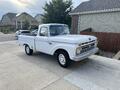
I need to pull the engine in my Slick to seal it up. It is leaking too much oil, mainly from the oil pan gasket. I want to pull it out and put all new gaskets and rear main seal in it.
This has a 4sp tranny. Which is easier to do, pull just the engine or the engine and tranny as a whole? I've never pulled an engine out of a Ford but done plenty of Chevys. For the Chevy, it is easier just to pull the engine.
This has a 4sp tranny. Which is easier to do, pull just the engine or the engine and tranny as a whole? I've never pulled an engine out of a Ford but done plenty of Chevys. For the Chevy, it is easier just to pull the engine.
Laughing Gas


Joined: Mar 2005
Posts: 1,109
Likes: 9
From: Thornton, Colorado

I've always found it easier to put one guy in the cab holding the shifter, and one guy underneath, to lower the trans to the ground. That way you don't have to remove the shifter assembly. Then just pull the engine and bell housing in one piece. Not very hard. I once used 2 pieces of angle iron, and just moved the trans back. I was only replacing a clutch though, and so it wasn't hangin out there long.

Senior User
Joined: Jan 2003
Posts: 357
Likes: 1
From: willamette valley ore
Pulling the engine/tranny in a unit requires beefy lifting equipment and lots of overhead. You also need a load tilting mechanism that will allow you to tip the engine at a very steep angle to clear the firewall in the rear and the radiator support in the front. I have done it and it is not worth the trouble. Much easier to separate the engine from the tranny and then just lift it out. Steve
Senior User
Joined: Jan 2003
Posts: 357
Likes: 1
From: willamette valley ore
Here's an afterthought. Just recently my neighbor and I removed a 289 from a 1967 Galaxie with the auto tranny attached. Now this is a much smaller and lighter combined unit than the FE with cast iron tranny. My story is aimed more at the safety issues of pulling a large assembly out of a vehicle. I had a manifold lift in my bag of tricks and it seemed like just the ticket to get that motor and tranny out of the Galaxie. So I yanked the carb and installed the manifold lift. This consists of a plate of heavy aluminum with an eye bolt. the plate slides over the four carb studs and you're ready to lift. Well, not quite. I did not realize that the eye was not welded shut. when the assembly was coming out over the top of the radiator support, I got the sensation that the load was settling downward but I could not tell at first what was happening. Soon I saw that the eye had started to open up and was slipping slowly to the point where the engine and tranny was going to drop. My neighbor said afterward that he had never seen anyone move so fast in his life. I grabbed a come-along that was hanging nearby and ran up a 6 foot ladder that was also still at hand from hooking up the hoist to the jib arm. I wrapped a chain around the load and hooked it onto the jib arm just before the eye gave up completely. There was a hell of a bang when it gave way but the chain held everything until we could re-rig and lift it out. The most important thing I learned was that you need to use the right eiquipment. I had used that lifting bracket to move engines around the shop and before that had never had any trouble. But with the tranny attached and the severe angle of lift, I was just asking too much of it. I also decided that I should run out and buy a lottery ticket because of how lucky I was with my narrowly diverted disaster but I must have used up all my luck 'cause the ticket did not win me a dang thing. Safetly First, Steve

Logistics Pro


Joined: May 2008
Posts: 3,670
Likes: 370
From: PHX AZ
I need to pull the engine in my Slick to seal it up. It is leaking too much oil, mainly from the oil pan gasket. I want to pull it out and put all new gaskets and rear main seal in it.
This has a 4sp tranny. Which is easier to do, pull just the engine or the engine and tranny as a whole? I've never pulled an engine out of a Ford but done plenty of Chevys. For the Chevy, it is easier just to pull the engine.
This has a 4sp tranny. Which is easier to do, pull just the engine or the engine and tranny as a whole? I've never pulled an engine out of a Ford but done plenty of Chevys. For the Chevy, it is easier just to pull the engine.
I started the same project on my 65' it turned into a MAJOR job... 5mo later I had it back together. The "Might as wells" can really add up. LOL
I just pulled a 352 not too long ago and it had NEVER been apart! Still have another to pull in the next month or so.

Senior User
Joined: Dec 2010
Posts: 188
Likes: 0
Mike: Before you pull the engine, would you do yourself a favor first? Please double check the source of the leak. FE engines are notorious for leaking from the backside of the intake manifold in such a way as to make it look like a pan gasket or a main oil seal leak. When this happened to me, I didn't find it until I thoroughly cleaned the backside of the engine, removed all oily remnants (with kerosene and brake cleaner) and then checked for leaks. If this is the answer, it will be much easier to fix, an you won't risk nearly as much scratching that beautiful paint job.
Trending Topics
Thread Starter
|
Senior User
Joined: Nov 2010
Posts: 258
Likes: 0
Thanks for the advise guys.
The problem I've seen in the past with the lifting by the manifold is that it can lead to leaks. But then again, I'm thinking of a small 4 barrel and new intake.
The engine was rebuilt about 30k ago but that was probably close to 10 years. It doesn't smoke and is extremely strong. The leaks are due to the truck being driven so little and the gaskets shrinking up (well, that is my theory. seen it many times in the past). I won't replace the head gaskets because my buddy that I bought the truck from did that within the last 10k miles. The shop that rebuilt the engine double up the head gaskets for some reason, probably crappy gas in Oregon/Idaho, who knows. But if I have the oil pan off, it wouldn't hurt to replace the main bearings since they are so cheap.
I really want the work to be minimal since I'll be pulling the front clip and bed next winter and also installing a C6. But as much oil as it's leaking, I don't want to drive it for 10 months like that. There is probably 3 ozs. pooled in the drip pan under it now and I only drove it 3 times since I cleaned the pan.
The problem I've seen in the past with the lifting by the manifold is that it can lead to leaks. But then again, I'm thinking of a small 4 barrel and new intake.
The engine was rebuilt about 30k ago but that was probably close to 10 years. It doesn't smoke and is extremely strong. The leaks are due to the truck being driven so little and the gaskets shrinking up (well, that is my theory. seen it many times in the past). I won't replace the head gaskets because my buddy that I bought the truck from did that within the last 10k miles. The shop that rebuilt the engine double up the head gaskets for some reason, probably crappy gas in Oregon/Idaho, who knows. But if I have the oil pan off, it wouldn't hurt to replace the main bearings since they are so cheap.
I really want the work to be minimal since I'll be pulling the front clip and bed next winter and also installing a C6. But as much oil as it's leaking, I don't want to drive it for 10 months like that. There is probably 3 ozs. pooled in the drip pan under it now and I only drove it 3 times since I cleaned the pan.
FTE Stories
Ford Trucks for Ford Truck Enthusiasts

10 Things Every Truck Owner NEEDS (2026 Edition)
Michael S. Palmer
Rezvani's Latest Post-Apocalytic Monster Is a Ford F-150 Raptor Underneath
Verdad Gallardo
Top 10 Most Expensive Ford Trucks Ever Sold on Bring a Trailer
Joe Kucinski
2027 Ford Super Duty Buyer's Guide (Every Model, Engine, & Package)
Brett Foote
Top 10 Ford Truck Tragedies
Joe Kucinski
AEV FXL Super Duty - the Super Duty Raptor Ford Doesn't Make
Brett Foote
Lobo Vs Lobo: Proof the F-150 Lobo Should Be Even Lower!
Michael S. Palmer
Ford's 2001 Explorer Sportsman Concept Looks For a New Home
Verdad Gallardo
10 Best Ford Truck Engines We Miss the Most!
Joe Kucinski
Thread Starter
|
Senior User
Joined: Nov 2010
Posts: 258
Likes: 0
Mike: Before you pull the engine, would you do yourself a favor first? Please double check the source of the leak. FE engines are notorious for leaking from the backside of the intake manifold in such a way as to make it look like a pan gasket or a main oil seal leak. When this happened to me, I didn't find it until I thoroughly cleaned the backside of the engine, removed all oily remnants (with kerosene and brake cleaner) and then checked for leaks. If this is the answer, it will be much easier to fix, an you won't risk nearly as much scratching that beautiful paint job.
Thanks for the tip on the manifold!

Elder User
Joined: Oct 2009
Posts: 825
Likes: 2
From: Dallas, Texas


Lead Driver
Joined: Aug 2003
Posts: 6,305
Likes: 18
From: Boulder Creek, Ca

Pulled engine on both 65's more often than I want to remember, I have found separating better, have done on several occasions without removing radiator, and support, but had to use a tilt arm and attached to block using bolts. On 1 occasion removed them together and it was at a 'Pick n Pull' where I had the use of the tall engine hoist, reached its full extention and still had to remove the radiator, and support.
IMO, it's not removing the engine, rather the installing that's the pain in the backside. Suggest take extra steps and hopefully it will go relatively quick. Out of frustration, there were couple occasions had to leave it only to return few hours later, or the next day, and surprisingly enough had the engine installed withing 15-30 min's. Found prepping tended to help; i.e., purchasing clutch pilot tool, only cost a few buck and can save time. Considering it now takes these ole bones day or two longer to recover I always replace the throwout bearing and clutch in the hopes of putting the next installation off a little longer. IMO, Fed Mogul is a very good quality throwout bearing, purchased mine at local NAPA store and they usually come with a grease fitting. Suggest have salesperson set their selection out and pick which you find the better quality. Basically, set clutch assembly in position, the clutch arm has a metal wire clip to hold it in position, might want to add little grease to shaft, and then it's a matter of having all the stars in alignment and if everything goes well the engine and tranny will slide together on the first attempt. Found loosening, possibly removing, tranns mount bolts can help, may need to lift tranny slightly to get correct alignment; oh, if not familiar, try and not move the clutch arm until certain the shaft is set into the pilot hole, otherwise, may need to start over. Anyhow, had an urge to chime in and add my $.02.
IMO, it's not removing the engine, rather the installing that's the pain in the backside. Suggest take extra steps and hopefully it will go relatively quick. Out of frustration, there were couple occasions had to leave it only to return few hours later, or the next day, and surprisingly enough had the engine installed withing 15-30 min's. Found prepping tended to help; i.e., purchasing clutch pilot tool, only cost a few buck and can save time. Considering it now takes these ole bones day or two longer to recover I always replace the throwout bearing and clutch in the hopes of putting the next installation off a little longer. IMO, Fed Mogul is a very good quality throwout bearing, purchased mine at local NAPA store and they usually come with a grease fitting. Suggest have salesperson set their selection out and pick which you find the better quality. Basically, set clutch assembly in position, the clutch arm has a metal wire clip to hold it in position, might want to add little grease to shaft, and then it's a matter of having all the stars in alignment and if everything goes well the engine and tranny will slide together on the first attempt. Found loosening, possibly removing, tranns mount bolts can help, may need to lift tranny slightly to get correct alignment; oh, if not familiar, try and not move the clutch arm until certain the shaft is set into the pilot hole, otherwise, may need to start over. Anyhow, had an urge to chime in and add my $.02.
Thread Starter
|
Senior User
Joined: Nov 2010
Posts: 258
Likes: 0
Thanks Dave, good advise. I have so many clutch alignment tools laying around, maybe one will work (Chevy, MG, Toyota). But like you said, they're only a few bucks.
Since I didn't want the mess in my driveway, I went to the DIY car wash today and degreased the engine. I had to wait in line and it's only 2 minutes from the house so the engine never got really hot.
So far at first glance, the front seal is leaking. I know that the valve covers are as well but how do I tell if the intake is leaking? Where should I look?
Thanks again all.
Since I didn't want the mess in my driveway, I went to the DIY car wash today and degreased the engine. I had to wait in line and it's only 2 minutes from the house so the engine never got really hot.
So far at first glance, the front seal is leaking. I know that the valve covers are as well but how do I tell if the intake is leaking? Where should I look?
Thanks again all.
Senior User
Joined: Nov 2010
Posts: 376
Likes: 1
From: Tempe, AZ
 but they won't fail at the eye.
Another $.02 addition.
Joe
Last edited by FourOneTons; Jan 22, 2011 at 01:51 PM. Reason: spelling
Lead Driver
Joined: Aug 2003
Posts: 6,305
Likes: 18
From: Boulder Creek, Ca
That's an issue with these vintage treasures when they set for extended period of time. I find that once I've driven the truck for awhile occasionally the pestering leak will subside with the gaskets swelling, have a throwout bearing that squeels like a greased pig if allow to set for any length of time and usually goes away within few miles. I have yet to be able to totally seal the 390 hog, sometime of opinion engine was designed with a leak.
While the engine is running I would take a Vac test and see if reading and see if there is a steady needle in the range of 18-21 inches of Vac. Depending upon reading, and the needle reaction can sometimes provide a clue as to what's going on with the engine. Low steady reading can suggest number of issues to include timing, tappets, intake leak, etc. Sometimes if needle pulsates regularly can suggest problem in a particular cyl. Also, large sweeps under at higher speeds could suggest valve spring, and on the otherhand at higher speed with rapid small pulsations could suggest intake leak. Also suggest taking a compression test on all cyl. with both test more as a base, or reference point when the engine is installed and running. Anyhow, food for thought.
While the engine is running I would take a Vac test and see if reading and see if there is a steady needle in the range of 18-21 inches of Vac. Depending upon reading, and the needle reaction can sometimes provide a clue as to what's going on with the engine. Low steady reading can suggest number of issues to include timing, tappets, intake leak, etc. Sometimes if needle pulsates regularly can suggest problem in a particular cyl. Also, large sweeps under at higher speeds could suggest valve spring, and on the otherhand at higher speed with rapid small pulsations could suggest intake leak. Also suggest taking a compression test on all cyl. with both test more as a base, or reference point when the engine is installed and running. Anyhow, food for thought.
Posting Guru
Joined: Nov 2008
Posts: 1,255
Likes: 2
From: Santa Monica, CA
Hey Mike,
I drive my 66 F100 352 daily. It has a little drip or two that's kind of annoying but with regular driving, it doesn't drip as much. Since you said you're pulling the front clip off in a few months to install a C6, I think I would just drive it more often and see if the leak lessens rather than pull the engine now. You can do all that stuff while you have it out in a few months and it'll be a whole lot less work in the long run. Just a thought.....
Randy
I drive my 66 F100 352 daily. It has a little drip or two that's kind of annoying but with regular driving, it doesn't drip as much. Since you said you're pulling the front clip off in a few months to install a C6, I think I would just drive it more often and see if the leak lessens rather than pull the engine now. You can do all that stuff while you have it out in a few months and it'll be a whole lot less work in the long run. Just a thought.....
Randy