





HELP WITH TOWING ENCLOSED TRAILER
Thread Starter
|
Junior User
Joined: Dec 2009
Posts: 66
Likes: 0
HELP WITH TOWING ENCLOSED TRAILER
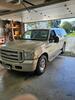
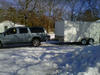
I too have some questions bout towing... I am getting ready to go cross country with a 16 or 20 ft trailer enclosed dunno yet cuz i havent bought it. Mine is not heavy loads just a trailer full of my household stuff couch beds etc boxes and junk prolly nothing more than 5000 lbs im figuring. Should i set up anything for this move or all my stock stuff should do?

Junior User
Joined: Dec 2010
Posts: 95
Likes: 0
From: Cape Cod
5K (+-) I wouldnt worry at all. How many miles on the ole girl? I'd do a basic tune up, maybe a tranny fluid change- but thats it. I'd recommend trailer brakes, cause you'll be trying to stop a whole lotta weight above and beyond "normal". And the Ex's brakes have always been marginal to begin with.
Thread Starter
|
Junior User
Joined: Dec 2009
Posts: 66
Likes: 0
Yeah im gonna get a brake controller. She has 141000 on her v10 still sounds perfect no ticking misses all good. Thats what i figured trailer is 3500 plus whatever i put in it which isnt much im saying mayb 7000 the very most. Thanks for input

Senior User
Joined: Apr 2009
Posts: 444
Likes: 2
From: Franktown, CO

Brake Controller
Don't go cheap on the brake controller. Look at the Prodigy line. P3 maybe. I think a cheap controller is worse than no controller because they can be unpredictable. Get a good controller, plan on spending about $150+, unless you get on Ebay or somewhere similar.
Junior User
Joined: Dec 2010
Posts: 95
Likes: 0
From: Cape Cod
X2 on the Prodigy. GREAT controller. I use it on our 02 EX with a 31' travel trailer.
Elder User
Joined: Oct 2009
Posts: 672
Likes: 0
From: RTP, NC
I agree you may get ALOT of trailer sway.
Trending Topics

Fleet Mechanic


Joined: Feb 2008
Posts: 1,955
Likes: 6
From: Eastern PA
Psh, you'll be fine, just keep at decent speed. I towed a 16' enclosed trailer weighing 6500lbs with a 2001 cavalier with a 2.0 and a 5speed trans. I kept it around 55, mostly because it was physically impossible to go any faster, 40mph on the inclines. I had a class 2 hitch at that. I traveled from mississippi to texas then texas to pennsylvania like that. Just be responsible when towing, be aware of the warning signs for problems, and be careful. Watch wind gusts side to side, and be sure to keep in your lane, the trailer can wander at times without you feeling it, so check your mirrors often.
FTE Stories
Ford Trucks for Ford Truck Enthusiasts

10 Things Every Truck Owner NEEDS (2026 Edition)
Michael S. Palmer
Rezvani's Latest Post-Apocalyptic Monster Is a Ford F-150 Raptor Underneath
Verdad Gallardo
Top 10 Most Expensive Ford Trucks Ever Sold on Bring a Trailer
Joe Kucinski
2027 Ford Super Duty Buyer's Guide (Every Model, Engine, & Package)
Brett Foote
Top 10 Ford Truck Tragedies
Joe Kucinski
AEV FXL Super Duty - the Super Duty Raptor Ford Doesn't Make
Brett Foote
Lobo Vs Lobo: Proof the F-150 Lobo Should Be Even Lower!
Michael S. Palmer
Ford's 2001 Explorer Sportsman Concept Looks For a New Home
Verdad Gallardo
10 Best Ford Truck Engines We Miss the Most!
Joe Kucinski
Mountain Pass
Joined: Jan 2006
Posts: 202
Likes: 1
Regarding sway caused by passing trucks or crosswinds, you can defeat most of that with how you load the trailer.
Measure the front and rear ride heights from the top of the tires to the fender lips. Lower the loaded trailer onto the trailer hitch.
The rear should compress about an inch, no more than two. The front should not lift more than two inches.
That's a good rule of thumb for checking the weight distribution in the trailer. If the rear compresses more than two inches, move some of the load back in the trailer, reducing tongue weight. If the reas doesn't compress enough add tongue weight.
On the road, if big trucks passing you cause trailer sway, enough that you make more than a minor correction, move the load. I usually find most people don't have enough tongue weight, that makes it feel like you are chasing the rear of the truck with the front wheels. If the front wheels feel like they are sliding around, or skipping, or understeering, remove tongue weight.
If you know you'll have the trailer loaded with a heavy tongue, a weight distributing hitch (Curt brand for example) can be found online or at your local trailer shop pretty cheaply.
I've seen an excursion with a 12 foot trailer on it's side in the median before, the driver told me he was blown off by a tractor trailer. He also told me the upright piano he was carrying for a friend was at the back of the trailer, well behind the axle, and he was surprised by how balanced the trailer was when he hooked it up to the truck. He basically had no tongue weight, and for a few moments, probably no rear wheels on the ground....
Measure the front and rear ride heights from the top of the tires to the fender lips. Lower the loaded trailer onto the trailer hitch.
The rear should compress about an inch, no more than two. The front should not lift more than two inches.
That's a good rule of thumb for checking the weight distribution in the trailer. If the rear compresses more than two inches, move some of the load back in the trailer, reducing tongue weight. If the reas doesn't compress enough add tongue weight.
On the road, if big trucks passing you cause trailer sway, enough that you make more than a minor correction, move the load. I usually find most people don't have enough tongue weight, that makes it feel like you are chasing the rear of the truck with the front wheels. If the front wheels feel like they are sliding around, or skipping, or understeering, remove tongue weight.
If you know you'll have the trailer loaded with a heavy tongue, a weight distributing hitch (Curt brand for example) can be found online or at your local trailer shop pretty cheaply.
I've seen an excursion with a 12 foot trailer on it's side in the median before, the driver told me he was blown off by a tractor trailer. He also told me the upright piano he was carrying for a friend was at the back of the trailer, well behind the axle, and he was surprised by how balanced the trailer was when he hooked it up to the truck. He basically had no tongue weight, and for a few moments, probably no rear wheels on the ground....

Got Diesel?
Joined: Jan 2004
Posts: 4,345
Likes: 21
On my 4x4 Excursion, I inflate my tires to 60/65 (front/rear) for year round. Max is 70lbs... but this gets me the best tread wear as I have a diesel. When I tow or pull a froends 28' pontoon boat, I inflate the rear-end to 70lbs due to the extra weight.
I would also inflate your tires to 68-70lbs in the rear which is max cold inflation (I am assuming you have load range E tires)? I also assume your Excursion will be fully loaded with cargo and people as well... so you'll want extra air pressure.
For the front, I run 60lbs which will probably still be OK for you. With the length trailer you have, it will be a twin axle, so just load the trailer properly to have about 10% of the total weight on the tongue and the balance over the remainder of the trailer (real heavy stuff centered over tires or just in front of... and balanced).
BTW - Prodigy brake controller is the only way to go and they work with multiple axle trailers and have "proportional braking".... read up on them and you will know what we're talking about.
Good luck,
I would also inflate your tires to 68-70lbs in the rear which is max cold inflation (I am assuming you have load range E tires)? I also assume your Excursion will be fully loaded with cargo and people as well... so you'll want extra air pressure.
For the front, I run 60lbs which will probably still be OK for you. With the length trailer you have, it will be a twin axle, so just load the trailer properly to have about 10% of the total weight on the tongue and the balance over the remainder of the trailer (real heavy stuff centered over tires or just in front of... and balanced).
BTW - Prodigy brake controller is the only way to go and they work with multiple axle trailers and have "proportional braking".... read up on them and you will know what we're talking about.
Good luck,

Hotshot
Joined: Oct 2005
Posts: 12,237
Likes: 22
From: Florida
The rear should compress about an inch, no more than two. The front should not lift more than two inches.

The purpose of a WD hitch is to shift that weight BACK to the front axle.
If you limit the trailer LOADED weight to 5000-5500#'s...you shoud be fine with out a WD hitch. If you look at your receiver rating...you will notice that Ford limits your hitch to 5000#'s and 500#'s of tongue weight withOUT a WD hitch. The main purpose of this rating is to essentially force the operator to use the WD hitch for tongue weights that apply too heavy of a load to off-load the FRONT axle.
A good rule of thumb when towing heavier is use a WD hitch and when you use a WD hitch you should strive to RETURN the FRONT axle to the weight it was BEFORE it was hitched...this insures that your front axle is not too light.
Now...if you keep your loaded trailer to 5000#'s...you should be fine with no WD hitch...any more than that...I'd look for a good used WD hitch for this trip.
Also...a standard Prodigy brake controller will be fine...you can usually pick one up for alittle over $100...shop around...
The P3 will usually set you back about $150 or so...for your situation...the standard Prodigy will be fine.
Also...I'd suggest a simple friction bar anti sway device. You can have an extra ball welded on the standard ball mount if you don't need a WD hitch and if you do you can usually bet that extra small ball mount for the friction bar on the hitch head of the WD hitch.
The above is simply my $0.02 on this topic...
In general the Ex is a perfect tow vehicle for this type of load but if you are over 5000#'s...think hard about the addition of a WD hitch.
Good luck,
Joe.
Mountain Pass
Joined: Jan 2006
Posts: 202
Likes: 1
Agreed, that's why I recommended the WD hitch if he can't control the tongue weight with the load in the trailer. But, you are assuming the front springs are linear, I think you'll find when you dyno them that they are not, and the first two inches of unloading travel is not worth 600 pounds.