


How much fuel do I use idling?
#1
 02-02-2011, 05:50 PM

How much fuel do I use idling?
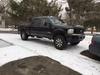
Well I usually let my truck warm up for about 20-30 minutes before I leave for work in the morning and before I leave work to go home.
Some people say I am crazy for leaving it out there running for that long wasting fuel....
I really don't think I am using that much?
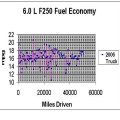
How much would I burn per hour?
Some people say I am crazy for leaving it out there running for that long wasting fuel....
I really don't think I am using that much?
How much would I burn per hour?
#2
02-02-2011, 06:15 PM


#3
02-02-2011, 06:15 PM
Senior User
Join Date: Aug 2010
Location: Princeton, MN
Posts: 145
Likes: 0
Received 0 Likes
on
0 Posts
#4
02-02-2011, 06:19 PM
#5
02-02-2011, 06:29 PM
Senior User
Join Date: Aug 2010
Location: Princeton, MN
Posts: 145
Likes: 0
Received 0 Likes
on
0 Posts
regardless of what it actually is, its nothing to be worried about for 20-30 mins if it means your engine is nice and warm before using it.
#6
02-02-2011, 06:43 PM
a buddy of mine was out of town and it was going to drop between 40-50 below and he didnt have anywhere to plug it in so he filled it up parked it for 9 hrs and only had to put in about 3 gals. so yeah about 1/3 gallon/hr. im sure it has quite a variance from truck to truck but he told me its in the manual somewhere as about a quart/hr (i have not read this so i cant verify whats printed)
regardless of what it actually is, its nothing to be worried about for 20-30 mins if it means your engine is nice and warm before using it.
regardless of what it actually is, its nothing to be worried about for 20-30 mins if it means your engine is nice and warm before using it.
Also, Ford says don't idle for more than 10 minutes unless you have the high idle. I know folks that do, but you will generate more soot idling at 750 rpm's and it can eventually bite you.
Additionally it takes around 10 minutes of high idle to get your coolant up around 150 degrees F - when the weather is in the mid 20's. Regular idle is not very effective in cold weather at warming things up very fast.
#7
02-02-2011, 07:21 PM
i bet it is well below .5 gal.
our tractors have gauges that allow us to read fuel gph (and they are pretty accurate). and with 6.8L displacement, when idling it is reading .2-.3 gph. which come out to .94L, so i would say that skills_kills is pretty close.
idling for 9 hrs may not be good for egr, but beats the damage from coolant becoming frozen. but high idle mod is a definite plus in cold weather.
our tractors have gauges that allow us to read fuel gph (and they are pretty accurate). and with 6.8L displacement, when idling it is reading .2-.3 gph. which come out to .94L, so i would say that skills_kills is pretty close.
idling for 9 hrs may not be good for egr, but beats the damage from coolant becoming frozen. but high idle mod is a definite plus in cold weather.
Trending Topics
#8
02-02-2011, 07:22 PM

If you don't have a good "hard" drive after those long warmups, you're asking for trouble.
Idling that long will wash the lube oil off the cylinder walls, accelerating normal wear and hastening compression loss. Running at high idle will slow this process down, but not eliminate it entirely.
If you're not driving it hard enough to warm it up within 60 seconds of driving, stop idling it and plug it in overnight. And by "warm it up" I mean to have heat at the registers, which usually means 100 degree (or so) coolant temps.
The "industry accepted" standard is one gallon per hour. Observational evidence on my own Detroit Series-60 engine suggests half that. And the Detroit is a 12-liter engine.
At the current price of $3.50/gal, how much MONEY are you wasting?
Maybe enough to pay for that coat to keep you warm? *snicker*
-blaine
Idling that long will wash the lube oil off the cylinder walls, accelerating normal wear and hastening compression loss. Running at high idle will slow this process down, but not eliminate it entirely.
If you're not driving it hard enough to warm it up within 60 seconds of driving, stop idling it and plug it in overnight. And by "warm it up" I mean to have heat at the registers, which usually means 100 degree (or so) coolant temps.
The "industry accepted" standard is one gallon per hour. Observational evidence on my own Detroit Series-60 engine suggests half that. And the Detroit is a 12-liter engine.
At the current price of $3.50/gal, how much MONEY are you wasting?
Maybe enough to pay for that coat to keep you warm? *snicker*
-blaine
#9
02-02-2011, 07:25 PM
If you don't have a good "hard" drive after those long warmups, you're asking for trouble.
Idling that long will wash the lube oil off the cylinder walls, accelerating normal wear and hastening compression loss. Running at high idle will slow this process down, but not eliminate it entirely.
If you're not driving it hard enough to warm it up within 60 seconds of driving, stop idling it and plug it in overnight. And by "warm it up" I mean to have heat at the registers, which usually means 100 degree (or so) coolant temps.
The "industry accepted" standard is one gallon per hour. Observational evidence on my own Detroit Series-60 engine suggests half that. And the Detroit is a 12-liter engine.
At the current price of $3.50/gal, how much MONEY are you wasting?
Maybe enough to pay for that coat to keep you warm? *snicker*
-blaine
Idling that long will wash the lube oil off the cylinder walls, accelerating normal wear and hastening compression loss. Running at high idle will slow this process down, but not eliminate it entirely.
If you're not driving it hard enough to warm it up within 60 seconds of driving, stop idling it and plug it in overnight. And by "warm it up" I mean to have heat at the registers, which usually means 100 degree (or so) coolant temps.
The "industry accepted" standard is one gallon per hour. Observational evidence on my own Detroit Series-60 engine suggests half that. And the Detroit is a 12-liter engine.
At the current price of $3.50/gal, how much MONEY are you wasting?
Maybe enough to pay for that coat to keep you warm? *snicker*
-blaine
If you keep the proper coolant mix, I don't see much chance of freezing (60% protects to -60F). But I guess I agree, better idle than freeze (but there are better ways to prevent freezing - block heater is one). Being able to start it is another issue (not the OP's question though) - I can certainly understand if you did not have block heater provisions in extreme cold weather like Skill_Kills friend.
#10
02-02-2011, 07:36 PM

#11
02-02-2011, 07:36 PM

this would be a great suggestion for Myth Busters. The only way to know would be to place some sort of "flow meter" in the fuel line, or to drain the tank and place only 1 gallon of fuel, and seeing how long it takes to run it out of fuel, but no one who owns a diesel is going to let a 6.0 run out of fuel on purpose so flow meter or nothing, call Myth Busters!
#12
02-02-2011, 07:38 PM
We need to remember that a 6.0L flash has it increasing the idle RPM's periodically, so it will be more fuel consumption than the older diesels.
Also (regarding Ford's position on extended idling):
Page 14 of the 6.0L Diesel Manual:
The following cold weather idling guidelines must be followed:
• Avoid idling the engine for more than 10 minutes at a time.
• Use Motor Craft Cetane Index improvers of a non-alcohol based from a reputable manufacturer.
• Maintain the engine cooling system properly.
• Do not shut the engine down after an extensive idling period (10 minutes or more). Drive the vehicle for several miles with the engine at normal operating temperatures under a moderate load to burn off any accumulated carbon and varnish.
• Consider using an engine block heater.
• For extended idle times use an approved idle speed increase device.
Also (regarding Ford's position on extended idling):
Page 14 of the 6.0L Diesel Manual:
The following cold weather idling guidelines must be followed:
• Avoid idling the engine for more than 10 minutes at a time.
• Use Motor Craft Cetane Index improvers of a non-alcohol based from a reputable manufacturer.
• Maintain the engine cooling system properly.
• Do not shut the engine down after an extensive idling period (10 minutes or more). Drive the vehicle for several miles with the engine at normal operating temperatures under a moderate load to burn off any accumulated carbon and varnish.
• Consider using an engine block heater.
• For extended idle times use an approved idle speed increase device.
#13
02-02-2011, 07:40 PM
this would be a great suggestion for Myth Busters. The only way to know would be to place some sort of "flow meter" in the fuel line, or to drain the tank and place only 1 gallon of fuel, and seeing how long it takes to run it out of fuel, but no one who owns a diesel is going to let a 6.0 run out of fuel on purpose so flow meter or nothing, call Myth Busters!
I will try to find the old posts.
#14
02-02-2011, 08:00 PM
Here is one of the old posts I was remembering:
https://www.ford-trucks.com/forums/5...tion-idle.html
and another one from the archives (just can't find the one I was specifically looking for though):
https://www.ford-trucks.com/forums/4...high-idle.html
https://www.ford-trucks.com/forums/5...tion-idle.html
and another one from the archives (just can't find the one I was specifically looking for though):
https://www.ford-trucks.com/forums/4...high-idle.html
#15
02-02-2011, 09:17 PM

Yes, low idle leaves a lot unburnt fuel traveling though the system (the flame in the combustion chamber takes a drastically different and far smaller shape at idle). So higher idle reforms the flame into a ball shape (which burns far more effectively) and burns off nearly all of the fuel. So low idle is creating a wet system and high-idle + is dry, and you want a dry system. <--- layman terms.