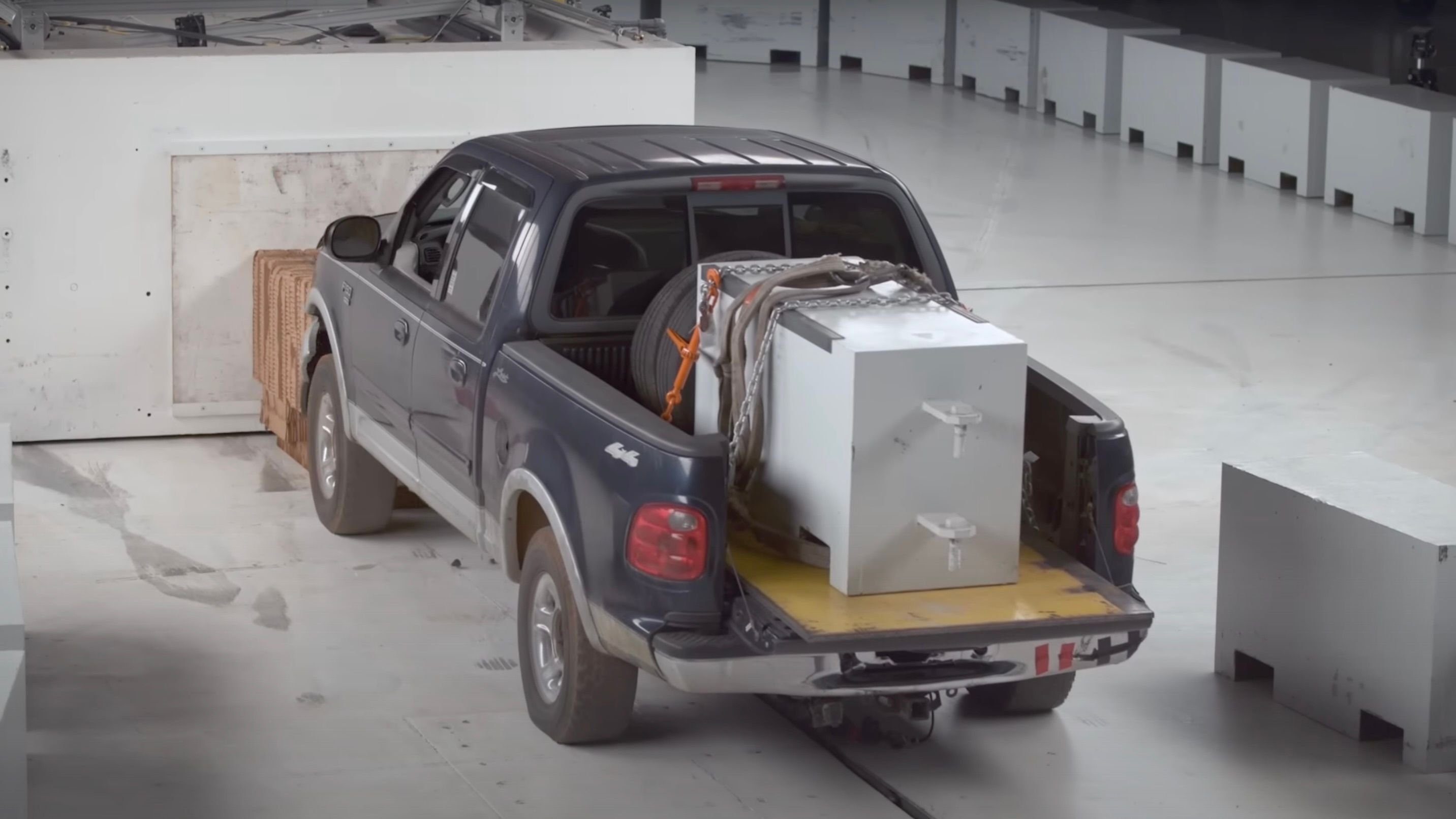
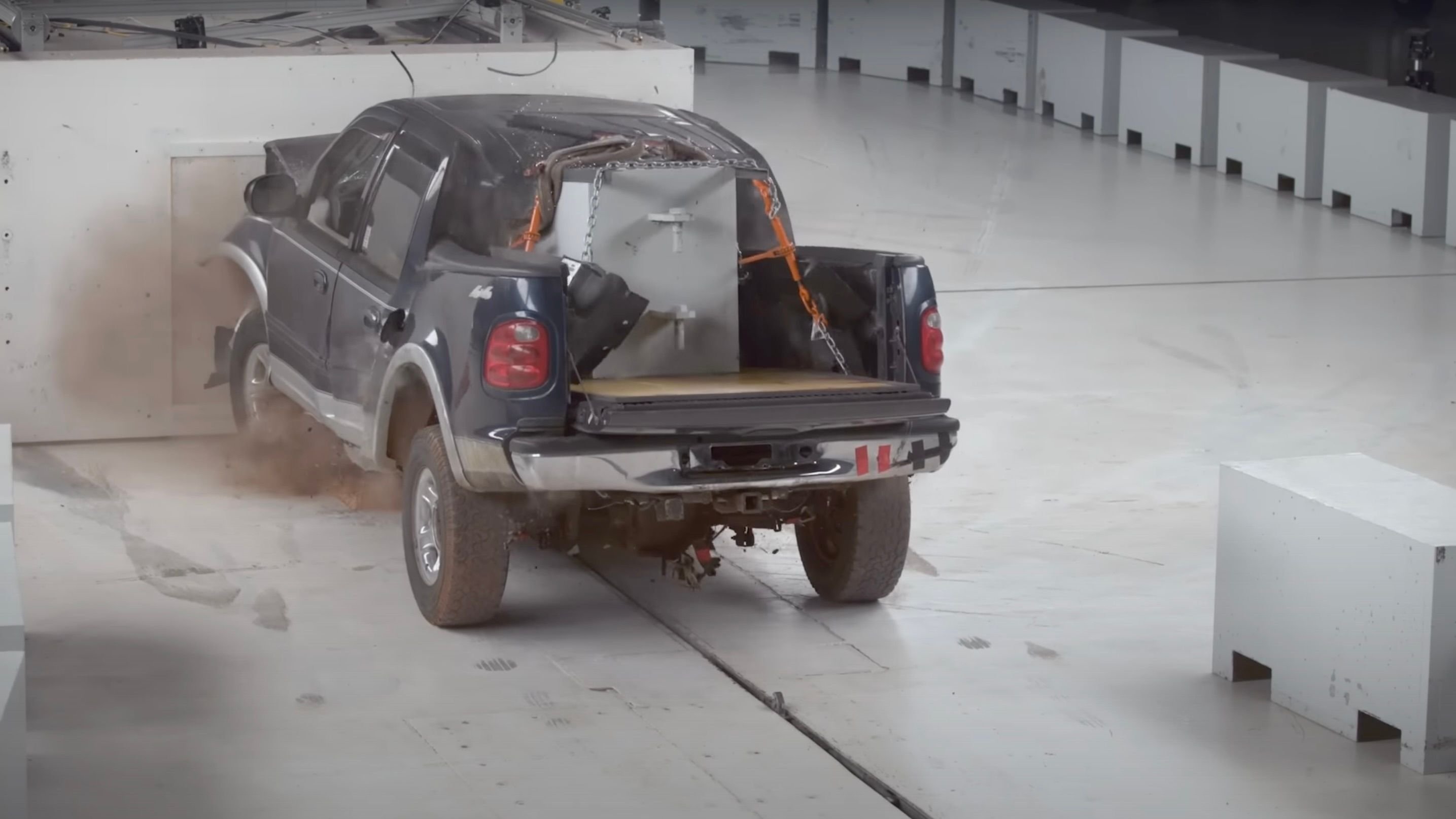
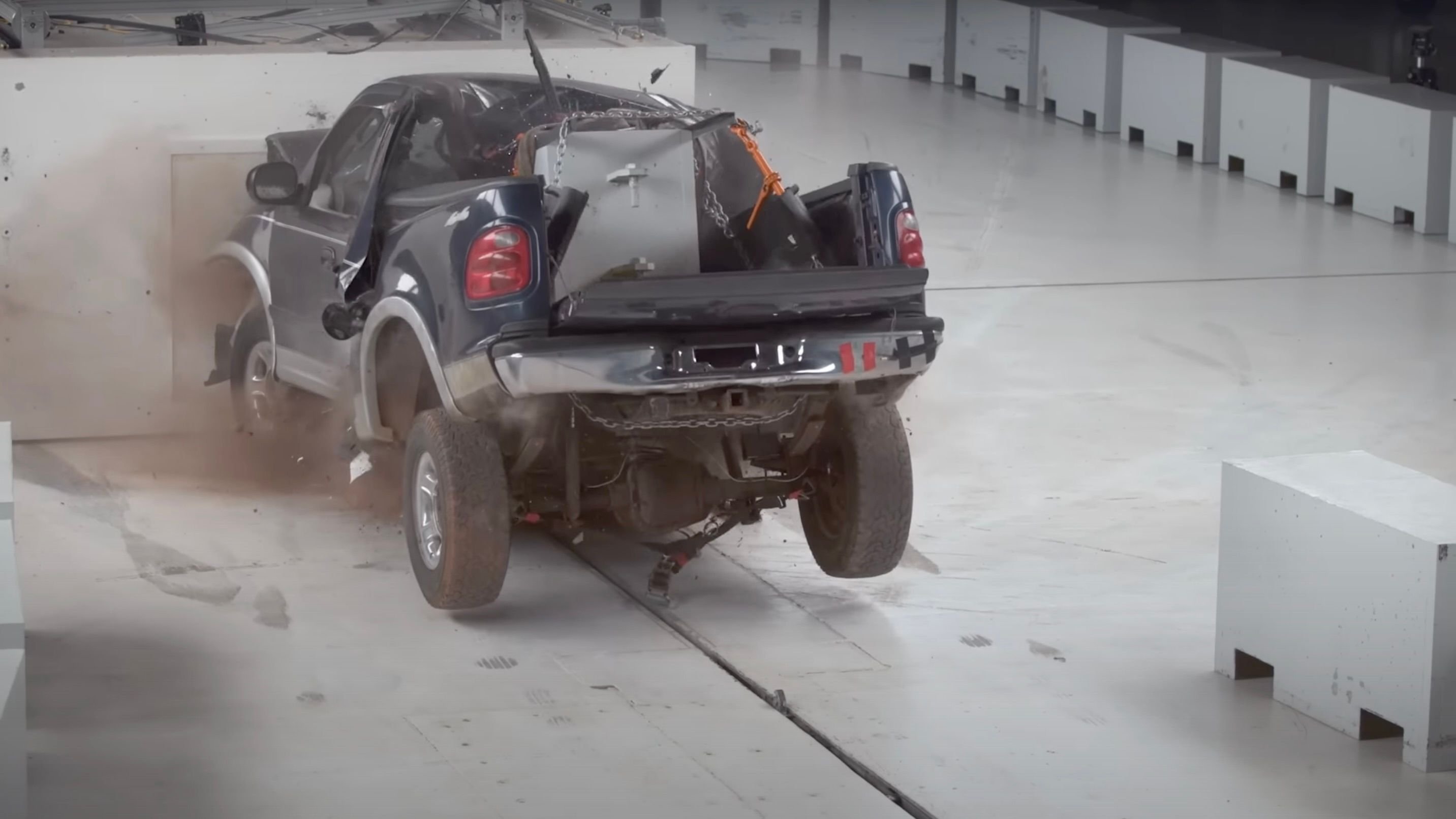
This F-150 gave its life in an effort to save others.
Interesting Technique
The Insurance Institute for Highway Safety (IIHS) plays an important role in the U.S., testing cars to ensure they're safe before we, the general public, go out and spend our hard-earned cash on them. Problem is, the emergence of all-electric vehicles - trucks, in particular - is making it a bit more difficult to crash test them, mostly due to their excessive weight. Thus, IIHS recently used an interesting technique to prepare its equipment for that process.
Brutal Simulation
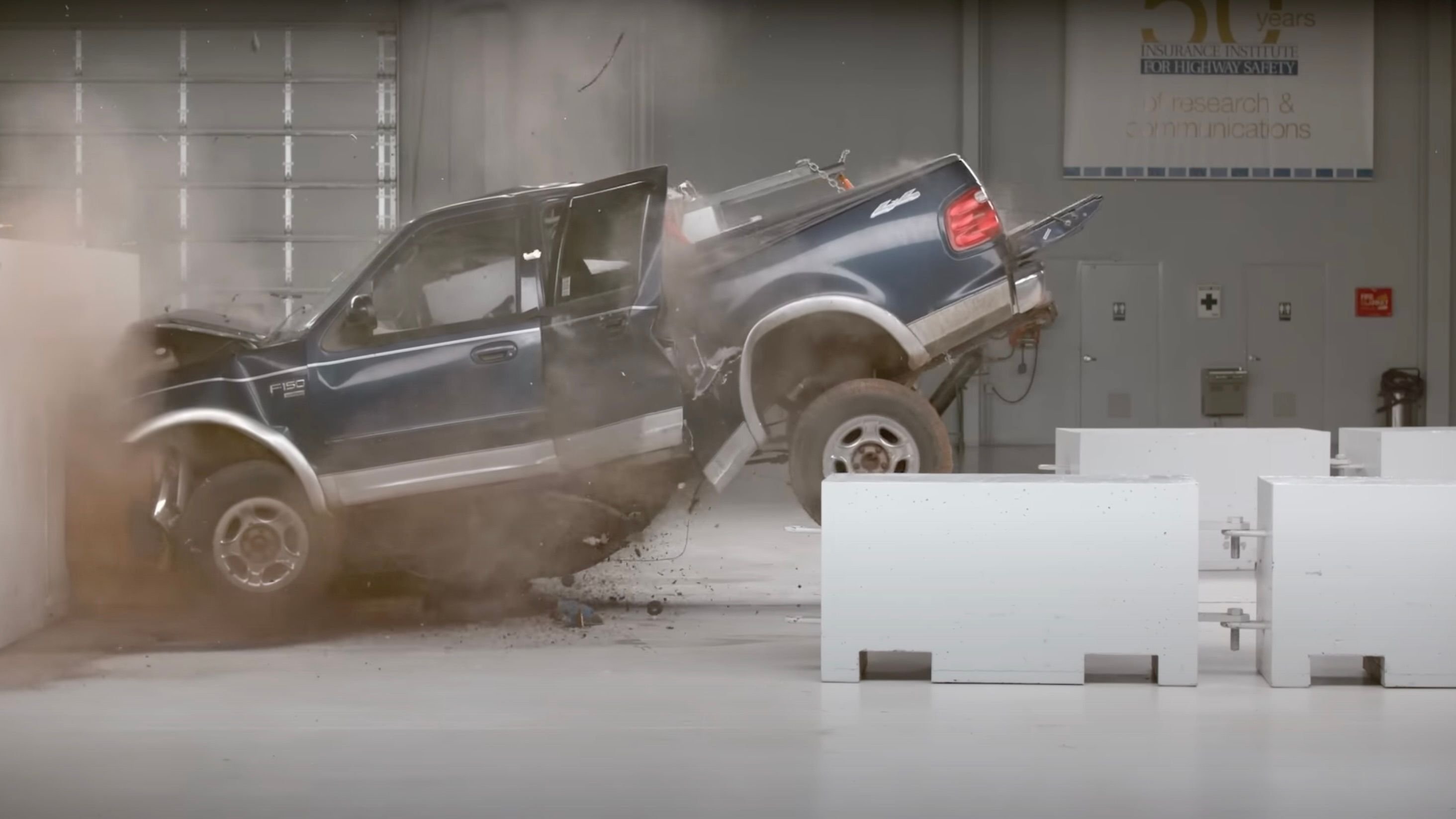
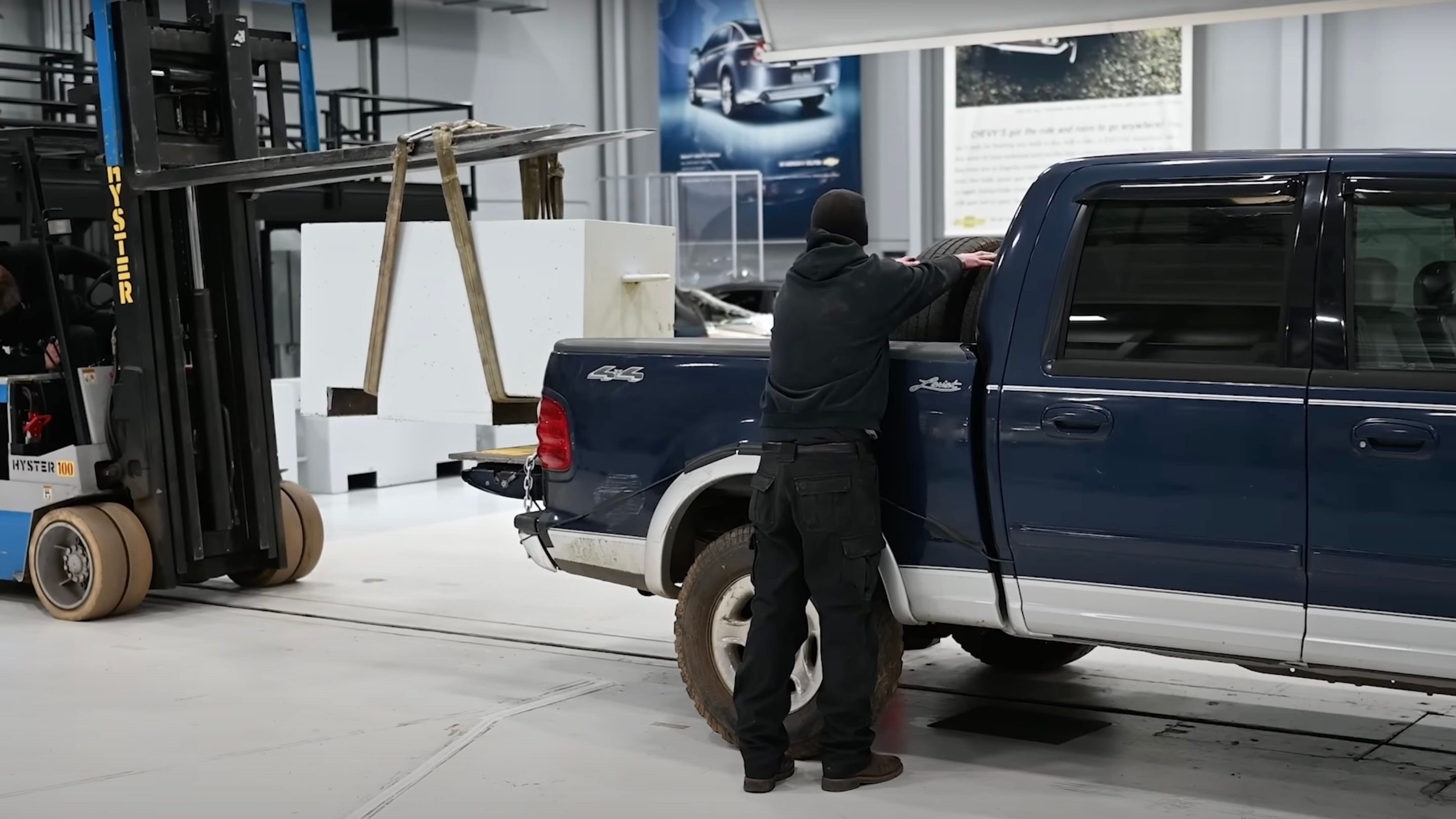
Given the fact that some EV pickups can weigh as much as 9,000+ pounds - far heavier than the average ICE-powered model - IIHS has to ensure that its equipment is up to the task of slamming all that weight into it, while also making sure that it can get accurate data from those tests. Thus, it stuffed a bunch of weight into an older Ford F-150 to simulate an EV, then propelled it into a barrier.
Adding Weight
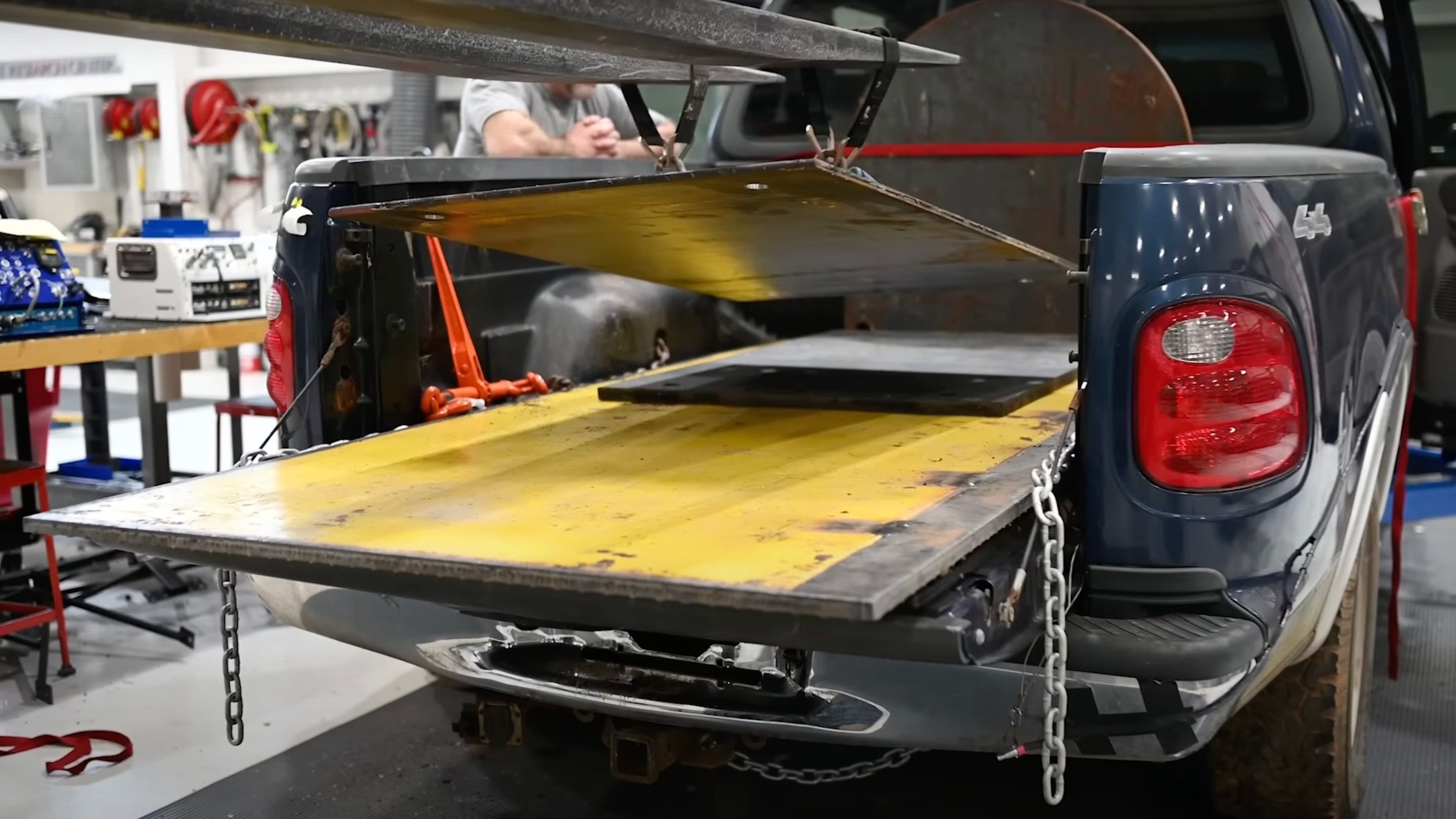
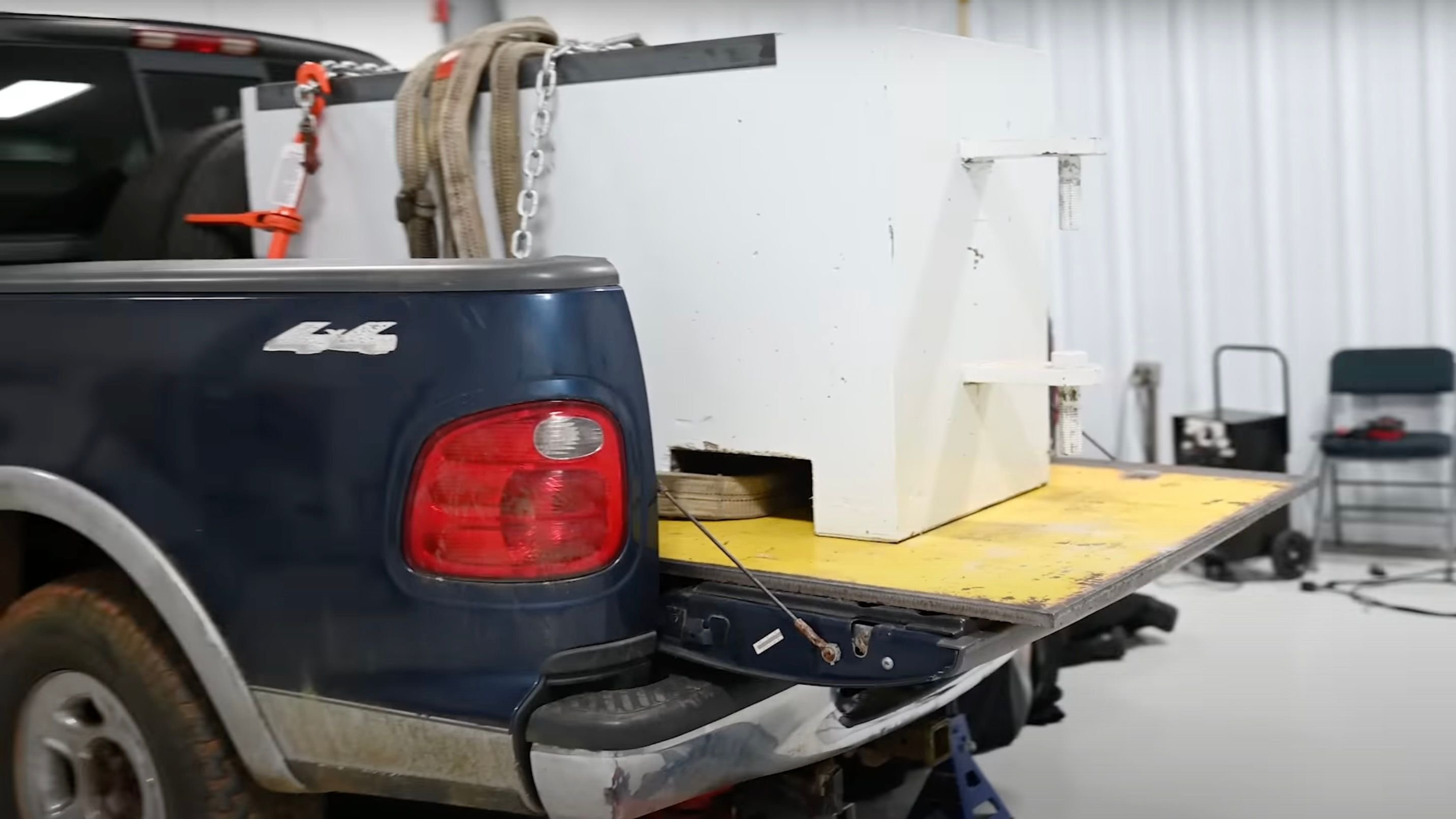
IIHS stuffed steel plates and concrete blocks into the bed of the F-150 - enough to bring it up to 9,500 pounds of total curb weight - before performing the test. The idea is to test the safety organization's propulsion system, ensuring that it's capable of pulling the vehicle up to the proper speed at which this crash testing is conducted.
Simple, Yet Effective
That propulsion system consists of a tow cable connected to a crash machine that pulls the vehicle down a 600-foot runway, but it must reach a certain speed and keep it there before the vehicle hits the barrier to ensure accurate results. For the past 20 years, this system has performed remarkably well, but heavier EVs were cause for a bit of a concern.
Realistic Results
The 9,500-pound pickup was actually the heaviest vehicle IIHS has ever tested, but it's pretty close to what the GMC Hummer EV tips the scales at, shockingly enough. Thus, this F-150 was the perfect stunt double to test out this equipment for these porky, futuristic rides.
Important Cause
This particular test was performed at 40 miles-per-hour, and the propulsion system proved up to the task as the old F-150 smashed head-first into the barrier at that speed, That extra weight in the bed completely destroyed the old truck, as one might imagine, but at least it gave its life for a very important cause.
Unknown Impact
The concern here isn't necessarily for those that drive big, heavy EVs, but rather, folks that are tooling around in smaller, lighter vehicles. It remains to be seen what sort of impact ultra-heavy all-electric trucks will have in terms of roadway crashes and potential injuries, but at least we know that the IIHS is working to figure that out as we speak.
>>Join the conversation about this poor Ford F-150 right here in the forum.
For help with your maintenance and repair projects, please visit our how-to section of Ford-trucks.com