When you click on links to various merchants on this site and make a purchase, this can result in this site earning a commission. Affiliate programs and affiliations include, but are not limited to, the eBay Partner Network.
So I have been fighting this issue for awhile and viewed dozens of forums about it with no luck, which is why I'm waving the white flag and asking for direct help.
Here is what I can tell you.
I have a 1986 F250 460 auto 4x4
I have had it a few months and have never had it running right.
The general issue is that it dies once above about 30ish mph. When driving you can watch the rpm needle and it will move fine then drop suddenly.
If I feather the gas sometimes I can save it from dying but it still won't go above 30ish without dying.
The only exception is if you accelerate extremely slowly to about 40 then it dies.
It starts right back up once it dies. To the point where it can restart while still rolling at speed.
Oil pressure shows as good-high.
Half tank of gas.
Things I have done.
New spark plug wires because the old ones would short to ground.
Fuel filter installed after the tank switch mechanism.
No debris in it after running.
New distributor (semi lie, the last guy did that).
Tried with vacuum advance disconnected.
Plugged any vacuum leaks I could find.
Weird thing.
While idleing, you can rev it faster and higher then when it's driving. Also it idles fine and will idle forever.
Any help is greatly appreciated thank you.
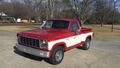
Picture for you to enjoy after reading my ramblings.
Quote: When driving you can watch the rpm needle and it will move fine then drop suddenly.
Normally, you would instantly jump to " fuel limited"....
But the RPM needle is voltage sensitive, meaning an electrical issue. If you had a engine failure due to no more fuel, the tachometer would still show engine rpm as the engine / truck slowed down.
Can you add some more info as to what the RPM needle does, related to when the engine cuts out.
Also can you confirm that this is a stock DS2 ignition system. Stock coil.
Jim
If I'm not mistaken, with this being an automatic when the engine dies the torque converter prevents the engine from continuing to turn while the vehicle is moving.
The needle will go from say 3k down to 1k or 0 while the engine stalls/dies. And the gas pedal will do little to nothing to affect it.
Hopfuly the attached picture will answer your questions about the coil.
And I will check the coil voltage when I can.
Thank you for your assistance.
The coil looks to be a stock DS2 coil. There are 2 red wires on the positive side, disconnect the white connector that feeds the noise suppression capacitor. Use the white connector as a place to attach the voltage meter. I would leave the capacitor out of the system until you fix the problem, it's just for an AM radio band.
Wiggle the connector on the coil as you watch the volt meter.
I will let others speak up regarding the torque converter, I thought it worked the same, both directions.
Jim
What Jim posted is where I would start but I dont know about the converter and tach just dropping but you may be right as the transmission dose not have a pump driven by the drive shaft so the converter would not turn.
Same reason why you cany jump start a auto transmission car or truck.
I know Max has had a issue with the coil horse shoe connector & wires so look that over good.
I would also pull apart the 2 connectors to the DSII box on the fender well and see what they look like.
I had water in them after a motor wash and my motor stopped running 2 miles down the road. After they were dried and dielectric grease it has been fine but also have not washed the motor since.
What brand & make plugs were installed? They should be good old copper plug like the truck was made to use.
The fancy plugs have been known to cause problems for some.
Dave ----
Quote: When driving you can watch the rpm needle and it will move fine then drop suddenly.
Normally, you would instantly jump to " fuel limited"....
But the RPM needle is voltage sensitive, meaning an electrical issue. If you had a engine failure due to no more fuel, the tachometer would still show engine rpm as the engine / truck slowed down.
Can you add some more info as to what the RPM needle does, related to when the engine cuts out.
Also can you confirm that this is a stock DS2 ignition system. Stock coil.
Jim
Not totally convinced it's a ignition/electrical issue. If one of us were there, as you said you could more carefully experiment and watch the tach and see if it's a sudden cut-out or a slow downward spiral like a fuel starvation would cause. But sometimes there is no way to know but try one thing then another.
If the ignition avenue doesn't pan out, I wonder if he has the site plugs on a holley 4bbl, and he can open these when things are normal, and then quickly get out and open them up again when the engine won't hardly run.
Positive on coil reads 7.2 v and doesn't waver while shaking connections or the unit. Including as far back as I could follow the cable.
This is a good voltage number.
Can you run a wire into the cab and monitor this voltage (coil positive) while driving?
If it stays the same, or close the same, it would rule out an ignition issue.
If it changes when the engine quits , then it's more information for troubleshooting.
For example, if it goes 12 -14 volts range when the engine quits, it would point you to the ignition module next.
Jim
Thank you Jim, I will see if I can find a wire to rig up and let you know how that goes when I can.
The battery was new recently. But troubleshooting has hurt it a bit along with it sitting in a truck in 100°+ temps. Not to mention there is a drain somewhere. So I now take the battery out and then usually jump start it and then do any tests. It only needs the one jump start then it will start fine on its own.
Funny how much bad information there is out there. And the Ai takes it and runs with it. You COULD push start certain automatic vehicles in the early days. A 1957 chevy with a powerglide was one of them.
What you need to push start a automatic is oil pressure inside the transmission. Most modern transmissions get the oil pressure from the pump hooked to the front of the transmission which is hooked to the engine. The engine has to run before it will develop oil pressure and make the auto transmission work.
Several of the early GM powerglides had TWO pumps, for the specific purpose of push starting. They had the conventional pump in the front like any modern auto transmission, but they also had a pump tied into the output shaft. So you could push the car to 30 mph to develop enough oil pressure to lock the transmission in drive and it would turn the engine over. It's right in the manual for the car.
Eventually GM stopped adding this pump in the rear of the transmission.
The battery was new recently. But troubleshooting has hurt it a bit along with it sitting in a truck in 100°+ temps. Not to mention there is a drain somewhere. So I now take the battery out and then usually jump start it and then do any tests. It only needs the one jump start then it will start fine on its own.
Um, what is going on here? I'm thoroughly confused. When you "take the battery out", do you mean physically disconnecting it when parked? Even if there's an active drain that could run the battery down if left connected, that should not be an issue if disconnected. If the charging system is working properly, and the battery is disconnected shortly after parking, the engine should fire right up when the battery is reconnected. In that scenario, you should NOT need a jump start. If that is the case, you may have several active faults, each in need of some attention.
If (notice all the IFs) the charging system is suspect, it's very possible that is one of the contributing factors. Could be the system voltage is low, and that is affecting the strength of the spark. All of this preceding is pure conjecture on my part, so don't just rush out and start throwing parts at the problem. But it would be worthwhile to take a quick voltage reading to make sure the charging system is working properly. With the engine at 1500 RPM or so, you should see approximately 13.7 at the battery. If much lower than that, more investigation is warranted.
As far as those jumper cables, I highly recommend getting a strong steel tool box to store them. Make sure the box has a hasp for a padlock. You'll want a key lock, not a combination style. Put the jumpers in the box. Install the lock. Double check the lock is secure. Tip the lock so the tumblers are facing up. Fill the tumblers with instant glue or quick set epoxy. More details on when to use jumper cables, post #24 in this thread:
This Hennessey Takes the Expedition Tremor's Off-Roading Capability to the Next Level
Slideshow: The VelociRaptor Expedition gains a lift, upgraded suspension, Brembo brakes, and trail-ready equipment while retaining the stock 440-horsepower EcoBoost V6.
Rezvani's Latest Post-Apocalyptic Monster Is a Ford F-150 Raptor Underneath
Slideshow: Called the Fortress, the 850-horsepower pickup combines Raptor underpinnings with military-inspired features, survival equipment, and a starting price of $285,000.






 ----
----