When you click on links to various merchants on this site and make a purchase, this can result in this site earning a commission. Affiliate programs and affiliations include, but are not limited to, the eBay Partner Network.
Since I am in the process of upgrading my alternator (Leece-Neville 230) along with all of the charging/starting/ground cabling, I have been reading about the potential issues of over-driving the glow plugs with an HO alternator.
Many people have installed a manual switch to control the GPs – hold the switch in for however long they think necessary, then release and start the truck. Once running, no need for GPs and off they go.
Because my wife and kids drive the truck, I wanted to investigate a more seamless solution that didn’t rely on them remembering to hold the switch in.
I have attached a relay-based diagram that I think accomplishes that – am I’m looking for feedback on whether it makes sense.
Basically, when you turn the key to the run position you will energize the glow plugs thru the 2nd relay via PCM control - everything is still as if it was stock. Once you turn the key to start, the 1st relay will energize from the starter signal and latch itself from a ‘Hot in Run/Start’ source, then it will energize the 2nd relay and open the glow plug circuit, cutting them off. The first relay remains latched (even with the starter signal absent) until you turn the key to the off position, thus re-making the connection on the 2nd relay for the glow plug circuit - ready for the next start cycle.
This is probably more complicated than it needs to be (versus a manual switch), but with this there would be no change in human behavior needed and the glow plugs will be protected. Not sure if I will use mechanical relays or spend the money on solid state ones - the InPower VMC-10 relay is one built for automotive use.
Has anyone had a failure because of this on a 7.3?
I mean if the glow plugs are turning on for any length of time, its generally cold (like below freezing cold). They are mostly on before the engine starts and not much longer after the motor starts. I could see if you lived where you dont get winter, but they are mostly embedded in a giant cold cast iron head (heat sink). Also there is 4 gallons of cold oil and 8 gallons of cold coolant running in that head.
Correct me if im wrong (please). Im curious as i have upgraded my alt and it can pull 13v with the plugs on. They only stay on maybe a minute after the motor has started.
I also live in the Canadian prairies, so it can get cold at anytime, summer or winter with wild temperature fluctuations... So no glow plugs can mean a no start. I wouldn't tamper with it myself as stock is generally the most reliable solution. My thoughts anyways.
I also know that the second alt was shut down while the plugs are on for dual alt setups. I could see ford doing it for a 1 size fits none senerio. Canadian prairies, i say giver' all shes got captain.
I have a 320A MechMan alternator.
There have been Zero issues with the glow plugs, the battery is about 11.6 to 12.1 when engine starts.
It takes a few seconds to get the battery voltage high enough to harm the glow plugs.
I feel you are worried about a problem that is not present.
If your wife drives the truck a lot, they have been Educated to watch the WTS light and if the temperature is down in the 10*F area, they have been told to count to 90 or more before starting the engine.
I have a chart on the dash showing time vs Temps and anyone who violates the procedure is not allowed to use the truck.
They only stay on maybe a minute after the motor has started.
And that's just it... the glow plugs are staying on for a minute AFTER the motor has already started.
Glow plugs didn't used to do that prior to the 1996-97 calibration and shunted relay changes to meet California Emissions requirements to reduce cold start emissions.
Prior to that, glow plugs turned off once the motor started. The old normal. That is what the ZD-11 Beru glow plugs were designed for. The old normal.
The ZD-11 glow plugs are rated for 11 volts. Prior to the engine starting (which turns on the alternator), the system voltage on batteries alone is usually 11 volts.
Even with two fully charged AGM batteries with resting voltage at 12.8 volts, by the time those batteries are hit with 120 amps of glow plug demand, plus 850 to 1,700 transient pulse cranking amps to start the high compression diesel engine, the battery voltage ain't 12.8 volts anymore. It isn't even 12 volts. Without any other energy source input (alternator off), the current demand will reduce the voltage, dutifully following Ohm's Law.
So the original glow plug design did not need to be rated at 12.8 volts, or 13 volts, or 14.4 volts. Instead, the glow plugs were optimized to operate at the voltage that would realistically be available to them... which would only be battery voltage, diminished by the combined load of glow plug and starter, which are the highest loads in a truck for the battery to provide power to, without any help from the alternator.
Because the glow plugs were not expected to be on while the was engine running back in 1994, when the ZD-11 glow plugs were designed, prior to the emissions standards being revised, the glow plugs did not need to be rated at any higher voltage that would be expected after the engine was started and the alternator kicked in, bring the voltage up higher than 11 volts.
Your observation that your glow plugs remain on is the very point and proof of the OP's concern.
Originally Posted by Hellraiser456
I have upgraded my alt and it can pull 13v with the plugs on.
Keep in mind, your glow plugs are rated at 11 volts, not 13 volts. The 2 volt difference is significant in this low voltage range.
Originally Posted by Hellraiser456
I wouldn't tamper with it myself as stock is generally the most reliable solution.
Yet you have already tampered with the stock system, by changing your alternator to a higher amperage alternator. That change alone is tampering with the stock solution, rendering any reliability that you would otherwise expect from the stock solution moot, and undone, by your change.
Ford had the following to say, all the way back in 1999, about "upgrading" alternators in the 7.3L Power Stroke:
Originally Posted by Hellraiser456
I also know that the second alt was shut down while the plugs are on for dual alt setups.
And the reason for this is because one 110 amp alternator is insufficient at IDLE to produce enough power to raise the system voltage up to 12 volts while trying to recharge the batteries from the starting load depletion at the same time as still meeting the current demand of the glow plugs that since 1999 were calibrated to remain on for up to 120 seconds AFTER the engine has started. The same glow plugs that were designed in 1994, which were not called upon to remain on after the engine started.
Originally Posted by John in OkieLand
I feel you are worried about a problem that is not present.
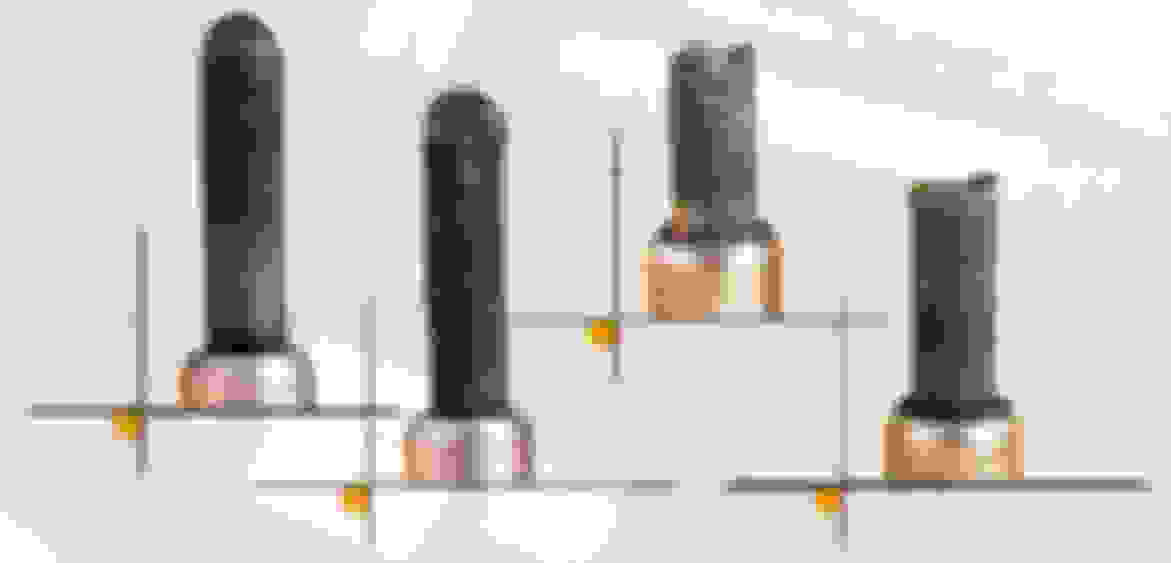
Beru, the designer and manufacturer of the Motorcraft OEM glow plugs, states that their glow plugs can fail if operated over their voltage rating.
Unfortunately, Beru did not release a "new" "three stage" glow plug with a "GN" designation designed for post start after glow heating to reduce emissions for Ford until the 6.0L engine. The ZD-11 glow plug is only available as conventional "GV" series 2 stage glow plug.
As long as one sticks with the anemic stock 110 am alternator (which is only about 45 amps at idle), and/or utilizes two of such alternators, while making sure that one of the alternators remains OFF for the period of time that the glow plugs remain after engine start up... then you are right... there is no problem present.
But as soon as one changes alternators to a higher output type, such as a 230 amp Prestolite Leece Neville that the OP is installing, or such as a 320 amp "Mechman" rebrand of a 2008 Ford Super Duty alternator with an internal VR and translation harness modification first improvised by Romaine... then there could be a problem that can eventually lead to what Beru shows here:
You can read more about the problem in the following thread, from several years ago:
I have a chart on the dash showing time vs Temps and anyone who violates the procedure is not allowed to use the truck.
Having a chart on the dash for the family to have to follow (or be banned from driving the truck) is probably the kind of thing that @yobuda is trying to avoid with his relay idea (which isn't new to FTE, as other members have posted about similar schemes with relays for doing the same thing).
The entire premise is not to have to burden or rely upon a less mechanically inclined family member to read a chart, remember a procedure, flip a switch, hold down a switch, unflip a switch, count down for a minute, turn the headlights and blower fan on high after starting, or make any conscious effort at all in starting the truck normally, despite having modified the truck with a higher amperage alternator than what Ford supplied and strongly recommended not to deviate from.
Wonder if there's a newer gen 3 stage plug out there that's physically compatible with our heads? Could rig up a very simple microcontroller to handle the plug activation timing depending on the engine oil temp.
True. Sorry for some reason I was thinking a stage three plug would possibly need different timing or control scheme than what the PCM does. While I'm not sure I'm doubtful that a physically compatible 3 stage plug exists anyway.
By the way, was curious how International handled this (given the alternators on t444e are beasts). Here's what the book says:
I might ask PHP about what kind of modulation the International PCM is coded to perform. They've been dealing with the International PCMs lately, might be able to look it up. If we can replicate it that's as close to a "factory approved" option as we'll get WRT the high amp alt / glow plug over voltage issue.
TLDR: I did not like how the PCM would cycle the GPR and GP's on/off repeatedly during the 100 seconds or so when the engine was running. The momentary switch gets 15 - 30 seconds of activation of the GPR and the engine roars to life.
This was my personal preference and would take less than one (1) minute to return to OEM operation.
They will learn to push that button if the engine won't start. If they call you to complain about it, remind them of the need to operate the switch. If they cannot remember that after one or two go-rounds, they don't deserve to have access to the truck. 99% of the time it will anyway, 900lb of iron takes a while to cool off. One of the best things I ever did was install that push button. Still running the same glow plugs 15 years later and all eight are still heating.
@yobuda easier way that would work better and keep glow plugs on on and only require one relay would be to interrupt the alternator signal wire so the alternator doesn't charge when glow plugs are active. Just use a single relay and trigger it from the glow plug relay. Just wire the alternator signal wire in the NC of 5 pin relay then when activated it will open the circuit so alternator won't turn on. Make sense?
If this is an issue, I guess I've been lucky for the last 12 years or so...or my alt isn't HO enough.
I haven't done any testing and not sure how accurate my volt meter is that's hooked to my AMP. I have noticed it takes a certain amount of time (never measured) for the voltage to get back up to 13.8-14v...I don't think it's more than 30 seconds though, I'll have to check.
I also didn't know the Tekonsha P3 had a volt meter, i'll have to look at that even though it's not easily accessible. maybe also hook up a multimeter to verify my current volt meter is accurate.
@yobuda easier way that would work better and keep glow plugs on on and only require one relay would be to interrupt the alternator signal wire so the alternator doesn't charge when glow plugs are active. Just use a single relay and trigger it from the glow plug relay. Just wire the alternator signal wire in the NC of 5 pin relay then when activated it will open the circuit so alternator won't turn on. Make sense?
I would caution against this in colder regions because of the length of time that the glow plugs would be commanded to run. Arctic regions, mostly.
I would caution against this in colder regions because of the length of time that the glow plugs would be commanded to run. Arctic regions, mostly.
Don't the glow plugs on stay on max time for like 120 seconds? If your batteries can't sustain that then they need replaced. Would be no different then how most do it anyway. Cycling tbe key a few times when it's real cold. Or holding there override switch down longer before they start it.
I have debated adding a momentary push button or just plan to swap out glow plugs every 100k miles as preventative maintenance to the higher voltage they see.