




Calling Engine Gurus--Explorer Info

Thread Starter
|
Junior User
Joined: Nov 2007
Posts: 57
Likes: 0
I think it is the fact they are willing to experiment. Can you imagine just saying, let's just throw this cam or piston set in and see what happens? Oops, lets start over.
I finished off the bench with a 3/8" top. I wanted a heavier one, but man, steel is expensive now.
I have been working a while on my shop. The welding area also has an exhaust fan. I also put in a spray booth with a 5 hp fan. It is a lot of work to set up a shop.
Jim
I finished off the bench with a 3/8" top. I wanted a heavier one, but man, steel is expensive now.
I have been working a while on my shop. The welding area also has an exhaust fan. I also put in a spray booth with a 5 hp fan. It is a lot of work to set up a shop.
Jim

Postmaster
Joined: Jan 2009
Posts: 4,584
Likes: 3
From: Chesapeake, Va.
I have been working a while on my shop. The welding area also has an exhaust fan. I also put in a spray booth with a 5 hp fan. It is a lot of work to set up a shop.
Agreed, been there, done that. The more you do the more you find to improve on.
Are your manifols iron or aluminum? And the Risers?
Agreed, been there, done that. The more you do the more you find to improve on.
Are your manifols iron or aluminum? And the Risers?
Postmaster
Joined: Jan 2009
Posts: 4,584
Likes: 3
From: Chesapeake, Va.
I'm not familure with that type of exhaust as all of the H-M powered marine engines used a riser where the exhaust exited as well as the engine cooling water, except for Drag, SK and SS class race boats.
With todays environmental concerns you might want to look into a closed loop cooling system, space permitting. It wouldn't be too hard to do and you won't have to worry about the water pickup getting clogged with debris and overheating the engine.
With todays environmental concerns you might want to look into a closed loop cooling system, space permitting. It wouldn't be too hard to do and you won't have to worry about the water pickup getting clogged with debris and overheating the engine.
Postmaster
Joined: Jan 2009
Posts: 4,584
Likes: 3
From: Chesapeake, Va.
Good luck with it.
Thread Starter
|
Junior User
Joined: Nov 2007
Posts: 57
Likes: 0
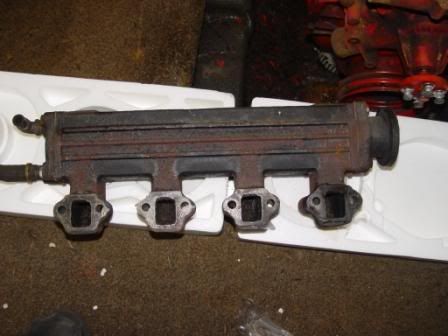
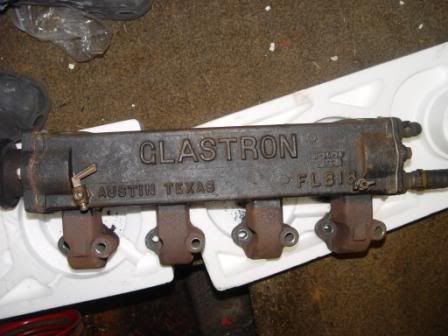
I have one last question. If you take a look at the picture of the exhaust manifold you will see that there is an area where there is no coolant passages. It is between the cap at the end of the manifold and the flanged end where it attaches to the 90 degree elbow. I wonder if this could be drilled and tapped should I decide to do fuel injection.
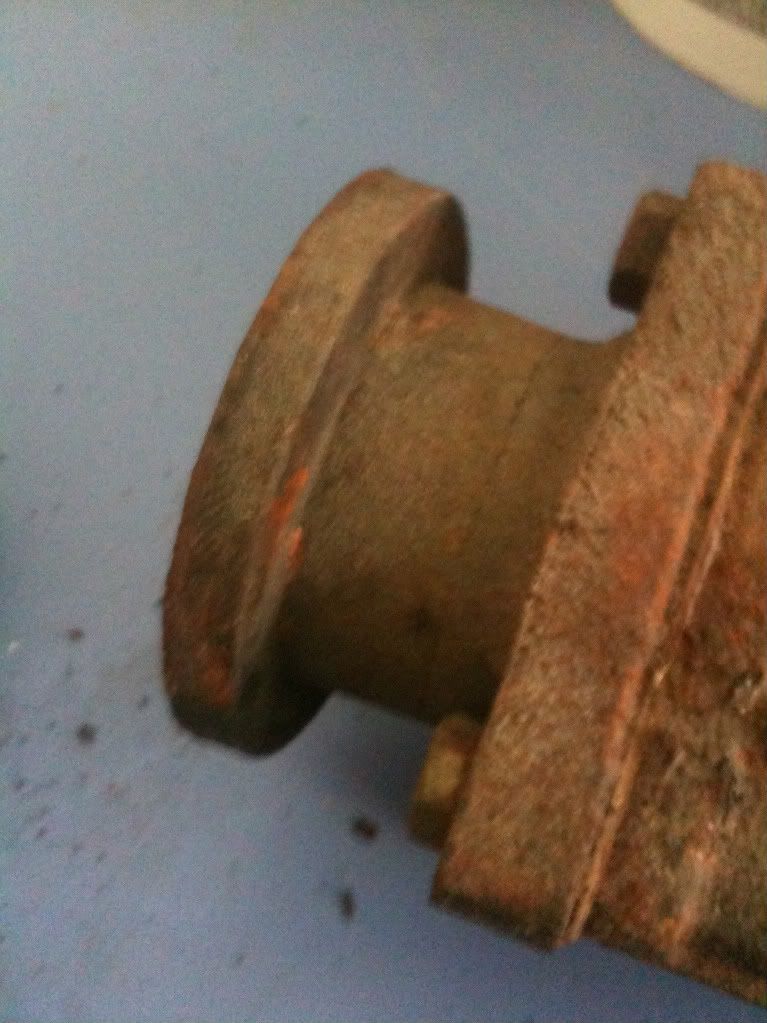
This is the 90 degree elbow where the water is discharged through two holes on the inside.
As shown in the last picture, the manifold and the discharge elbow seem to be separated. I should be able to test the Manifold easily thanks to your suggestion.
Jim
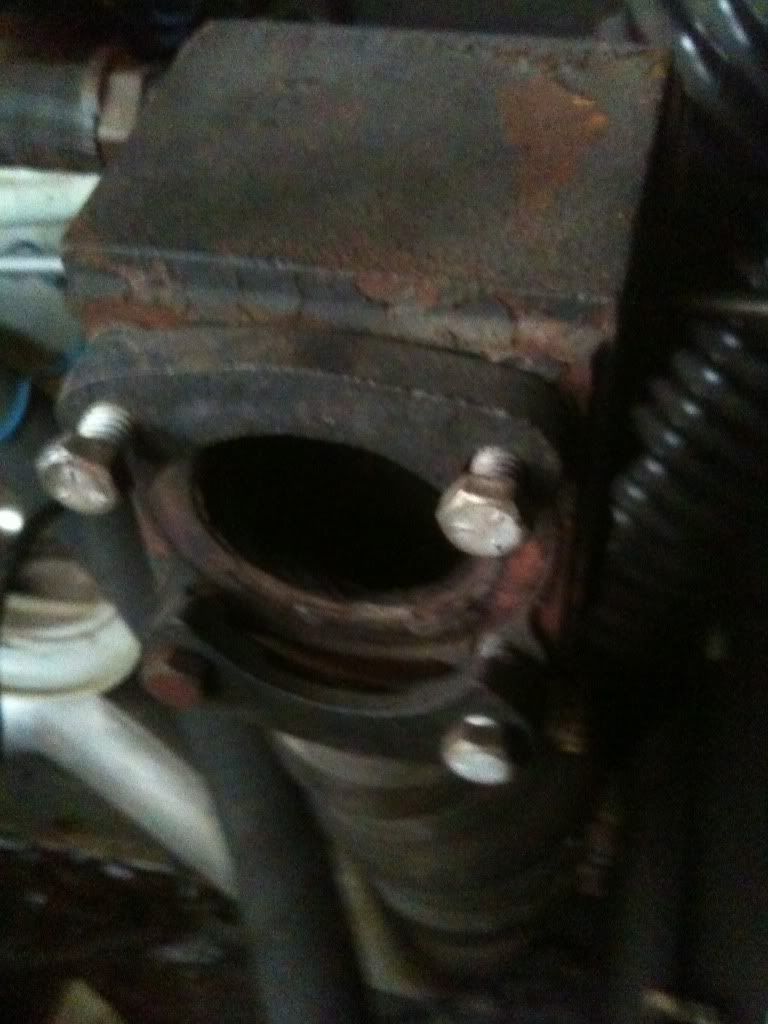
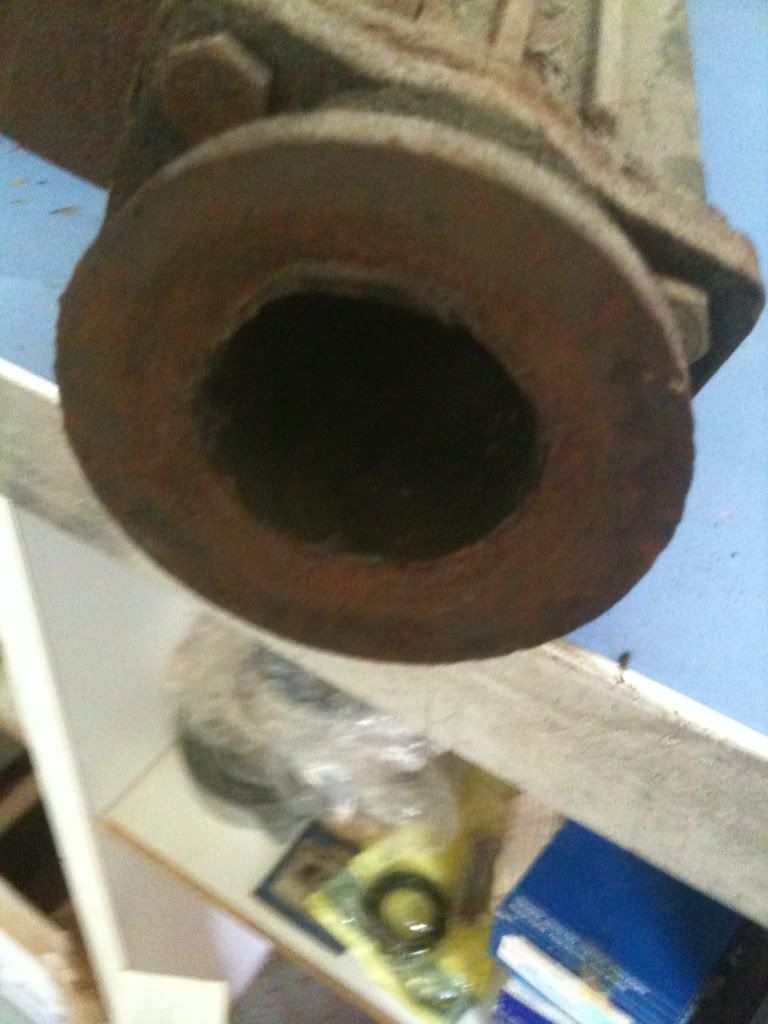
This is the 90 degree elbow where the water is discharged through two holes on the inside.
As shown in the last picture, the manifold and the discharge elbow seem to be separated. I should be able to test the Manifold easily thanks to your suggestion.
Jim
FTE Stories
Ford Trucks for Ford Truck Enthusiasts

Top 10 Fords at 2026 Carlisle Ford Nationals
Joe Kucinski
3 Best / 3 Worst Parts of Modern Ford Ownership
Brett Foote
10 Amazing Upgrades That Solve Common Ford Truck Owner Headaches
Pouria Savadkouei
Every 2026 Ford Engine Explained
Brett Foote
10 Ugly Ford Trucks That We Still Kinda Love
Joe Kucinski
10 Things Every Truck Owner NEEDS (2026 Edition)
Michael S. Palmer
Rezvani's Latest Post-Apocalyptic Monster Is a Ford F-150 Raptor Underneath
Verdad Gallardo
Top 10 Most Expensive Ford Trucks Ever Sold on Bring a Trailer
Joe Kucinski
2027 Ford Super Duty Buyer's Guide (Every Model, Engine, & Package)
Brett Foote
Thread Starter
|
Junior User
Joined: Nov 2007
Posts: 57
Likes: 0
Running the numbers.
I took the numbers off of the engine and heads and came up with these?
Head-- 369 WF 351
Engine D4DE 6015 AA 3C18
If these are 351 heads does that mean that the intake manifold and the distributor are as well?
Jim
I took the numbers off of the engine and heads and came up with these?
Head-- 369 WF 351
Engine D4DE 6015 AA 3C18
If these are 351 heads does that mean that the intake manifold and the distributor are as well?
Jim
Postmaster
Joined: Jan 2009
Posts: 4,584
Likes: 3
From: Chesapeake, Va.
I wonder if this could be drilled and tapped should I decide to do fuel injection.
What would F.I. have to do with it? If it is solid iron I can see no reason you couldn't.
I thought the engine being discussed was a NOS 302 Ford crate engine. The D4 number indicates 1974 production. I don't know about the heads but Ford did ID the small block heads with numbers like that near the valve springs or near the intake ports. If you have a 351 engine the spread between the heads will be wider than the 302.
What would F.I. have to do with it? If it is solid iron I can see no reason you couldn't.
I thought the engine being discussed was a NOS 302 Ford crate engine. The D4 number indicates 1974 production. I don't know about the heads but Ford did ID the small block heads with numbers like that near the valve springs or near the intake ports. If you have a 351 engine the spread between the heads will be wider than the 302.
Thread Starter
|
Junior User
Joined: Nov 2007
Posts: 57
Likes: 0
Actually, I was just gathering a little data. The engine is in such good shape I might rebuild it later and put it in a project car. So, I thought I would write myself a few notes about it and grease it up really well before I put it away.
If you want to see something kind of interesting on fuel injection, take a look at this site and see what you think. I talked with these guys last week and they are going for Coast Guard approval. The oxygen sensor is what was their concern.
Anyway, check this out and see what you think. They have some pretty good ideas.
Professional Products Online
Jim
If you want to see something kind of interesting on fuel injection, take a look at this site and see what you think. I talked with these guys last week and they are going for Coast Guard approval. The oxygen sensor is what was their concern.
Anyway, check this out and see what you think. They have some pretty good ideas.
Professional Products Online
Jim
Postmaster
Joined: Jan 2009
Posts: 4,584
Likes: 3
From: Chesapeake, Va.
It is some very nice stuff but for $2,000 plus the time and/or cost of installation You can get a lot of performance out of the engine and still have some cash left over. For your boat it is far from needed and when you get ino the high powered, high rpm engines you quickly start having a lot of problems. For your boat you have a nearly ideal engine to power it for a nice cruise, going fishing or water skiing with great reliability and economy.
Thread Starter
|
Junior User
Joined: Nov 2007
Posts: 57
Likes: 0
I would agree with you. Probably best to get a good carburetor, ignition and go from there. I have heard that over 70% of the new boats still come with carburetion. EFI is about a $3000 add and you would probably never get it back.
It looks like my task is set up now. Thanks so much for your input.
Jim
It looks like my task is set up now. Thanks so much for your input.
Jim
Postmaster
Joined: Jan 2009
Posts: 4,584
Likes: 3
From: Chesapeake, Va.
I would agree with you. Probably best to get a good carburetor, ignition and go from there. I have heard that over 70% of the new boats still come with carburetion. EFI is about a $3000 add and you would probably never get it back.
It looks like my task is set up now. Thanks so much for your input.
Jim
It looks like my task is set up now. Thanks so much for your input.
Jim
