






Question on C load tires !

Thread Starter
|
New User
Joined: Jan 2010
Posts: 3
Likes: 0
Question on C load tires !
HI GUYS !
Forgive my ignorance, but could somebody please explain this to me.
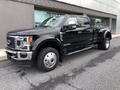
I bought a 02 f250 superduty for 1 thing, to pull my 3000lb boat and trailer to the lake approx. 2-3 times a month.
So here's the question !
With a truck gross weight of approx. 7000 lbs, and a tongue weight of less than 500, ( i have no idea on tongue weight,but im sure its less than 500) why cant i use C load tires that have a combined load limit of 9,880 lbs?
any opinions welcome!
thanks a bunch!
Forgive my ignorance, but could somebody please explain this to me.
I bought a 02 f250 superduty for 1 thing, to pull my 3000lb boat and trailer to the lake approx. 2-3 times a month.
So here's the question !
With a truck gross weight of approx. 7000 lbs, and a tongue weight of less than 500, ( i have no idea on tongue weight,but im sure its less than 500) why cant i use C load tires that have a combined load limit of 9,880 lbs?
any opinions welcome!
thanks a bunch!
Junior User
Joined: Dec 2009
Posts: 56
Likes: 0
From: MASS
I would spend the extra $ and buy E Rated tires. When you add the truck weight, people, luggage, ETC the weight adds up plus towing. I bought my truck which is just shy of 10,000lb with a fifth wheel and the last owner had D Rated tires, so I replaced with E Rated. With the E rated you get thicker sidewalls and higher weight rating. It’s not worth skimping on tires to load a heavy truck with people and towing. You will be putting yourself as well other drivers on the road in danger if your heavier then your tires are rated for. I have operated plow trucks with sanders bouncing around and tire almost pealing off turning with less rated tires and it’s scary. Just my 2 cents!

Senior User
Joined: Aug 2009
Posts: 100
Likes: 0
The price difference between C and E rated tires (or at least D rated) tires tends to be minimal.
I would also weigh the truck ready to roll for a fishing trip full of fuel, beer, gear, and people. You might be surprised how much weight is added.
Also, C rated tires might get a bit squishy under load.
I would also weigh the truck ready to roll for a fishing trip full of fuel, beer, gear, and people. You might be surprised how much weight is added.
Also, C rated tires might get a bit squishy under load.

Logistics Pro


Joined: Jan 2010
Posts: 4,100
Likes: 1,634
Load range C tires are typically reserved for smaller SUV's and pickups, though some are available on half-ton trucks. For general driving around and maybe a few sheets of plywood, this would be acceptable. However, I would NEVER recommend them on any truck that is going to be seeing heavy or large loads.

Hotshot
Joined: Mar 2007
Posts: 10,101
Likes: 40
From: Pa
The sidewalls of a C rated tire will make the SD feel mushy. Not worth it just to save little if any money on tires. If you want to save money buy a cheaper priced tire, like the Yokohama Geolander A/T-S in E rated if you can, but D will work fine too.
Trending Topics

More Turbo


Joined: Feb 2006
Posts: 538
Likes: 11
From: Shiner, TX
Will your tire shop even mount a load range "C" tire on a Super Duty pickup?
Some tire shopes will not do that sort of thing because of liability concerns.
You and I both know you'll probably be just fine and never have a blow out or anything dramatic happen like that if you use "C" rated tires. You're right, if you're just going to drive the truck around town, tow a smal boat a few miles, or pick up a few bags of potting soil from the home improvement store, they'll be fine. You gotta gauge if you want to nueter your truck's payload capacity by putting those tires on there.
Some tire shopes will not do that sort of thing because of liability concerns.
You and I both know you'll probably be just fine and never have a blow out or anything dramatic happen like that if you use "C" rated tires. You're right, if you're just going to drive the truck around town, tow a smal boat a few miles, or pick up a few bags of potting soil from the home improvement store, they'll be fine. You gotta gauge if you want to nueter your truck's payload capacity by putting those tires on there.
FTE Stories
Ford Trucks for Ford Truck Enthusiasts

Top 10 Most Expensive Ford Trucks Ever Sold on Bring a Trailer
Joe Kucinski
2027 Ford Super Duty Buyer's Guide (Every Model, Engine, & Package)
Brett Foote
Top 10 Ford Truck Tragedies
Joe Kucinski
AEV FXL Super Duty - the Super Duty Raptor Ford Doesn't Make
Brett Foote
Lobo Vs Lobo: Proof the F-150 Lobo Should Be Even Lower!
Michael S. Palmer
Ford's 2001 Explorer Sportsman Concept Looks For a New Home
Verdad Gallardo
10 Best Ford Truck Engines We Miss the Most!
Joe Kucinski
2026 Shelby F-150 Off-Road: Better Than a Raptor R?
Brett Foote
2027 Super Duty Carhartt Package First Look: 12 Things You NEED to Know!
Michael S. Palmer
Token Redneck
Joined: Jun 2007
Posts: 9,337
Likes: 345
From: Breckenridge, TX

Yeah, you're technically "in the range" of the tire, but the sidewall flex will cause the tires to heat up a lot worse than one with more belts, and heat is what kills tires. I'd say 10K in tread life tops, if only because the treads are roasting off just with the weight of the truck
Cargo Master
Joined: Dec 2003
Posts: 2,022
Likes: 4
From: Redford, Mi.
Just as DKF said, your truck will handle and ride like a 1970 Lincoln Mark 5. Don't be surprised if you get weird steering dynamics and suspension bounce. The suspension on the truck will actually cause the tire to work like a spring and the suspension it self won't do anything. They tried this at work on a dodge pickup, it was a death trap until they put the proper tires back on.

Posting Guru
Joined: Jul 2003
Posts: 1,273
Likes: 3
Ill just comment and say its not really your best choice, as a C tire would be very much inferior and prone to fail under load, such as when towing. The much weaker and more flexible sidewalls could also become a problem rather quickly. I personally would err on the side of safety.

FTE Leadership Emeritus

Joined: Sep 2000
Posts: 23,174
Likes: 1,678
From: Stephensville WI

I think you may be overloaded even without the boat.
A typical Load Range C or 6 ply tire is rated at around 1800 pounds. Your truck probably tips the scale at 7000 and change. Guessing your weight balance at 60/40 (pickups tend to be nose heavy) that means each front tire is supporting 30% of your weight, or at least 2100 pounds.
Truck weight, tire load rating and balance will vary in each situation, but using general measurements I would not drive the truck like it is.
A typical Load Range C or 6 ply tire is rated at around 1800 pounds. Your truck probably tips the scale at 7000 and change. Guessing your weight balance at 60/40 (pickups tend to be nose heavy) that means each front tire is supporting 30% of your weight, or at least 2100 pounds.
Truck weight, tire load rating and balance will vary in each situation, but using general measurements I would not drive the truck like it is.

Thread
Thread Starter
Forum
Replies
Last Post
Torklift Sheryl
Vendor Specials, Discounts, Product Announcements & Group Buys
0
Feb 17, 2017 01:08 PM
milkweed.gardener
2017 - 2022 Super Duty
19
Feb 17, 2017 09:38 AM
