



Braking problem, need advice

Thread Starter
|
New User
Joined: May 2009
Posts: 20
Likes: 0
From: Brookings, Oregon
Braking problem, need advice
I searched and searched some more looking for an answer and came up with nothing. I'm hoping someone has an answer for me. Sorry for the length of this but I wanted to include all the info on what I've done so far.
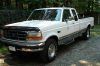
I have a SNAFU going on. I have a '92 F250 4x4, 460 (7.5), extended cab. This truck sat under an oak tree in California for at least 2 years, possibly up to 4 years before I got if a few months ago. It wouldn't smog so it was parked, I got it for $400.
My problem is with the brakes. The rears were grabbing badly so I replaced the rear hub grease seals, wheel cylinders and shoes (3" wide). Removed and cleaned the RABS module. Bled and adjusted the now the work great, RABS also works as it should.
After getting the rear done I tested it and the fronts weren't working. No matter how hard I depressed the pedal they wouldn't lock. So, on the front I replaced the left rotor (it was cracked all the way through), left hub oil seal, new left and right dual piston caliper, new pads and new master cylinder. Bled the system (a few times now). The front brakes still will not lock.
I set in the pads and shoes doing 50mph to 5mph, cool then repeat a half a dozen times. I can push the pedal to the floor if I push very hard. Still no lock up on the fronts. While setting the brakes the rotors do get hot so I know there is something coming from the fronts just not enough.
I've never had this type of problem before and I'm at a loss. I've bled brakes on every auto I've owned so I don't think that's it. I bled them in the correct order rr, lr, rabs, rf, lf and bench bled the master before installing it.
I'm into this quite a bit and need to get it on the road (prospecting season is almost here). Any advice or help would be appreciated.
Bill
I have a SNAFU going on. I have a '92 F250 4x4, 460 (7.5), extended cab. This truck sat under an oak tree in California for at least 2 years, possibly up to 4 years before I got if a few months ago. It wouldn't smog so it was parked, I got it for $400.
My problem is with the brakes. The rears were grabbing badly so I replaced the rear hub grease seals, wheel cylinders and shoes (3" wide). Removed and cleaned the RABS module. Bled and adjusted the now the work great, RABS also works as it should.
After getting the rear done I tested it and the fronts weren't working. No matter how hard I depressed the pedal they wouldn't lock. So, on the front I replaced the left rotor (it was cracked all the way through), left hub oil seal, new left and right dual piston caliper, new pads and new master cylinder. Bled the system (a few times now). The front brakes still will not lock.
I set in the pads and shoes doing 50mph to 5mph, cool then repeat a half a dozen times. I can push the pedal to the floor if I push very hard. Still no lock up on the fronts. While setting the brakes the rotors do get hot so I know there is something coming from the fronts just not enough.
I've never had this type of problem before and I'm at a loss. I've bled brakes on every auto I've owned so I don't think that's it. I bled them in the correct order rr, lr, rabs, rf, lf and bench bled the master before installing it.
I'm into this quite a bit and need to get it on the road (prospecting season is almost here). Any advice or help would be appreciated.
Bill
Thread Starter
|
New User
Joined: May 2009
Posts: 20
Likes: 0
From: Brookings, Oregon
FYI. When I removed the original calipers I took out the pistons (dual), there was a black thick liquid filling most of the space behind them. I don't know what it was but the system has been flushed and is clear now. Not sure if that may have something to do with it?

More Turbo
Joined: Jan 2008
Posts: 679
Likes: 3
From: Vancouver B.C.
I can think of no situation where I have locked up my front brakes on my truck on flat dry pavement... but my truck stops just fine. I would imagine that with the weight of our trucks, and the fact that there is a huge weight transfer to the front while braking, that it would be very difficult to lock up the front brakes.... I can't say that your brakes are fine but if your brake pedal is good and the truck stops good then it sounds like there ok...
Keep in mind that new brakes take a while to brake in and may not sound right or feel right for the first little bit... But they should of course stop the vehicle!!!
Now if you think the brakes are not stopping the truck like they should then there are some things that you can check. while bleeding the front you want to insure that there is a good amount of fluid coming out of the bleeder valves (make sure the bleeder valves are clean of debris). I've never seen it (i worked in a brake shop for 6years) but I've heard of front brake hoses not allowing enough fluid or impeding fluid to the calipers.... but it usually comes with a bad brake pull to one side.
If your brake peddle is low and you have adjusted the rear brakes properly then you might still have air in the system... if you have bled them properly (sounds like you have) and have bench bleed the master then the next thing to do is to bleed the master with it on the truck. with some one helping you apply the brakes and slightly loosen the brake lines at the master... I've seen this fix lots of vehicles.
some good tips for bleeding brakes are:
#1 It takes TWO people to bled brakes one in the truck and one at the wheel being bled.
#2 start at the wheel farthest from the master.
#3 If you need to pump the peddle use slow pumps as fast pumps will just turn the fluid to foam.
#4 don't let the master run out of fluid while bleeding... check it and top it up often.
#4 As the person at the bleeder you should try to keep the bleeder open for a short time... leaving it open for too long just lets the pedal go to the floor which you want to avoid.
Keep in mind that new brakes take a while to brake in and may not sound right or feel right for the first little bit... But they should of course stop the vehicle!!!
Now if you think the brakes are not stopping the truck like they should then there are some things that you can check. while bleeding the front you want to insure that there is a good amount of fluid coming out of the bleeder valves (make sure the bleeder valves are clean of debris). I've never seen it (i worked in a brake shop for 6years) but I've heard of front brake hoses not allowing enough fluid or impeding fluid to the calipers.... but it usually comes with a bad brake pull to one side.
If your brake peddle is low and you have adjusted the rear brakes properly then you might still have air in the system... if you have bled them properly (sounds like you have) and have bench bleed the master then the next thing to do is to bleed the master with it on the truck. with some one helping you apply the brakes and slightly loosen the brake lines at the master... I've seen this fix lots of vehicles.
some good tips for bleeding brakes are:
#1 It takes TWO people to bled brakes one in the truck and one at the wheel being bled.
#2 start at the wheel farthest from the master.
#3 If you need to pump the peddle use slow pumps as fast pumps will just turn the fluid to foam.
#4 don't let the master run out of fluid while bleeding... check it and top it up often.
#4 As the person at the bleeder you should try to keep the bleeder open for a short time... leaving it open for too long just lets the pedal go to the floor which you want to avoid.

Posting Guru
Joined: Nov 2009
Posts: 2,244
Likes: 1
uhm cooked rubber from the lines and chared brake fluid.....
i had to replace my drivers side line because it was causeing the caliper to stick....
the lining on the inside would let u shuve the piston out but then when u let off for the fluid to return to the resevoir the line's inside would colapse behind it..... not letting the fluid leave the caliper....
i know urs arent locking but try and replace the rubber lines and see what that does...
lol the trucks 18 years old and it prolly wouldnt hurt to have new ones anyway
i had to replace my drivers side line because it was causeing the caliper to stick....
the lining on the inside would let u shuve the piston out but then when u let off for the fluid to return to the resevoir the line's inside would colapse behind it..... not letting the fluid leave the caliper....
i know urs arent locking but try and replace the rubber lines and see what that does...
lol the trucks 18 years old and it prolly wouldnt hurt to have new ones anyway

Posting Guru
Joined: Jun 2003
Posts: 2,314
Likes: 0
From: southwest michigan
If you take the caliper off of the disk, and apply pressure, does the caliper move as it should?
Trending Topics
Thread Starter
|
New User
Joined: May 2009
Posts: 20
Likes: 0
From: Brookings, Oregon
Yes, they both seem to work, on both the pistons with little pressure to the pedal.
FTE Stories
Ford Trucks for Ford Truck Enthusiasts

Top 6 Best Deals Available on New Fords & Lincolns Right Now
Brett Foote
This Hennessey Takes the Expedition Tremor's Off-Roading Capability to the Next Level
Verdad Gallardo
Top 10 Fords at 2026 Carlisle Ford Nationals
Joe Kucinski
3 Best / 3 Worst Parts of Modern Ford Ownership
Brett Foote
10 Amazing Upgrades That Solve Common Ford Truck Owner Headaches
Pouria Savadkouei
Every 2026 Ford Engine Explained
Brett Foote
10 Ugly Ford Trucks That We Still Kinda Love
Joe Kucinski
10 Things Every Truck Owner NEEDS (2026 Edition)
Michael S. Palmer
Rezvani's Latest Post-Apocalyptic Monster Is a Ford F-150 Raptor Underneath
Verdad Gallardo
Thread Starter
|
New User
Joined: May 2009
Posts: 20
Likes: 0
From: Brookings, Oregon
I can think of no situation where I have locked up my front brakes on my truck on flat dry pavement... but my truck stops just fine. I would imagine that with the weight of our trucks, and the fact that there is a huge weight transfer to the front while braking, that it would be very difficult to lock up the front brakes.... I can't say that your brakes are fine but if your brake pedal is good and the truck stops good then it sounds like there ok...
Keep in mind that new brakes take a while to brake in and may not sound right or feel right for the first little bit... But they should of course stop the vehicle!!!
Now if you think the brakes are not stopping the truck like they should then there are some things that you can check. while bleeding the front you want to insure that there is a good amount of fluid coming out of the bleeder valves (make sure the bleeder valves are clean of debris). I've never seen it (i worked in a brake shop for 6years) but I've heard of front brake hoses not allowing enough fluid or impeding fluid to the calipers.... but it usually comes with a bad brake pull to one side.
If your brake peddle is low and you have adjusted the rear brakes properly then you might still have air in the system... if you have bled them properly (sounds like you have) and have bench bleed the master then the next thing to do is to bleed the master with it on the truck. with some one helping you apply the brakes and slightly loosen the brake lines at the master... I've seen this fix lots of vehicles.
some good tips for bleeding brakes are:
#1 It takes TWO people to bled brakes one in the truck and one at the wheel being bled.
#2 start at the wheel farthest from the master.
#3 If you need to pump the peddle use slow pumps as fast pumps will just turn the fluid to foam.
#4 don't let the master run out of fluid while bleeding... check it and top it up often.
#4 As the person at the bleeder you should try to keep the bleeder open for a short time... leaving it open for too long just lets the pedal go to the floor which you want to avoid.
Keep in mind that new brakes take a while to brake in and may not sound right or feel right for the first little bit... But they should of course stop the vehicle!!!
Now if you think the brakes are not stopping the truck like they should then there are some things that you can check. while bleeding the front you want to insure that there is a good amount of fluid coming out of the bleeder valves (make sure the bleeder valves are clean of debris). I've never seen it (i worked in a brake shop for 6years) but I've heard of front brake hoses not allowing enough fluid or impeding fluid to the calipers.... but it usually comes with a bad brake pull to one side.
If your brake peddle is low and you have adjusted the rear brakes properly then you might still have air in the system... if you have bled them properly (sounds like you have) and have bench bleed the master then the next thing to do is to bleed the master with it on the truck. with some one helping you apply the brakes and slightly loosen the brake lines at the master... I've seen this fix lots of vehicles.
some good tips for bleeding brakes are:
#1 It takes TWO people to bled brakes one in the truck and one at the wheel being bled.
#2 start at the wheel farthest from the master.
#3 If you need to pump the peddle use slow pumps as fast pumps will just turn the fluid to foam.
#4 don't let the master run out of fluid while bleeding... check it and top it up often.
#4 As the person at the bleeder you should try to keep the bleeder open for a short time... leaving it open for too long just lets the pedal go to the floor which you want to avoid.
My Bronco (87 XLT) has basically the same system and the fronts will lock on it. I can't get the trucks to lock on my gravel driveway or pavement.
Can you push your pedal to the floor? Sitting or while very hard braking (breaking in the pads/shoes) I can push it to the floor. The rears are adjusted well. To be sure I put it on stands, ran the truck in first/low (automatic) and adjusted them till the RPM dropped very slightly then backed off about 4-5 teeth on the adjuster. The rears are working well, at least seem to be.
Thread Starter
|
New User
Joined: May 2009
Posts: 20
Likes: 0
From: Brookings, Oregon
Ok, so today I replaced the flexible hoses (x3, 2-front, 1-rear) and bled the system. The truck will stop well but will not lock the fronts. Since the RABS is working the rears never will (supposedly) lock.
Tried it at 50-0 hard stop no lock, 30-0 hard stop no lock and 15-0 hard stop no lock.
Guess this must be normal for this truck.
Thank you all for the advice and answers, I do appreciate it.
Time to test it with the trailer, headed out prospecting this weekend.
Tried it at 50-0 hard stop no lock, 30-0 hard stop no lock and 15-0 hard stop no lock.
Guess this must be normal for this truck.
Thank you all for the advice and answers, I do appreciate it.
Time to test it with the trailer, headed out prospecting this weekend.
More Turbo
Joined: Jan 2008
Posts: 679
Likes: 3
From: Vancouver B.C.
I'll try bleeding the MC with it on the truck. Never thought of that.
My Bronco (87 XLT) has basically the same system and the fronts will lock on it. I can't get the trucks to lock on my gravel driveway or pavement.
Can you push your pedal to the floor? Sitting or while very hard braking (breaking in the pads/shoes) I can push it to the floor. The rears are adjusted well. To be sure I put it on stands, ran the truck in first/low (automatic) and adjusted them till the RPM dropped very slightly then backed off about 4-5 teeth on the adjuster. The rears are working well, at least seem to be.
My Bronco (87 XLT) has basically the same system and the fronts will lock on it. I can't get the trucks to lock on my gravel driveway or pavement.
Can you push your pedal to the floor? Sitting or while very hard braking (breaking in the pads/shoes) I can push it to the floor. The rears are adjusted well. To be sure I put it on stands, ran the truck in first/low (automatic) and adjusted them till the RPM dropped very slightly then backed off about 4-5 teeth on the adjuster. The rears are working well, at least seem to be.
I would avoid putting the truck on stands and placing it in drive and adjusting the brakes... sounds like an accident waiting to happen...lol.
Adjust your brakes so that there is a slight binding of the brakes when you try to spin the wheel... I would say that a properly adjusted drum brake wouldn't allow you to spin the wheel by hand more than one or one and a half revolutions...
Always make sure that when your bleeding the brakes that you close the bleeder before whomever is in the truck takes there foot off of the pedal...
If your pedal goes to the floor than there is a problem with your brakes. The first thing that comes to mind is air in the system. seeing as you have replaced the master and have had your calipers apart there is a real good chance you still have air in the system... try bleeding the master like I said earlier and if that don't work then bleed the whole truck again starting from the rr and working forward.
The other thing that comes to mind is the master cylinder being bad... I've seen many brand new master cylinders come right out of the box bad... For the most part a bad master cylinder will feel much different than air in the brake system. It's hard to explain but with air in the system you will get a very poor or spongy pedal that can go all the way to the floor... a bad master will for the most part feel very different. It will under light braking or sometimes hard braking leak fluid past the piston and bore... you can feel the pedal slowly going to the floor...
Any how I hope that helps a bit and let us know how it all works out for ya.

Elder User
Joined: Nov 2006
Posts: 973
Likes: 2
From: Texas
If you can push it to the floor then you defiantly have air in the system somewhere. If it just kinda goes and then gets really stiff then it could be the vac assist. But from what it sounds like now that iv read more into it, its a fluid problem.
goodBoy is right on. Try what he is suggesting, and hopefully that will draw some conclusions.
also, make sure you got the right master from the parts store. If it was a master from a 1/2 ton, it will have a smaller bore and might not be moving enough fluid. Although i don't think i would be enough to keep it from locking up. Its unlikely you got the wrong one, but you never know.
Good Luck
goodBoy is right on. Try what he is suggesting, and hopefully that will draw some conclusions.
also, make sure you got the right master from the parts store. If it was a master from a 1/2 ton, it will have a smaller bore and might not be moving enough fluid. Although i don't think i would be enough to keep it from locking up. Its unlikely you got the wrong one, but you never know.
Good Luck