


F350 question

Post Fiend
Joined: May 2008
Posts: 7,641
Likes: 21
From: Poway, Ca.
Hi Pete!
I guess it depends what transmission you have in your truck. The three speed light duty transmission is synchronized in second and third and no double clutching is necessary. You will be able to down shift from third to second, but you will not be able to get it into first until you are just about stopped.
Can you tell us what transmission you have?
I guess it depends what transmission you have in your truck. The three speed light duty transmission is synchronized in second and third and no double clutching is necessary. You will be able to down shift from third to second, but you will not be able to get it into first until you are just about stopped.
Can you tell us what transmission you have?
Thread Starter
|
Senior User
Joined: Mar 2008
Posts: 377
Likes: 1
From: robin hood country UK
Also Is first gear at the top closest to the screen,Second down then third in the middle then down ,then up and reverse straight down from third.Its some tme before i have drove it and then it was a short distance.Thanks
Post Fiend
Joined: May 2008
Posts: 7,641
Likes: 21
From: Poway, Ca.

Sorry I couldn't resist. My dad used to have a 59 MGA, so I've very well versed with screens, bonnets, petrol etc.
The shift pattern is a basic "H". If it is on the column (and you are sitting on the right side shifting with the left hand), if you pull the shift lever up toward you, then clockwise (say from 9 o'clock to 10 o'clock) from neutral, that should be "Reverse"
If you pull the shift lever up toward you and rotate it counter clockwise (say from 9 o'clock to 8 o'clock) that should be first gear.
From first gear you shift into second by stepping on the clutch, then rotating the shift lever fron the 8 o'clock position clockwise into neutral, allowing it to drop back down into its lower detents, then with a slight pressure pushing away from you continue to rotate it clockwise into the 10 o'clock position.
To get into third, simply rotate the shift from the 10 o'clock position down to the 8 o'clock position. It should stay in the lower detents by itself.
Floor shift in the US is also an "H." Reverse is forward and to the left, 1st is back and to the left, second is forward and to the right; third is back and to the right. I don't think yours is reversed left and right.
Question for you. I drove while I was in Japan and I don't remember if the pedals are reversed as well. In your truck are they arranged as accelerator, brake, then clutch pedal - moving from the center out to the right?
Thread Starter
|
Senior User
Joined: Mar 2008
Posts: 377
Likes: 1
From: robin hood country UK
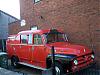
Hi well we have boots and bonnets over here Ha ha anyway i have posted a photo.With what your saying mine steering wheel is on the left and the gears on the right side of the steering column is this the way round your are saying.Thanks 

Laughing Gas
Joined: Aug 2006
Posts: 815
Likes: 4
From: mountaintop, Pa
this came from wiki:
Unsynchronized transmission
The earliest form of a manual transmission is thought to have been invented by Louis-René Panhard and Emile Levassor in the late 19th century. This type of transmission offered multiple gear ratios and, in most cases, reverse. The gears were typically engaged by sliding them on their shafts—hence the term "shifting gears," which required a lot of careful timing and throttle manipulation when shifting, so that the gears would be spinning at roughly the same speed when engaged; otherwise, the teeth would refuse to mesh. These transmissions are called "sliding mesh" transmissions and sometimes called a crash box. Most newer transmissions instead have all gears mesh at all times but allow some gears to rotate freely on their shafts; gears are engaged using sliding-collar dog clutches; these are referred to as "constant-mesh" transmissions.
In both types, a particular gear combination can only be engaged when the two parts to engage (either gears or dog clutches) are at the same speed. To shift to a higher gear, the transmission is put in neutral and the engine allowed to slow down until the transmission parts for the next gear are at a proper speed to engage. The vehicle also slows while in neutral and that slows other transmission parts, so the time in neutral depends on the grade, wind, and other such factors. To shift to a lower gear, the transmission is put in neutral and the throttle is used to speed up the engine and thus the relevant transmission parts, to match speeds for engaging the next lower gear. For both upshifts and downshifts, the clutch is released (engaged) while in neutral. Some drivers use the clutch only for starting from a stop, and shifts are done without the clutch. Other drivers will depress (disengage) the clutch, shift to neutral, then engage the clutch momentarily to force transmission parts to match the engine speed, then depress the clutch again to shift to the next gear, a process called double clutching. Double clutching is easier to get smooth, as speeds that are close but not quite matched need to speed up or slow down only transmission parts, whereas with the clutch engaged to the engine, mismatched speeds are fighting the rotational inertia and power of the engine.
Even though automobile and light truck transmissions are now almost universally synchronised, transmissions for heavy trucks and machinery, motorcycles, and for dedicated racing are usually not. Non-synchronized transmission designs are used for several reasons. The friction material, such as brass, in synchronizers is more prone to wear and breakage than gears, which are forged steel, and the simplicity of the mechanism improves reliability and reduces cost. In addition, the process of shifting a synchromesh transmission is slower than that of shifting a non-synchromesh transmission. For racing of production-based transmissions, sometimes half the teeth (or "dogs") on the synchros are removed to speed the shifting process, at the expense of greater wear.
Heavy duty trucks use unsynchronized transmissions in the interest of saving weight.<sup class="noprint Template-Fact" title="This claim needs references to reliable sources from August 2009" style="white-space: nowrap;">[citation needed]</sup> Military edition trucks, which do not have to obey weight laws, usually have synchronized transmissions. Highway use heavy-duty trucks in the United States are limited to 80,000 pounds GVWR, and the lighter the curb weight for the truck, the more cargo can be carried; with a synchronizer adding weight to a truck that could otherwise be used to carry cargo, most drivers are simply taught how to double clutch, initially, and then most eventually gravitate to shifting without the clutch.<sup class="noprint Template-Fact" title="This claim needs references to reliable sources from August 2009" style="white-space: nowrap;">[citation needed]</sup> In the United States, traffic safety rules refer to non-synchronous transmissions in classes of larger commercial motor vehicles.
Similarly, most modern motorcycles use unsynchronized transmissions as synchronizers are generally not necessary or desirable. Their low gear inertias and higher strengths mean that forcing the gears to alter speed is not damaging, and the pedal operated selector on modern motorcycles is not conducive to having the long shift time of a synchronized gearbox. Because of this, it is necessary to synchronize gear speeds by blipping the throttle when shifting into a lower gear on a motorcycle.
Unsynchronized transmission
The earliest form of a manual transmission is thought to have been invented by Louis-René Panhard and Emile Levassor in the late 19th century. This type of transmission offered multiple gear ratios and, in most cases, reverse. The gears were typically engaged by sliding them on their shafts—hence the term "shifting gears," which required a lot of careful timing and throttle manipulation when shifting, so that the gears would be spinning at roughly the same speed when engaged; otherwise, the teeth would refuse to mesh. These transmissions are called "sliding mesh" transmissions and sometimes called a crash box. Most newer transmissions instead have all gears mesh at all times but allow some gears to rotate freely on their shafts; gears are engaged using sliding-collar dog clutches; these are referred to as "constant-mesh" transmissions.
In both types, a particular gear combination can only be engaged when the two parts to engage (either gears or dog clutches) are at the same speed. To shift to a higher gear, the transmission is put in neutral and the engine allowed to slow down until the transmission parts for the next gear are at a proper speed to engage. The vehicle also slows while in neutral and that slows other transmission parts, so the time in neutral depends on the grade, wind, and other such factors. To shift to a lower gear, the transmission is put in neutral and the throttle is used to speed up the engine and thus the relevant transmission parts, to match speeds for engaging the next lower gear. For both upshifts and downshifts, the clutch is released (engaged) while in neutral. Some drivers use the clutch only for starting from a stop, and shifts are done without the clutch. Other drivers will depress (disengage) the clutch, shift to neutral, then engage the clutch momentarily to force transmission parts to match the engine speed, then depress the clutch again to shift to the next gear, a process called double clutching. Double clutching is easier to get smooth, as speeds that are close but not quite matched need to speed up or slow down only transmission parts, whereas with the clutch engaged to the engine, mismatched speeds are fighting the rotational inertia and power of the engine.
Even though automobile and light truck transmissions are now almost universally synchronised, transmissions for heavy trucks and machinery, motorcycles, and for dedicated racing are usually not. Non-synchronized transmission designs are used for several reasons. The friction material, such as brass, in synchronizers is more prone to wear and breakage than gears, which are forged steel, and the simplicity of the mechanism improves reliability and reduces cost. In addition, the process of shifting a synchromesh transmission is slower than that of shifting a non-synchromesh transmission. For racing of production-based transmissions, sometimes half the teeth (or "dogs") on the synchros are removed to speed the shifting process, at the expense of greater wear.
Heavy duty trucks use unsynchronized transmissions in the interest of saving weight.<sup class="noprint Template-Fact" title="This claim needs references to reliable sources from August 2009" style="white-space: nowrap;">[citation needed]</sup> Military edition trucks, which do not have to obey weight laws, usually have synchronized transmissions. Highway use heavy-duty trucks in the United States are limited to 80,000 pounds GVWR, and the lighter the curb weight for the truck, the more cargo can be carried; with a synchronizer adding weight to a truck that could otherwise be used to carry cargo, most drivers are simply taught how to double clutch, initially, and then most eventually gravitate to shifting without the clutch.<sup class="noprint Template-Fact" title="This claim needs references to reliable sources from August 2009" style="white-space: nowrap;">[citation needed]</sup> In the United States, traffic safety rules refer to non-synchronous transmissions in classes of larger commercial motor vehicles.
Similarly, most modern motorcycles use unsynchronized transmissions as synchronizers are generally not necessary or desirable. Their low gear inertias and higher strengths mean that forcing the gears to alter speed is not damaging, and the pedal operated selector on modern motorcycles is not conducive to having the long shift time of a synchronized gearbox. Because of this, it is necessary to synchronize gear speeds by blipping the throttle when shifting into a lower gear on a motorcycle.
Trending Topics
Post Fiend
Joined: May 2008
Posts: 7,641
Likes: 21
From: Poway, Ca.
Ah, Not locally built! good-oh!
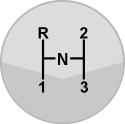
Pull the shift lever toward you when in neutral, then lift up (toward the screen from 3 o'clock to 2 o'clock) is reverse;
Toward you and down (4 o'clock) is first;
Away and up is second;
Away and down is third!
Pull the shift lever toward you when in neutral, then lift up (toward the screen from 3 o'clock to 2 o'clock) is reverse;
Toward you and down (4 o'clock) is first;
Away and up is second;
Away and down is third!
FTE Stories
Ford Trucks for Ford Truck Enthusiasts

Top 10 Fords at 2026 Carlisle Ford Nationals
Joe Kucinski
3 Best / 3 Worst Parts of Modern Ford Ownership
Brett Foote
10 Amazing Upgrades That Solve Common Ford Truck Owner Headaches
Pouria Savadkouei
Every 2026 Ford Engine Explained
Brett Foote
10 Ugly Ford Trucks That We Still Kinda Love
Joe Kucinski
10 Things Every Truck Owner NEEDS (2026 Edition)
Michael S. Palmer
Rezvani's Latest Post-Apocalyptic Monster Is a Ford F-150 Raptor Underneath
Verdad Gallardo
Top 10 Most Expensive Ford Trucks Ever Sold on Bring a Trailer
Joe Kucinski
