



Batterys????
Thread Starter
|
wellhead
Joined: Mar 2007
Posts: 417
Likes: 0
From: Russellville, Arkansas

Batterys????
Hi guys. Need your help..
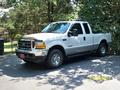
01 F250 was getting hard to start. Replaced fuel filter and checked each battery. One batt 12.54v other batt 12.67v. Cycled fuel pump a couple of times to make sure fuel bowl full. With volt meter on batterys and after the wait to start light off and while cranking the volts went down to 8.6volts.
I know it takes at least 10.50 volts for the engine to start.
I am going to pull the batterys and take to autozone and have them load tested.
If they check out OK. Could the starter be the problem?
Grady
01 F250 was getting hard to start. Replaced fuel filter and checked each battery. One batt 12.54v other batt 12.67v. Cycled fuel pump a couple of times to make sure fuel bowl full. With volt meter on batterys and after the wait to start light off and while cranking the volts went down to 8.6volts.
I know it takes at least 10.50 volts for the engine to start.
I am going to pull the batterys and take to autozone and have them load tested.
If they check out OK. Could the starter be the problem?
Grady

Elder User
Joined: Nov 2005
Posts: 796
Likes: 0
From: North Idaho
If they load test OK, check your clamps and post. I just went thru this a couple of months ago-batteries down on charge,hard start, wouldn't hold a charge. I took everything apart, scrubbed the posts and clamps, washed everything with a baking soda solution. When I got everything back together and the batteries charged, it worked like a champ---until yesterday.
I checked the batteries and the post looked good, but there was a film across the top of the batteries which was causing a discharge. I pulled the clamps off and there was a white corrosion between the post and the clamp. I took the batteries out and did a baking soda solution on the trays, cable, clamp, and batteries. I reinstalled with a dielectric grease underneath and around the clamps and posts, which I hadn't done before.
Even though the clamps looked good, the corrosion was building up between the clamp and the post and not letting the battery take a charge, thus discharging over time until it wouldn't start. I think that created some kind of electrolysis and caused some sort of vapor the come out of the battery and build up on the surface and create more problems.
I checked the batteries and the post looked good, but there was a film across the top of the batteries which was causing a discharge. I pulled the clamps off and there was a white corrosion between the post and the clamp. I took the batteries out and did a baking soda solution on the trays, cable, clamp, and batteries. I reinstalled with a dielectric grease underneath and around the clamps and posts, which I hadn't done before.
Even though the clamps looked good, the corrosion was building up between the clamp and the post and not letting the battery take a charge, thus discharging over time until it wouldn't start. I think that created some kind of electrolysis and caused some sort of vapor the come out of the battery and build up on the surface and create more problems.
Thread Starter
|
wellhead
Joined: Mar 2007
Posts: 417
Likes: 0
From: Russellville, Arkansas
Thanks Eric,
I cleaned the battery posts about a week ago and it didn't help the slow start. I am going to check the ground connection here in a little while.
We are visiting my Daughter here in North Texas for a few days. The Girls are out shopping so it will be awhile before I can get the batteries (thanks, can't spell anymore) checked. The batteries are 34 months old and have a three year warranty on them. Hope the girls get back soon.
Grady
I cleaned the battery posts about a week ago and it didn't help the slow start. I am going to check the ground connection here in a little while.
We are visiting my Daughter here in North Texas for a few days. The Girls are out shopping so it will be awhile before I can get the batteries (thanks, can't spell anymore) checked. The batteries are 34 months old and have a three year warranty on them. Hope the girls get back soon.
Grady
Elder User
Joined: Nov 2005
Posts: 796
Likes: 0
From: North Idaho
When you cleaned the posts, did you use a wire brush? When cleaned mine the first time I just used a stiff bristled brush with the baking soda, and they looked good. It wasn't until I really scrubbed with a wire brush that I could really see how much they changed from a dull gray to a shiny silver. That was when I saw a big improvement in the starting and holding a charge.
Elder User
Joined: Nov 2005
Posts: 796
Likes: 0
From: North Idaho

That is what they gave me at my local NAPA store today when I was working on the batteries.
It says on the tube "For all electrical connections to prevent voltage loss from arcing, suppress radio frequency interference, dissipate heat, insulate connections, and seal out moisture. Use on GM modules, Ford rotors, spark plug boots, marine light sockets and other connections."
I put it on today and everything seems to be working well, and am thinking if it seals out the moisture and the air, it should stop the corrosion as well.
Trending Topics

Hotshot
Joined: Jan 2008
Posts: 13,144
Likes: 11
From: Rochdale MA
Aw.. does that mean I have to clean the dielectric off and start over
That is what they gave me at my local NAPA store today when I was working on the batteries.
It says on the tube "For all electrical connections to prevent voltage loss from arcing, suppress radio frequency interference, dissipate heat, insulate connections, and seal out moisture. Use on GM modules, Ford rotors, spark plug boots, marine light sockets and other connections."
I put it on today and everything seems to be working well, and am thinking if it seals out the moisture and the air, it should stop the corrosion as well.
That is what they gave me at my local NAPA store today when I was working on the batteries.
It says on the tube "For all electrical connections to prevent voltage loss from arcing, suppress radio frequency interference, dissipate heat, insulate connections, and seal out moisture. Use on GM modules, Ford rotors, spark plug boots, marine light sockets and other connections."
I put it on today and everything seems to be working well, and am thinking if it seals out the moisture and the air, it should stop the corrosion as well.
FTE Stories
Ford Trucks for Ford Truck Enthusiasts

3 Best / 3 Worst Parts of Modern Ford Ownership
Brett Foote
10 Amazing Upgrades That Solve Common Ford Truck Owner Headaches
Pouria Savadkouei
Every 2026 Ford Engine Explained
Brett Foote
10 Ugly Ford Trucks That We Still Kinda Love
Joe Kucinski
10 Things Every Truck Owner NEEDS (2026 Edition)
Michael S. Palmer
Rezvani's Latest Post-Apocalyptic Monster Is a Ford F-150 Raptor Underneath
Verdad Gallardo
Top 10 Most Expensive Ford Trucks Ever Sold on Bring a Trailer
Joe Kucinski
2027 Ford Super Duty Buyer's Guide (Every Model, Engine, & Package)
Brett Foote
Top 10 Ford Truck Tragedies
Joe Kucinski
Elder User
Joined: Nov 2005
Posts: 796
Likes: 0
From: North Idaho
That is good to know. I have used the dielectric on all my light connections on my Kenworth and Peterbilt trucks for years with great results. I figured if it worked on those connections, which were exposed to a lot of road grime, it would work on the batteries, where they are not exposed to all the road chemicals.
Thread Starter
|
wellhead
Joined: Mar 2007
Posts: 417
Likes: 0
From: Russellville, Arkansas
UPDATE.
It's Running!! One of the batteries was a little low on H20 in one cell. Topped it off. Took them to Auto Zone for a charge and load test. Both were ok.
Will pay closer attention to my batteries in the future.
Thanks for all the help and info. You guys are awsome!!
Grad7y
It's Running!! One of the batteries was a little low on H20 in one cell. Topped it off. Took them to Auto Zone for a charge and load test. Both were ok.
Will pay closer attention to my batteries in the future.
Thanks for all the help and info. You guys are awsome!!
Grad7y