


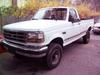

Need help figuring out my fuel gauge problem

Thread Starter
|
New User
Joined: Apr 2009
Posts: 16
Likes: 0
Need help figuring out my fuel gauge problem
I have an 89 f-350 diesel with dual tanks. The gauge pegs full most of the time for both of the tanks and then some times it jumps around and it doesn't matter the amount of diesel in either one. I replaced the gauge and still not working. I find it hard to believe that both sending units went bad but who knows. I guess it could be a ground maybe. I just need some help, is there something I'm missing? Is there something else in the line that could go bad?

Tuned

Joined: Apr 2004
Posts: 259
Likes: 5
Swampthang2 - I have a 89 F250 4x4 7.3L which is experiencing some of the same issues as yours with my front tank only.
With the dash switch pushed on front tank, the gauge pegs way past full... until there is only about close to empty, then when I come to stop light, the indicator needle will start working and drop to less that 1/4 tank. When I start up or release the brake pedal the needle goes back to fully pegged.
The rear tank reads normal and fuel from both tanks are pulled normally. I am not having any problem with the rear tank fuel transferring to the front tank or front to back as some have posted in the past.
I am going to pull the bed off and try to isolate the problem, either the front sending unit, fuel selector valve on the driver side frame, or the dash switch.
hugger94
With the dash switch pushed on front tank, the gauge pegs way past full... until there is only about close to empty, then when I come to stop light, the indicator needle will start working and drop to less that 1/4 tank. When I start up or release the brake pedal the needle goes back to fully pegged.
The rear tank reads normal and fuel from both tanks are pulled normally. I am not having any problem with the rear tank fuel transferring to the front tank or front to back as some have posted in the past.
I am going to pull the bed off and try to isolate the problem, either the front sending unit, fuel selector valve on the driver side frame, or the dash switch.
hugger94
Thread Starter
|
New User
Joined: Apr 2009
Posts: 16
Likes: 0
If you could let me know what you find out hugger i would really appreciate it. What is the fuel selector valve and where is it. Is it electric? What does it do? Does anyone think it could be a ground on the sending unit, i would just like to eliminate some possible problems. And if anyone has some more info on this i could really use it, need to fix this want to drive and cant until the gauge works. Dont really want to run out of fuel when pulling my mud truck.
Tuned
Joined: Apr 2004
Posts: 259
Likes: 5
The fuel selector valve is attached the driver side frame approximately behind the driver's seat. Fuel lines from both the back and side tank run through this valve. I am not sure whether or not this fuel selector valve is controlled by the dash tank switch but I think on the 7.3L it is, or at least until someone with more knowledge/experience corrects me.
I haven't had time to get back to removing my bed but I have welded 3/4 nuts to the bed bolt heads. It was somewhat of a trying experiment. We had to use a magnet ground fastened to both the bed and on part of the bed bolt head. We then used the magnet ground to position and hold the nut in place while welding the nut inside to the bolt head, then tacked a couple of the outsides for good measure.
I will post what I find out once I get the bed off.
I haven't had time to get back to removing my bed but I have welded 3/4 nuts to the bed bolt heads. It was somewhat of a trying experiment. We had to use a magnet ground fastened to both the bed and on part of the bed bolt head. We then used the magnet ground to position and hold the nut in place while welding the nut inside to the bolt head, then tacked a couple of the outsides for good measure.
I will post what I find out once I get the bed off.
Trending Topics

Posting Guru
Joined: Jan 2002
Posts: 1,346
Likes: 8
From: Baltimore
Here's the schematic for a 88 Diesel dual tank.
The 89 should be the same but the color code of the wires may be different.
The fuel tank selector valve has a contact inside of it that switches which tank sender resistance goes to the Fuel gage.
145 ohms = Full
22.5 ohms = Empty
If you were to unplug the electrical connector at the fuel tank selector valve mounted on the driver side inside frame rail and turn the ignition on, the fuel gage should read Full.
At the fuel tank selector valve electrical connector is a Dark Blue/Yellow wire which comes from the Front Tank sender. With the ignition off, and the selector valve connector unplugged you can use an ohm meter and measure the resistance to ground. It should read between 145 - 22.5 ohms depending how much fuel is in the tank.
Same with the Yellow/Light Blue wire which comes from the Rear tank sender.
If you want to test the Fuel gage accuracy, place a 145 ohm resistor (or something close to that value) from the Yellow/Wite wire which goes to the Fuel gage and the other end of the resistor to ground. Turn the ignition on. The Fuel gage should read full.
Place a 22.5 ohm resistor (or something close to that value) to the Yellow/White wire which goes to the Fuel gage and the other end of the resistor to ground. Turn the ignition on. The gage should red empty.
Yes the senders do go bad. The resistive material wears away usually because the tanks is not used often enough. The metal arm attached to the float eventually scrapes away the resistive material creating an open. (High resistance = Full on the Fuel gage).

The 89 should be the same but the color code of the wires may be different.
The fuel tank selector valve has a contact inside of it that switches which tank sender resistance goes to the Fuel gage.
145 ohms = Full
22.5 ohms = Empty
If you were to unplug the electrical connector at the fuel tank selector valve mounted on the driver side inside frame rail and turn the ignition on, the fuel gage should read Full.
At the fuel tank selector valve electrical connector is a Dark Blue/Yellow wire which comes from the Front Tank sender. With the ignition off, and the selector valve connector unplugged you can use an ohm meter and measure the resistance to ground. It should read between 145 - 22.5 ohms depending how much fuel is in the tank.
Same with the Yellow/Light Blue wire which comes from the Rear tank sender.
If you want to test the Fuel gage accuracy, place a 145 ohm resistor (or something close to that value) from the Yellow/Wite wire which goes to the Fuel gage and the other end of the resistor to ground. Turn the ignition on. The Fuel gage should read full.
Place a 22.5 ohm resistor (or something close to that value) to the Yellow/White wire which goes to the Fuel gage and the other end of the resistor to ground. Turn the ignition on. The gage should red empty.
Yes the senders do go bad. The resistive material wears away usually because the tanks is not used often enough. The metal arm attached to the float eventually scrapes away the resistive material creating an open. (High resistance = Full on the Fuel gage).
FTE Stories
Ford Trucks for Ford Truck Enthusiasts

10 Things Every Truck Owner NEEDS (2026 Edition)
Michael S. Palmer
Rezvani's Latest Post-Apocalyptic Monster Is a Ford F-150 Raptor Underneath
Verdad Gallardo
Top 10 Most Expensive Ford Trucks Ever Sold on Bring a Trailer
Joe Kucinski
2027 Ford Super Duty Buyer's Guide (Every Model, Engine, & Package)
Brett Foote
Top 10 Ford Truck Tragedies
Joe Kucinski
AEV FXL Super Duty - the Super Duty Raptor Ford Doesn't Make
Brett Foote
Lobo Vs Lobo: Proof the F-150 Lobo Should Be Even Lower!
Michael S. Palmer
Ford's 2001 Explorer Sportsman Concept Looks For a New Home
Verdad Gallardo
10 Best Ford Truck Engines We Miss the Most!
Joe Kucinski
Thread Starter
|
New User
Joined: Apr 2009
Posts: 16
Likes: 0
So if the readings to dont read the right ohms then what is the problem, the senders? both senders? Where is the best place to test the ohms.
Im kinda confused so the tanks should read a certain ohms when its full and empty. But if it was the sending units wouldnt it be getting no fuel or i guess it could just be reading wrong. And a thing i forgot to add to the first message is that the guage pegs full but it does move while im driving it like its kinda working but not lined up with the gauge. Dont know if that would affect any thing.
Im kinda confused so the tanks should read a certain ohms when its full and empty. But if it was the sending units wouldnt it be getting no fuel or i guess it could just be reading wrong. And a thing i forgot to add to the first message is that the guage pegs full but it does move while im driving it like its kinda working but not lined up with the gauge. Dont know if that would affect any thing.
Tuned
Joined: Apr 2004
Posts: 259
Likes: 5
F150XLT - Finally got to follow up on the front fuel gauge problem. I undid the connector from the Fuel tank selector valve on the frame.... It is a bugger to get the connector back into the valve because of the valve location in relationship to the frame but its back together. I'm going to past your post with my comments at the respective spots.
-------
The 89 should be the same but the color code of the wires may be different. They appear to be the same on my 89 F250, Blue w/yellow stripe for the front sending unit and Yellow/Lt Blue stripe for the rear sending unit.
The fuel tank selector valve has a contact inside of it that switches which tank sender resistance goes to the Fuel gage.
145 ohms = Full
22.5 ohms = Empty
If you were to unplug the electrical connector at the fuel tank selector valve mounted on the driver side inside frame rail and turn the ignition on, the fuel gage should read Full. Both tanks pegged past full, the same as the front tank registers usually, unless I'm coming to a stop with less than a quarter of a tank of fuel.
At the fuel tank selector valve electrical connector is a Dark Blue/Yellow wire which comes from the Front Tank sender. With the ignition off, and the selector valve connector unplugged you can use an ohm meter and measure the resistance to ground. It should read between 145 - 22.5 ohms depending how much fuel is in the tank. The Dark Blue/Yellow wire showed OL or nothing on my Fluke meter. Does this indicate the front sending unit is bad?
Same with the Yellow/Light Blue wire which comes from the Rear tank sender. The Yellow/Light Blue wire showed a .071 on the Fluke meter, which I am assuming approx. 1/2 tank but the gauge shows approx. 3/4 on the rear tank.
If you want to test the Fuel gage accuracy, place a 145 ohm resistor (or something close to that value) from the Yellow/Wite wire which goes to the Fuel gage and the other end of the resistor to ground. Turn the ignition on. The Fuel gage should read full. I didn't get this tested but I am assuming that you are talking about some radio shack ohm resistors with various ohms????
Place a 22.5 ohm resistor (or something close to that value) to the Yellow/White wire which goes to the Fuel gage and the other end of the resistor to ground. Turn the ignition on. The gage should red empty. Same as previous response??
hugger94
-------
The 89 should be the same but the color code of the wires may be different. They appear to be the same on my 89 F250, Blue w/yellow stripe for the front sending unit and Yellow/Lt Blue stripe for the rear sending unit.
The fuel tank selector valve has a contact inside of it that switches which tank sender resistance goes to the Fuel gage.
145 ohms = Full
22.5 ohms = Empty
If you were to unplug the electrical connector at the fuel tank selector valve mounted on the driver side inside frame rail and turn the ignition on, the fuel gage should read Full. Both tanks pegged past full, the same as the front tank registers usually, unless I'm coming to a stop with less than a quarter of a tank of fuel.
At the fuel tank selector valve electrical connector is a Dark Blue/Yellow wire which comes from the Front Tank sender. With the ignition off, and the selector valve connector unplugged you can use an ohm meter and measure the resistance to ground. It should read between 145 - 22.5 ohms depending how much fuel is in the tank. The Dark Blue/Yellow wire showed OL or nothing on my Fluke meter. Does this indicate the front sending unit is bad?
Same with the Yellow/Light Blue wire which comes from the Rear tank sender. The Yellow/Light Blue wire showed a .071 on the Fluke meter, which I am assuming approx. 1/2 tank but the gauge shows approx. 3/4 on the rear tank.
If you want to test the Fuel gage accuracy, place a 145 ohm resistor (or something close to that value) from the Yellow/Wite wire which goes to the Fuel gage and the other end of the resistor to ground. Turn the ignition on. The Fuel gage should read full. I didn't get this tested but I am assuming that you are talking about some radio shack ohm resistors with various ohms????
Place a 22.5 ohm resistor (or something close to that value) to the Yellow/White wire which goes to the Fuel gage and the other end of the resistor to ground. Turn the ignition on. The gage should red empty. Same as previous response??
hugger94
Posting Guru
Joined: Jan 2002
Posts: 1,346
Likes: 8
From: Baltimore
hugger94
Your front tank sender must be bad.
No need to trouble shoot any further.
Yes Radio Shack sells a Qty. 5 150 ohm resistor pack for .99 cents (close enough +- 5% tolerance) and 10 ohm resistor pack. You could put two in series to get 20 ohms.
Or you could purchase a 1k linear pot like this at Radio Shack and dial in the resistance you want,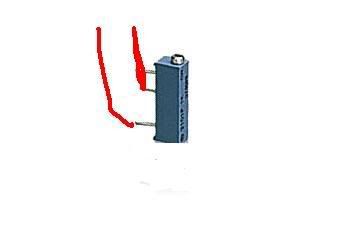
As far a your .071 measurement for the rear tank, as long as your meter was on the 1k scale then yes that would equal 71 ohms. Your OL or infinity reading for the front tank sender indicates an open from the sender.
The gas gage is not linear so it appears the rear tank is working.
If the sender is sending the proper resistance value and Full and Empty are not accurate the only adjustment that can be made is to bend of the float arm a trial and error method.
If you purchase a new sender for the front tank, before you install it in the tank, remove the electrical plug from the front tank and if it will reach, plug the electrical connector into the new sender. Turn the ignition on and manually move the float and watch the gas gage.
Note: The sender and fuel pump motors use the same ground. So if the pump works you don't have a sender ground problem. Another problem with the senders as some one mentioned is the float can develop a pin hole leak. If that happens the fuel gage when switched to that tank will always show empty.
Your front tank sender must be bad.
No need to trouble shoot any further.
Yes Radio Shack sells a Qty. 5 150 ohm resistor pack for .99 cents (close enough +- 5% tolerance) and 10 ohm resistor pack. You could put two in series to get 20 ohms.
Or you could purchase a 1k linear pot like this at Radio Shack and dial in the resistance you want,
As far a your .071 measurement for the rear tank, as long as your meter was on the 1k scale then yes that would equal 71 ohms. Your OL or infinity reading for the front tank sender indicates an open from the sender.
The gas gage is not linear so it appears the rear tank is working.
If the sender is sending the proper resistance value and Full and Empty are not accurate the only adjustment that can be made is to bend of the float arm a trial and error method.
If you purchase a new sender for the front tank, before you install it in the tank, remove the electrical plug from the front tank and if it will reach, plug the electrical connector into the new sender. Turn the ignition on and manually move the float and watch the gas gage.
Note: The sender and fuel pump motors use the same ground. So if the pump works you don't have a sender ground problem. Another problem with the senders as some one mentioned is the float can develop a pin hole leak. If that happens the fuel gage when switched to that tank will always show empty.
Thread Starter
|
New User
Joined: Apr 2009
Posts: 16
Likes: 0
fordf150xlt- where is the best place to test for ohms? i can just use a volt meter? electrical is totally not my area. If i test both tanks and the ohms arent right then that means both senders are bad? i kinda need someone to walk me through this never done it before. if you could give me step by step how you would do it, i could really use it. do i need to drop the tanks to test the ohms? just so many questions
Posting Guru
Joined: Jan 2002
Posts: 1,346
Likes: 8
From: Baltimore
To measure resistance move the Red probe to the plug with the Omega symbol.  The Black probe plugs in to the port with the ground symbol or marking that says common.
Turn the **** or push the button depending on the meter to read OHMS.
Turn the meter on and touch the two probes together. The meter should read zero ohms.
Crawl under the truck. About the middle of the inside driver side frame rail is the selector valve. The fuel lines go to it.
Disconnect the electrical plug.
One of the wires will be Dark Blue with a Yellow stripe.
That is the wire from the Front tank sender.
Touch the Red probe to the Dark Blue/Yellow wire and the Black probe to the truck frame. Might have to sand a small spot on the frame to get a good contact.
Make sure your fingers don't touch the metal part of either probe when you take the measurements or your readings will be incorrect.
The meter should read some where between 22 and 145 ohms depending on how much fuel is in the tank. If your meter reads OL (Over Load) if you have a digital meter it indicates the sender is bad. If you have an analog meter and the needle doesn't move and points to the infinity symbol the sender is bad.
Do the same test to the Yellow wire with a Light Blue stripe. That wire comes from the Rear tank sender.
The Black probe plugs in to the port with the ground symbol or marking that says common.Turn the **** or push the button depending on the meter to read OHMS.
Turn the meter on and touch the two probes together. The meter should read zero ohms.
Crawl under the truck. About the middle of the inside driver side frame rail is the selector valve. The fuel lines go to it.
Disconnect the electrical plug.
One of the wires will be Dark Blue with a Yellow stripe.
That is the wire from the Front tank sender.
Touch the Red probe to the Dark Blue/Yellow wire and the Black probe to the truck frame. Might have to sand a small spot on the frame to get a good contact.
Make sure your fingers don't touch the metal part of either probe when you take the measurements or your readings will be incorrect.
The meter should read some where between 22 and 145 ohms depending on how much fuel is in the tank. If your meter reads OL (Over Load) if you have a digital meter it indicates the sender is bad. If you have an analog meter and the needle doesn't move and points to the infinity symbol the sender is bad.
Do the same test to the Yellow wire with a Light Blue stripe. That wire comes from the Rear tank sender.
Thread Starter
|
New User
Joined: Apr 2009
Posts: 16
Likes: 0
thanks i will do that soon. so if it reads between 145-22.5 ohms then that means the senders are good? i know it depends on the fuel level but of my tanks are about halfway im pretty sure, so between those two numbers should mean the senders are good? what if they both test good then what could it be?
Posting Guru
Joined: Jan 2002
Posts: 1,346
Likes: 8
From: Baltimore
You'll probably find both senders are bad. If your measurements are not correct you need to drop the tank, pull the sender from the tank and measure the resistance while you manually move the float arm. The resistance should be around 22 ohms when the float is down and as you manually move the float up the resistance reading should increase smoothly to about 145 ohms. If it doesn't, the sender is bad.
To test the fuel gage accuracy you would need to purchase some resistors from Radio Shack.
I don't think you need to test the gage since you replaced it but the procedure is as follows.
To test the fuel gage you would place a 22 ohm resistor and connect one end to the Yellow/White wire at the selector valve connector you disconnected. Ground the other end of the resistor to the frame. Turn the ignition On and the gage should read empty.
Place a 145 ohm resistor and connect one end to the Yellow/White wire and ground the other end of the resistor to the frame. Turn the ignition On and the gage should read full.
Radio Shack sells 150 ohm resistors for .99 cents for a pack of 5.
They also sell 10 ohm resistors for .99 cents for a pack of 5. To get the 22 ohms place two of the 10 resistors in series and that should be close enough to 22 ohms.
You said you replaced the gage and it still reads full. That indicates the gage is seeing a resistance of 145 ohms or more.
To test the fuel gage accuracy you would need to purchase some resistors from Radio Shack.
I don't think you need to test the gage since you replaced it but the procedure is as follows.
To test the fuel gage you would place a 22 ohm resistor and connect one end to the Yellow/White wire at the selector valve connector you disconnected. Ground the other end of the resistor to the frame. Turn the ignition On and the gage should read empty.
Place a 145 ohm resistor and connect one end to the Yellow/White wire and ground the other end of the resistor to the frame. Turn the ignition On and the gage should read full.
Radio Shack sells 150 ohm resistors for .99 cents for a pack of 5.
They also sell 10 ohm resistors for .99 cents for a pack of 5. To get the 22 ohms place two of the 10 resistors in series and that should be close enough to 22 ohms.
You said you replaced the gage and it still reads full. That indicates the gage is seeing a resistance of 145 ohms or more.