




New shoes!
Laughing Gas
Joined: Aug 2007
Posts: 1,132
Likes: 0
From: Baldwin, ND
I wouldnt go as far as calling them proven BUT they seem to have good things said about them thus far.
Also, big rigs use retreads. Those are probably what you see most of on the side of the interstate.....lol
Thad
Also, big rigs use retreads. Those are probably what you see most of on the side of the interstate.....lol
Thad
Mountain Pass
Joined: Oct 2004
Posts: 243
Likes: 2
From: Kremlin, Ok
Proven? Proven to litter the highway with chunks of tread from failed caps and casings.  Running a capped tire on a lightweight Jeep is a different application from a pickup weighing 6000 lbs+ empty. Nevermind any load you may put on it. I don't think I would trust them with the loads I've carried in my pickup. I'm all for saving a buck, and $90 a tire might seem like a bargain. But blow just one of those tires and see how much damage it will cause.
I've known a few guys that have run them on their pickups with mixed success. I had a set on a Toyota, but traded them back in because I couldn't get them to balance and stay balanced.
Run them for 50K miles and then let us know how you like them.
Jason
Running a capped tire on a lightweight Jeep is a different application from a pickup weighing 6000 lbs+ empty. Nevermind any load you may put on it. I don't think I would trust them with the loads I've carried in my pickup. I'm all for saving a buck, and $90 a tire might seem like a bargain. But blow just one of those tires and see how much damage it will cause.I've known a few guys that have run them on their pickups with mixed success. I had a set on a Toyota, but traded them back in because I couldn't get them to balance and stay balanced.
Run them for 50K miles and then let us know how you like them.
Jason
Probably 95% of the time it's from some lazy-*** driver that doesn't pretrip his equipment every day or more often. It may even have been because the company he works for absolutely will not replace a tire until it blows out (which if he is smart, he would find another company to work for).
Recaps have been improved greatly just over the last 15 years I've been driving a truck. I check the tires on my rock bucket on average of 5 to 6 times a day. I know when one is getting low, where (most likely) I picked up the, nail, screw, bolt, rebar, or railroad spike up at. Common sense prevails, which the majority lack anymore.

Posting Guru
Joined: Aug 2006
Posts: 2,175
Likes: 0
From: Kent WA
I've never liked old fashioned retreads either. The only set I ever bought were so lopsided they "galloped" down the road.
Posting Guru
Joined: Aug 2006
Posts: 2,175
Likes: 0
From: Kent WA
Proven? Proven to litter the highway with chunks of tread from failed caps and casings. Running a capped tire on a lightweight Jeep is a different application from a pickup weighing 6000 lbs+ empty. Nevermind any load you may put on it. I don't think I would trust them with the loads I've carried in my pickup. I'm all for saving a buck, and $90 a tire might seem like a bargain. But blow just one of those tires and see how much damage it will cause.
I've known a few guys that have run them on their pickups with mixed success. I had a set on a Toyota, but traded them back in because I couldn't get them to balance and stay balanced.
Run them for 50K miles and then let us know how you like them.
Jason
Running a capped tire on a lightweight Jeep is a different application from a pickup weighing 6000 lbs+ empty. Nevermind any load you may put on it. I don't think I would trust them with the loads I've carried in my pickup. I'm all for saving a buck, and $90 a tire might seem like a bargain. But blow just one of those tires and see how much damage it will cause.I've known a few guys that have run them on their pickups with mixed success. I had a set on a Toyota, but traded them back in because I couldn't get them to balance and stay balanced.
Run them for 50K miles and then let us know how you like them.
Jason
These are a different animal alltogether. You say you've "known a few guys that have run them on their pickups with mixed success", and my question is which "them" have they run? Traditional recaps or Treadwrights?
And while a set of these on a Jeep doesn't cary nearly the load that they do on an IDI truck, they take a LOT more abuse offroading in the rocks of Moab than they'll ever see on pavement or anywhere anyone will take one of these trucks. On Jeeps they are often run for extended periods at greatly reduced air pressures (around 12-5 PSI) and take a real beating in the rocks. They've proven to me that they are a quality product by the abuse they've taken over the years.

Postmaster
Joined: Dec 2002
Posts: 3,594
Likes: 2
From: Southern Oregon USA
Recaps have been improved greatly just over the last 15 years I've been driving a truck. I check the tires on my rock bucket on average of 5 to 6 times a day. I know when one is getting low, where (most likely) I picked up the, nail, screw, bolt, rebar, or railroad spike up at. Common sense prevails, which the majority lack anymore.
Yes, some of the problem lies with the driver. But the majority of the blown tires you see are from an improperly capped tire or a bad casing. Also, many companies will re use a casing beyond what is recommended, gambling that it will hold up. I've put a set of tires on one day, only to change one of them the next day after they have separated or come apart. When they blow, they take out trailer floors, crossmembers, mudflaps, tail lights, etc. They'll do wonders to the sheetmetal of a pickup.
Jason
Senior User
Joined: Mar 2008
Posts: 450
Likes: 0
From: Vancouver,WA.
I've seen tires come apart (on big rigs) and fly what seems like 20-30 feet in the air...
Keep us posted as to how you like them...
Keep us posted as to how you like them...
FTE Stories
Ford Trucks for Ford Truck Enthusiasts

2027 Ford Super Duty Buyer's Guide (Every Model, Engine, & Package)
Brett Foote
Top 10 Ford Truck Tragedies
Joe Kucinski
AEV FXL Super Duty - the Super Duty Raptor Ford Doesn't Make
Brett Foote
Lobo Vs Lobo: Proof the F-150 Lobo Should Be Even Lower!
Michael S. Palmer
Ford's 2001 Explorer Sportsman Concept Looks For a New Home
Verdad Gallardo
10 Best Ford Truck Engines We Miss the Most!
Joe Kucinski
2026 Shelby F-150 Off-Road: Better Than a Raptor R?
Brett Foote
2027 Super Duty Carhartt Package First Look: 12 Things You NEED to Know!
Michael S. Palmer
10 Most Surprising 2026 Ford Truck Features!
Joe Kucinski
Postmaster
Joined: Jun 2007
Posts: 2,621
Likes: 1
From: Sweetwater Texas
Most of the recaps that come apart are caused by low pressure 95% of the time, they don't handle abuse like normal tires, but if they are maintained they will last just as long as regulars, well thats my experience anyway with recaps, but I've never messed with radial recaps just biased ply recaps for trailers.
Postmaster
Joined: Dec 2002
Posts: 3,594
Likes: 2
From: Southern Oregon USA
As others have said, what you see on the side of the road is 99% from semis and they are running the old-fashioned glued-on-band-of-tread-rubber type of retread. That's what we buy at the company I work for.
And while a set of these on a Jeep doesn't cary nearly the load that they do on an IDI truck, they take a LOT more abuse offroading in the rocks of Moab than they'll ever see on pavement or anywhere anyone will take one of these trucks. On Jeeps they are often run for extended periods at greatly reduced air pressures (around 12-5 PSI) and take a real beating in the rocks. They've proven to me that they are a quality product by the abuse they've taken over the years.
And while a set of these on a Jeep doesn't cary nearly the load that they do on an IDI truck, they take a LOT more abuse offroading in the rocks of Moab than they'll ever see on pavement or anywhere anyone will take one of these trucks. On Jeeps they are often run for extended periods at greatly reduced air pressures (around 12-5 PSI) and take a real beating in the rocks. They've proven to me that they are a quality product by the abuse they've taken over the years.
I realize the gators on the side of the road are mainly from trucks. But ANY recapped tire can, and has failed. You see the truck tires more often because of the sheer numbers of trucks running caps.
I've never actually heard of anyone using these tires on a serious trail rig.
And that they won't warranty your tires if you have aired them down tells me how much they stand behind their work. I've ran my BFG's and Swampers off the bead (and destroyed them) more than I can remember, and I've never been denied a replacement or pro rate.
Personally, I'll stick to my $300 a piece tires when it comes to wheeling on some of the trails like I ran in Moab, where a tire failure could lead to more than an inconvience. Trail hazards and crawling pressure are a different type of abuse. But I'd still argue that a loaded pickup on the highway or even on a gravel road is going to be more prone to failure.
Jason
Thread Starter
|
Postmaster
Joined: Oct 2005
Posts: 3,724
Likes: 0
From: Clarksburg WV
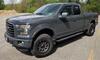
Anyway...I still have faith in these tires. I guess if I post up about a blowout, you can laugh at me...but, I think they're some good looking tires, and the guys at wally world were even asking me where I got them because they said they were some of the best looking retreads they'd ever seen.
Laughing Gas
Joined: Aug 2007
Posts: 1,132
Likes: 0
From: Baldwin, ND
The funny thing about this is that we act like "new" tires dont have issues with blowouts. If it was that big of an issue the company wouldnt be around. Several 4x4 magazines have put good reviews out about these tires.
Ghunt, drive on man!
Thad
Ghunt, drive on man!
Thad
Posting Guru
Joined: Aug 2006
Posts: 2,175
Likes: 0
From: Kent WA
Treadwright takes the shaved carcass (much like a new carcass) and throws it into a mold (like a new tire manufacturing mold) and hot injection mold new tread onto the carcass, then vulcanize the new rubber.
Still don't see a difference?
A new tire can fail as well. Remember the Firestone fiasco a few years ago?
Personally, I'll stick to my $300 a piece tires when it comes to wheeling on some of the trails like I ran in Moab, where a tire failure could lead to more than an inconvience. Trail hazards and crawling pressure are a different type of abuse. But I'd still argue that a loaded pickup on the highway or even on a gravel road is going to be more prone to failure.
As for on-road usage, I tow my Jeep with the front wheels on a dolly and the rear wheels on the ground. 1100 miles non-stop each way to Moab and back several times now. No blowouts. No "gaters".
Like others have said, a recap manufactured like these, with good quality carcasses, properly inflated, and correctly load rated will hold up pretty much the same and as long as a new tire.
Postmaster
Joined: Dec 2002
Posts: 3,594
Likes: 2
From: Southern Oregon USA
It is still 2 dissimilar rubber compounds being put together. The standard cap has a pre-molded strip, the TreadRights bare tread is put into a heated mold AFTER it is attached to the tire. The standard cap does have a seam. But the seam is not the problem. It is the movement between the different rubber, casing issue, or the failure of the vulcanization process. Which both use.
There's no denying that ANYTHING can fail, new or old. The Firestone thing was a comedy of errors from Ford, Firestone, and the consumers who had them on. Too light duty of tire, running at too low of a pressure, and ignorant owners that didn't know how to control their vehicle in the case of a tire failure or even look to see a tire that is low.
If you run a tire flat or off the bead and the rim cuts into it, any tire is going to fail. It wasn't the tire's fault. It was mine for running too low PSI without beadlocks. My point is that TreadRight won't warranty their tires if they are ran low and destroyed like this. My new tires get replaced, no questions asked. If you haven't lost a bead on a tire, then you're not running low enough pressure . Before beadlocks were the norm, the group I wheel with would lose a bead every trip out. And it never happens on the dirt road. It's always in the middle of an obstacle where there is no possibility of resetting or changing it.
I would expect them to. But if you have a CJ, it probably weighs close to nothing in the rear. Load it to the tires capacity or near and then run hard for 2200 miles. That's kinda my point there, CheaperJ. And I am regularly exceeding the capacity of tires tires on my pickup.
There are places to skimp and places to spend. I wouldn't trust ANY style of caps on the trailer that I haul my Bronco with, let alone flat tow it with questionable tires on it. Or on my tow rig.
My $200 (or whatever) is not paying just for the replacement value. It's paying for R&D. It's paying for the quality. And yes, it's paying for the name brand. But with that name brand, you get peace of mind that some tech did not miss a flaw in the casing that has already ran for 50K miles or more. As I said earlier, it all come down to the casing quality. You're gambling on the fact that the casings you're using for the caps are good. The truth is, unless you give them your own set to cap, you really have no idea how good the casings are.
Jason
. Before beadlocks were the norm, the group I wheel with would lose a bead every trip out. And it never happens on the dirt road. It's always in the middle of an obstacle where there is no possibility of resetting or changing it.There are places to skimp and places to spend. I wouldn't trust ANY style of caps on the trailer that I haul my Bronco with, let alone flat tow it with questionable tires on it. Or on my tow rig.
My $200 (or whatever) is not paying just for the replacement value. It's paying for R&D. It's paying for the quality. And yes, it's paying for the name brand. But with that name brand, you get peace of mind that some tech did not miss a flaw in the casing that has already ran for 50K miles or more. As I said earlier, it all come down to the casing quality. You're gambling on the fact that the casings you're using for the caps are good. The truth is, unless you give them your own set to cap, you really have no idea how good the casings are.
Jason