


Idle Too Fast

Thread Starter
|
Freshman User
Joined: Nov 2005
Posts: 35
Likes: 0
From: Chattanooga, TN
 Idle Too Fast
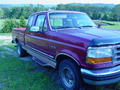
Well I bought the super clean 1995 F150 this weekend. Its an ext. cab long bed with a 351W automatic OD.
The idle was high at about 1500 rpm when I looked at the truck. After convincing myself it would be a simple fix and knocking the price down a bit I bought the truck. Yesterday as I entered the emmissions inspection station the idle was at a steady 2100 rpm. I tried to adjust the screw where the throttle cable meets at the top of the engine. Then I started messing with turning the distributor. No timing light or anything, just turning it to see what I could get it to do.
Well, as those of you who may know a little about this may have already guessed, I made things a little worse when I got the idle to slow down so I just put it back where it started.
I'm not real good at troubleshooting engines, even with detailed instructions. Are there some basic sensors or other things like PCV valves that I might go ahead and replace that could affect idle while I do a tune up and oil change on this motor?
The idle was high at about 1500 rpm when I looked at the truck. After convincing myself it would be a simple fix and knocking the price down a bit I bought the truck. Yesterday as I entered the emmissions inspection station the idle was at a steady 2100 rpm. I tried to adjust the screw where the throttle cable meets at the top of the engine. Then I started messing with turning the distributor. No timing light or anything, just turning it to see what I could get it to do.
Well, as those of you who may know a little about this may have already guessed, I made things a little worse when I got the idle to slow down so I just put it back where it started.
I'm not real good at troubleshooting engines, even with detailed instructions. Are there some basic sensors or other things like PCV valves that I might go ahead and replace that could affect idle while I do a tune up and oil change on this motor?
Fleet Owner


Joined: Aug 2005
Posts: 23,668
Likes: 301
From: Easton,Ks
About the worst thing you could do is to adjust the screw where the throttle cable meets at the top of the engine.
The curb idle and fast idle rpms are controlled by the Powertrain Control Module (PCM) and the Idle Air Control (IAC) valve. The Idle Air Control (IAC) valve is not adjustable. A large increase or decrease in closed plate airflow from the calibrated level will not allow this device to effectively control the rpm.
Throttle bodies with sludge tolerant design are clearly identified with a yellow/black attention decal. This decal advises that the throttle return screw must not be adjusted counter-clockwise (backed off), as this will not reduce the engine speed but may cause the throttle plate to stick in the bore in the closed (idle) position. Backing out the screw may be required if the throttle body had been previously serviced (a plug in the throttle plate orifice may be present) or if the throttle return screw has been tampered with (TP sensor self-test output out of range), refer to procedure for details. The decal also advises that these throttle bodies must not be cleaned inside the bore, as cleaning will impair the sensitive coating. The sludge accumulation will not affect the throttle body idle air flow. (The cleaning procedure for the Idle Air Control (IAC) valve may still apply.)
To answer your question a high idle can be caused by any of the following:
1. a dirty, sticking or bad IAC valve
2. vacuum leak
3. binding throttle shaft or cable
4. PCV valve
5. TP sensor (Throttle Position Sensor)
The first thing you need to do is run a self test and then post the codes back here and we will try to help you. If you do not know how to run a self test go here:
http://fordfuelinjection.com/?p=13
Good luck
The curb idle and fast idle rpms are controlled by the Powertrain Control Module (PCM) and the Idle Air Control (IAC) valve. The Idle Air Control (IAC) valve is not adjustable. A large increase or decrease in closed plate airflow from the calibrated level will not allow this device to effectively control the rpm.
Throttle bodies with sludge tolerant design are clearly identified with a yellow/black attention decal. This decal advises that the throttle return screw must not be adjusted counter-clockwise (backed off), as this will not reduce the engine speed but may cause the throttle plate to stick in the bore in the closed (idle) position. Backing out the screw may be required if the throttle body had been previously serviced (a plug in the throttle plate orifice may be present) or if the throttle return screw has been tampered with (TP sensor self-test output out of range), refer to procedure for details. The decal also advises that these throttle bodies must not be cleaned inside the bore, as cleaning will impair the sensitive coating. The sludge accumulation will not affect the throttle body idle air flow. (The cleaning procedure for the Idle Air Control (IAC) valve may still apply.)
To answer your question a high idle can be caused by any of the following:
1. a dirty, sticking or bad IAC valve
2. vacuum leak
3. binding throttle shaft or cable
4. PCV valve
5. TP sensor (Throttle Position Sensor)
The first thing you need to do is run a self test and then post the codes back here and we will try to help you. If you do not know how to run a self test go here:
http://fordfuelinjection.com/?p=13
Good luck
Last edited by subford; Feb 22, 2007 at 07:33 AM.
Thread Starter
|
Freshman User
Joined: Nov 2005
Posts: 35
Likes: 0
From: Chattanooga, TN
I ran the self test. I believe i'm getting a 12 and a 33 code. I did not understand how to interpret these numbers. (if I was even able to log them correctly in the first place)Speaking of the PCV valve, I bought one with the standard tune up stuff but I'll be darned if I can find it on the motor. I even bought a Haynes manual. I always tell myself I won't buy another one because they really dont have much useful or specific information. This manual proves that, if nothing else, they are consistent. God Bless all on this forum willing to help those of us in need of a little know how.
Fleet Owner
Joined: Aug 2005
Posts: 23,668
Likes: 301
From: Easton,Ks
Originally Posted by Jalon7
Speaking of the PCV valve, I bought one with the standard tune up stuff but I'll be darned if I can find it on the motor.
http://i54.photobucket.com/albums/g9...pcvvalve87.gif
Thread Starter
|
Freshman User
Joined: Nov 2005
Posts: 35
Likes: 0
From: Chattanooga, TN
Aha! Hiding in the back! A guy at work told me it was in the back but I just didn't see it. Thanks for the diagram. That puts it into perspective. I'm digging into the idle problem tomorrow. Had to drive it to work for the last couple of days and used a ton of gas. The egr sounds like a good place to look. Thanks everybody.
Trending Topics
Thread Starter
|
Freshman User
Joined: Nov 2005
Posts: 35
Likes: 0
From: Chattanooga, TN
It idles at around 1600 rpm. I started playing around with the IAC connector and found that when I unplug it it idles at 500 or 600 rpm. Seems to run well and sounds normal when IAC is disconnected.
I know the obvious answer is leave it unplugged..LOL..
Is this indicating that I need a new IAC valve? Or does this mean it is OK?
I know the obvious answer is leave it unplugged..LOL..
Is this indicating that I need a new IAC valve? Or does this mean it is OK?
FTE Stories
Ford Trucks for Ford Truck Enthusiasts

Top 10 Fords at 2026 Carlisle Ford Nationals
Joe Kucinski
3 Best / 3 Worst Parts of Modern Ford Ownership
Brett Foote
10 Amazing Upgrades That Solve Common Ford Truck Owner Headaches
Pouria Savadkouei
Every 2026 Ford Engine Explained
Brett Foote
10 Ugly Ford Trucks That We Still Kinda Love
Joe Kucinski
10 Things Every Truck Owner NEEDS (2026 Edition)
Michael S. Palmer
Rezvani's Latest Post-Apocalyptic Monster Is a Ford F-150 Raptor Underneath
Verdad Gallardo
Top 10 Most Expensive Ford Trucks Ever Sold on Bring a Trailer
Joe Kucinski
2027 Ford Super Duty Buyer's Guide (Every Model, Engine, & Package)
Brett Foote
Fleet Owner
Joined: Aug 2005
Posts: 23,668
Likes: 301
From: Easton,Ks
It sounds like the IAC is working OK.
But the engine should die when you unplug the IAC so this means you have problems elsewhere.
Maybe a vacuum leak, throttle plates not closing, ............
But the engine should die when you unplug the IAC so this means you have problems elsewhere.
Maybe a vacuum leak, throttle plates not closing, ............
Thread Starter
|
Freshman User
Joined: Nov 2005
Posts: 35
Likes: 0
From: Chattanooga, TN
Thanks Subford. That does make sense. Others have said it should die after unplugging IAC. I guess I'll have to stop looking for a sensor or something and get down to finding a vac leak or similar problem.

Senior User
Joined: Oct 2006
Posts: 151
Likes: 0
I had that exact scenario. Truck started to idle at 1500-2000. So I unplugged the idle valve (engine died) and turned in the idle stop screw to keep it at 600 as a temp fix. I eventually got around to pulling the codes and got 123 - throttle position sensor. Replaced that and back to normal.
Maybe the reason your truck doen't die when you unplug the idle bypass valve is because you messed with your stop screw.
Maybe the reason your truck doen't die when you unplug the idle bypass valve is because you messed with your stop screw.
Thread Starter
|
Freshman User
Joined: Nov 2005
Posts: 35
Likes: 0
From: Chattanooga, TN
I'm going to sniff down that trail a little bit now. I almost bought a TPS tonight after Autozone pulled a 628 codefor me. It said something about TPS not matching up with air or something like that.
How in the world do you get to the TPS on the underside of the intake?
How in the world do you get to the TPS on the underside of the intake?
Thread Starter
|
Freshman User
Joined: Nov 2005
Posts: 35
Likes: 0
From: Chattanooga, TN
That fixed it! Replaced the TPS today and it's idling at 900 rpm which seems right. The transmission, which has been shifting funny even when it wasn't slamming each gear, feels perfect now. Shifts real smooth and when it should. It actually had a 121 code refering to the TPS. The 628 code had something to do with the tranny. Thanks for everyone's input. Weighing all info helped to save me from spending tons of money swapping parts.

Thread
Thread Starter
Forum
Replies
Last Post
1983F1503004x4
1980 - 1986 Bullnose F100, F150 & Larger F-Series Trucks
6
May 23, 2013 12:24 PM
LARIAT 85
Fuel Injection, Carburetion & Fuel System
11
Nov 3, 2011 05:32 PM
j-rad
1987 - 1996 F150 & Larger F-Series Trucks
6
Sep 20, 2011 06:46 PM
yeahbuddy24
1973 - 1979 F-100 & Larger F-Series Trucks
5
Nov 17, 2009 09:11 PM
d_stange
1987 - 1996 F150 & Larger F-Series Trucks
1
Mar 9, 2006 09:03 AM