


Brackets and mounts... help

Thread Starter
|
Freshman User
Joined: Jul 2006
Posts: 29
Likes: 0
Brackets and mounts... help
I'm doing a 302/c4 trans swap into a '55 f-100 and want to know if anybody has any suggestions on the easiest way to setting frame brackets for the motor in place as far as the right position. The brackets I'm using are the 2 piece brackets, one on each frame rail... no cross member.

Lead Driver


Joined: Apr 2002
Posts: 8,813
Likes: 13
From: Littleton, New Hampshire
Originally Posted by danfish
I'm doing a 302/c4 trans swap into a '55 f-100 and want to know if anybody has any suggestions on the easiest way to setting frame brackets for the motor in place as far as the right position. The brackets I'm using are the 2 piece brackets, one on each frame rail... no cross member.

Last edited by GreatNorthWoods; Oct 11, 2006 at 08:38 AM.
Lead Driver
Joined: Apr 2002
Posts: 8,813
Likes: 13
From: Littleton, New Hampshire
Originally Posted by AXracer
To be sure, level the carb mounting surface on the intake manifold.

Senior User
Joined: Jan 2006
Posts: 182
Likes: 0
From: Jane Lew, WV
Originally Posted by GreatNorthWoods
Sorry I wasn't clear on that. When leveling from side to side and front to rear use the carburetor mounting surface to determine that.
Bike


Hotshot

Joined: Oct 2004
Posts: 15,882
Likes: 88
From: Durham NC
Originally Posted by Bikewrench
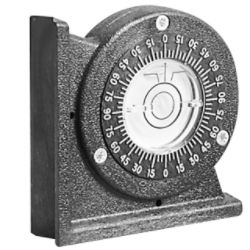
If you not running a carb. as in a late model with injection. You can use the fuel log. I used a dial angle indicator on my SHO. I just set it up to match my pinion angle. It worked.
Bike
Bike
Should you align everything in a straight line or have the tranny output shaft/driveshaft angle more than a couple degrees different from the pinion/driveshaft angle either viewed from the top or the side, you will be plagued with driveshaft vibration and premature universal joint failure, that often gets blamed on out of balance or bent driveshafts.
Trending Topics
Thread Starter
|
Freshman User
Joined: Jul 2006
Posts: 29
Likes: 0
I know their are measurement tools to help with the angling of the motor and trans (making sure it lines up with the rear end and such). Does anybody know what these are called? And what's more where can I get one.
FTE Stories
Ford Trucks for Ford Truck Enthusiasts

Top 10 Fords at 2026 Carlisle Ford Nationals
Joe Kucinski
3 Best / 3 Worst Parts of Modern Ford Ownership
Brett Foote
10 Amazing Upgrades That Solve Common Ford Truck Owner Headaches
Pouria Savadkouei
Every 2026 Ford Engine Explained
Brett Foote
10 Ugly Ford Trucks That We Still Kinda Love
Joe Kucinski
10 Things Every Truck Owner NEEDS (2026 Edition)
Michael S. Palmer
Rezvani's Latest Post-Apocalyptic Monster Is a Ford F-150 Raptor Underneath
Verdad Gallardo
Top 10 Most Expensive Ford Trucks Ever Sold on Bring a Trailer
Joe Kucinski
2027 Ford Super Duty Buyer's Guide (Every Model, Engine, & Package)
Brett Foote

Elder User
Joined: May 2004
Posts: 553
Likes: 2
From: MN - NW of Twin Cities
Take a look at the digital angle finder from speedpartz_dot_ com. That is what I use.
http://www.speedpartz.com/smarttool.htm
http://www.speedpartz.com/smarttool.htm
Hotshot
Joined: Oct 2004
Posts: 15,882
Likes: 88
From: Durham NC
Originally Posted by brucewolff
Take a look at the digital angle finder from speedpartz_dot_ com. That is what I use.
http://www.speedpartz.com/smarttool.htm
http://www.speedpartz.com/smarttool.htm


old and in the way


Joined: Jul 1997
Posts: 5,926
Likes: 1,054
From: Lovely Hueytown Alabama

\
all this is right on the money.... you didn't say if you had done any rear suspension work or not or what the original engine was, but I'm assuming that it wasn't a 302 ??? If it wasn't or if the transmission is different, there is going to have to be some driveshaft work done also. Something to consider and it might affect where the engine finally rests. Another thing to consider now is the pinion angle and phasing the engine/trans and the rear end. Ax touched on this... the angle of the engine and the rearend must be 'complimentary' they have to equal 180 degrees. Before you weld in the engine mounts... check the rearend angle and work your engine angle to be correct...
When I did mine I did the rear end suspension first, then set up the engine/trans like Vern said... as close to the firewall as practical... as low in the frame as possible... offset as little as needed and leave plenty of room for the radiator.... with or without a mech fan. block it in place...hold it in place with tie wire, coat hangers, engine hoist hook...whatever... THEN check the angles and get them right... after that, fab up your engine mounts and install/build your transmission crossmembers/mounts.
later
John
Originally Posted by GreatNorthWoods
I didn't use a 302 but the approach is the same. First, make sure the truck is perfectly level. Next, position the transmission cross member on the frame and slide the engine and transmission in and bolt the transmission to the cross member. Next, slide the engine/trans back as far as it will go and still have firewall clearance. Then level the engine side to side and front to rear making sure it is low enough that you do not have to make any floor modifications and that there will be no interference with exhausts or steering box. Once all that is done set the engine mounts from the frame to the engine. Next, temporarily set the radiator into position to be sure you have the clearance necessary. Once you determine where the engine mounts will go you can tack weld them and mark the holes in the frame for mounting the transmission cross member. Check again to be sure everything is level before you weld the mounts. If you have any steering box clearance issues (not likely since the 289/302 is one of the most narrow V8 engines around) it will not hurt anything to offset the engine up to two inches to the passenger side. Just be sure that if you do this you also offset the transmission mount the same amount.
all this is right on the money.... you didn't say if you had done any rear suspension work or not or what the original engine was, but I'm assuming that it wasn't a 302 ??? If it wasn't or if the transmission is different, there is going to have to be some driveshaft work done also. Something to consider and it might affect where the engine finally rests. Another thing to consider now is the pinion angle and phasing the engine/trans and the rear end. Ax touched on this... the angle of the engine and the rearend must be 'complimentary' they have to equal 180 degrees. Before you weld in the engine mounts... check the rearend angle and work your engine angle to be correct...
When I did mine I did the rear end suspension first, then set up the engine/trans like Vern said... as close to the firewall as practical... as low in the frame as possible... offset as little as needed and leave plenty of room for the radiator.... with or without a mech fan. block it in place...hold it in place with tie wire, coat hangers, engine hoist hook...whatever... THEN check the angles and get them right... after that, fab up your engine mounts and install/build your transmission crossmembers/mounts.
later
John