


I need your help!

Thread Starter
|
Senior User
Joined: Nov 2003
Posts: 283
Likes: 0
From: State College, PA
 I need your help!
Anyone that can send me a picture of their 84 f150 with the 302 2bbl would be really helpful right about now...I need to run new vacuum lines but most of the original are split going other places or capped off. (top end without the breather attached)
There is a map below the hood but its all confusing to me...
I need to get this truck running by the end of the week...dad is taking his car back and told me I need to get this on the road.
PAH-LEEZZZ HELP ME OUT HERE!!!!
Thanks.

There is a map below the hood but its all confusing to me...
I need to get this truck running by the end of the week...dad is taking his car back and told me I need to get this on the road.
PAH-LEEZZZ HELP ME OUT HERE!!!!
Thanks.

New User
Joined: Jan 2008
Posts: 0
Likes: 24
Had you put the topic in the title I would have looked at this earlier.
Please put the topic in thread titles
You didn't list enough info abou the truck.
The best is to post the claibration code or engine Identification code from the valve cover sticker.
It should be 3 letters in the very bottom left hand corner of the decal.
There are so many different calibration codes (that change hose routing) a poerson has to know what the code is and for that they need this info:
Model Truck
Engine Type
Axle ratio
Transmission type
Operating local (49 state or calif)
Once you get me that info......I'll help
Please put the topic in thread titles
You didn't list enough info abou the truck.
The best is to post the claibration code or engine Identification code from the valve cover sticker.
It should be 3 letters in the very bottom left hand corner of the decal.
There are so many different calibration codes (that change hose routing) a poerson has to know what the code is and for that they need this info:
Model Truck
Engine Type
Axle ratio
Transmission type
Operating local (49 state or calif)
Once you get me that info......I'll help
Last edited by Mil1ion; Sep 28, 2006 at 12:19 AM.

Posting Guru
Joined: Sep 2003
Posts: 1,002
Likes: 1
From: Right Next to U
The way to understand these diagrams is simple, each hose has a connection, each connection goes to a part, you will notice what some of the parts are, traced them out first, then each one check to make sure the hoses are good and tight, and relace any that you think could be bad or leaking, hoses that are old and dirty, oiled soak and split should be replaced. You want to make sure everything is snug and tight. Don't glue the ends to the parts or put any wire or clamp on them. They are desiged to be tight but not easy to pull off, snug is what you want.
Be patient and trace every hose to its proper place, if you don't know where something should go, ask here and we'll help you locate it.
Be patient and trace every hose to its proper place, if you don't know where something should go, ask here and we'll help you locate it.

Senior User
Joined: Apr 2005
Posts: 239
Likes: 1
Ok not to rob your thread but I also need help with this, could someone explain what the letters mean on the diagram? For example what is a A/CL CVM or a VCV.
Trending Topics
Thread Starter
|
Senior User
Joined: Nov 2003
Posts: 283
Likes: 0
From: State College, PA
yea yea yea explain them abbr.s im lost trying to figure out what vcv and some other ones mean
FTE Stories
Ford Trucks for Ford Truck Enthusiasts

Top 10 Fords at 2026 Carlisle Ford Nationals
Joe Kucinski
3 Best / 3 Worst Parts of Modern Ford Ownership
Brett Foote
10 Amazing Upgrades That Solve Common Ford Truck Owner Headaches
Pouria Savadkouei
Every 2026 Ford Engine Explained
Brett Foote
10 Ugly Ford Trucks That We Still Kinda Love
Joe Kucinski
10 Things Every Truck Owner NEEDS (2026 Edition)
Michael S. Palmer
Rezvani's Latest Post-Apocalyptic Monster Is a Ford F-150 Raptor Underneath
Verdad Gallardo
Top 10 Most Expensive Ford Trucks Ever Sold on Bring a Trailer
Joe Kucinski
2027 Ford Super Duty Buyer's Guide (Every Model, Engine, & Package)
Brett Foote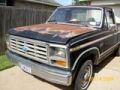
Cargo Master


Joined: Apr 2003
Posts: 2,059
Likes: 426
From: Too close to Houston
I'll give it a try. Maybe someone more knowledgeable can fill in the blanks and correct my mistakes....
A/CL DV - Air Cleaner Diverter Valve
A/CL CWM - Air Cleaner __________?
V REST - Vacuum Resistor
A/CL BI MET - Air Cleaner Bi-Metallic (air temperature controlled valve)
VCV - Vacuum Control Valve (usually coolant temperature controlled)
EXH HCV - Exhaust Heat Control Valve
VRDV - __________?
INT HCV - Intake Heat Control Valve
EGR - Exhaust Gas Recirculation
FLTR - Filter
MAN VAC - Manifold Vacuum
VCK V - Vacuum Check Valve
DIST - Distributor
CARB - Carburetor
C - _______? (vacuum source for A.I.R. System)
BV - Bowl Vent
TCP - __________?
PV - Power Valve
T - __________? (ported vacuum for distributor advance)
TVS - Temperature Vacuum Switch
SV-CBV - Solenoid Valve Carburetor Bowl Vent
VRDV - __________?
TVV - _________?
AIR BPV - Air Injection Reactor Bypass Valve
PURGE CV - Purge Cannister Control Valve
A/CL DV - Air Cleaner Diverter Valve
A/CL CWM - Air Cleaner __________?
V REST - Vacuum Resistor
A/CL BI MET - Air Cleaner Bi-Metallic (air temperature controlled valve)
VCV - Vacuum Control Valve (usually coolant temperature controlled)
EXH HCV - Exhaust Heat Control Valve
VRDV - __________?
INT HCV - Intake Heat Control Valve
EGR - Exhaust Gas Recirculation
FLTR - Filter
MAN VAC - Manifold Vacuum
VCK V - Vacuum Check Valve
DIST - Distributor
CARB - Carburetor
C - _______? (vacuum source for A.I.R. System)
BV - Bowl Vent
TCP - __________?
PV - Power Valve
T - __________? (ported vacuum for distributor advance)
TVS - Temperature Vacuum Switch
SV-CBV - Solenoid Valve Carburetor Bowl Vent
VRDV - __________?
TVV - _________?
AIR BPV - Air Injection Reactor Bypass Valve
PURGE CV - Purge Cannister Control Valve

Post Fiend
Joined: Jul 2004
Posts: 8,786
Likes: 28
From: Northern California
Here is a great Automotive Dictionary.
http://vvvvvv.odessa.ua/
If you put in the Smog part Abreviation, such as VRDV in the search box, it will tell you what it means.
If you look at your Vac Diagram, it will show sketches of the parts, in the relative area where the part is located, Front back, left right, etc... Look around the engine in the relative area shown on the diagram until you find the part.
If you can't find the part, it is a good chance that it may have been removed.
Good luck!
http://vvvvvv.odessa.ua/
If you put in the Smog part Abreviation, such as VRDV in the search box, it will tell you what it means.
If you look at your Vac Diagram, it will show sketches of the parts, in the relative area where the part is located, Front back, left right, etc... Look around the engine in the relative area shown on the diagram until you find the part.
If you can't find the part, it is a good chance that it may have been removed.
Good luck!
New User
Joined: Jan 2008
Posts: 0
Likes: 24
That APD number is useless.That's a decal number
Do you also have a yellow or white sticker on the valve cover ,,that has a UPC code on it ?
You can find some of those abbrevations defined here.
http://www.clubfte.com/users/mil1ion...mDiagrams.html
Do you also have a yellow or white sticker on the valve cover ,,that has a UPC code on it ?
You can find some of those abbrevations defined here.
http://www.clubfte.com/users/mil1ion...mDiagrams.html
Last edited by Mil1ion; Oct 3, 2006 at 06:25 PM.