


help with installing heads

Thread Starter
|
Senior User
Joined: Mar 2005
Posts: 123
Likes: 0
From: Blacksburg, VA
help with installing heads
I'm installing the heads on my new rebuild, and have noticed a few things.
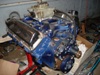
First off, the gaskets I have block a significant portion of some of the water passages. So did the old ones on the engine, and so do the ones shown in my "how to rebuilding your Ford V-8" book. See the following picture for an example.
http://www.gooberstank.com/IMG_3111.JPG
Is this OK?
Also, I have no idea which head went to which bank. The way I have it now, the drivers side head has the # "72" in it, and a tag that says 9F18. The passenger side says "62" and 9F22. IS this right? Does it matter?
And thirdly, on an unrelated note: would it be bad to fill the engine with kerosene, run the oil pump for several minutes in an attempt to rinse the engine out, and then recoat the cam lobes with the red moly oil? I'm concerned that particles have got into the engine...I don't have a garage, so I was forced to assemble at least part of the engine outdoors in a carport. I'd really like to rinse the engine out. Would it be better to rinse it out with cheap oil?
Thanks
-James
First off, the gaskets I have block a significant portion of some of the water passages. So did the old ones on the engine, and so do the ones shown in my "how to rebuilding your Ford V-8" book. See the following picture for an example.
http://www.gooberstank.com/IMG_3111.JPG
Is this OK?
Also, I have no idea which head went to which bank. The way I have it now, the drivers side head has the # "72" in it, and a tag that says 9F18. The passenger side says "62" and 9F22. IS this right? Does it matter?
And thirdly, on an unrelated note: would it be bad to fill the engine with kerosene, run the oil pump for several minutes in an attempt to rinse the engine out, and then recoat the cam lobes with the red moly oil? I'm concerned that particles have got into the engine...I don't have a garage, so I was forced to assemble at least part of the engine outdoors in a carport. I'd really like to rinse the engine out. Would it be better to rinse it out with cheap oil?
Thanks
-James
Posting Guru

Joined: Aug 2000
Posts: 2,416
Likes: 4
From: PacNW
The gaskets should say FRONT on them and they need to be assembled correctly or you will have an instant overheating problem. If you follow the instructions in the Monroe book you shouldn't have a problem. I don't have my book in fornt of me right now but IIRC it's pretty explicit about how to install them the right way. Hopefully you didn't get the wrong gaskets, like for a 351W.
The only problem you're going to run into if the heads are backwards is trying to install the accessories when you get the engine back into the truck. The left cylinder head (when sitting in the driver's seat) should have 4 threaded holes in the front. The right should have 2. If you install them backwards your accessories won't have any place to bolt on and you'll have to switch the heads.
You really need to clean the oil passages out prior to assembling the block, otherwise you're just pushing junk into places it shouldn't be. There really no good way to remove whatever it is you're trying to get rid of once the bearings, crank, rods, cam, etc is installed. I suppose you could try putting some inexpensive oil in the crankcase, leave the oil filter off and spin the oil pump and let it spit out the oil filter port but there's no guarantee it'll get everything you want out.
The only problem you're going to run into if the heads are backwards is trying to install the accessories when you get the engine back into the truck. The left cylinder head (when sitting in the driver's seat) should have 4 threaded holes in the front. The right should have 2. If you install them backwards your accessories won't have any place to bolt on and you'll have to switch the heads.
You really need to clean the oil passages out prior to assembling the block, otherwise you're just pushing junk into places it shouldn't be. There really no good way to remove whatever it is you're trying to get rid of once the bearings, crank, rods, cam, etc is installed. I suppose you could try putting some inexpensive oil in the crankcase, leave the oil filter off and spin the oil pump and let it spit out the oil filter port but there's no guarantee it'll get everything you want out.

Cargo Master
Joined: May 2003
Posts: 2,561
Likes: 1
From: Earth
The only thing I could add to Bill's response, is that the head gasket water passages are rather small. There was a thread about this a few months ago, it seems that it is made that way to regulate the amount of flow, if I remember right. Having just done this to my engine this past summer, I noticed the same thing. However, I would compare it to the old ones (if you still have them), and make sure you pay attention to the direction you install them, ie "Front" should be stamped on there. Good luck!
Thread Starter
|
Senior User
Joined: Mar 2005
Posts: 123
Likes: 0
From: Blacksburg, VA
Thanks for the info...yeah, I definitely installed the gaskets with the "front" facing forward for both sides. And my new gaskets match the old ones, so thats a good sign.
About the accessory bolts: that was what confused me. The heads appear to be identical, so regardless of which one you put on the right side, the left always has 4 bolts. If you looked at the heads from the back of the engine, there are also 4 bolts on the left from that angle and 2 on the right. Well, reverse that since the sides reversed when looking from the back. So I had no way to tell which one goes on which side other than the casting #s.
I think I might try flushing with cheap oil, and put a container under the oil filter connection like you suggested.
Thanks again
-James
About the accessory bolts: that was what confused me. The heads appear to be identical, so regardless of which one you put on the right side, the left always has 4 bolts. If you looked at the heads from the back of the engine, there are also 4 bolts on the left from that angle and 2 on the right. Well, reverse that since the sides reversed when looking from the back. So I had no way to tell which one goes on which side other than the casting #s.
I think I might try flushing with cheap oil, and put a container under the oil filter connection like you suggested.
Thanks again
-James

Senior User
Joined: Jan 2003
Posts: 139
Likes: 0
On most V8 engines, the heads are identical from side to side. The only time it makes a difference is when there are smog holes that are plugged with inserts for accessory holes on the front side of the motor. Then the back ones are left open for the smog equipment. An example of this is the 302 and 351W engines. But the heads are still identical. I'm assuming that your motor is a 351M or a 400. I'm not familier with the smog setup on those engines,(if it even has smog holes) so other than that it won't matter which side the heads go on.
As far as the gasket coolant holes being smaller than the holes in the block, this is normal. It is for controlling the rate of coolant flow through the engine. And a lot of times aftermarket gaskets have different sized holes than OEM gaskets, and even block some holes off completly. This is because they have found better heat control by changing the sizes of the holes in the gaskets.
As far as the gasket coolant holes being smaller than the holes in the block, this is normal. It is for controlling the rate of coolant flow through the engine. And a lot of times aftermarket gaskets have different sized holes than OEM gaskets, and even block some holes off completly. This is because they have found better heat control by changing the sizes of the holes in the gaskets.

Posting Guru
Joined: Mar 2002
Posts: 2,070
Likes: 2
From: Boise, Idaho
Some head gaskets have different colors on the opposite sides and it can cause confustion. For example if you put on one head gasket with the 'front' toward the front, it might have a blue color facing up. When you go to put the other head gasket on, you might be tempted to put its blue side up, too. That's where the trouble will start because it will be on backward. Ignore the color.
I knew a guy who flushed his engine with diesel fuel at every oil change. His 67 442 had 140k and ran like a top. He used Delvac (diesel engine) motor oil, too. Which brings up another point; be sure to add an oil additive that has ZDDP in it. STP oil treatment, or GM EOS, or WalMart Tech Lube, or use a diesel motor oil that contains ZDDP. Motor oil for gasoline engines used to have this stuff, but it has been phased out because the new engines don't need it and it shortens cat life. Older flat-tappet engines need ZDDP to protect the cam.
I knew a guy who flushed his engine with diesel fuel at every oil change. His 67 442 had 140k and ran like a top. He used Delvac (diesel engine) motor oil, too. Which brings up another point; be sure to add an oil additive that has ZDDP in it. STP oil treatment, or GM EOS, or WalMart Tech Lube, or use a diesel motor oil that contains ZDDP. Motor oil for gasoline engines used to have this stuff, but it has been phased out because the new engines don't need it and it shortens cat life. Older flat-tappet engines need ZDDP to protect the cam.

Senior User
Joined: Oct 2005
Posts: 449
Likes: 0
I really believe this new SM oil thing is going to be the death of alot of older engines. If people don't pay attention to this, we could be seeing alot less older vehicles on the road. Flat tappet cams NEED the ZDDP that pcmenten speaks of.
Trending Topics
Thread Starter
|
Senior User
Joined: Mar 2005
Posts: 123
Likes: 0
From: Blacksburg, VA
FTE Stories
Ford Trucks for Ford Truck Enthusiasts

Top 6 Best Deals Available on New Fords & Lincolns Right Now
Brett Foote
This Hennessey Takes the Expedition Tremor's Off-Roading Capability to the Next Level
Verdad Gallardo
Top 10 Fords at 2026 Carlisle Ford Nationals
Joe Kucinski
3 Best / 3 Worst Parts of Modern Ford Ownership
Brett Foote
10 Amazing Upgrades That Solve Common Ford Truck Owner Headaches
Pouria Savadkouei
Every 2026 Ford Engine Explained
Brett Foote
10 Ugly Ford Trucks That We Still Kinda Love
Joe Kucinski
10 Things Every Truck Owner NEEDS (2026 Edition)
Michael S. Palmer
Rezvani's Latest Post-Apocalyptic Monster Is a Ford F-150 Raptor Underneath
Verdad Gallardo
Senior User
Joined: Oct 2005
Posts: 449
Likes: 0
Yes, it's formulated for diesel engines, but is actually recomended by Comp Cams for use with a flat tappet cam. Torque1st actually posted the update from Comp in this section under a thread titled "comp cams lifters" a couple weeks ago. It's pretty enlightening reading, and just might save you some money and headaches.

Thread
Thread Starter
Forum
Replies
Last Post
blueeyedfordguy
Garage & Workshop
27
Feb 17, 2014 11:23 PM
boffah
1997 - 2006 Expedition & Navigator
2
Sep 17, 2008 07:14 AM
924x2150
Fuel Injection, Carburetion & Fuel System
4
Jan 11, 2004 08:35 AM