


429 questions

Thread Starter
|
Freshman User
Joined: Dec 2004
Posts: 34
Likes: 0
429 questions
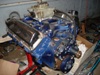
This is my first post and Im new to the BBF world. im building my first right now. Its a 429 from a 70' Thunderbird. I've heard this was a strong motor but i dont know much about it. I've used mostly Edelbrock Performer RPM parts to build power at 1500-5500 RPM range. Does any one know what kind of poweri can expect from this? Im hoping its a bit better than the 400 i just blew up.

FTE Leadership Emeritus


Joined: Jan 2003
Posts: 161,999
Likes: 75
From: 3rd Rock

WELCOME to the site, please read the Guidelines… Check out the list of forums and make sure you read the headings and Read First: notices in each forum. The members in this forum are very knowledgeable about these engines, they will be by.....to help with your question. 
 Enjoy FTE
Enjoy FTE
Thread Starter
|
Freshman User
Joined: Dec 2004
Posts: 34
Likes: 0
Trending Topics
Posting Guru

Joined: Aug 2000
Posts: 2,416
Likes: 4
From: PacNW
Factory rated @ 360 HP (SAE gross) with a 4V carb A.K.A. 429 "ThunderJet". It was offered with a 2V carb rated @ 320 HP. I don't think the 2V got the ThunderJet moniker. They came in Thunderbirds and also were offered in the larger Galaxies & XL models in 70. Small, closed chamber heads pushed the comp. ratio up to 11:1 which made them a bit finicky as far as fuel went. It's tough to get them to run well on today's fuels and the rocker system was poorly designed which led to a tendency to drop valves in high mileage engines.
Like a lot of FoMoCo heads the exhaust port in poorly designed and had miserable flow characteristics which is basically the limiting factor on these engines. The 429 is a relatively high revving engine for as big as it is due to the shorter stroke but serious exhaust port work and a dual pattern cam with longer exhaust duration & lift can really wake it up.
Even with the short stroke the 429 produces a lot of bottom end torque. They were mostly used in big, heavy vehicles with high (numerically low) rear end ratios and still moved 5000# vehicles off the line quite briskly. 429 equipped vehicles with 2.95 rear gears will bury the speedo on a long stretch of highway and just keep going. Put in a set of 3.50 gears and you're going to be buying a lot of rear tires.
The key to running high compression engines on todays pump gas is keeping the engine from getting too hot. A low temp thermostat and heavy duty cooling system are "must haves". Replacing the old points ignition with an efficient spark delivery system will help as well. Longer duration cams help lower the dynamic compression ratio and polishing the chambers will reduce hot spots which preignite the A/F mixture. Taking it a step further, the new high temp ceramic coatings available for pistons & valves will also reduce comb. chamber temps and preignition.
Like a lot of FoMoCo heads the exhaust port in poorly designed and had miserable flow characteristics which is basically the limiting factor on these engines. The 429 is a relatively high revving engine for as big as it is due to the shorter stroke but serious exhaust port work and a dual pattern cam with longer exhaust duration & lift can really wake it up.
Even with the short stroke the 429 produces a lot of bottom end torque. They were mostly used in big, heavy vehicles with high (numerically low) rear end ratios and still moved 5000# vehicles off the line quite briskly. 429 equipped vehicles with 2.95 rear gears will bury the speedo on a long stretch of highway and just keep going. Put in a set of 3.50 gears and you're going to be buying a lot of rear tires.
The key to running high compression engines on todays pump gas is keeping the engine from getting too hot. A low temp thermostat and heavy duty cooling system are "must haves". Replacing the old points ignition with an efficient spark delivery system will help as well. Longer duration cams help lower the dynamic compression ratio and polishing the chambers will reduce hot spots which preignite the A/F mixture. Taking it a step further, the new high temp ceramic coatings available for pistons & valves will also reduce comb. chamber temps and preignition.
FTE Stories
Ford Trucks for Ford Truck Enthusiasts

AEV FXL Super Duty - the Super Duty Raptor Ford Doesn't Make
Brett Foote
Lobo Vs Lobo: Proof the F-150 Lobo Should Be Even Lower!
Michael S. Palmer
Ford's 2001 Explorer Sportsman Concept Looks For a New Home
Verdad Gallardo
10 Best Ford Truck Engines We Miss the Most!
Joe Kucinski
2026 Shelby F-150 Off-Road: Better Than a Raptor R?
Brett Foote
2027 Super Duty Carhartt Package First Look: 12 Things You NEED to Know!
Michael S. Palmer
10 Most Surprising 2026 Ford Truck Features!
Joe Kucinski
Top 10 Ford Trucks Coming to Mecum Indy 2026
Brett Foote