When you click on links to various merchants on this site and make a purchase, this can result in this site earning a commission. Affiliate programs and affiliations include, but are not limited to, the eBay Partner Network.
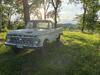
Folks, I'm in the process of spiffing up an engine I purchased off Craigslist that was advertised as a fairly low mileage rebuild: no receipts, no compression numbers, just a lick and a promise and about $300 later, it was mine. I've spent many hours cleaning the grime off the block thinking that it was painted black at some point. No, that black color was merely grime and soot. Underneath that coating is the residual blue paint suggesting that the block is 1966 and later. I'm going to paint it black for my 65 F100 and add powder coated valve cover, oil pan, timing cover and side panel in Ford blue.
I'm curious about its vintage
Additionally, I found the following markings stamped on the leading edge of the engine block. I'm guessing they were made by some mechanic years later. The four dots MAY correspond to the size of the pistons, perhaps, as the pistons have the number 40 embossed on them and the pistons look pretty good to my untrained eye.
The cylinder head was unpainted and looked pretty clean to me, so I will paint it black too after prep.
and here's a photo of how the engine appeared before removing parts.
This engine is replacing the one that came with the truck. I originally thought it was a 240, but I later confirmed it is actually a 300, too, by measuring the stoke against a known 240 I have.
The C6AE-6015-D indicates the casting mold was first used in 1966.
The 8M3 indicated 8 = 1968, M = December and the 3 is 3rd day of the month. To the right of that is FoMoCo - short for Ford Motor Company.
The numbers to the left in the circle are batch codes. The C with a smaller F inside indicates the Cleveland Foundry. The 16 is the revision of the mold I believe.
Appears it was bored 40 thousandths of an inch over - 0.040 in. the other stamps were probably done by the rebuilder.
It's a '69 300. The 8M3 is the casting date of the block, 1968, December 3, and the stamped 8M13 would be the original engine assembly date, 1968, December 13. Your pistons are marked as being .040 oversize, so the engine has been rebuilt at least once in it's lifetime.
Thanks guys. I really appreciate the detailed information you provided. Ford sure didn't waste any time pushing these through the assembly line considering it was cast on the 3rd and assembled on the 13th. Judging from the overall condition of the pistons and the valves I have no reason to question the seller's claim that it was not a high-mileage rebuild. I did notice that the cylinder walls appeared a bit glazed with no cross hatching one would expect from a cylinder hone, but I did not see any scoring on the cylinder walls.
You'll want to be measuring things twice. If you can clean it up at .050 that would be best. IF it needs to be bored. It might spec out OK and you could get by with just rings.
1966 and later definitely blue. For at least 1966 and a few immediate years after - until about 1981 - they used 'Ford Corporate Blue' which is available in a rattle can or you can get it mixed in pint or gallon sizes to use with a catalyst and spray gun which typically lasts longer but a rattle can is easier for quick touchups so either way seems to work out well.
I paint engines the same way I paint a body, epoxy primer, and single stage urethane paint. That way, it stays on. Rattle can will fall off anytime you spill gas or carb cleaner on it, and stay away from pressure washers...it will disappear.
@rusty valley has a method that is well respected and would have a good durability. However, a single stage paint only has moderate chemical resistance and can still soften with fuel and carb cleaner and has fair to good UV resistance where a catalyzed paint has a high chemical resistance to solvents, fuel and pressure washing and superior UV resistance. If people are going for maximum long-term resilience, it is a superior product line. Of course, powder coating those parts in blue would be great but for the black portion being done in paint I'd sway toward catalyzed if a person has the ability and the cost isn't a concern as it tends to run a bit more expensive all things being equal.
considering that I am not going to be repainting the exterior of this truck with anything other than spot painting with rattle cans to cover exposed metal, having the engine paint wear off gradually is okay with me. To be honest, I was kind of torn as to whether or not to spray it black as I was pondering leaving the residual blue as it was. I just thought it would be incongruous with the freshly powder coated bits I have for it. I am unable to find 'off the shelf' spray cans that match the original color (poppy red, i believe). There is no paint code on the ID tag, just a DSO number. The closest color I found is Allis Chalmers Orange,(I've tried Safety Orange) good enough for a patina truck.