






No go when cruising

Lead Driver


Joined: Oct 2018
Posts: 7,903
Likes: 2,372
if your kickdown is disconnected it has to be held in the forward position, it cannot be allowed to be in the downshift position.
It would be dumb to worry about the transmission until the engine is properly tuned. the transmission cannot transmit power it doesn't have from the engine.
It would be dumb to worry about the transmission until the engine is properly tuned. the transmission cannot transmit power it doesn't have from the engine.

Thread Starter
|
Tuned


Joined: Sep 2018
Posts: 364
Likes: 22
From: Eagar, az
Never serviced trans since owning it, other than adding a few ounces of some fluid twice, and replacing the modulator like 9 years ago. If the torque converter was acting up, would it be possible for it to only act up in high gear? I can roast 33" tires before it shifts from first. Take offs, are flawless, and just tapping the pedal instantly sends you flying
Thread Starter
|
Tuned
Joined: Sep 2018
Posts: 364
Likes: 22
From: Eagar, az
So, i checked on my way home, and right after shifting to 3rd, I am at 1500 rpm. Starts off ok, but about 1800 it fades out to where it starts loading up. At 50mph the engines at 2000 rpm. 40mph at 1800. Really only had it over 3000 when going up a steep hill, and it kicked down a few times over the years. Gear shifts usually happen about 2200-2500;in town, but if I step on it they can go up to 2800-3000

Cargo Master

Joined: Oct 2020
Posts: 2,703
Likes: 798
A 4412 is exactly 1/2 of a 4779 750 double pumper so the carburetor is very simple. Usually needle creep happens as idle or low speeds. This is caused by the fuel getting past the needle when it is supposed to be closed. Most of the time this is not caused by the needle itself but the O ring that's on the outside of the needle. Checking this is very easy. After it is loosened if you can unscrew the needle from the bowl using just your fingers with very little effort the O ring is probably bad. What I'm thinking is that it might be creeping just enough that the float level looks ok while it is idling but then you start using fuel and the actual float level setting is way too low, it leans out and starts to misfire/make no torque.
Another thing to check would be to make sure that there isn't anything caught in one or both of the jets.
Another thing to check would be to make sure that there isn't anything caught in one or both of the jets.
Thread Starter
|
Tuned
Joined: Sep 2018
Posts: 364
Likes: 22
From: Eagar, az
I will check in a minute.i also have a mc 2100 that came with the truck, but still has this issue with it, and not nearly the throttle response as the holley. The holley is noticably a far better performer, but requires a lot of weekly tuning, where as the MC carb is a set it and forget it carb, with lower performance to me. Is there some kind of formula for holley jets in relation to altitude/engine, or is it more personal to the application? Just wondering if 72 jets are right for me. I just bought a few sizes lower and ran with it when I got the carb
Cargo Master
Joined: Oct 2020
Posts: 2,703
Likes: 798
A 4412 is calibrated richer at part throttle than the Motorcraft probably is. On Holley carburetors that are intended for performance applications(double pumpers) the power valve channel restriction is smaller and the jet is larger to produce the same mixture at wide open throttle as with the vacuum secondary version(3310). The 4412 carries this over from the 4779.
With that said, the rule for Holley jetting used to be to take out about 1 jet size per 1000ft of elevation above sea level. This doesn't seem to be quite true any more with fuels that contain more oxygen and it doesn't need quite as much correction. I think that most 4412's come out of the box with a 72 or a 73 and a 4.5 power valve. I don't know offhand what size the channel restriction is in the block.
After you get it running right it would be very worthwhile to spend some time getting the idle feed restrictions trimmed out because they will be a lot richer than necessary especially at your altitude.
With that said, the rule for Holley jetting used to be to take out about 1 jet size per 1000ft of elevation above sea level. This doesn't seem to be quite true any more with fuels that contain more oxygen and it doesn't need quite as much correction. I think that most 4412's come out of the box with a 72 or a 73 and a 4.5 power valve. I don't know offhand what size the channel restriction is in the block.
After you get it running right it would be very worthwhile to spend some time getting the idle feed restrictions trimmed out because they will be a lot richer than necessary especially at your altitude.
FTE Stories
Ford Trucks for Ford Truck Enthusiasts

Top 6 Best Deals Available on New Fords & Lincolns Right Now
Brett Foote
This Hennessey Takes the Expedition Tremor's Off-Roading Capability to the Next Level
Verdad Gallardo
Top 10 Fords at 2026 Carlisle Ford Nationals
Joe Kucinski
3 Best / 3 Worst Parts of Modern Ford Ownership
Brett Foote
10 Amazing Upgrades That Solve Common Ford Truck Owner Headaches
Pouria Savadkouei
Every 2026 Ford Engine Explained
Brett Foote
10 Ugly Ford Trucks That We Still Kinda Love
Joe Kucinski
10 Things Every Truck Owner NEEDS (2026 Edition)
Michael S. Palmer
Rezvani's Latest Post-Apocalyptic Monster Is a Ford F-150 Raptor Underneath
Verdad Gallardo
Thread Starter
|
Tuned
Joined: Sep 2018
Posts: 364
Likes: 22
From: Eagar, az
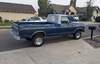
Just checked needle, and after loosening the set screw, the needle is tight. I pulled it out, and ring looks new. This car only has mabey 300 miles on it. It's a factory reman carb, and was like new when I bought it from holley. Only reason I never used it much was because the blue alcohol gaskets/pump diaphragm that came on it sucked. I went through 2 diaphragms in a few weeks, and block gasket came apart after the first time I opened it up. I live in a small mountain town, and can't get these at my Napa. I finally ordered the black ones, and they have lasted waaaay better.
Fleet Mechanic

Joined: Mar 2013
Posts: 1,662
Likes: 1,063
From: Montana
If it does come out of the box with a 4.5, might that be an issue with 15.5" of vacuum at idle? I am thinking 7.5 would be closer to what he needs. I know he is higher in elevation, but my thoughts are he's leaning out at part throttle since the power valve hasn't opened since vacuum is still above 4.5?
Fleet Mechanic
Joined: Mar 2013
Posts: 1,662
Likes: 1,063
From: Montana
Generally speaking you start with a PV that is half your vacuum at an idle. The idea being at part throttle/cruise when you are under light load and manifold vacuum drops by half the PV opens passing more fuel in part throttle to wide open throttle conditions. If I recall correctly when the PV opens it's the equivalent of increasing jet size 4-6 points.
If there's anyway you can connect a vacuum gauge and go for a drive so you can see what the vacuum signal is from 1500-2200 RPM that would give you some more insight.
Thread Starter
|
Tuned
Joined: Sep 2018
Posts: 364
Likes: 22
From: Eagar, az
Absolutely can do that. Just need to go buy like 4 ft of hose. I can just run it out the hood around to my window, and hang it there. Mabey 6 ft. I will for sure buy some after work, or mabey i can find some in the shop. That would be rad, if it was that easy to cure
Cargo Master
Joined: Oct 2020
Posts: 2,703
Likes: 798
I just looked in my old Holley catalog(tremendously handy resource with all of that calibration information for nearly any list number). A 4412 came stock with a 73 jet and a 5.0 power valve. It had a .028 shooter for the accelerator pump discharge. It could be possible that it is waiting too long to get to the power mixture and giving it a lean hole but it has the problem at wide open throttle too.
Holley came out with the green and the blue plastic accelerator pump diaphragms to replace the black rubber ones that would tend to harden with ethanol fuels. I think that they were actually worse in real world use. Most of the time they wouldn't leak but they would get so stiff that the pump shot timing would get messed up. Usually the green or the blue gaskets are ok with methanol or ethanol fuels. The ones that have caused problems for me are the red colored ones. I've had them start to crumble where they were exposed to the fuel at the corners of the bowl gasket and I've had them erode the gasket almost all the way through in the emulsion leg of the block.
Holley came out with the green and the blue plastic accelerator pump diaphragms to replace the black rubber ones that would tend to harden with ethanol fuels. I think that they were actually worse in real world use. Most of the time they wouldn't leak but they would get so stiff that the pump shot timing would get messed up. Usually the green or the blue gaskets are ok with methanol or ethanol fuels. The ones that have caused problems for me are the red colored ones. I've had them start to crumble where they were exposed to the fuel at the corners of the bowl gasket and I've had them erode the gasket almost all the way through in the emulsion leg of the block.
Thread Starter
|
Tuned
Joined: Sep 2018
Posts: 364
Likes: 22
From: Eagar, az
My problem with the blue ones was that the outer blue rubber would erode very slightly at the base fold, leaving the mesh open. Couldn't see it until I held it up to the sun. 1 per week is a little too short of a lifespan for me using pump gas. Haven't had an issue yet with the black ones. My acc cam is the brown one

Thread
Thread Starter
Forum
Replies
Last Post
MikeOK
1961 - 1966 F-100 & Larger F-Series Trucks
13
Jun 24, 2022 01:15 AM
Lpardee84
1967 - 1972 F-100 & Larger F-Series Trucks
0
Aug 5, 2021 09:16 PM
sledrock52
1980 - 1986 Bullnose F100, F150 & Larger F-Series Trucks
20
Sep 18, 2014 10:56 AM
1975FordF250
FE & FT Big Block V8 (332, 352, 360, 390, 406, 410, 427, 428)
3
Jun 24, 2014 09:06 PM
butchpoodle
335 Series- 5.8/351M, 6.6/400, 351 Cleveland
14
Jan 30, 2004 05:49 PM