When you click on links to various merchants on this site and make a purchase, this can result in this site earning a commission. Affiliate programs and affiliations include, but are not limited to, the eBay Partner Network.
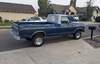
i have a 79 f350 4x4. i am in the process of redoing the whole truck. i am looking for suggestions on motor choice. it originally came with a 400. i don't have the motor. bought as a roller. i am down to either a 460 or a 400. this truck will be a fun driver and seldom pull anything. i want the motor to make decent power and last. want a roller cam. so i can stay away from special oils and flat cams. truck will have a c6, 3:50 gears, 35" tires, and ac. i also want to run 87 gas. where is the recommended place to buy parts? places to find 400 info? not familiar with it at all. thanks
A 460 engine has more potential than a 400 but there is also a ton of stuff that'll need to be changed to put it into the truck where the 400 was a factory option. Either engine is popular and performance parts are not difficult to get. On either engine a roller cam will require a steel core. There used to be a SADI cast core for the 400 but those are no longer available. This isn't a huge deal but it means that you'll have to run a bronze or a specially heat treated distributor gear(not a stock cast iron gear) to be compatible. Figure on spending about $1000 more than you would with a flat tappet.
400 engines and cranks are getting a little bit scarce in some places so you might have to shop around a bit to find that stuff. Also on the 400 your block of choice should be the later improve version that came out in about 1977 or so and later. It is reinforced in the valley area where the 400 blocks were notorious for cracking.
Thanks for the reply. I think I can get either short block for free. I planned on running procomp heads on either. I know they are junk. I also knew roller cams add to the bottom line. Figured it was money well spent. I know 460s have a problem running roller cams. Part of the reason for considering a400. Can’t I run a steel gear on the dizzy? They are cheap and don’t usually wear out. I really like the info on 400 blocks. I didn’t know that.
The 460 is no different than the 400 or any engine with a canted valvetrain that was originally designed to use a flat tappet lifter. What happens is that when you go to a hydraulic roller lifter the pushrod seat is raised about .400. This puts the pushrod out of plane with the valvetrain. This can cause problems if the valvetrain has a stud mounted rocker arm because it causes the rocker arm itself to try to rotate around the axis of the stud as the valvetrain actuates. A good solution is to use a rocker arm that bolts down. Stock rockers are fine if the cam is pretty mild but companies like Yella Terra, Scorpion, Harland Sharp and others make them too.
Look closely at this picture. See how the pushrod axis is not quite perpendicular with the base of the rocker arm stand? This is a 545 with Dove heads, Yella Terra rockers and a hydraulic roller cam.
I see how the geometry could be a problem but.........I have a Crane hyd roller in my 400 and haven't noticed that. Never had any problems with 562/586 lift on studs and roller rockers. Not gonna pull the valve covers to look but would like to see pics of a 400 similar.
Most of the time there's enough slop in the rocker system to absorb a lot of that twisting movement. . What it can do over time is sort of pick a place where it wants to work over and over and gradually it'll wear a flat spot on the roller at the tip. This puts a lot of side loading onto the valve stem that gradually gets worse as it wears and it can't slide back and forth as easy.
Here's the real question.... From Boss 302 to 400 the engines all use the same exact valve and rocker arm angles which must be correct for one of the engines but which one? Boss 302 with an 8.200 deck or a 400 with a deck height of 10.300? Or maybe the 351C which is in between at 9.200. Which lifter bank angle is actually correct? The Boss 302 which is 83 degrees or the others which are 90?
My WAG is the geometry should be correct for 351C with 9.200 deck height. That's what those heads were originally designed for.
For grins and giggles I think the Ford engineers decided to slap a set of Cleveland heads on a 302 just to see what they would do, and when it ran well decided to call it the 302 BOSS for marketing reasons and to take more of our hard earned money so we could have something "unique & special"
The 400 and later the 351M, were based off the original Cleveland design.
From my understanding Ford had the 351 Cleveland in development and it was called the 351GT or something like that. After the Tunnel Port 302 didn't work out so well the Boss 302 was put together using the 351GT cylinder head layout to make an engine for Trans Am that worked ok.
From my understanding Ford had the 351 Cleveland in development and it was called the 351GT or something like that. After the Tunnel Port 302 didn't work out so well the Boss 302 was put together using the 351GT cylinder head layout to make an engine for Trans Am that worked ok.
This is what Dave was talking about, The BOSS 302 Story
What I have always wondered about is, did Ford ever intend to produce a Boss 351 or was it just super-secret. My 1970 Ford Muscle parts book and the July supplement to it give very little information on the 351C even though both the 2V and 4V were available in Mustangs, Cougars etc. It basically explains what the 335 series is and details how to install Boss 302 heads or machine the pedestals for screw in studs Boss 302 guide plates and says hardened pushrods would be available in the fall of 1970. For all other engines it gives long lists of factory parts to increase the HP and how much HP gain you should expect from adding those parts. On the 351C it only makes a vague reference to a solid lifter cam that will be available at the end of 1970 year.
Also, my 1971 1st addition (Sept.1970) shop manual makes no reference to a 351HO motor but has the 302HO motor. In addition, the Jan. 1971 supplement to it doesn't mention a 351HO but has 302HO in it. I don't have any later addition manuals, but the first addition 1972 manual has 351HO motors in it and it is interesting to note that the head bolt torque and the rod bolt torque isn't the same as the 2v and 4v engines. Of course, everything was done by hand in those days and Jan supplement had to have been in the works in Oct. or Nov. 70.
My guess is that when Henry II fired Knudsen and shut down all racing and high performance at Ford in 1970 it left the whole company scrambling to figure out how to fill the gaps.
How ever the Boss 351 came about they did it right.
I really think that Ford saw the success of the Big Block Chevy as an all around performer, took the basic ideas and ran with them doing them their own way with their own "improvements". I don't know when the 385 series development started but it had to be in late '65 or 1966 to make it into production by 1968. They came up with a design that overcame most of the limitations of the FE, much larger displacement capacity and superior breathing capability.
What's interesting is how Ford then took those basic ideas and applied them to a medium size engine platform, GM never really did that with the small block engine. The Cleveland design is much more refined than the 385 series. The valve placement is a lot more ideal especially the intake. They were probably just trying to fit the largest possible valves into a 4 inch cylinder but for whatever reason they got that right.
I don't know how much was known at the time about mean port cross section/mean port velocity and how that applies to a given amount of displacement and rpm. The Cleveland style cylinder head has a mean port cross section that's outrageously too large to produce proper velocities at any reasonable RPM from any of the factory displacements. Bigger is better thinking had worked before so it was applied to these designs as well. I don't know how they came up with the intake port sizing or what the prototypes looked like but that would be interesting to see.
I think the engineers at Ford and GM took note of these engines, also I've ran across a couple of references to a poly angle, open chamber GM experimental small block head that never made it to production. What Is A Mopar 318 Polysphere And How Come Nobody Likes It?
Rezvani's Latest Post-Apocalyptic Monster Is a Ford F-150 Raptor Underneath
Slideshow: Called the Fortress, the 850-horsepower pickup combines Raptor underpinnings with military-inspired features, survival equipment, and a starting price of $285,000.