When you click on links to various merchants on this site and make a purchase, this can result in this site earning a commission. Affiliate programs and affiliations include, but are not limited to, the eBay Partner Network.
I have been driving my truck around and she’s been running well until one day this past week. The problem is that suddenly with the choke open it is bogging down, even stalling when starting from a stop, or accelerating at speed. With fully closed choke it ruins fairly well, but with the choke open it just wants to sputter and stall.
This just started suddenly and has never been a problem in the past. The truck is driven from April to October only, no cold weather or winter driving. With a cold engine I have always need to choke it to start, but within 5 minutes I can open the choke fully. Starting it when the engine is warm has always been without any choke and starting is immediate.
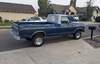
Truck is a 67 F100, 352, 3 speed manual, Autolite 2100, with manual choke and oil bath air cleaner. Around 93,000 miles, and apparently no rebuilds on the engine. The carb is original with carb tag attached and I rebuilt it in July 2020.
I spent some time today checking the following:
-Ignition coil resistance-primary 1.3 ohms, secondary 8600 ohms
-Vacuum at 560 rpm – 19 inches, steady
-Timing at 560 rpm – 10 degrees advance
-Compression over 8 cylinders – 143 to 151 psi
-Battery voltage , engine idling – 13.4 V
-Spark Plugs – 2000 miles.
-No leakage around the accelerator pump, though it is one thing I suspect may be causing the problem. However, I do see some gas squirting into the venturi when I push on the accelerator pump with the air cleaner removed and the engine off. My next step is to replace the accelerator pump and the rubber inlet check anyway to if that fixes the bogging down.
If anyone has any suggestions as to what may be the cause I would appreciate any advice. I am not an auto mechanic, but have learned some basics from various places, not the least of which is this forum.
no leaking from accelerator pump condition of plugs Any idea what would cause the black ring on the porcelain of this one plug?
Have you ever replaced the fuel filter on the fuel pump?
The black on the spark plug could be an internal leak. Very rare but I have seen a case where the combustion gasses leaked through the insides of the plug. Try swapping them and see if that is what is happening.
Yes Kenny, I forgot to mention that in my long list of things. Fuel filter and cannister replaced last summer. Destroy the canister getting it off.
Wayne
It could be the filter bag in the gas tank on the end of the suction line. I had an inboard marine repair shop for many years and the first thing after checking fuel filters was a 6 gallon outboard tank bypassing the fuel system. Just about every time the problem was inside the boat’s tank with the suction line.
You could just have a weak fuel pump.
Couple things come to mind, 560 RPM seems low for curb idle, I usually run 700 give or take 25 RPM when outside temps are warmer. During winter I will bump it to 800 or so. If I don't bump the idle up in the winter the engine likes to stall when I press in clutch and come to a stop, at least until I get the engine fully warmed up and heat soaked. I am running a different engine though, so maybe the FE likes a lower idle speed.
If it still runs okay closing the choke once it has warmed up I am thinking you might have a vacuum leak. I saw that it has a steady 19 inches, but that doesn't completely negate a vacuum leak. I would check for leaks around the base of the carb and the valley of intake. In my head, closing the choke and cutting off air flow once warmed up should stall the motor, if it doesn't, it is sucking air from somewhere. One method for testing if there is a large vacuum leak is completely cover the air horn of the carb to block all air flow while it's running. If it stays running, there's a big vacuum leak somewhere. Might be as simple as snugging down the carb mounting bolts or replacing the carb base gasket. I see that the paint is missing near the carb base and thought that could be due to fuel leaking at the base and removing the paint on the intake, but I could be mistaken and it's just old paint showing its age.
Couple things come to mind, 560 RPM seems low for curb idle, I usually run 700 give or take 25 RPM when outside temps are warmer. During winter I will bump it to 800 or so. If I don't bump the idle up in the winter the engine likes to stall when I press in clutch and come to a stop, at least until I get the engine fully warmed up and heat soaked. I am running a different engine though, so maybe the FE likes a lower idle speed.
One method for testing if there is a large vacuum leak is completely cover the air horn of the carb to block all air flow while it's running. If it stays running, there's a big vacuum leak somewhere. Might be as simple as snugging down the carb mounting bolts or replacing the carb base gasket. I see that the paint is missing near the carb base and thought that could be due to fuel leaking at the base and removing the paint on the intake, but I could be mistaken and it's just old paint showing its age.
I am considering all suggestions as checklist items and thought I would report back as I try them. The 1967 Ford truck manual spec for the manual transmission is 550 RPM at warm idle, but I will give it a try at a higher idle to see if that improves anything.
I covered the air horn with plastic wrap and the choke closed. It died immediately, not a sputter - a good thing.
Good observation on the missing paint. It was like that when I got the truck, and when I rebuilt the carb I surfaced the base of the carb and both sides of the phenolic spacer. The result from blocking the air horn tells me that I did that correctly. Thanks.
Well that rules out a big vacuum leak, so air flow should be good and properly metered, your ignition components seem to be within spec based on the ohm readings. Good steady vacuum signal and solid compression numbers so internals are probably okay. You might try using a heat gun to get the coil nice and warm then re-run your tests. Electronics can be funny that way, testing okay at ambient temp but not when things warm up.
Air/Fuel Mixture + Compression + Spark make things go vroom...seems you have air, compression and spark. Spark is presumably happening at correct time with 10 degree BTDC base timing. That leaves fuel and timing advance to check.
Which leads back to the above posters asking about fuel filters. There's a sock in the tank that might be plugged, if I am not mistaken there is also a filter on the pump itself and usually one at the carb inlet. Can't really check the tank with it installed, but you can bypass it to see if that resolves the issue by disconnecting fuel inlet from pump and running a short length of hose into a gas can which can be placed on the ground directly below the pump. Driving though you will have to rig up something with a smaller gas can sitting on the inner fender inside the engine bay.
You'll want to inspect and possibly just remove for testing purposes the fuel filter on the pump itself. Since you have a vacuum gauge, you should also be able to use that to measure fuel pressure. I think I would test fuel pressure with filter in place, remove the filter on the pump and run the test again. If fuel pressure looks good, say around 6 PSI give or take a point in both situations the filter is likely okay. If you have poor fuel pressure with filter but good without, the filter is clogged. If you have poor fuel pressure in both situations you may have a leaking fuel pump diaphragm and pump needs to be replaced. If you discover the fuel pump has gone bad, I would immediately change the oil too, since it was likely dumping raw fuel into the crankcase and you can quickly wipe out bearings with fuel diluted oil.
Also, if you're running ethanol blend that many have to these days, that can deteriorate rubber hoses. You can check for swelling, softness, etc, or just replace any rubber hose you can get to throughout the fuel system so you know that's good. That ethanol fuel also likes to deteriorate accelerator pump diaphragms and ruin the rubber tip on the needle valve which can cause issues since it will no longer shut off fuel supply to carb when the float is supposed to be shutting it off.
On the timing side of things, I would check the vacuum hose to the dizzy to make sure it's in good condition, make sure the vacuum diaphragm holds vacuum and moves the breaker plate when vacuum is applied. Inspect inside the distributor to make sure the mechanical advance didn't rust and get stuck during storage. If visual inspection looks good on those components, you can check your timing curve with a timing light and make sure it is advancing the timing as RPM increases. Depending on the spring(s) currently installed you should see a smooth curve advancing the timing up to about 3000 RPM. Once there you should be all in on mechanical advance and see something like 32-36 degrees total advance. If you are seeing that much advance below 2500 RPM your advance springs may have broken or weakened over time allowing it to advance sooner than it should. If you don't see any advance or very little change, the advance is likely hung up.
While you're messing with that, if you still have points, inspect those too, proper gap, dwell, no pitting, etc...
When at idle, if you snap the accelerator does it bog down of rev up? If it's bogging down I would look closely at the accelerator pump like you suggested earlier. I would check the rest of the fuel delivery system as suggested. Does this engine have the dual vac advance or single? Check for old check leaking vac lines. Now the plugs to me don't look like all are happy, but real bad. Are you still running points or have you converted it to point less? When was the last time you did a tune up.
When at idle, if you snap the accelerator does it bog down of rev up? If it's bogging down I would look closely at the accelerator pump like you suggested earlier. I would check the rest of the fuel delivery system as suggested. Does this engine have the dual vac advance or single? Check for old check leaking vac lines. Now the plugs to me don't look like all are happy, but real bad. Are you still running points or have you converted it to point less? When was the last time you did a tune up.
- Bogs down at idle when snapping accelerator with choke open.
-Single vacuum advance. The last time I checked, the distributor vacuum worked and moved plate. Will recheck.
-Distributor has Pertronix Igniter, reluctor slot set at13L.
-No vacuum lines. No power steering or brakes. Vacuum port on manifold had factory plug, but I installed a capped nipple for testing vacuum.
-Plugs bad in what way? Too rich, too lean? They are being replaced. They are about 2000 miles old. Distributor cap good. Maybe a new set of plug wires wouldn't be a bad idea.
-Pertronix and plugs done around same time.
Frankly, the truck has been running fine until I stopped the other day for about an hour, and when I started up to go home this bogging down started as soon as I drove.
Did you fill up recently? May want to check for water in the carb bowl. Just another thought.
Plugs are not burning real clean but this can be related to the bogging issue. Should look more like #1 and #7 but on a high mileage engine it's not uncommon if your getting some oil blow by.
Since you have a vacuum gauge, you should also be able to use that to measure fuel pressure[/b]. I think I would test fuel pressure with filter in place, remove the filter on the pump and run the test again. If fuel pressure looks good, say around 6 PSI give or take a point in both situations the filter is likely okay..
I have never checked fuel pressure. Can I hook the vacuum gauge up to the inlet side of the pump, then convert the Hg somehow to PSI?
Since gas has so much alcohol/ethanol in it now you would have had to of gotten a bunch of water for it to still be an issue, but it's always a possibility.
throw some Seafoam in the tank and run if for a bit, see if it helps.
I have never checked fuel pressure. Can I hook the vacuum gauge up to the inlet side of the pump, then convert the Hg somehow to PSI?
Depends on the vacuum gauge. I have an OTC gauge and you can see both vacuum and PSI on the gauge face. You connect the gauge between the pump and carb with a T-Fitting.
My gauge reads both as well, but I'd rather not have to add a tee fitting to the original steel gas line from the pump to the carb. I was sort of hoping that I could hook up the inlet side and see how much vacuum I could get until the carb runs dry, and be able to tell anything about the pump from the vacuum created. Wishful thinking I guess.
When I started looking into this bogging down issue, I checked to see if the accelerator pump was squirting gas into the carb, and it was, so I ruled it out, especially because it didn't bog down on full choke. So, I went on to a bunch of other things. Out of exasperation I finally changed the accelerator pump diaphragm, and guess what! Problem solved. Thanks to you all for replying to my questions and making suggestions. if I ever have the problem in the future I will check the accelerator pump first, and if that doesn't fix it I will have this thread all your great suggestions to refer back to.
Rezvani's Latest Post-Apocalyptic Monster Is a Ford F-150 Raptor Underneath
Slideshow: Called the Fortress, the 850-horsepower pickup combines Raptor underpinnings with military-inspired features, survival equipment, and a starting price of $285,000.










 .
.