When you click on links to various merchants on this site and make a purchase, this can result in this site earning a commission. Affiliate programs and affiliations include, but are not limited to, the eBay Partner Network.
So after two other engines from FB marketplace, I think I finally have a good one. The other two were "ran good before pulled". Upon removing the oil pan, they both had thrown rods, shattered piston, destroyed cylinders, and very damaged blocks. The engine that I have now, I got for free. So that's a win in itself, finally. I was told it was a 429 (which I doubted before I even looked at it). Got it home and took it apart the next day, after soaking it with PB Blaster every 3 hours. Most of the lifters and two pistons were rusted in place, but I got it stripped to parade rest.
The block is a D1VE block. I now know that it's not a 429 for sure due to:
(1) I measured the bottom-dead-center piston at 3.85.
(2) The crank is stamped "2YABC".
For those that do not know - Crank stamps:
- 429 = (internal balance) 4U, 4UA, or 4UAB
- 460 = (internal balance) 2Y, 2YA, or 2YABC
- 460 = (external balance) 3Y or 3YA
My crank is stamped 2YABC, so 460. The guy also said it came out of a police car but then said a Lincoln. So, who knows.
So, here is my question. I have rods from the other two engines that were damaged. Which of the two is the better rod to use? The DOOE or the D6VE? Which one is stronger? The DOOE rods came in my current block. I'm looking to build this to 375-400 horses, but I still want the strongest rods.
The D6VE 'football' bolt rods are supposedly the superior-strength rods, but either is good for your proposed power levels.
What is your intent for this engine build? What cylinder heads do you intend to use?
The block deck height changed in early 429/460s. 68-70.5 were 10.300, 70.5-72 were 10.310, and 73-up were 10.322. You're D1VE block could be either 10.310 or 10.322. With that, piston selection makes a difference, or you can machine the block down to whatever you choose...
Piston selection - since all have the same rod length, the piston compression height matters. 429s have theirs, and 460s have their own. BUT460s also had two different pin heights/dish volumes... It all comes down to what you have and what you want!
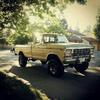
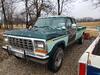
I've heard that the "football bolt" rods are the more desirable rods. I just wanted the input from the experienced guys here. This engine is going into my 1978 F150 4x4. The 351M in it now is mildly built but it's barely pushing 200-225 horses. She sounds mean, but she's not mean. I want the power to match the sound. The truck has a 6" lift, 35" tires, and 4:56 gears. I've done all the work myself since I have owned it for the past 12+ years. From what I have read, the power range that I want is not hard to come by. I still want this truck to be a dependable driver as I love driving more that my King Ranch.
As for the block, I need to do some measuring, unless there a way to tell via markings on the block. But, if the deck height was 10.322, wouldn't that be a D3VE block? I thought all 1973 to 1978 blocks were D3VE blocks. 1979+ blocks were D9TE blocks.
From what I understand, first digit is the decade (C=1960s, D=1970s, E=1980s, etc), second digit is the last number in the year of design, third digit is V or T designates Vehicle (passenger car) or Truck, and the last digit designates E=engine. So, D1VE would be a 1971 car engine. I'm pretty sure that the guy that gave me the engine didn't know what he had, since he said it came from a 1974 Lincoln.
I will definitely need to know the piston size since I will have to bore the block (even though I was hoping not to). Pistons will be 9.5:1 or 10:1. Probably leaning toward 9.5:1 to not worry about pinging on regular 87 pump gas.
try to use a piston with little or no bath tub dish in the middle of it .I have seen hypertectic flat top pistons for $250 on EBAY,I think they were sealpower .remember the bigger the bore ,the high the static compression gets .figure out your current deck height,and do you want to zero deck it ,and what head gasket do you want to use ?
For a truck, the aluminum CobraJet heads are probably not what you want. You likely won't be twisting your motor to over 5000rpm, and that's where the CJ heads start to shine. AFRs 280s are cnc-ported and are $500/pr cheaper than the FMS CobraJet heads!
V (lincoln) or T (truck) or A (full-size Ford) , O(Torino) or Z(Mustang) in the third position of the casting number just states which vehicle line the casting design change was charged to. Since the 429/460s were exclusively used in the Lincoln line in the late '60s, that's where the V came from. 429/460 blocks can have C8VE, C9VE, D0SZ, D1VE, D1ZE, D5TE... In 1979, the 460 went to external-balance 3Y-stamped crank and was exclusively in trucks/vans. The 1970 429CJ and SCJ were exclusively Torino/Cyclone so that's why the CJ/SCJ four-bolt maincap blocks are D0OE In '71 the CJ/SCJ was broadened to the Mustang/Cougar line as well, and used the D0OE 4-bolt-main block.
The same engine casting number was used for ALL that used that part, not broken down by car or truck.
To get 9.5 compression with 75 cc heads, you will be forced to use a dished piston. How much dish will depend on you piston compression height and the resultant piston-to-deck clearance. Optimally, you'll want it to be no more than .020 to get a good quench in the chamber to reduce the chance of detonation/pinging. The stock 460 carb dish piston has a .040 deck clearance! Remember, you also have gasket thickness... so that .020 combined with the gasket thickness of .040 is .060. It all depends on which piston you choose and your block height. From there, you can figure out how much dish you'll need to achieve your Compression Ratio goal... Or pick a piston and machine your block down (each .010 off the block will raise the CR by 0.2) . For my '95 7.5L EFI build, I used a flat top piston with 3cc valve relief, a .022 deck clearance, and 93cc F3TE heads to get my 9.5:1.
You can use either rod. The style of bolts makes no difference when it comes to strength. Why? Because the 460 rods generally don't break in the big end if they are going to fail they break in the beam about an inch up from the big end.
Actually these rods are stronger than they look but if you have a couple of sets to choose from look for rods that have the most "centered" forgings. Sometimes you'll find some where either the big end, the small end or both are bored way off center leaving the cap or the rod really thin on one side.
This Hennessey Takes the Expedition Tremor's Off-Roading Capability to the Next Level
Slideshow: The VelociRaptor Expedition gains a lift, upgraded suspension, Brembo brakes, and trail-ready equipment while retaining the stock 440-horsepower EcoBoost V6.
Rezvani's Latest Post-Apocalyptic Monster Is a Ford F-150 Raptor Underneath
Slideshow: Called the Fortress, the 850-horsepower pickup combines Raptor underpinnings with military-inspired features, survival equipment, and a starting price of $285,000.