


429 confusion

Cargo Master


Joined: Oct 2020
Posts: 2,673
Likes: 780
A shorter LSA will raise the dynamic compression because it will tend to cause the intake valve events to happen earlier in the cycle. The stock 351C 4V cam has very short duration. If you changed the cam to something with about 215 @.050 it would be very pump gas friendly. I have a 302 in my '65 Ford that I to replace the original 289. It has a flat top piston and right at 9.5:1 compression it is very picky about gas and requires at least 91 octane. The cam is only 190 and 202 @ .050 on a 108 lobe sep in 4 degrees advanced. If it had 205 @ .050 on the intake side it could probably run fine on 89 octane.

Laughing Gas


Joined: Jul 2009
Posts: 1,009
Likes: 405
From: NE Ohio

A shorter LSA will raise the dynamic compression because it will tend to cause the intake valve events to happen earlier in the cycle.
I used the Comp Cams 'computer-control-friendly' Xtreme Energy 34-255-5 on my '95 7.5 rebuild, where I bumped up the static CR to ~9.5:1 .490/495 lift, 256/268 adv, 212/219 duration @ .050 Not too crazy, even considering I performed a Mass Air SEFI conversion. The more precise fuel control offered by the Mass Air conversion allowed for my enhanced performance tweaks...
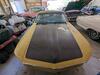
I'm not touching the 23k-mile Wife's Mach 1 351C-4V since it is all original... I even tried to rebuild her car's original water pump, but I must have bent the new shaft when installing it - the fan pulley wobbled horribly. I ended up slapping on a Chinesium new water pump, but kept here original one to try again later with rebuilding it again (to keep the proper date-coded original casting)
Hotshot
Joined: Jul 2020
Posts: 10,411
Likes: 2,612
From: Near Salt Lake City
Your static compression ratio only takes into account actual swept volume, what it is with added head/piston/gasket volume/deck clearance.
Dynamic compression takes valve timing into the equation - when valves start opening opening/closing completely is not at BTC or TDC of crankshaft rotation, therefore some compression ratio is 'lost' Wilder camshafts with more overalp and shorter LSAs will lower the actual compression ratio a bit over stock-type or milder camshafts.
Sooooo..... it is a balancing act. The milder cams generally give more low rpm torque, while wilder cams generally give horsepower gains at higher RPMS.
My '95 EFI-friendly 87-octane-friendly build necessitated a mild cam to keep the engine manifold vacuum within Ford PCM specs. As such, I didn't want to go anything over 9.5:1 compression, and a mild duration cam.
If you're going carburetor, you can go higher with static C/R. Heck, back in the late '60s/early '70s, cars had stock C/Rs of nearly 11:1, but those were also the days of leaded fuel with 98 Octane! Wife's '70 Mach 1 is bone-stock 351C-4V, and 11:1 from the factory. For just normal driving around, we have to run the highest test unleaded we can find and have necessarily backed off on the timing a bit so it doesn't run into detonation. We'll sometimes mix in a few gallons of 110 octane Racing fuel if we want to drive it with a bit more 'spirit'.
Dynamic compression takes valve timing into the equation - when valves start opening opening/closing completely is not at BTC or TDC of crankshaft rotation, therefore some compression ratio is 'lost' Wilder camshafts with more overalp and shorter LSAs will lower the actual compression ratio a bit over stock-type or milder camshafts.
Sooooo..... it is a balancing act. The milder cams generally give more low rpm torque, while wilder cams generally give horsepower gains at higher RPMS.
My '95 EFI-friendly 87-octane-friendly build necessitated a mild cam to keep the engine manifold vacuum within Ford PCM specs. As such, I didn't want to go anything over 9.5:1 compression, and a mild duration cam.
If you're going carburetor, you can go higher with static C/R. Heck, back in the late '60s/early '70s, cars had stock C/Rs of nearly 11:1, but those were also the days of leaded fuel with 98 Octane! Wife's '70 Mach 1 is bone-stock 351C-4V, and 11:1 from the factory. For just normal driving around, we have to run the highest test unleaded we can find and have necessarily backed off on the timing a bit so it doesn't run into detonation. We'll sometimes mix in a few gallons of 110 octane Racing fuel if we want to drive it with a bit more 'spirit'.
I add a few gallons of that to my Camaro, and my Boss Mustang when I drive them
Just starting them up in the garage is fun with some good fuel in them
Cargo Master
Joined: Oct 2020
Posts: 2,673
Likes: 780
It is easy to do that. Just like it is easy to get confused with the lobe centerlines and advance/retard. As the cam is advanced the intake centerline number becomes lower and the exhaust gets higher. When the camshaft is retarded the centerline of the intake gets higher and the exhaust lower. Really the main reason duration and lobe centers are used is because of the way cams are ground using masters set up on given centerlines to produce the events. Even cams that are ground using computer controlled equipment are treated similarly and they are not ground using the event numbers.
Hotshot
Joined: Jul 2020
Posts: 10,411
Likes: 2,612
From: Near Salt Lake City
They pay those engineers millions of dollars to figure out the scavenging effects of a motor with different intake and cam combos, headers and all that
Look at some of Smokeys setups over the years
Love me a 302 Chev at 8000 rpm
The scavenging effect is what they call the added incoming air, when both valves are open (the overlap)
That added incoming air, ups the compression ratio and the volumetric efficiency
That is what they are talking about when considering the camshafts effect on actual compression ratio
Look at some of Smokeys setups over the years
Love me a 302 Chev at 8000 rpm
The scavenging effect is what they call the added incoming air, when both valves are open (the overlap)
That added incoming air, ups the compression ratio and the volumetric efficiency
That is what they are talking about when considering the camshafts effect on actual compression ratio
Cargo Master
Joined: Oct 2020
Posts: 2,673
Likes: 780
They pay those engineers millions of dollars to figure out the scavenging effects of a motor with different intake and cam combos, headers and all that
Look at some of Smokeys setups over the years
Love me a 302 Chev at 8000 rpm
The scavenging effect is what they call the added incoming air, when both valves are open (the overlap)
That added incoming air, ups the compression ratio and the volumetric efficiency
That is what they are talking about when considering the camshafts effect on actual compression ratio
Look at some of Smokeys setups over the years
Love me a 302 Chev at 8000 rpm
The scavenging effect is what they call the added incoming air, when both valves are open (the overlap)
That added incoming air, ups the compression ratio and the volumetric efficiency
That is what they are talking about when considering the camshafts effect on actual compression ratio
Hotshot
Joined: Jul 2020
Posts: 10,411
Likes: 2,612
From: Near Salt Lake City
That is basically what I said
You talk like Kamala Harris with word salad to justify your stance
How much engineering training do you have again?
And your ASE and Ford masters certs are where?
You talk like Kamala Harris with word salad to justify your stance
How much engineering training do you have again?
And your ASE and Ford masters certs are where?
Cargo Master
Joined: Oct 2020
Posts: 2,673
Likes: 780
I have no formal training what so ever. Is that a problem with you? What did I state that was incorrect?
FTE Stories
Ford Trucks for Ford Truck Enthusiasts

Top 10 Most Expensive Ford Trucks Ever Sold on Bring a Trailer
Joe Kucinski
2027 Ford Super Duty Buyer's Guide (Every Model, Engine, & Package)
Brett Foote
Top 10 Ford Truck Tragedies
Joe Kucinski
AEV FXL Super Duty - the Super Duty Raptor Ford Doesn't Make
Brett Foote
Lobo Vs Lobo: Proof the F-150 Lobo Should Be Even Lower!
Michael S. Palmer
Ford's 2001 Explorer Sportsman Concept Looks For a New Home
Verdad Gallardo
10 Best Ford Truck Engines We Miss the Most!
Joe Kucinski
2026 Shelby F-150 Off-Road: Better Than a Raptor R?
Brett Foote
2027 Super Duty Carhartt Package First Look: 12 Things You NEED to Know!
Michael S. Palmer
Hotshot
Joined: Jul 2020
Posts: 10,411
Likes: 2,612
From: Near Salt Lake City
I'll keep educating you
You go ahead and keep fighting it
What I said was, they pay those engineers millions of dollars to figure out the valve opening and closing events
You think you are smarter than them, have a nut
You go ahead and keep fighting it
What I said was, they pay those engineers millions of dollars to figure out the valve opening and closing events
You think you are smarter than them, have a nut
Cargo Master
Joined: Oct 2020
Posts: 2,673
Likes: 780
Hotshot
Joined: Jul 2020
Posts: 10,411
Likes: 2,612
From: Near Salt Lake City
You will have to go back and read my responses to your thread posts
Most all of them should have educated you some
One of your last ones back art me asked "what was a masters cert"
You got that one figured out yet?
Most all of them should have educated you some
One of your last ones back art me asked "what was a masters cert"
You got that one figured out yet?

Butt-Head
Joined: Apr 2004
Posts: 9,437
Likes: 2,925
From: Reed Point, MT
I played that game before too back in the late 90's through about 2010 just to get a few cents an hour more on my paycheck and so the dealer could keep his franchise. I lookat those certifications on the walls and the patches on the sleeves and just cringe now knowing how much it must cost these days for such a waste of effort for a little clout.
Hotshot
Joined: Jul 2020
Posts: 10,411
Likes: 2,612
From: Near Salt Lake City
Well, I got mine and they worked out well for me (all 8 ASE's and L1, then you apply for a Ford Master)
You must have worked for the wrong dealer trying to keep his franchise
The one I worked for had 63 million in the bank
They bought all the required special tools and most of the optional ones as well
When I asked for more NGS's they bought us 6 and gave me my own
Made our lives easier with all the extras
Cents?
Hell, they gave us 8 bucks per flat rate hour to get our Masters and also a crew to run if we wanted to
You must have worked for the wrong dealer trying to keep his franchise
The one I worked for had 63 million in the bank
They bought all the required special tools and most of the optional ones as well
When I asked for more NGS's they bought us 6 and gave me my own
Made our lives easier with all the extras
Cents?
Hell, they gave us 8 bucks per flat rate hour to get our Masters and also a crew to run if we wanted to