When you click on links to various merchants on this site and make a purchase, this can result in this site earning a commission. Affiliate programs and affiliations include, but are not limited to, the eBay Partner Network.
Hello,
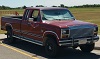
On my 88 f250, I’ve been having issues with the charging system. When my second alternator blew it took the fusible link for the charging circuit with it. Since I could not find a new link my fix was replacing that with a 100amp circuit breaker. All of my connections are taped up and secured, but for some reason the voltage constantly jumps above 100 amp causing the breaker to trip. Sometimes I can just pop it back in and keep rolling for a while but sometimes even at idle or having just turned off the truck it will stay popped and not want to go back in place. The alternator I have is labeled that on idle it puts out 65 amps and it’s max is 84 amps. With those being the parameters, how is it constantly shooting out 100+ amps and heating the circuit breaker.
You mentioned all of your connections are taped up. That is a mistake. You need to use a good crimper, butt connectors and a soldering iron to do automotive electronics.
I’m in class at the moment so I can’t get a pic, but if that’s the case I’ll be fixing that tonight. I have short 2 gauge battery cables that I can use to go from the circuit breaker to the relay that all the wires meet up at. The only thing that’s not oem in that charging system is that circuit breaker, the yellow/white wire and the thick black wire both meet up at the beginning of the breaker then it goes out to the relay. I could understand the wires not wanting to cooperate, but I’m just not sure how that setup would increase the alternator output to well over what its maximum output is. I could try replacing the regulator, however that was replaced about a year ago
Be aware that the best workman like practice is to NOT tin cables designed to carry hi current (i.e. starter cables and alternator charging cables). You still want to use a good ratcheting crimper with butt connectors and heat shrink though.
Be aware that the best workman like practice is to NOT tin cables designed to carry hi current (i.e. starter cables and alternator charging cables). You still want to use a good ratcheting crimper with butt connectors and heat shrink though.
I’m sorry but I cannot understand the first part of that message. I could get different wire but the options that I already have are regular 16 gauge wire and 2 gauge battery cable
Before you use a ratcheting crimper to secure the butt connector to a wire you're supposed to:
Strip the jacket of the wire
Tin the end of the wire using a soldering iron, solder and flux
As I mentioned, don't tin that 2 AWG alternator charging cable. Just crimp the butt connector on the end of the wire after stripping off the jacket.
Before you use a ratcheting crimper to secure the butt connector to a wire you're supposed to:
Strip the jacket of the wire
Tin the end of the wire using a soldering iron, solder and flux
I don't know where you learned that, but its not true of most crimped connections. A well made crimp connection allows the wire to move and flex slightly without breaking. Soldering connections stiffens the wire and makes it more prone to breaking due to vibration.
Back on topic, without having an ammeter on the line when it blows, there is no telling what the alternator is actually putting out. You may have a faulty circuit breaker, new doesn't always mean good. Fusible links are available at most auto parts stores.
Finally got a moment so I went and got a pic. It’s not a pretty setup at all but on this truck nothing is. Where the red wire and black wire continue from the breaker is where I would run the battery cable. The thick black and the yellow/white wires meet up and go into the breaker together. This setup had worked perfectly for almost a year, but going into winter last year it started messing up. I only just now started getting sick of charging it nightly. I would rather replace the circuit breaker than put a fusible link back in there so I might pick up a new one today.
If you had to charge the battery every evening there's something wrong with that setup. I suggest you try to figure out the OE setup and eliminate the circuit breaker.
Here's a good resource for wiring schematics and troubleshooting tips.
https://www.garysgaragemahal.com/
Does the black wire from the top of the circuit breaker change to the red one underneath the electrical tape? The black and yellow/white wires going to the bottom of the circuit breaker can be tinned and crimped together (learned that in the U.S. Army & the FAA) for proper termination if you keep the circuit breaker.
Coming from the relay I kept the old stock wire mainly for its connector end. It connects to that bright red wire right at the tape then that red wire goes to the breaker. I will solder the black and yellow/white wires together and onto a new circuit breaker and replace that janky wire leaving the breaker going towards the relay.
This setup only started failing when I tried running a sub pump off of my inverter. Pump had a short in it which cause an insane power draw that almost killed a 2000w inverter. Ever since then I’ve had to leave a battery tender on it overnight and have also replaced both batteries since then. Every once in a while I wouldn’t need to charge it and it could go without needing a charge up, but then randomly it would start again and I would be sol
Finally made it back home, errands were a pain when I had to jump after each stop but oh well. Switched out that janky wire for a 2ft long battery cable(shortest one I had), and now have the truck charging on my trusty motorcycle tender. If this fixes the charging issues then I’m happy. I know I might still need to get new batteries even though these ones are only 6 months old. Moneys tight so step by step
I have no idea what that thing is. It was already on the truck when I bought it and the guy I got it from said he had no idea either. I do know I have a block heater in this thing but that’s definitely not it. It’s not even wired in either
After a full night of charging I had just enough power to get the truck started. Drove around town for a while and did some heavy throttle to see if the breaker would trip. Didn’t trip once, my battery voltage gauge was sitting in the middle and my radio was displaying 13v on idle and 13.4-8 on throttle. Took my batteries into autozone and both tested good, one at 50% charge and the other at 75% charge. I had no idea that one wire would cause so many issues, to me electrical will always be magic lightning and demonic rocks. Thanks for the advice. Going to keep driving it to get those batteries up to 100%